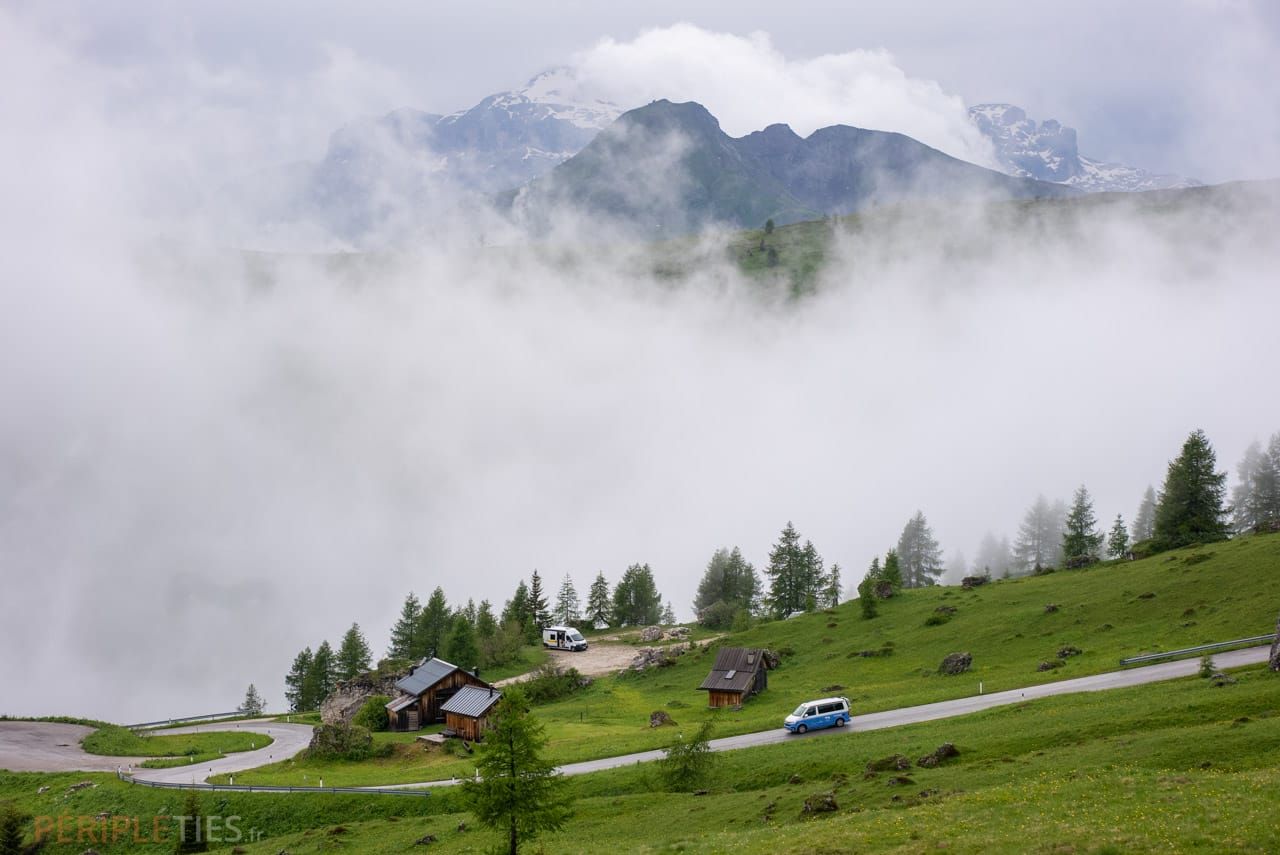
A perfect base for hiking, climbing, and skiing, the Dolomites have become one of the most sought-after destinations in Europe for a campervan or motorhome road trip.
But that popularity comes at a price for anyone traveling in a converted vehicle, and it really pays to arrive prepared. Here is our honest, been-there advice for exploring this spectacular mountain range without (completely) breaking the bank.
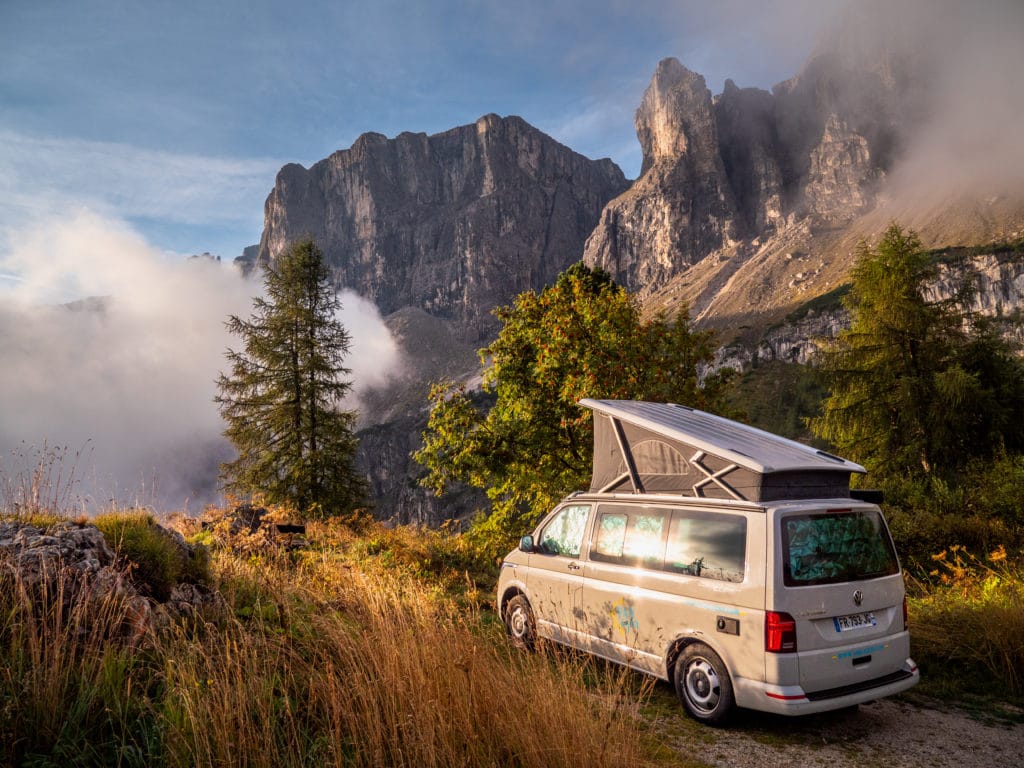
Rent a Campervan in the Dolomites from €40/day!
This range of jagged peaks in northern Italy is famous for its dramatic, knife-edge summits that glow white and pink as the light shifts through the day. A UNESCO World Heritage Site, it serves up staggering panoramas, crystal-clear lakes, and rich wildlife. Little wonder it tops so many bucket lists.
Are the Dolomites worth visiting by van or motorhome?
We will be upfront: we are not among those who rave about the Dolomites without reservation. Yes, the scenery is breathtaking, and it is impossible not to be awed by it, the alpine flora, and the sheer number of hikes (and yes, spoiler: there is far more to walk than just the Tre Cime di Lavaredo and Lago di Sorapis!). But we are going to be straight with you, so this guide also covers:
- Weather that is often far less idyllic than social media suggests.
- Serious overcrowding at the honeypot sites.
- Strict rules on so-called wild camping (more on what that means below).
- The sometimes steep cost of a night on a motorhome aire or campsite.
- The cost of accessing the trails themselves.
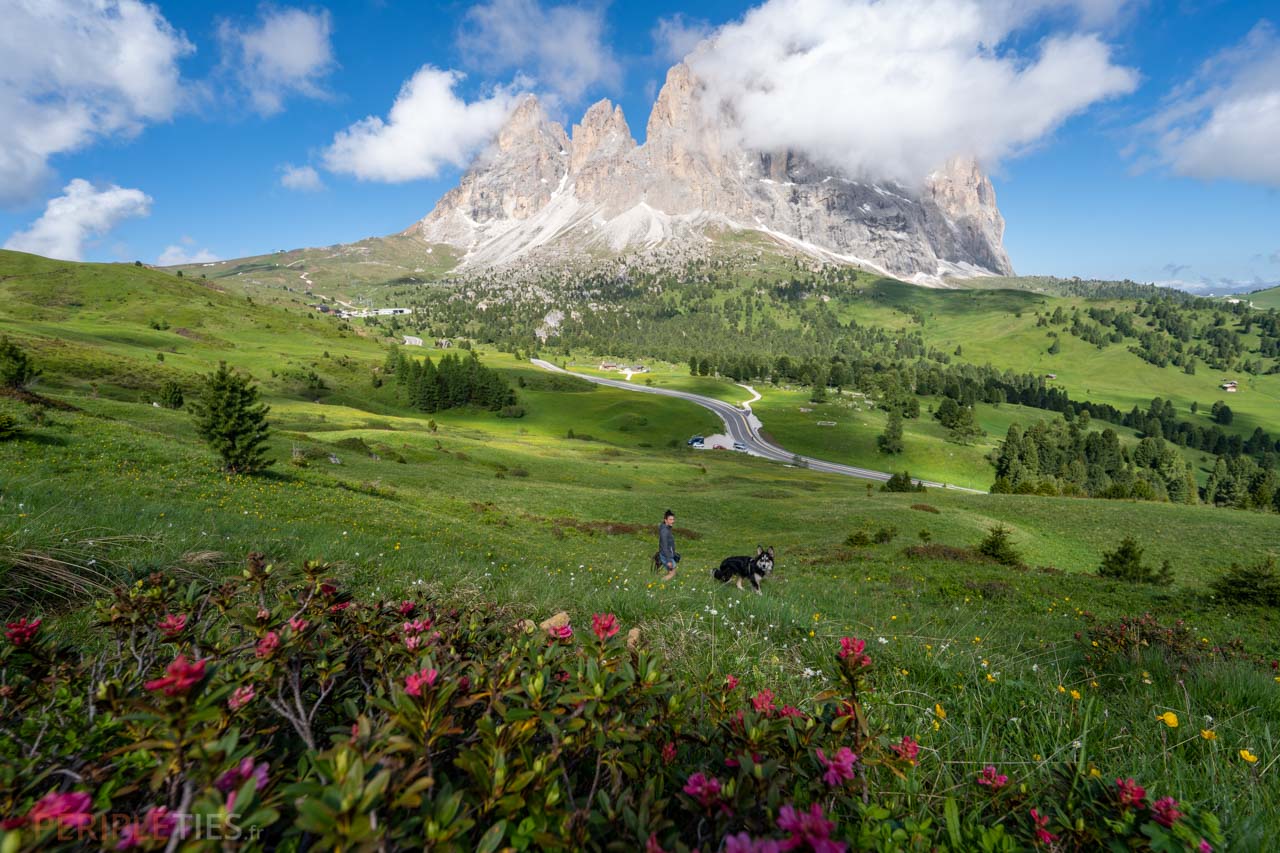
Renting a van or motorhome for the Dolomites
If you have not hired a car, you can rent a motorhome or campervan through national operators or peer-to-peer platforms. Several rental agencies and sites offer well-equipped vehicles to suit couples and families alike. Renting gives you the flexibility to reach icons like Lago di Carezza and the Tre Cime di Lavaredo while also slipping away to quieter corners. With Yescapa, for example, you can rent from France or Italy. Budget around 100 euros a day.
Our experience: 15 days in the Dolomites
We did our road trip over a fortnight from mid-June 2024, hoping for decent weather (there was still snow in the Dolomites in May that year!) and wanting to dodge the crowds at certain spots. That tactic had worked nicely on our Puglia road trip, another hugely popular Italian region.
This time, sadly, it did not pan out. Weather-wise we got off fairly lightly. Of the 14 days we spent in the Dolomites (we could not stay longer, as this was a test trip in the Pilote Atlas A603G van), we had around four days of genuinely bad weather.
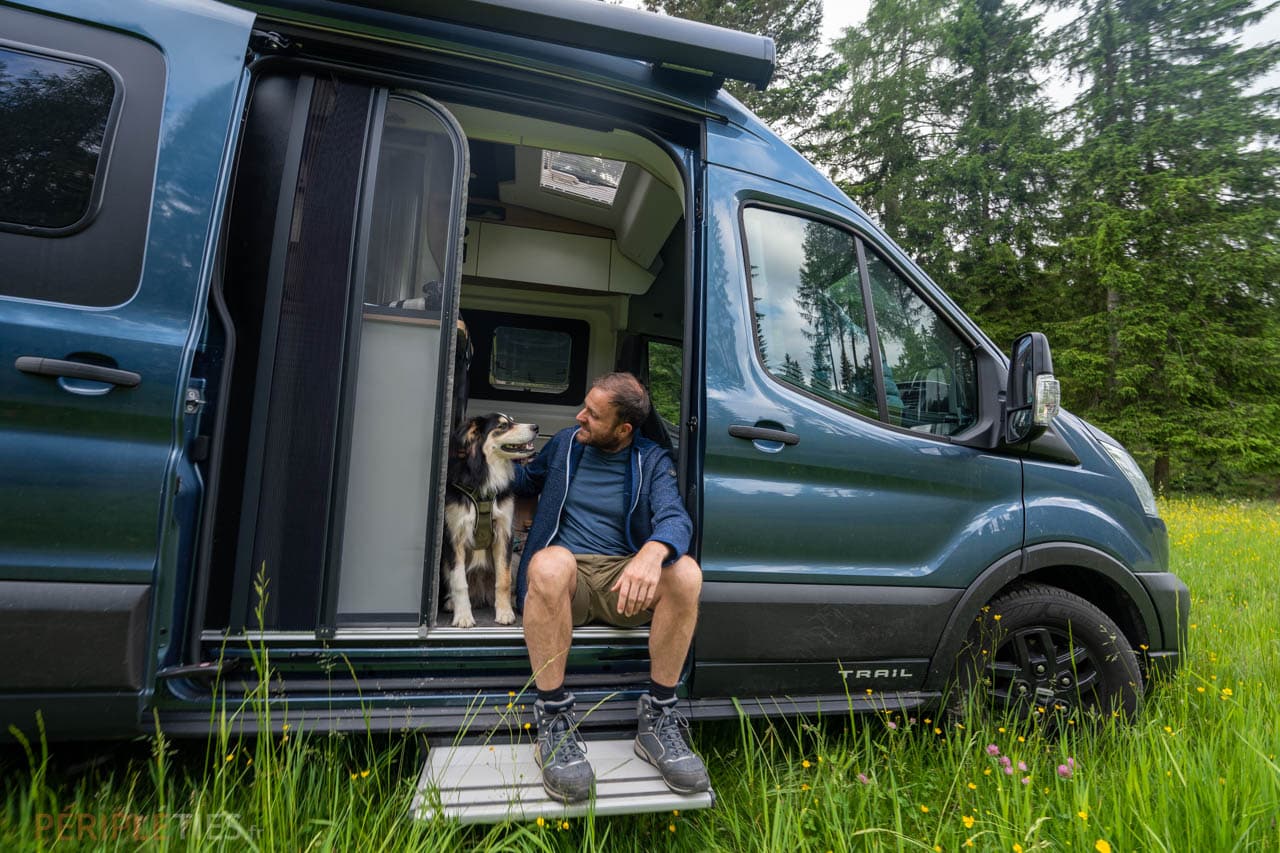
Bad timing?
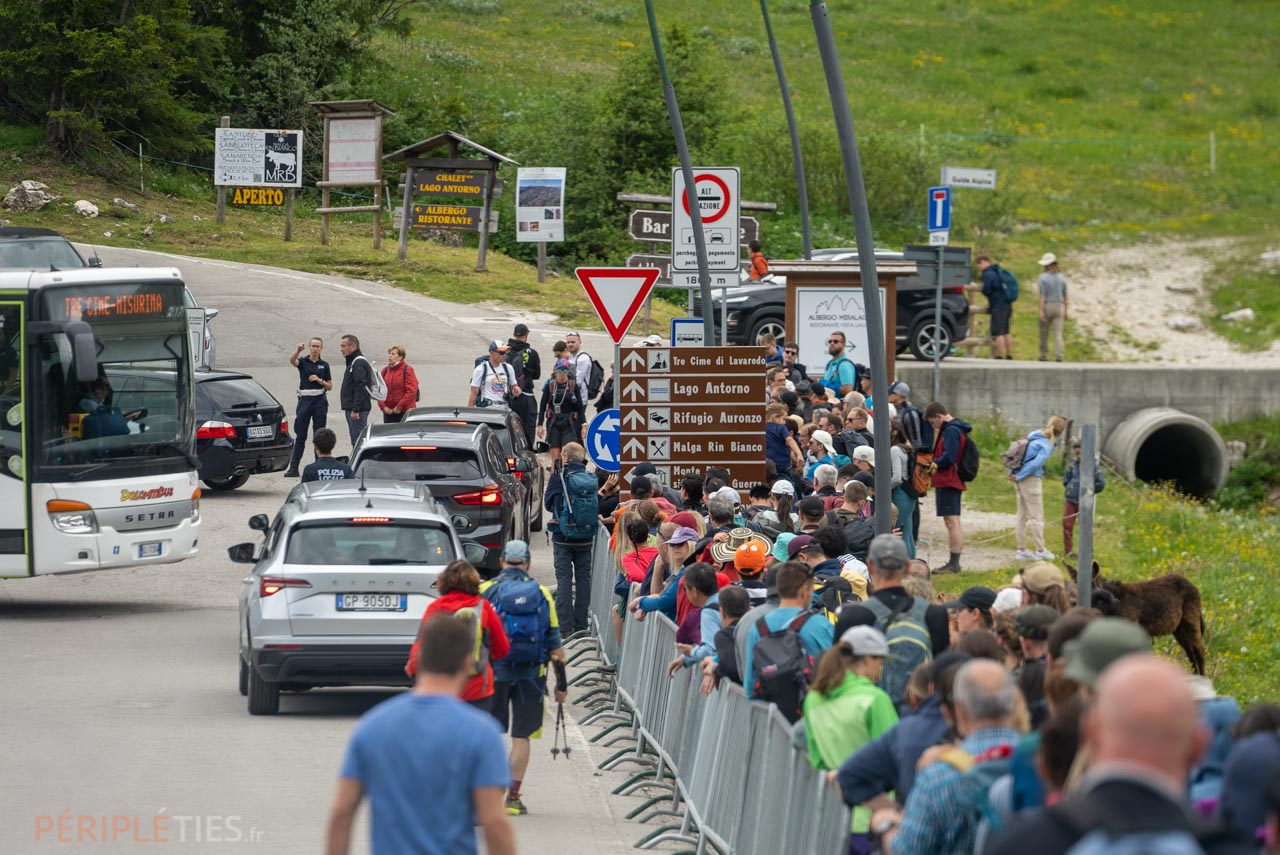
The catch is that in Italy many regions start their summer holidays as early as mid-June. Combined with glorious weather, especially at weekends, that pulled big crowds into the Dolomites, ourselves included.
(A quick aside: we do not claim to be anything other than tourists, whatever a few people fired back at us after our YouTube video. Although... we are not sure every tourist bothers to put together travel journals this detailed. Anyway, moving on!)
It may not have been the best timing for us, but it gave us a real taste of what the area is like in July and August. The takeaway: your experience can vary enormously depending on when you go and what you do. More on that below.
Bip & Go
Bip&Go toll badge -- Price: from 1.33 euros a month for months used in France, plus 2.50 euros a month for Italy. Badge delivery: 6 euros. Coverage: France, Spain, Portugal and Italy. (An electronic toll tag like this lets you glide through autostrada toll booths without queuing or hunting for change, handy if you are driving down from France.)
Ulys
Ulys toll badge -- Price: from 1.70 euros a month for months used in France, plus 2 euros a month (Spain, Portugal) and 2.40 euros (Italy). Delivery: free. Coverage: France, Italy, Spain, Portugal.
Do not be afraid to skip the big-ticket sights
We would genuinely suggest skipping the most hyped spots if, like us, you value peace and quiet over ticking off the places-to-see-before-you-die checklist.
Of course, some people are not bothered by the crowds and high prices we will cover here. No judgement at all, it is simply a different philosophy from ours.
We would have loved an honest heads-up before setting off on this Dolomites trip, so we would have wasted less time in certain places. That is exactly what we want to pass on to you here.
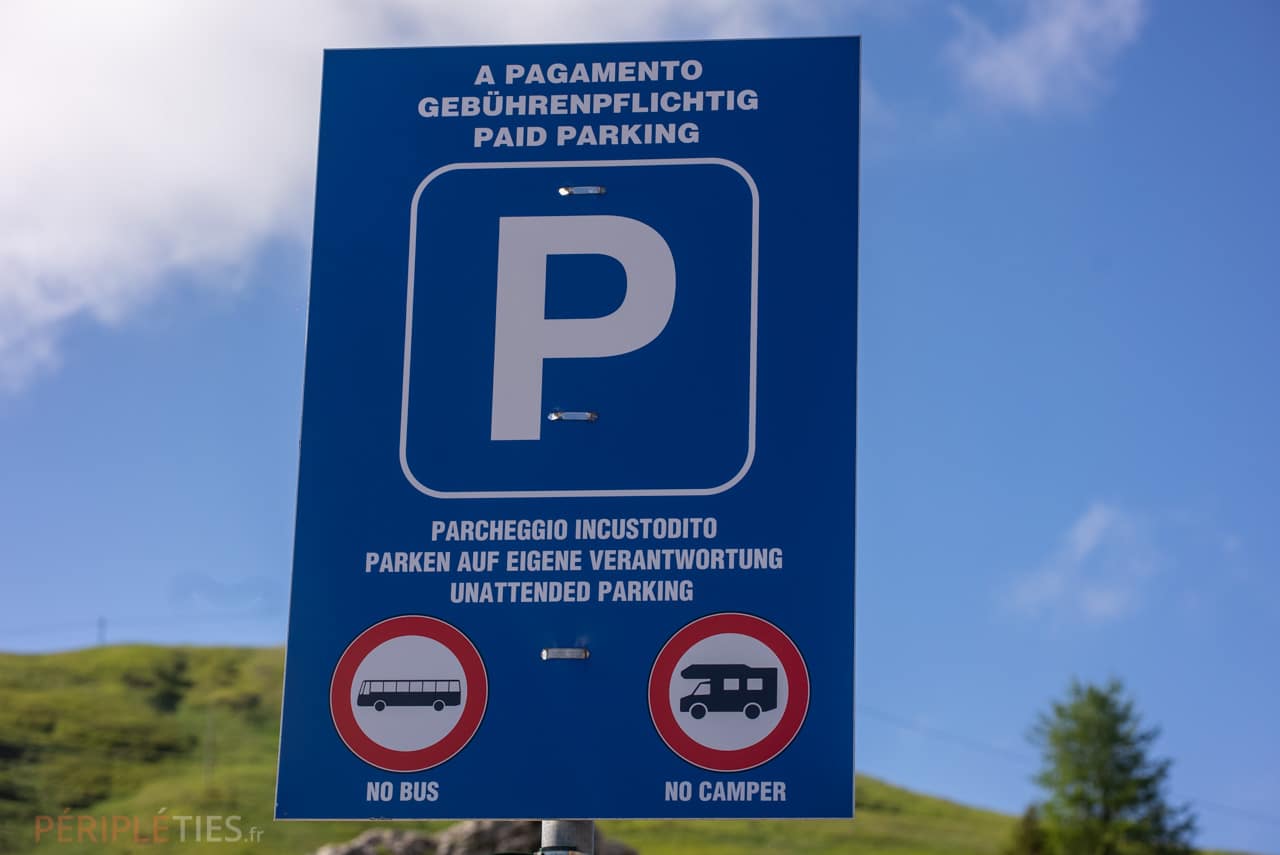
How to survive a Dolomites road trip
In our eyes, this range is, in places, a victim of its own beauty and its omnipresence on social media.
Chances are you started researching the Dolomites after seeing gorgeous van-life shots, right? A van door swinging open onto an epic spot, the occupants waking up alone in the wild, always at the foot of the most beautiful peaks...
The Instagram destination
Yes, the Dolomites are stunning. But the reality of the road trip is often very different from what a handful of Instagram accounts show, and we will explain why throughout this guide.
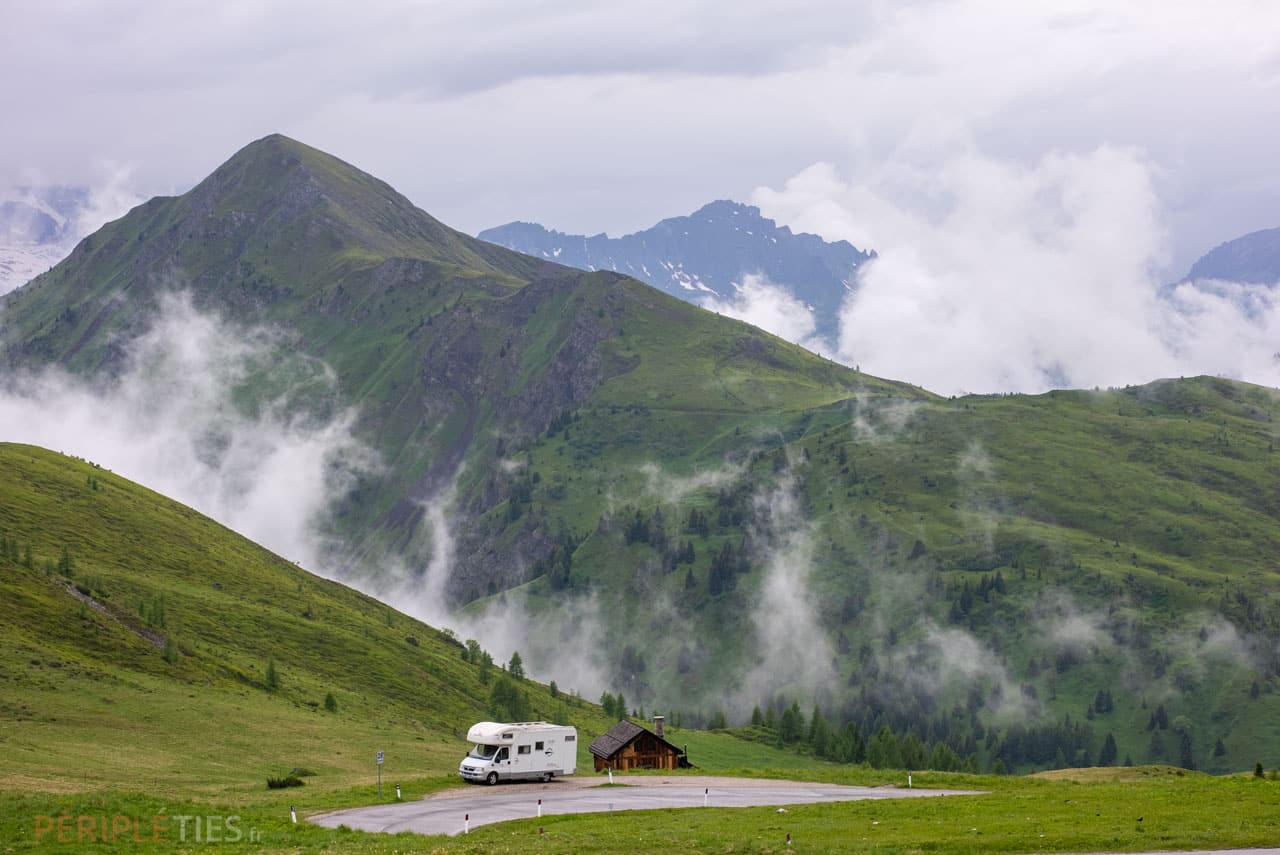
When is the best time to visit the Dolomites?
One of the big things to plan for is the weather. As a high mountain range, the Dolomites are subject to fast-changing, fickle conditions.
The range is snow-covered in winter and temperatures stay cold, often into April. Mountain pass roads can be tricky, especially if you are not set up for winter motorhoming.
That said, it is all doable, particularly if you love winter sports. From late April into May there are some lovely days, but spring can also be wet, as it was in 2024. That has its charm, but it can limit your hiking options.
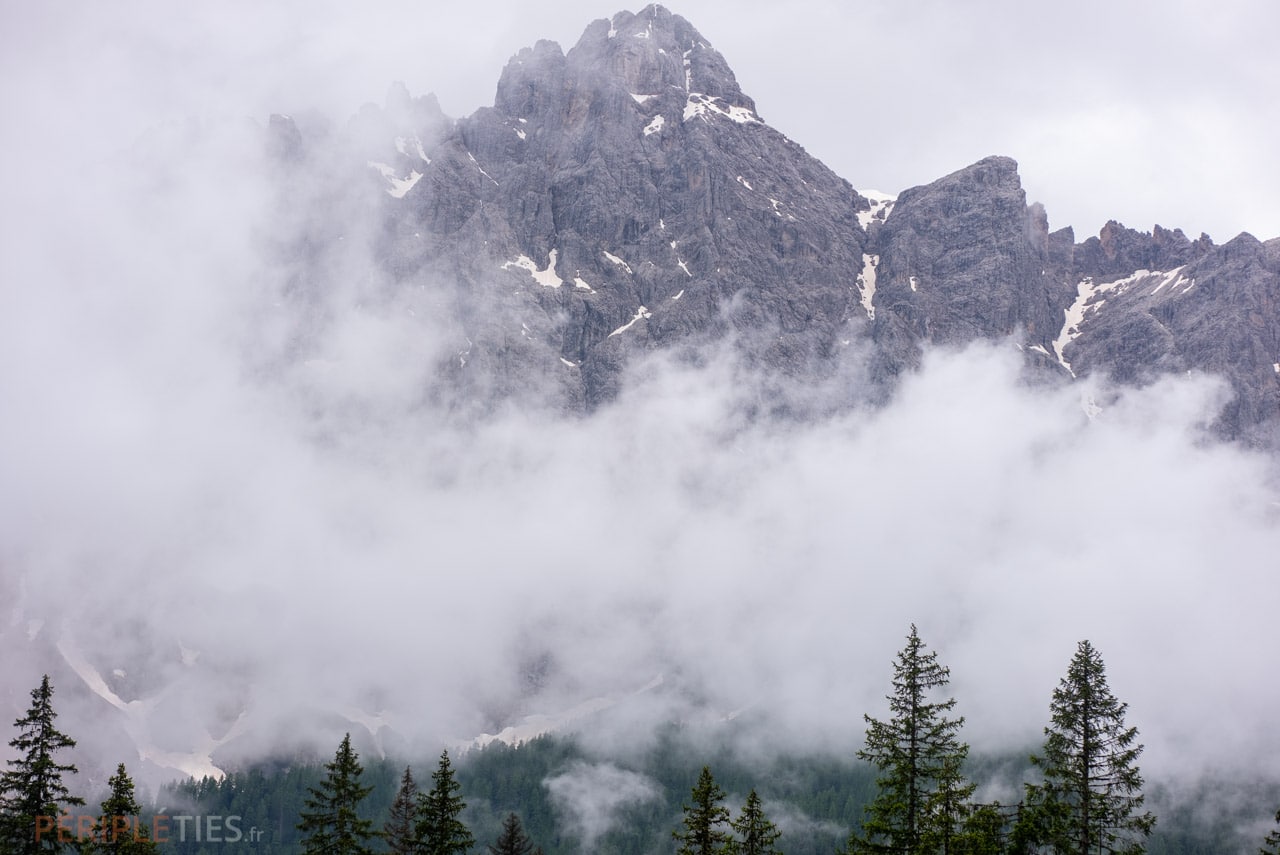
Avoid peak season if you possibly can
You can plan a trip in the best conditions from May onwards. From mid-June to the end of August it is high season, and spots like the popular lakes and passes (Lago di Carezza, Lago di Braies, Val Gardena) get very busy.
For us, the sweet spot for beautiful scenery with a calmer atmosphere is between May and mid-June, and again from September to mid-October.
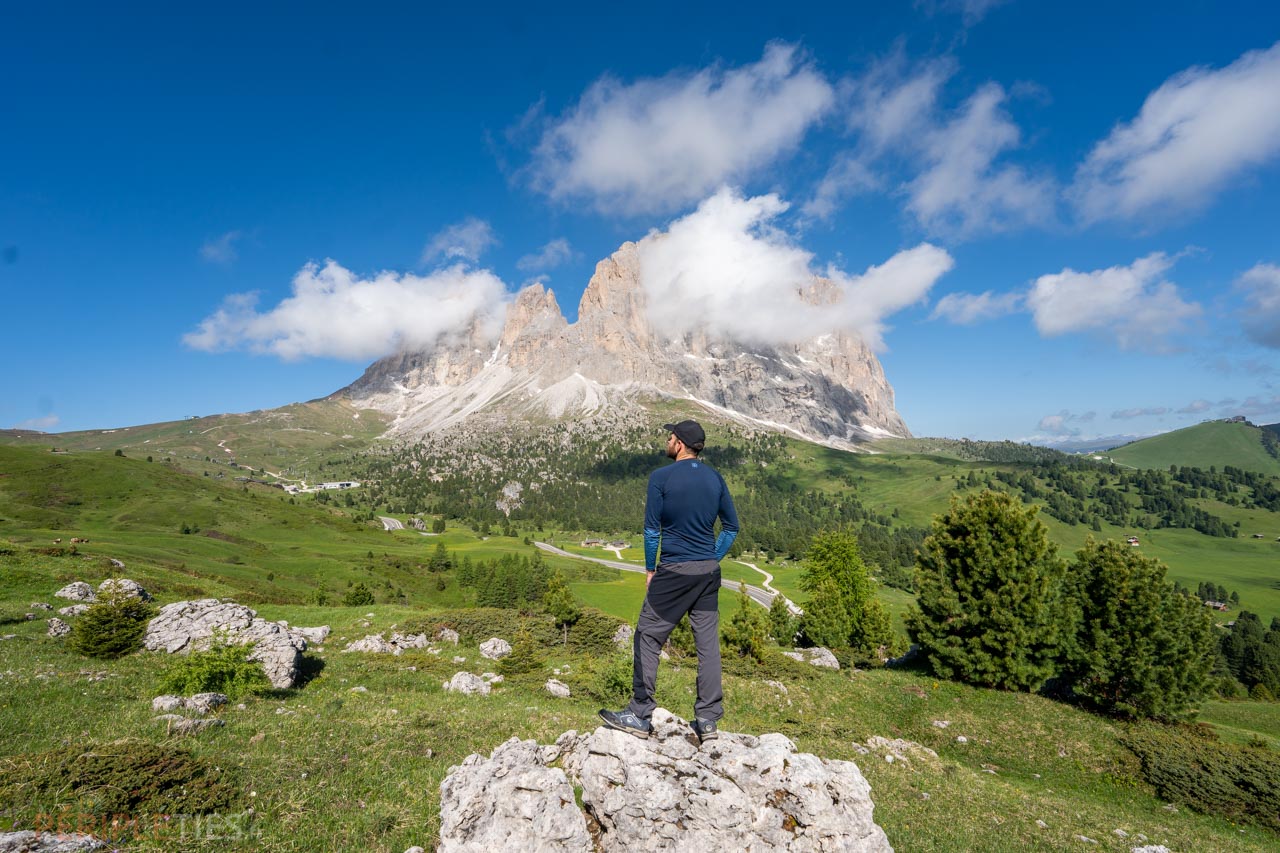
Can you wild camp in the Dolomites?
If you have lucked into good weather, you are already winning. Now for the thorny question of wild camping in the Dolomites.
Because the dreamy shots of waking up in the middle of nature are everywhere on social media, you might feel disappointed, even inadequate, if your own trip does not look like that.
Take heart: a lot of those photos are carefully framed. Shoot from a slightly different angle and you would often see the road, or the neighbour van door, just out of shot.
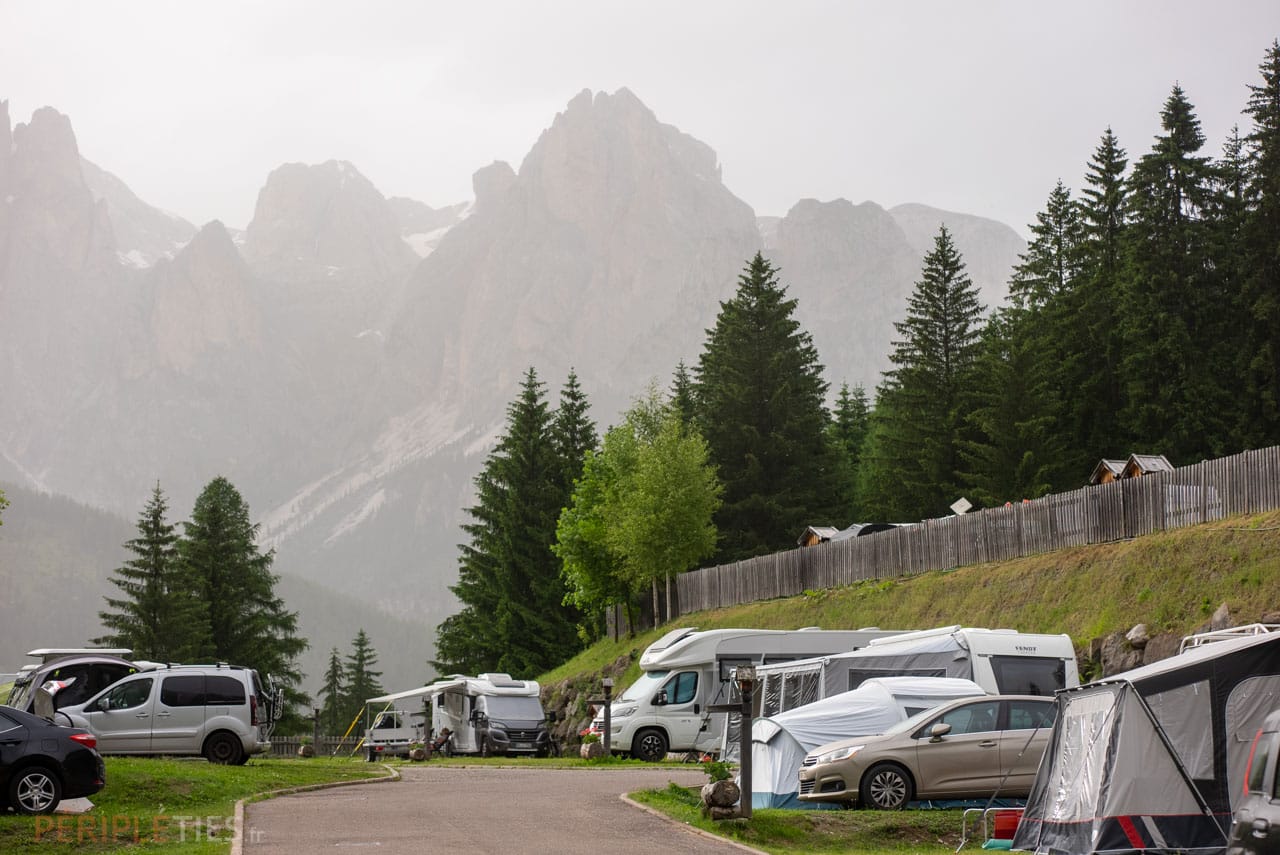
One of the first things to know is that the Dolomites roughly span three areas: the autonomous provinces of Trentino and Alto Adige/South Tyrol, and the province of Belluno (Veneto).
This matters for your trip, because if you are touring Italy by motorhome, the rules vary from province to province, and sometimes from one town to the next.
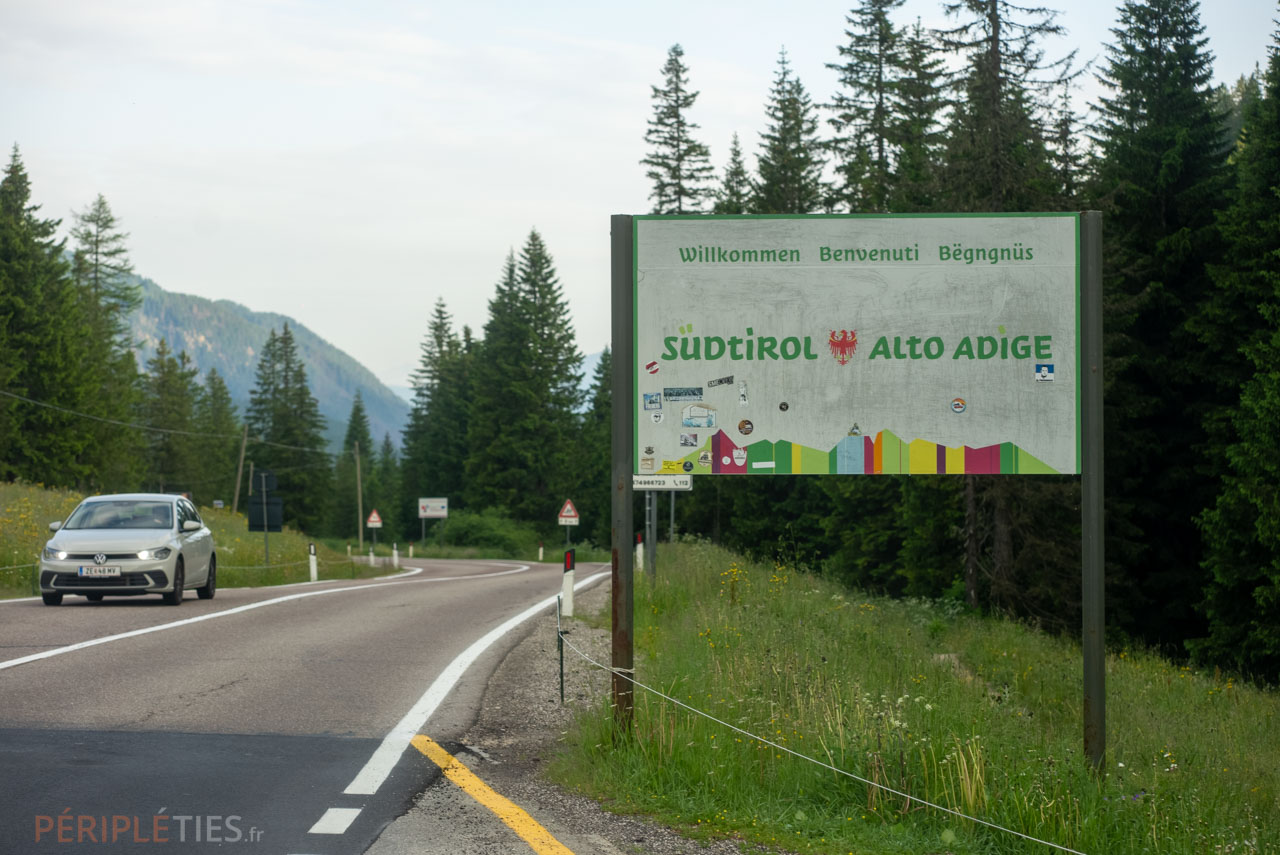
Wild camping (off-pitch) is banned in South Tyrol / Alto Adige
We found fairly relaxed spots in the province of Belluno and some tolerance in Trentino. South Tyrol/Alto Adige, however, which covers a large slice of the most popular Dolomites sites, explicitly bans wild camping.
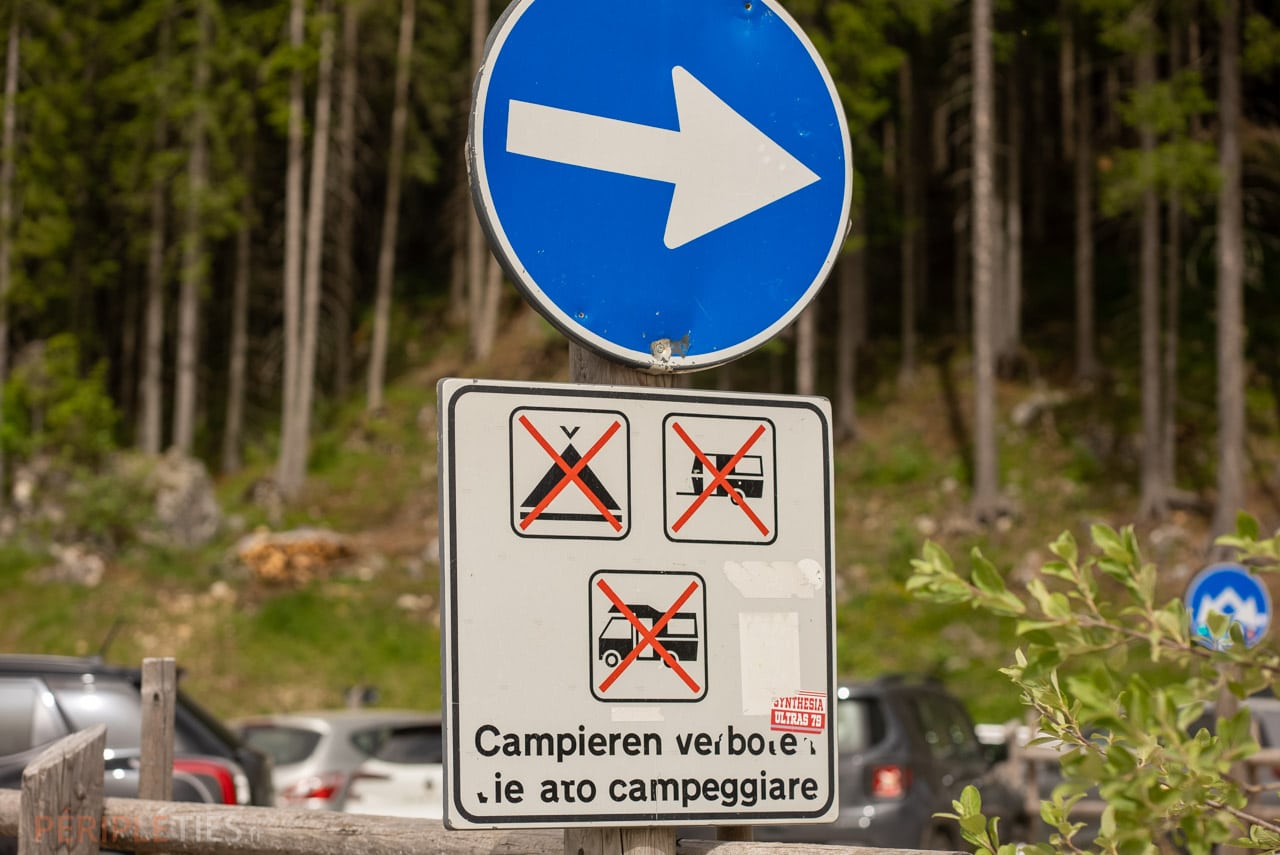
And that includes sleeping in a converted vehicle outside designated pitches. You will regularly see signs reminding you of it.
Can you spend the night in a van in the Dolomites?
The contradictory accounts you will hear (I found loads of spots where I was alone and nobody said a thing, or just get up at 5am) do not change the legal reality.
It is simply the law, and it covers converted vehicles, unlike in France, where you can argue that a parked vehicle is not technically camping. In much of the UK and France a motorhome parked legally is treated differently from pitching camp; that distinction does not help you here.
Dream spots in car parks and lay-bys
There are, of course, tolerated areas outside paid pitches, mainly car parks and lay-bys (great!). But it is essential to keep a low profile.
Avoid anything that looks like camping: no chairs or tables left out, no step extended. Otherwise you risk a hefty fine.
And too much abuse could trigger fresh bans. Spare a thought for the travellers who will come after you and want to enjoy this place too.
Tolerance is wearing thin
During our visit in June 2024 we saw many tracks signed as private, with barriers and notices, a clear sign that locals are tired of the sheer number of vans and motorhomes.
In many areas the authorities seem to be steering travellers in converted vehicles towards official parking areas.
Parking in the Dolomites with Agricamper Italia
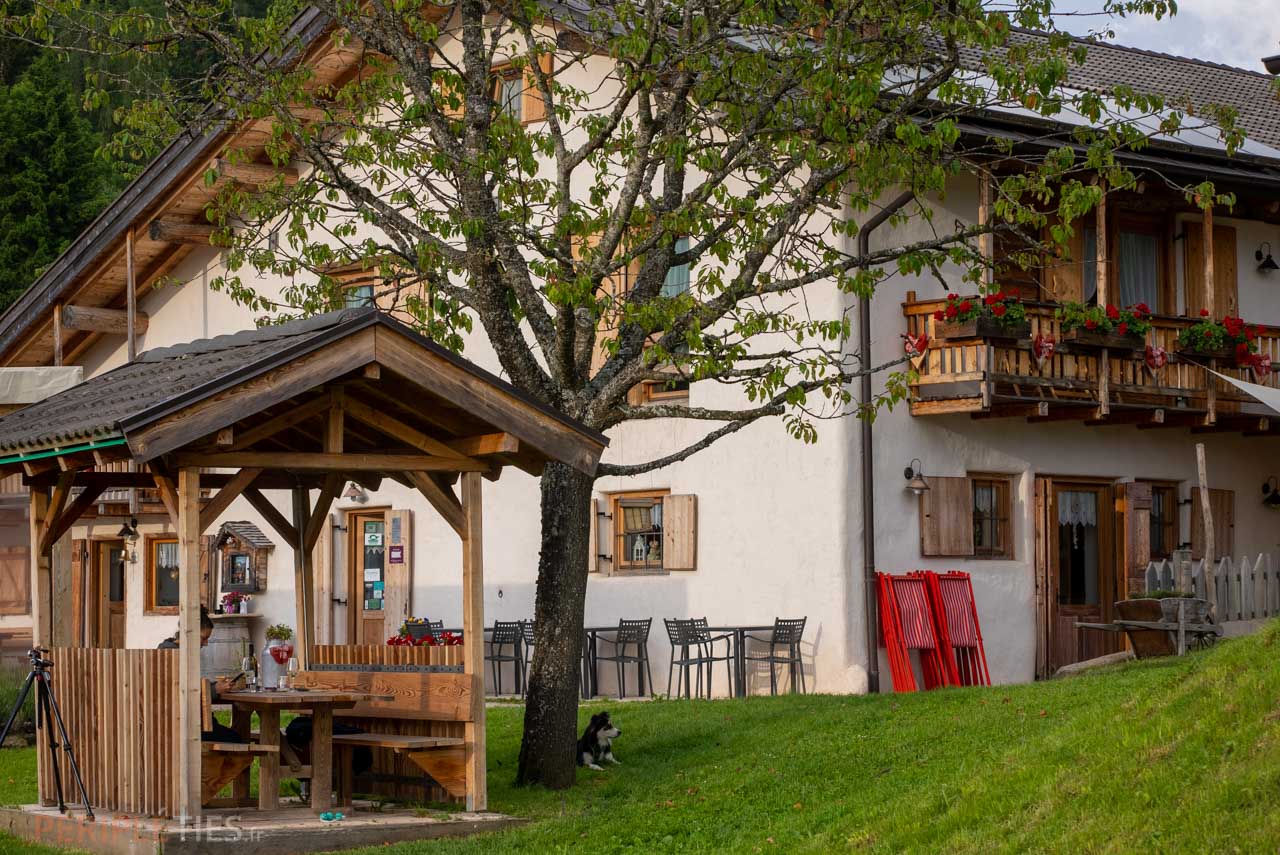
We were lucky to discover some off-the-beaten-track spots thanks to the Agricamper Italia network. Similar to the French France Passion scheme, it lets you stay overnight at farms, vineyards, inns and restaurants, much closer to the kind of travel we love. (France Passion and Agricamper work the same way: you pay a small annual membership, then stay for free with hundreds of hosts; you are expected to be self-sufficient and, ideally, to buy a little of their produce.) The catch: there were fewer than five stops available in the Dolomites in 2024, which limits your options.
Where to park and sleep in the Dolomites
During the day you can of course park up to sightsee or set off on a hike.
Here again it is rarely free, and often pricey for vans and motorhomes, which frequently pay double the car rate (though this seems to vary a lot by season).
Daytime parking prices in the Dolomites
As a rule, motorhome and campervan parking runs from 5 to 20 euros a day.
That said, thanks to some loyal followers we have learned that pick-up campers sometimes get charged the car rate.
Car parks near the marquee sites, such as Val Gardena, are usually the most expensive for motorhomes.
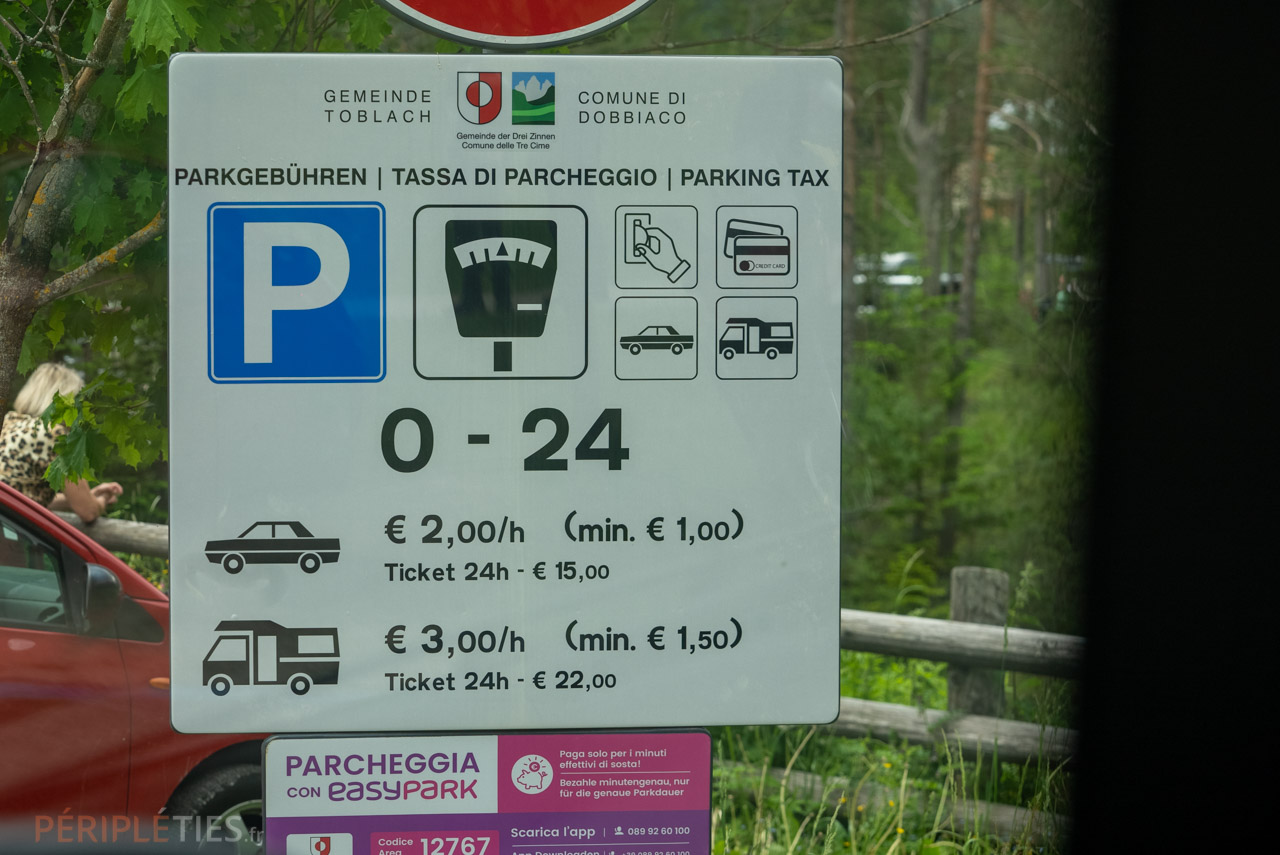
Sample parking fees at the Dolomites headline sites
- Lago di Carezza: 3 hours of parking costs 9 euros, or 20 euros to stay overnight.
- Tre Cime di Lavaredo: the coveted car park at Rifugio Auronzo costs 45 euros for 12 hours for a van or motorhome, including access via the toll road (from the 13th hour a new charge kicks in, so 90 euros total). There is also an area at the foot of the toll road for 25 euros, but it is often packed in high season. Roadside daytime parking is available too.
- Lago di Braies: car park access costs 35 euros for 24 hours, whether you stay 15 minutes or a full day.
How much does it cost to park overnight in the Dolomites?
Budget 25 to 50 euros a night for a van or motorhome depending on location and season, though a few cheaper pitches do exist.
You will find the cheapest options on motorhome parking apps like Park4night.
Campsite prices in the Dolomites
For a standard campsite in the Dolomites, reckon on 27 to 50 euros a night, including waste disposal and water. In high season, book ahead, as these sites fill up fast.
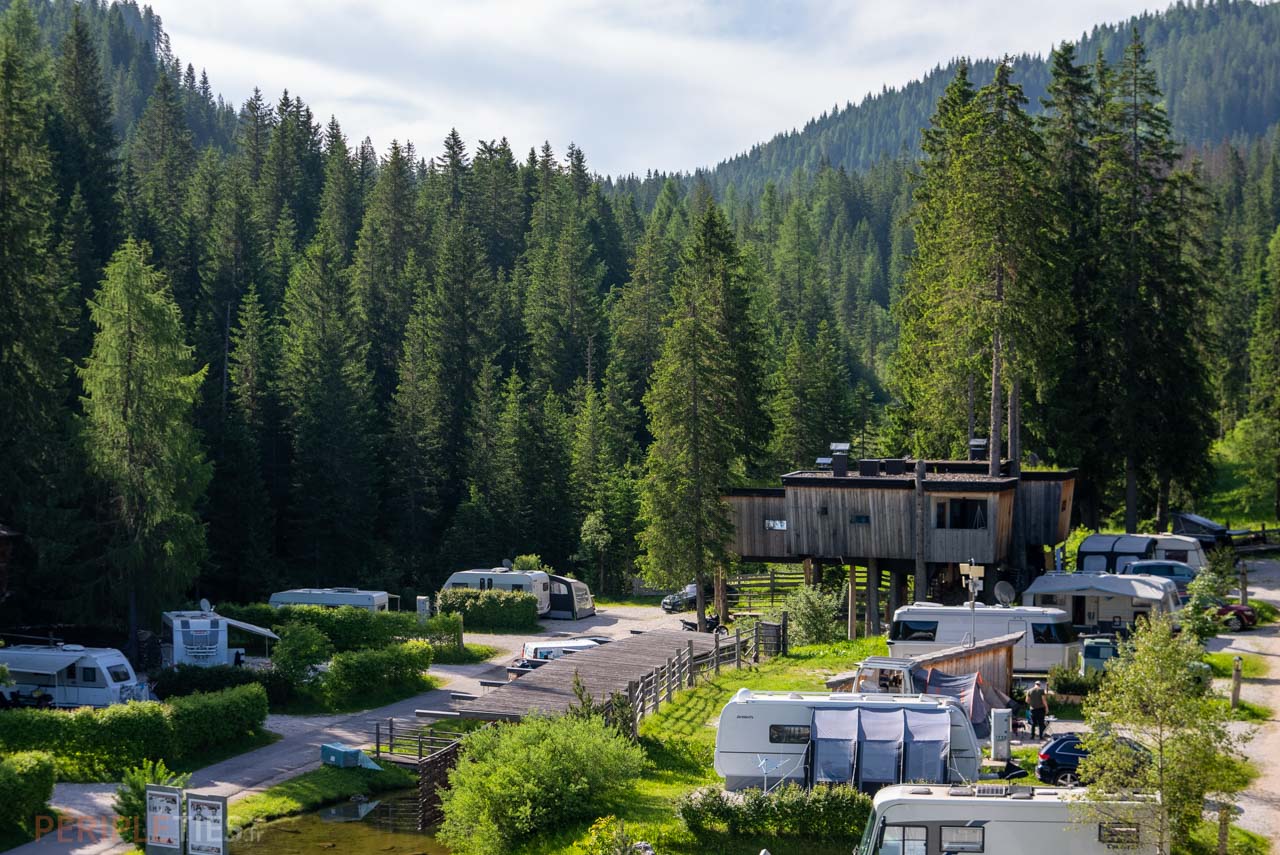
Caravan Park Sexten: an example of a luxury campsite
There are also high-end sites, such as Caravan Park Sexten in the Tre Cime national park, with facilities like a spa and pool. It was voted Italy best campsite at the 2023 ACSI awards.
Rates range from 40 to 100 euros (minimum 3 nights) depending on pitch type and season, plus a daily electricity charge. The site accepts the ACSI Club ID, which includes third-party liability insurance.
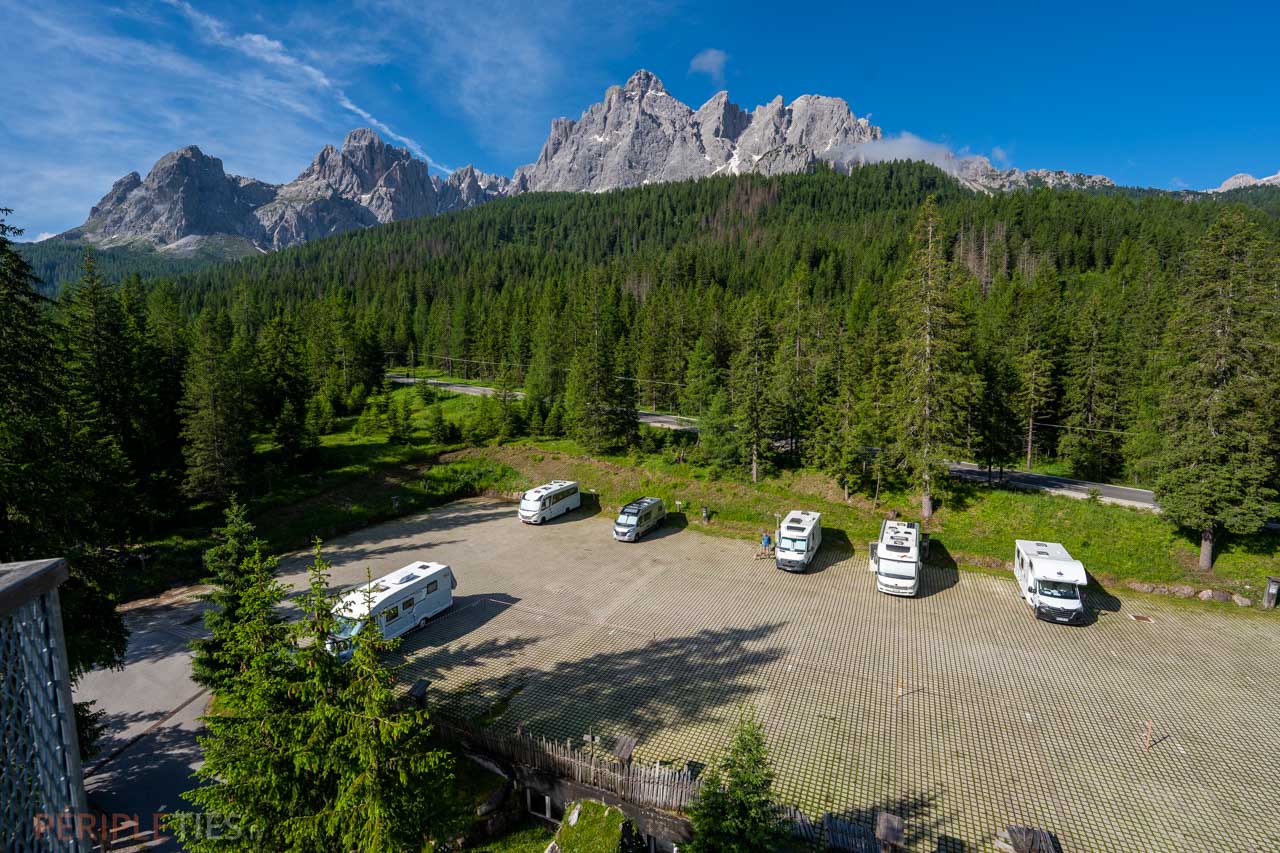
We stayed several nights here to hike the surrounding trails. The experience, which we shared in a video on our YouTube channel, was pricey but pleasant (apart from the restaurant, which we found far too expensive for what it was).
Worth noting: the Sosta Camper parking area right in front of Caravan Park Sexten lets you stay overnight (max 3 nights, no booking). Prices run from 34 to 51 euros depending on season.
Cheaper Dolomites campsites with the ACSI card
To get the most out of your trip, the CampingCard ACSI can be a smart move. This discount scheme (Auto-Caravaning Service International) gets you reduced off-season rates at participating campsites, a welcome saving.
Budgeting for aires (service areas)
Service and parking areas, the European aires designed for motorhomes, are generally more affordable, averaging around 25 euros a night including electricity, waste disposal and water. (An aire is a dedicated motorhome stopover with basic services; they are common across France and Italy and a staple of life on the road.)
Now and then you will get a pleasant surprise and find aires for 15 euros, or even 5 euros, like near Lago di Carezza.
On the flip side, some no-service car parks charge up to 35 euros for the night with nothing extra, just for the view and the door-to-door convenience. It is a real mixed bag, frankly.
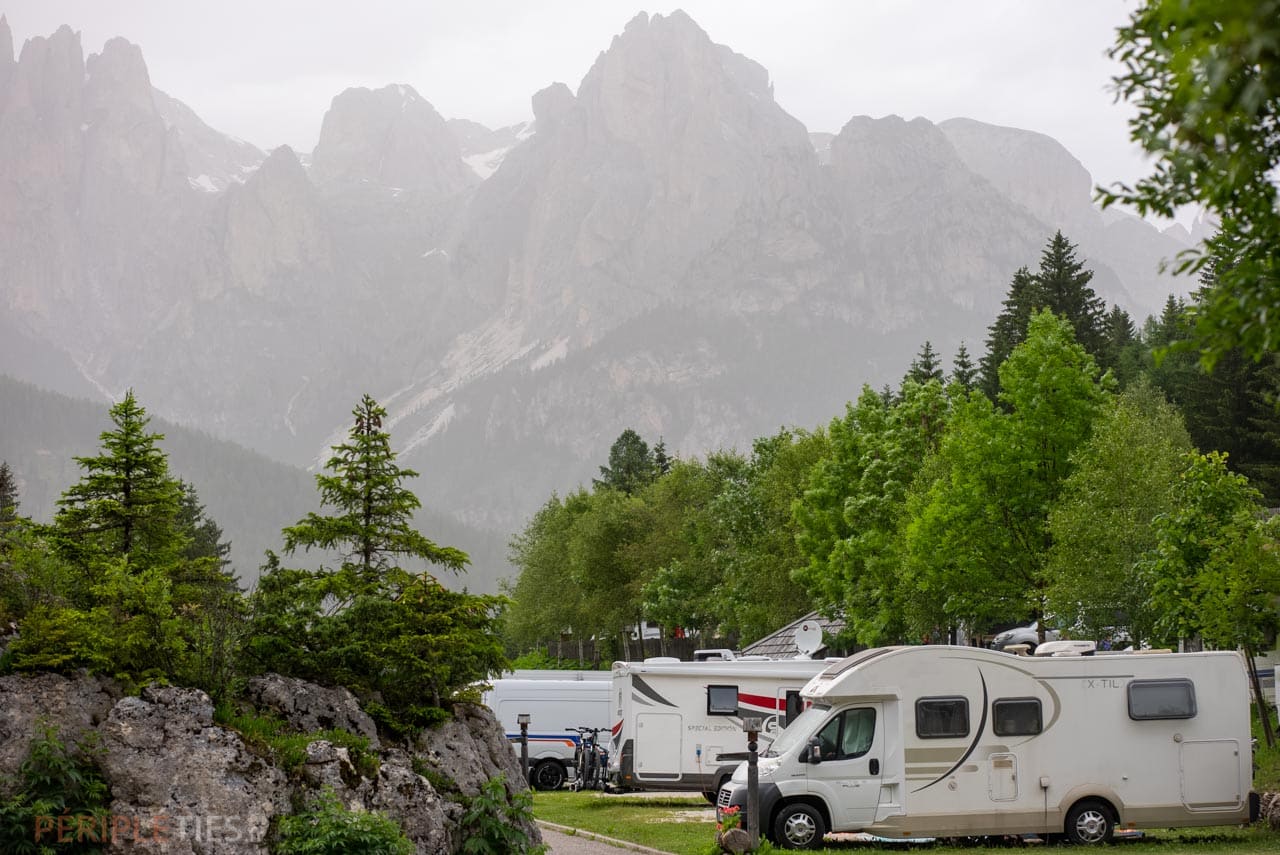
Hiking and cable cars in the Dolomites
If you are a keen hiker (and we assume you are, if you are heading to the Dolomites!), you will also need to factor in the cost of the cable cars that make the trailheads easier to reach.
These gondolas cost roughly 10 to 30 euros for a return trip. Day passes giving unlimited cable-car use run from 30 to 50 euros.
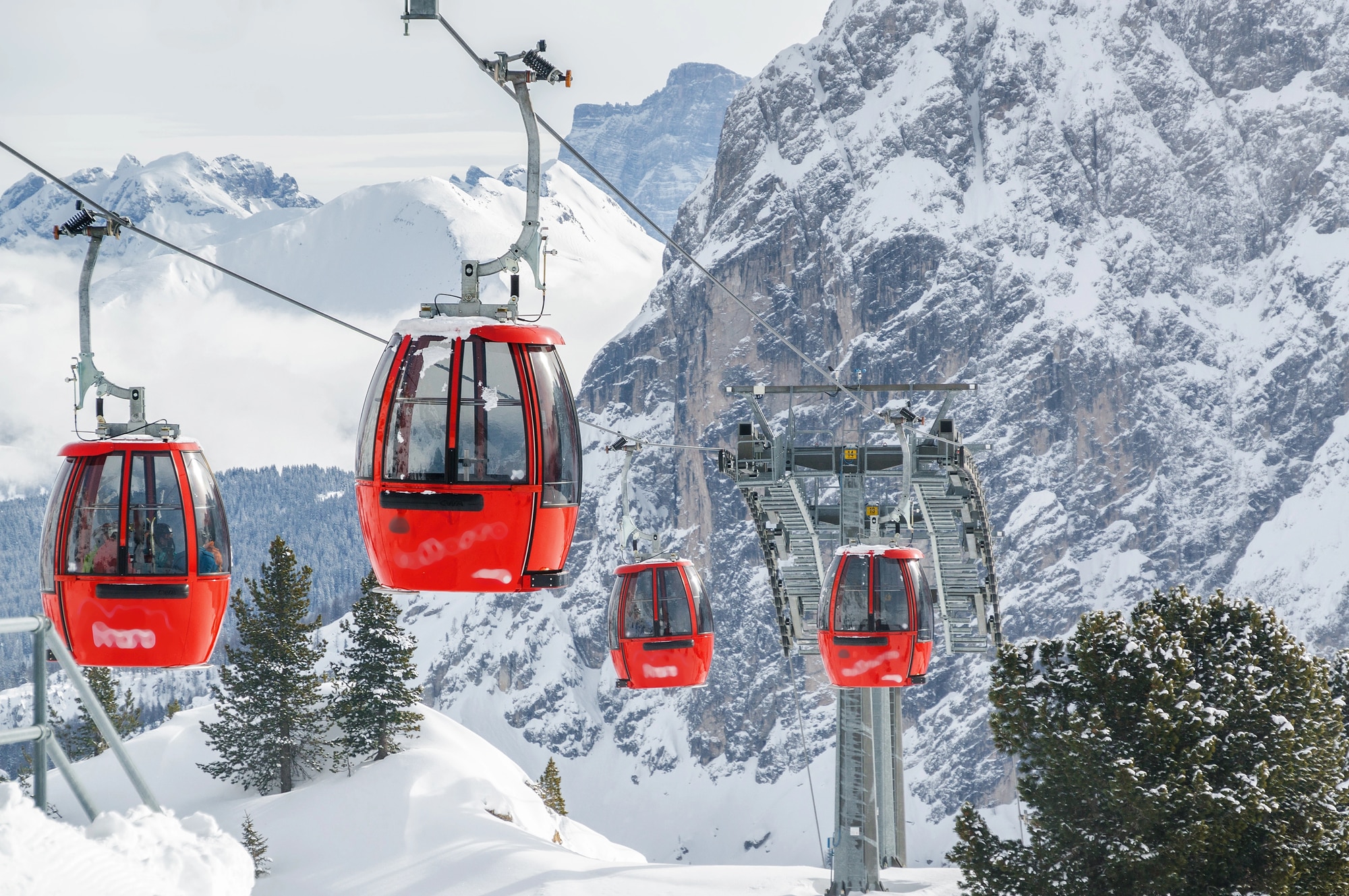
If you would rather skip the cable cars, the hikes up to the high valleys and summits are much longer and demand decent fitness.
You will also find plenty of accessible trails on apps like AllTrails, which is exactly what we did, and we were spoiled for choice.
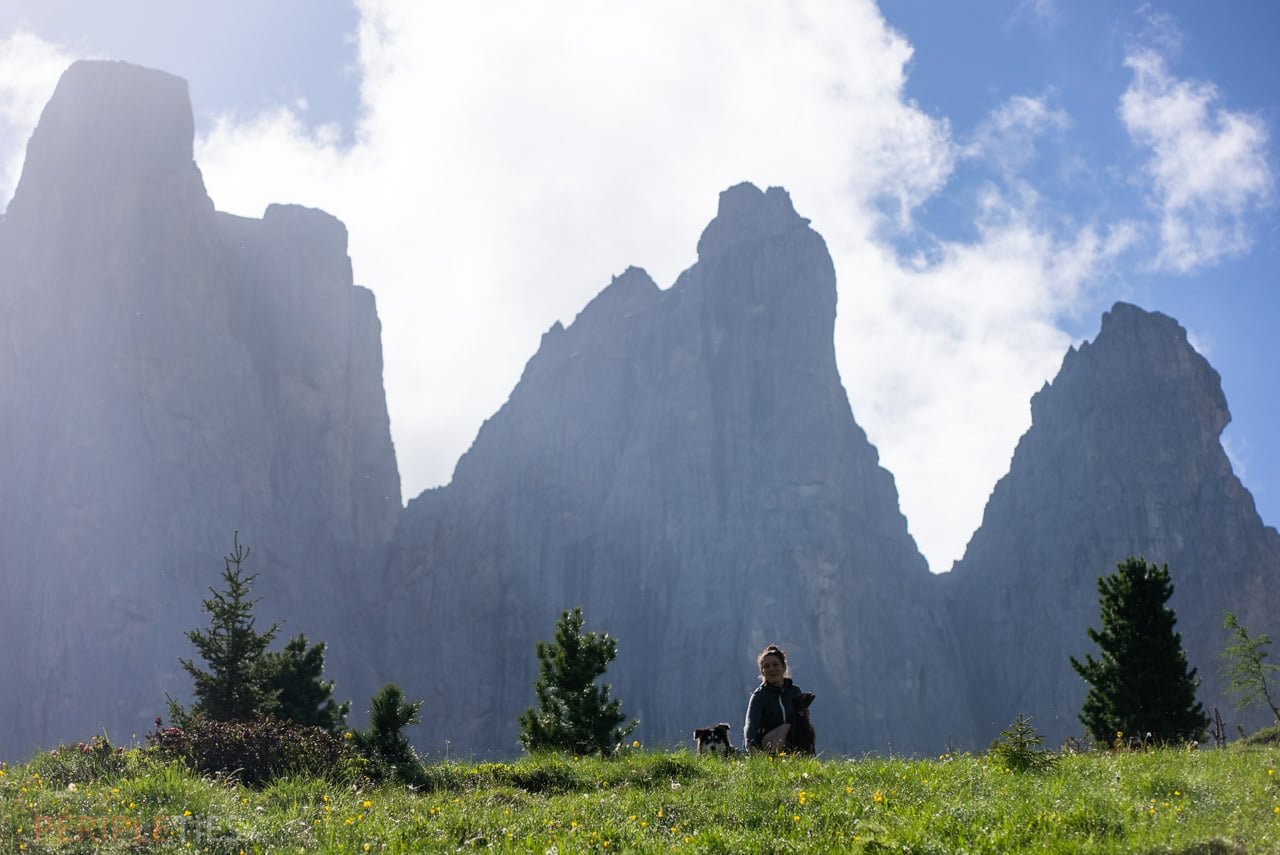
Driving the Dolomites: the must-sees in 7 days
Before planning your route, bear in mind that the Dolomite mountain roads are long and winding. A 20 km (12-mile) climb can take 45 minutes or more thanks to the hairpins. It is worth prioritising certain stretches depending on how much time you have. Here is a rundown of the must-sees.
Lago di Carezza
Lago di Carezza is famous for its crystal-clear, emerald-and-turquoise water that shifts colour with the light and weather. Ringed by conifer forest, it offers a gorgeous view of the Latemar massif.
Billed as the most beautiful spot in the Dolomites (let us not get carried away, it is right by the road!), it is easy to reach by car, with a paid car park nearby.
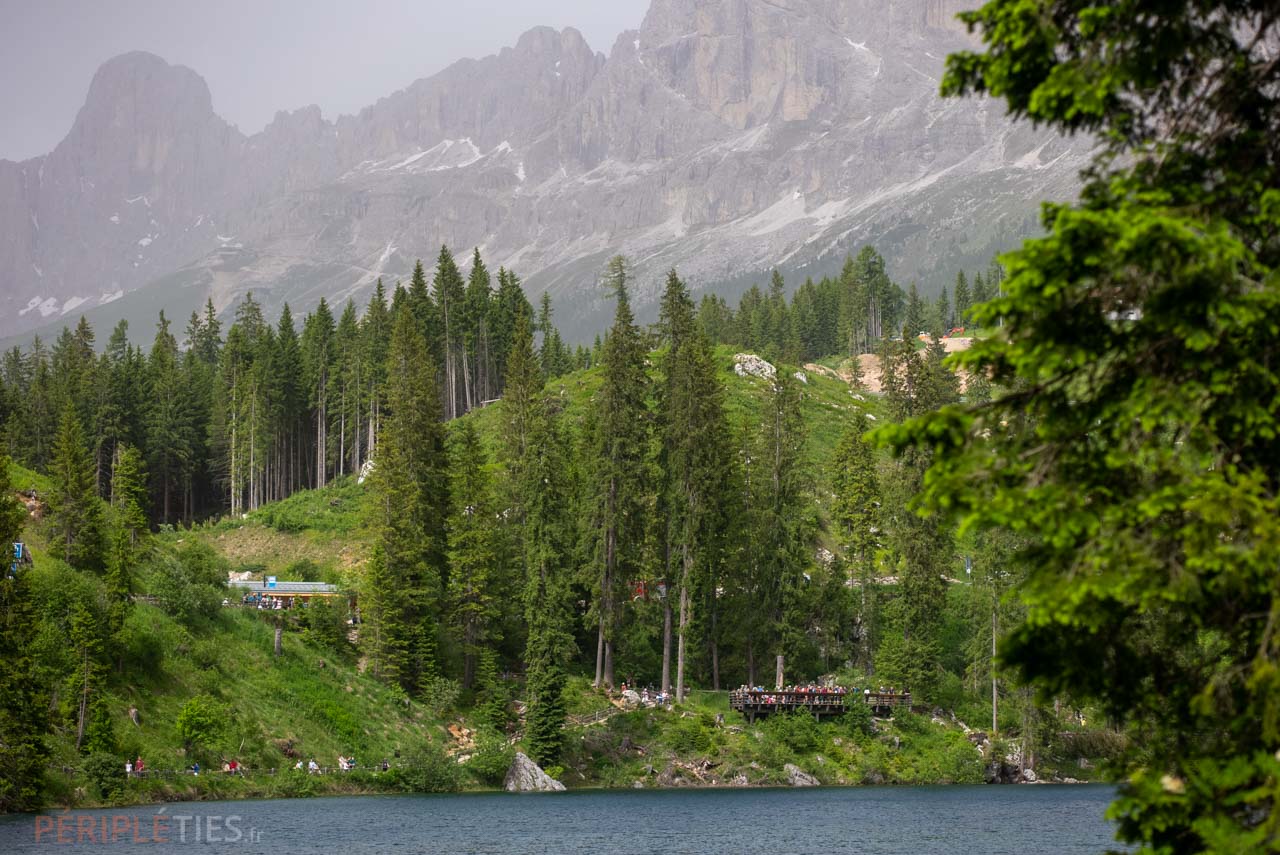
Access: 9 euros for 3 hours in a motorhome / 20 euros overnight.
Seceda via the Passo di Gardena and Passo Sella
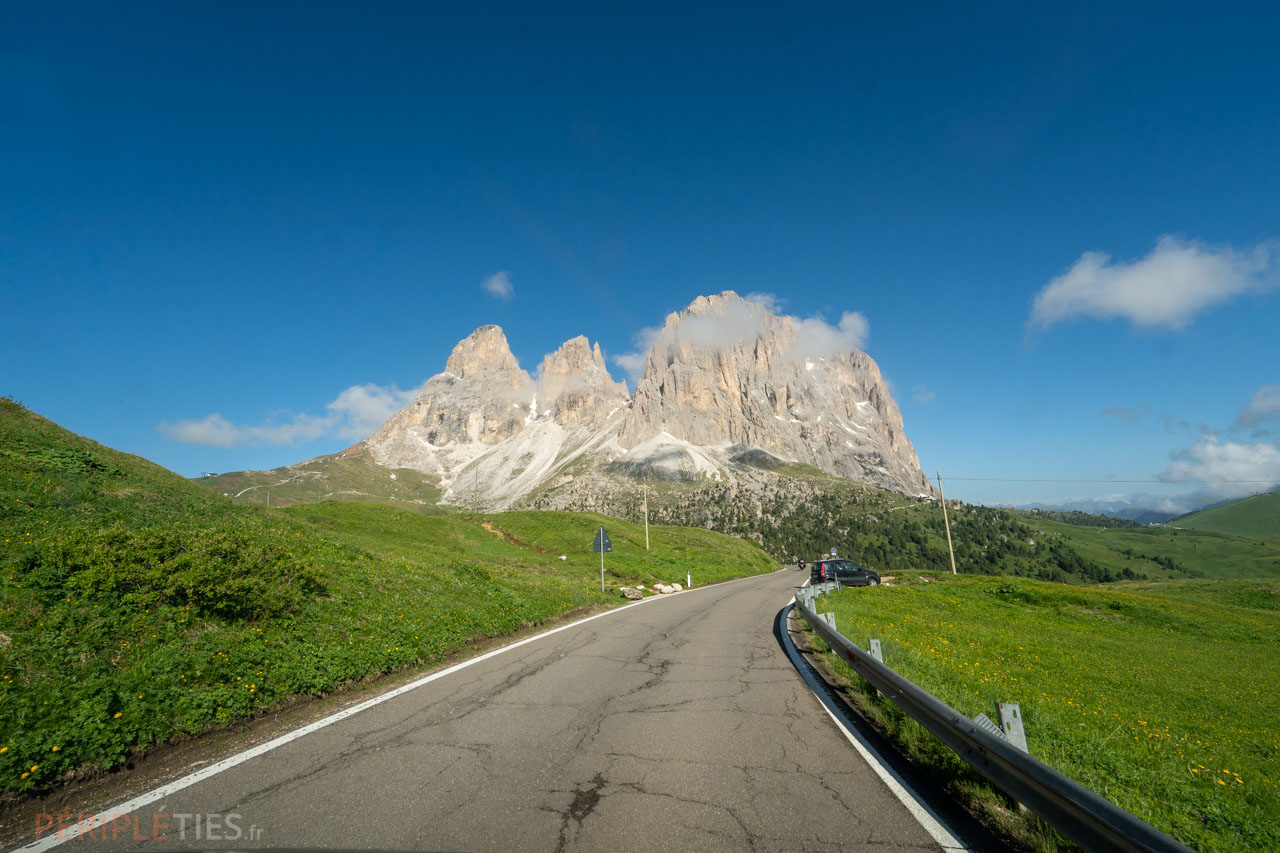
Seceda dramatic ridgelines offer sweeping views over the rocky spires and valleys below. To get there, head to the village of Ortisei via the Passo di Gardena and Passo Sella mountain passes, both spectacular drives.
These roads are ideal for a motorhome or campervan road trip, but be warned: depending on the season they can be heaving with cyclists, vans, motorbikes and coaches.
Along the way, Val Gardena serves up superb hiking. Ortisei is then the starting point for the Seceda cable car, which takes you straight up to the summit.
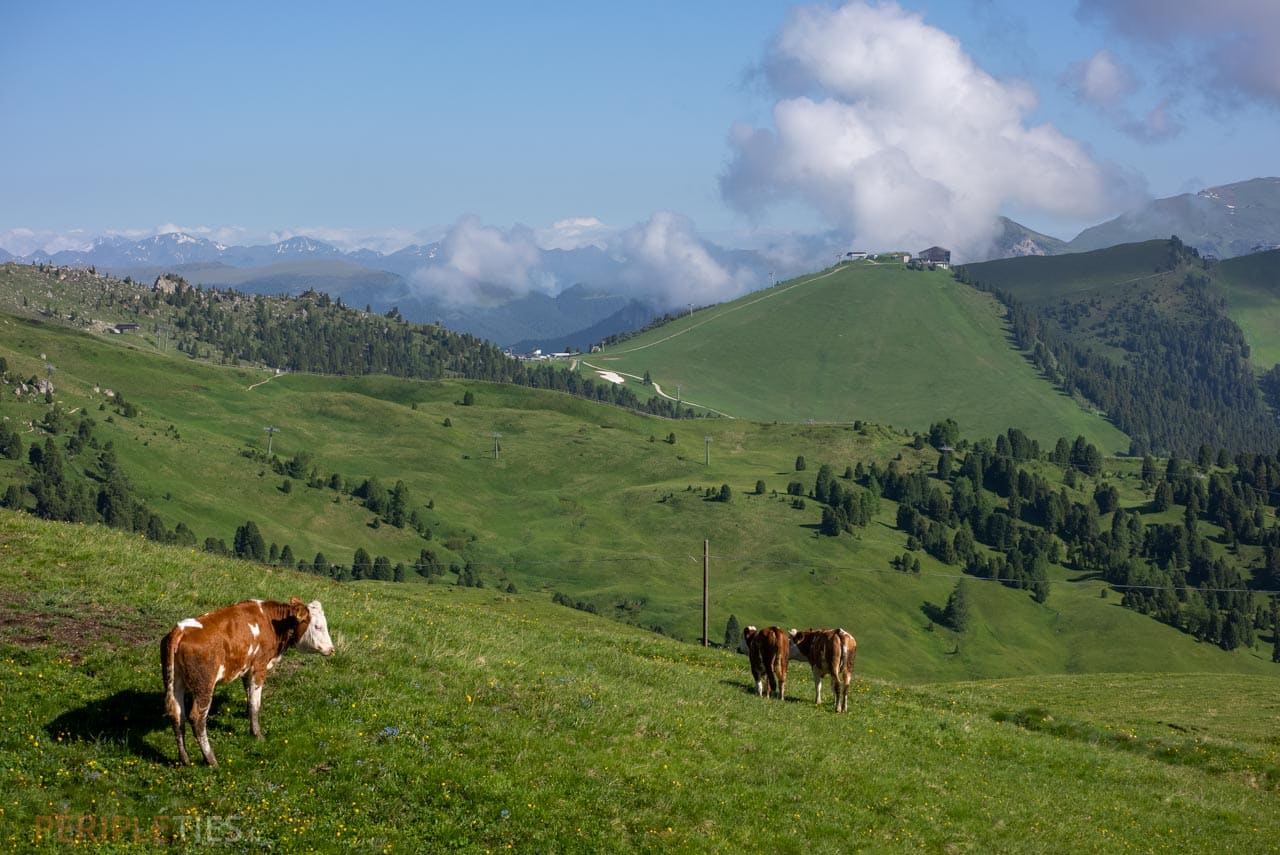
Alpe di Siusi (Seiser Alm)
Alpe di Siusi is another paradise for hikers and mountain bikers, with open views of the surrounding peaks, notably the Sassolungo massif.
Go early in the day for a peaceful walk or an open-air picnic.
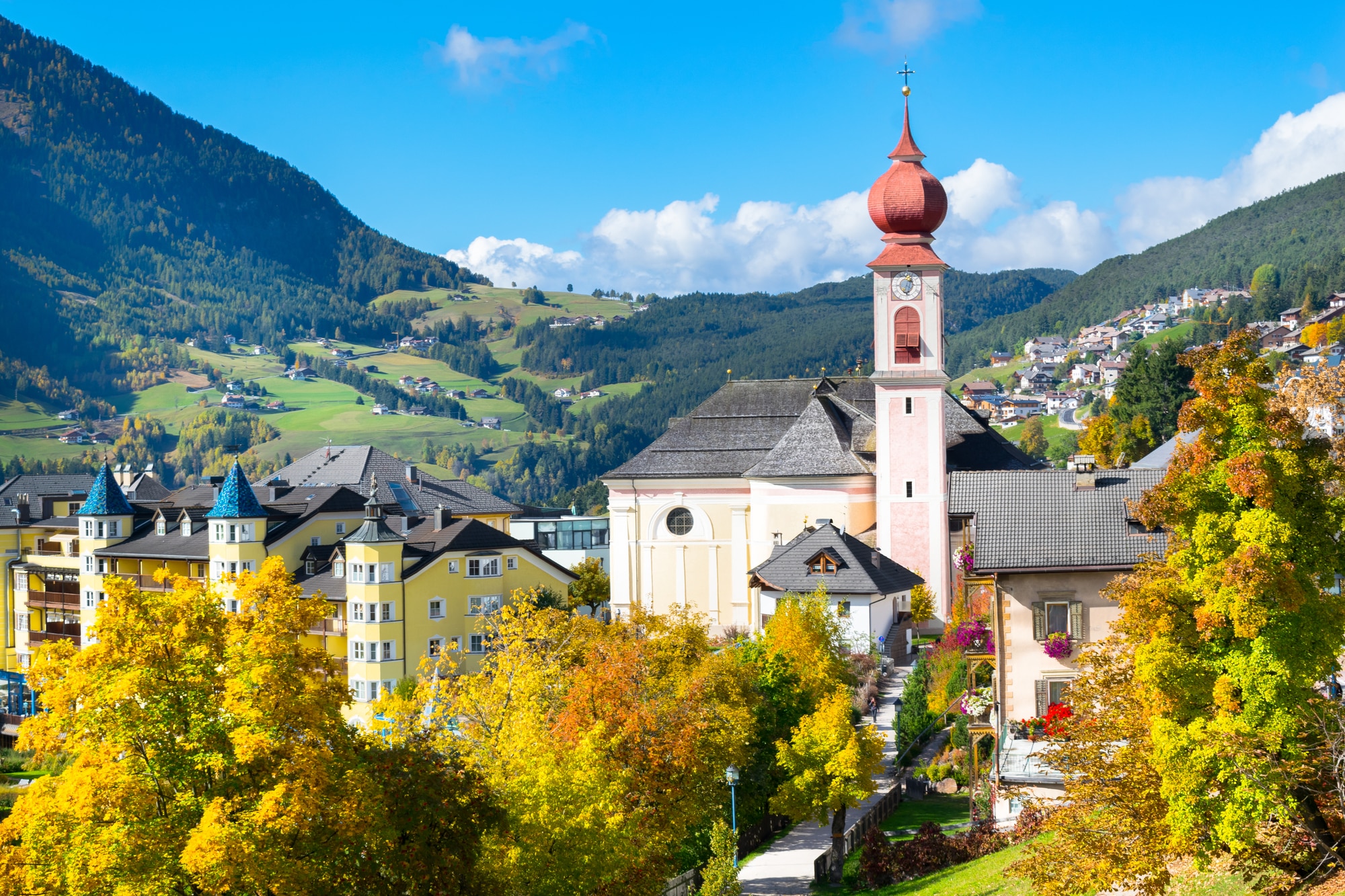
Val di Funes, Santa Maddalena and San Giovanni in Ranui
This picture-perfect valley is dominated by the imposing peaks of the Odle massif.
It is a tranquil place dotted with charming alpine villages, perfect for hikers and lovers of pastoral scenery.
This is where you will find the iconic little churches of San Giovanni in Ranui and Santa Maddalena.
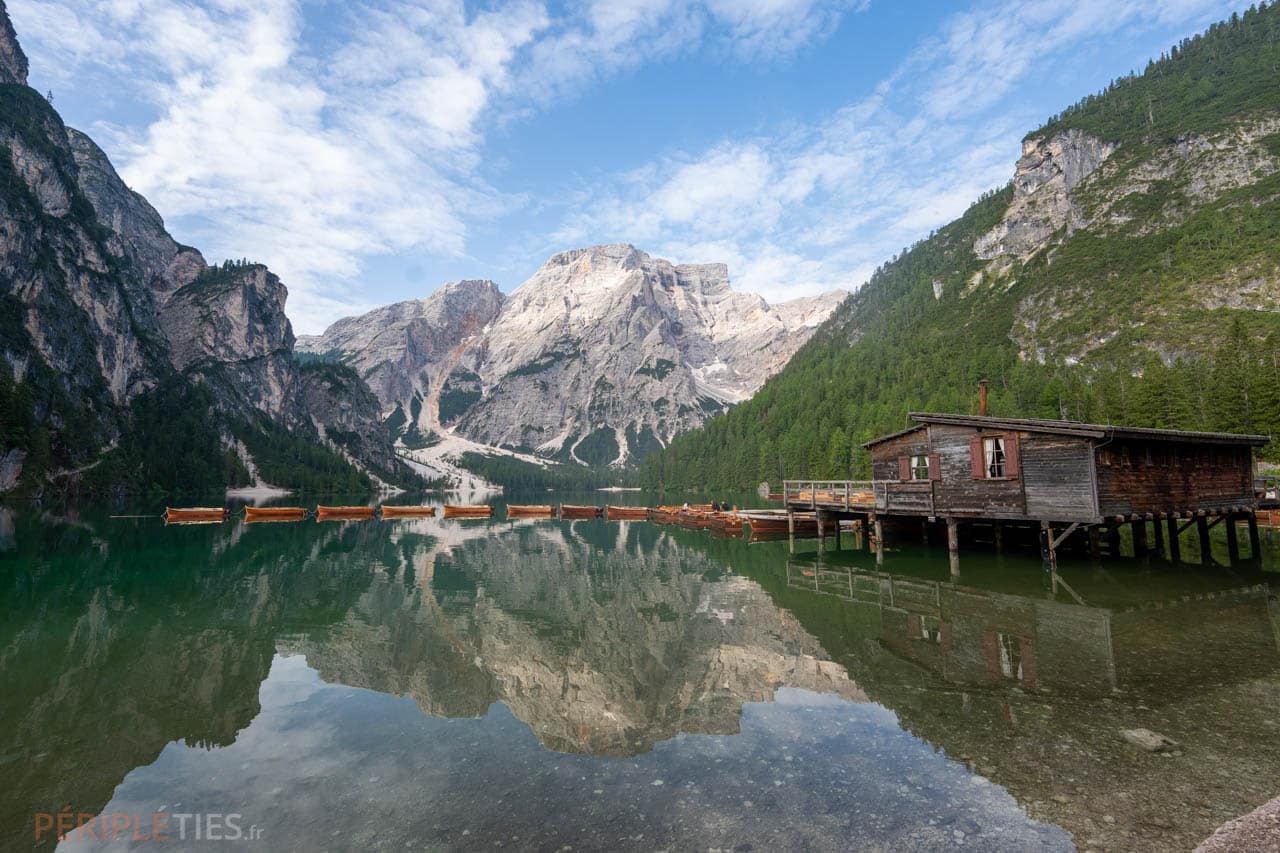
Lago di Braies in the Val Pusteria
Of all the landscapes we explored, this valley charmed us the least, with the exception of the Abbey of Novacella (Kloster Neustift), a beautiful Benedictine abbey (1142) near Bressanone in Alto Adige.
The road leads above all to the iconic Lago di Braies, internet-famous for its turquoise water and mountain backdrop.
Although we would happily file it under spots to avoid, it still delights plenty of visitors. Steer clear of peak hours in high season, because this place gets mobbed.
Access:
- Toll: a toll to reach Lago di Braies usually applies during the tourist season (late May to early October), at 10 euros.
- Parking: the car park right at Lago di Braies costs 35 euros for converted vehicles (regardless of how long you stay). Some park lower down or along the road, 2 km below, or near a small restaurant that charges 5 euros.
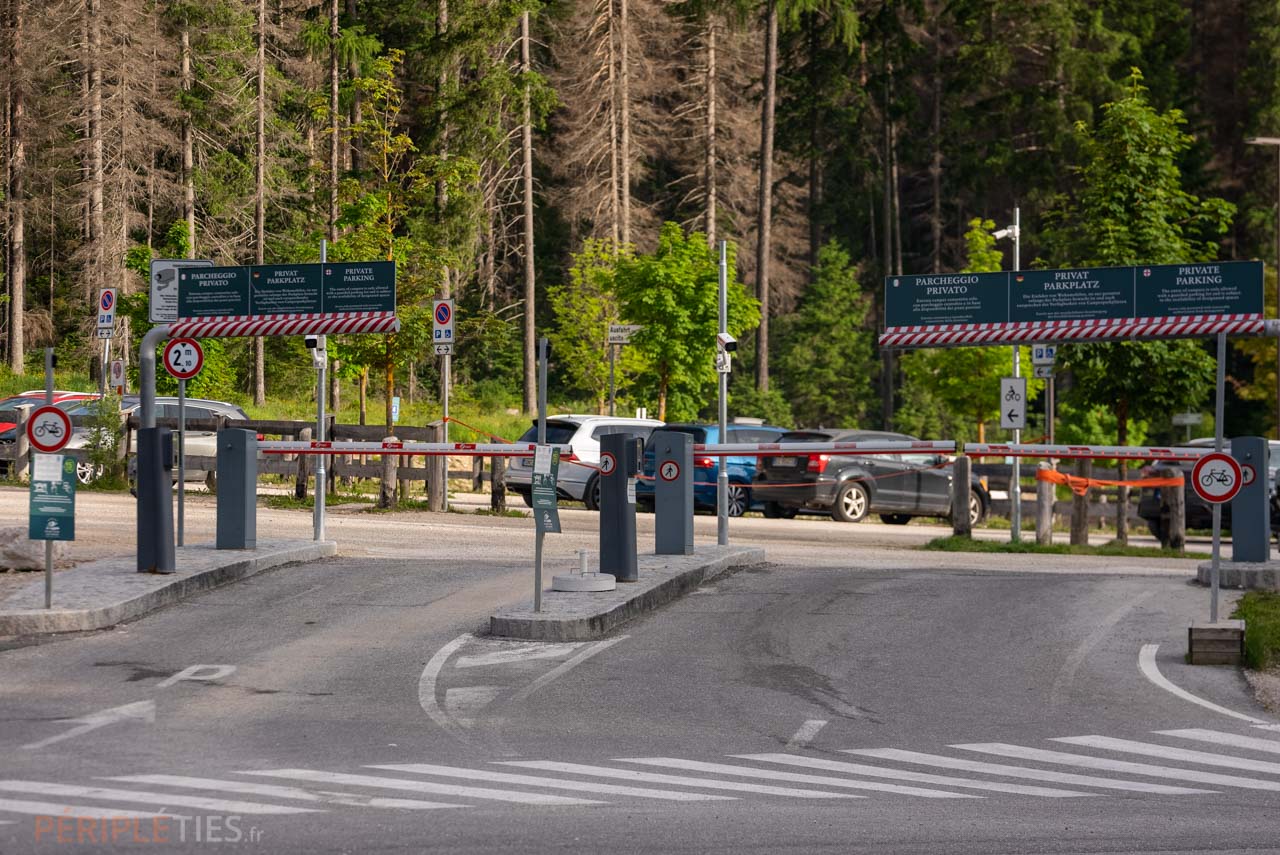
Photo tips for the rowing boats at Lago di Braies
If you want to arrive early in a motorhome to beat the crowds, you cannot enter the car park before 9am (there is a height barrier).
Our tip: park briefly and take turns walking down to the lake. That said, if you are after great photos, the light only reaches the lake around 9 to 10am.
How to photograph the rowing boats at Lago di Braies
For the best shots of Lago di Braies, remember the light only arrives around 9 to 10am, once the sun climbs above the mountains. You can hire the boats to recreate the now-iconic Instagram photo: 15 euros per person for 45 minutes in a shared boat (max 5 people), or 50 euros to have the whole boat to yourselves for the same time.
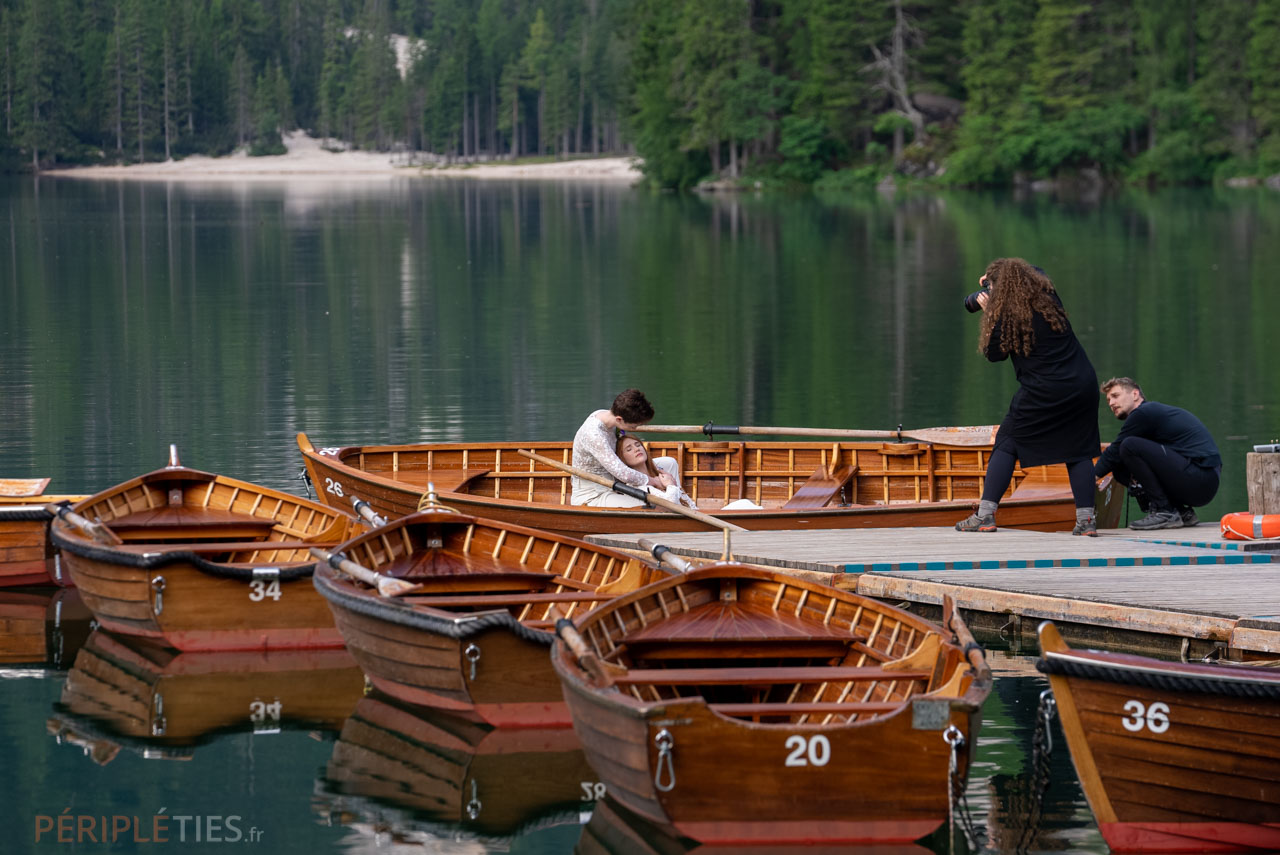
A day in the Dolomites with a pro photographer
Tre Cime di Lavaredo (The Three Peaks)
Probably the most photographed scene in the Dolomites, this site has loop trails circling the Tre Cime with spectacular views of the surrounding peaks, including from a small cave.
It is an extremely busy place, so if you really want to go, arrive early to beat the crowds, with no guarantees.
We gave it a miss, put off by the crowds and the eye-watering prices. Objectively, it is bonkers, is it not? There are plenty of other gorgeous hikes in the Dolomites!
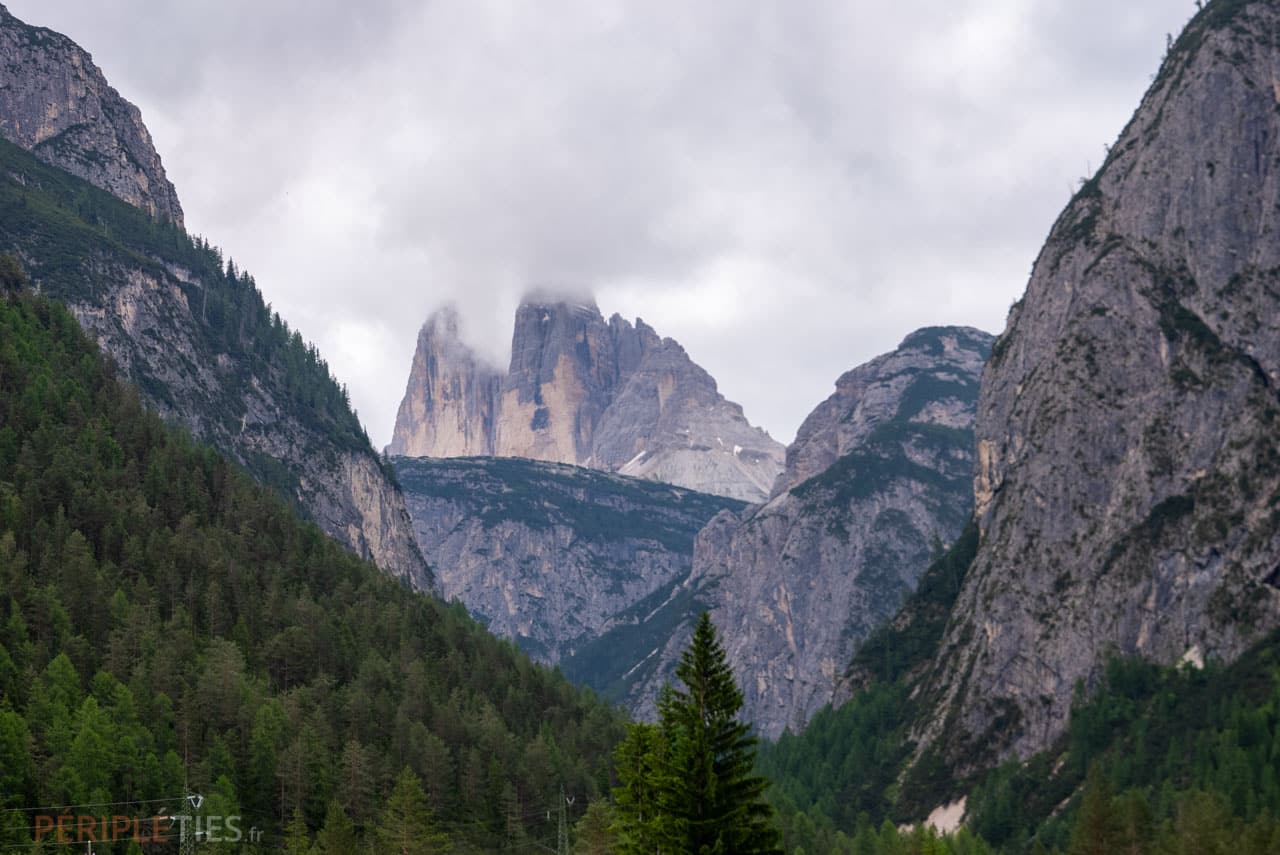
Access: via a toll road to park at the Rifugio Auronzo car park (the road closes once the vehicle quota is reached).
When we were there it was closed by 9:30am. Parking at the top costs 45 euros for 12 hours. You can sleep there, but beware: stay past 12 hours and you pay the fee again, so 90 euros in total.
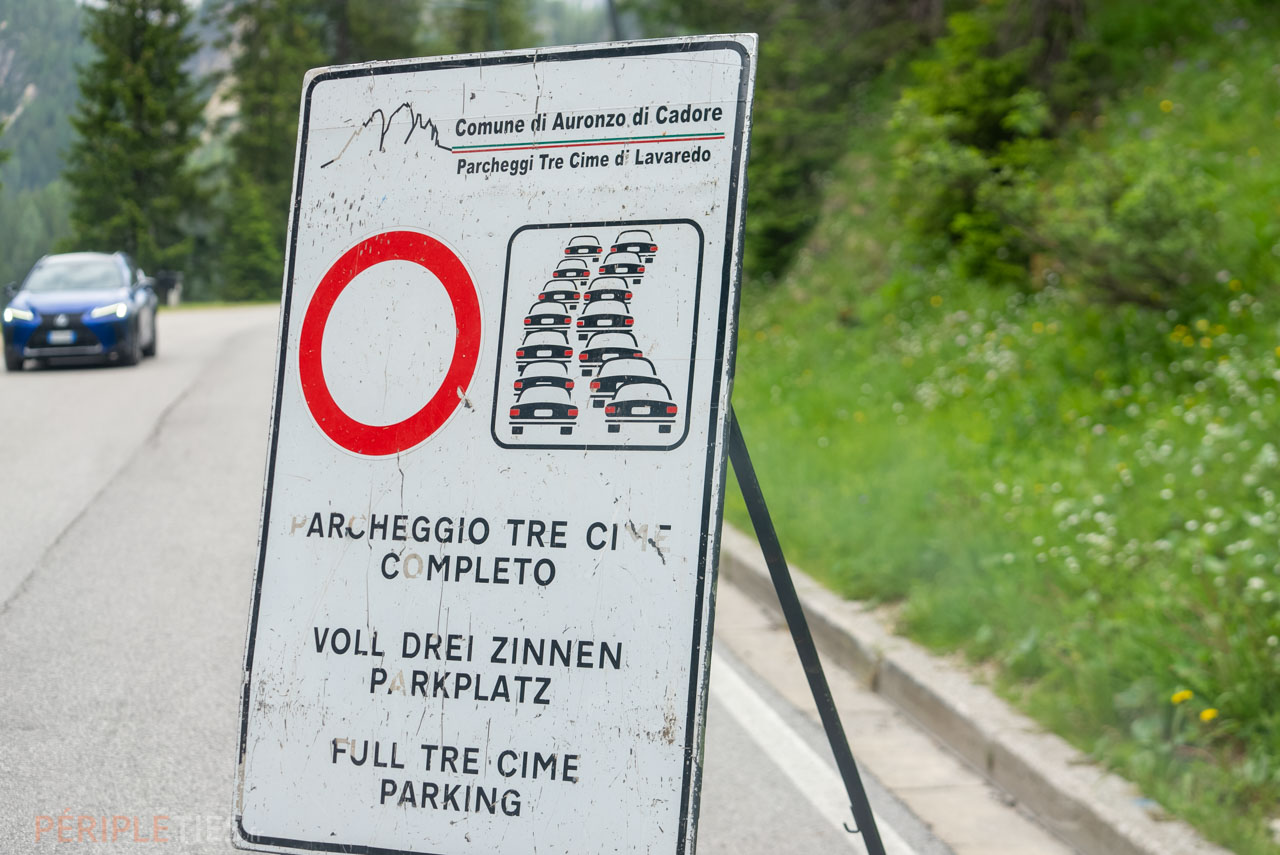
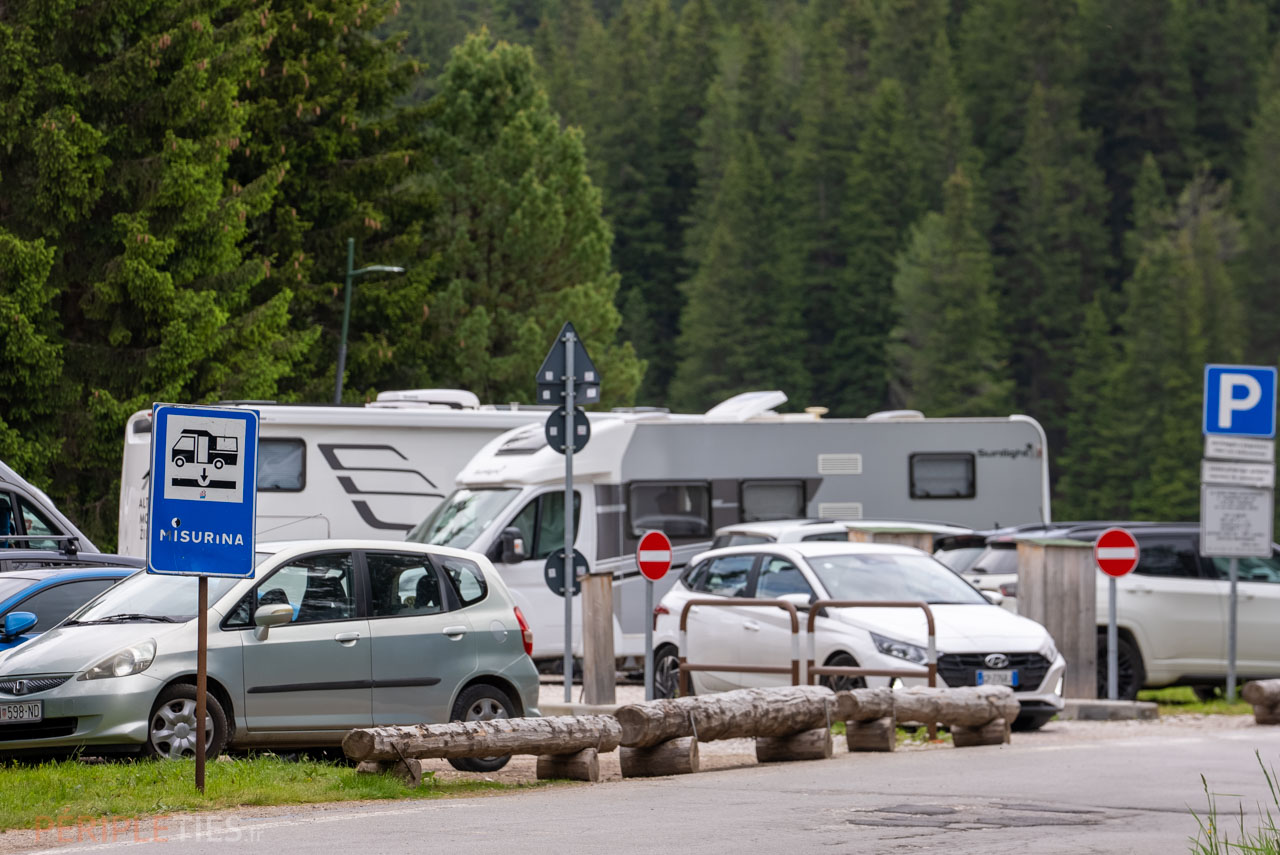
There is a parking area for vans and motorhomes before the pass road at 24 euros per 24 hours, but it is often full. The campsite opposite usually has space, though.
Lago di Sorapis
This mountain lake is renowned for its unreal lagoon-blue colour, but it too is very popular. To enjoy it, set off early, around 6am, for the climb up.
The hike in is demanding but doable. We decided against it after reading unanimous comments: the scenery is stunning, but you need to start at 5:30am to avoid hiking in single file!
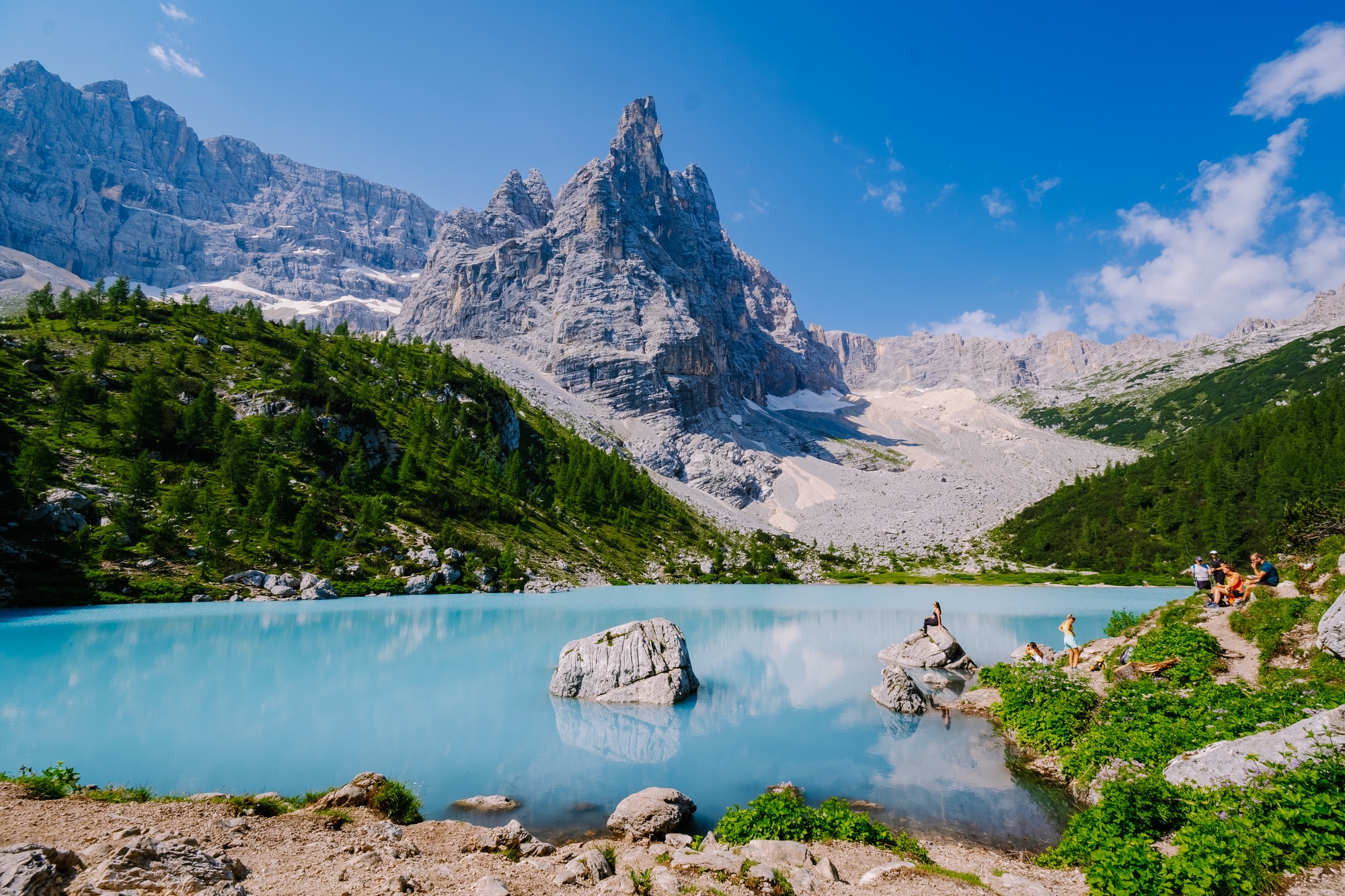
The rock towers of Cinque Torri
Near Cortina d Ampezzo, Cinque Torri is a cluster of five rock towers that create a striking landscape.
The walks around these formations offer breathtaking Dolomite views and access to First World War remains.
It is also a favourite with climbers, making it a must if you enjoy scrambling and rock climbing.
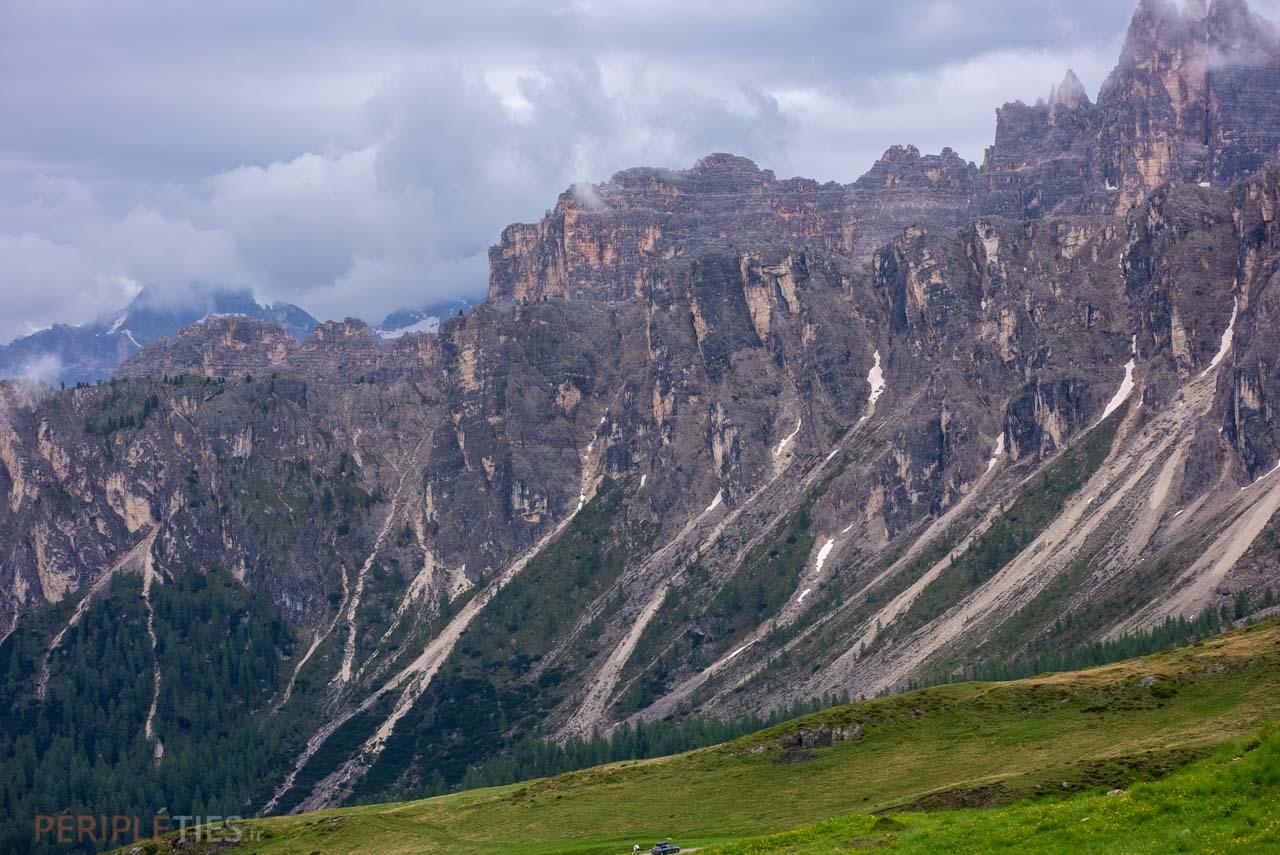
Marmolada and its ski resort
At 3,343 m (10,968 ft), Marmolada is the highest peak in the Dolomites.
It is a ski resort that is also home to the Marmolada glacier, reachable by cable car, with jaw-dropping views. There is a First World War museum up on the glacier too.
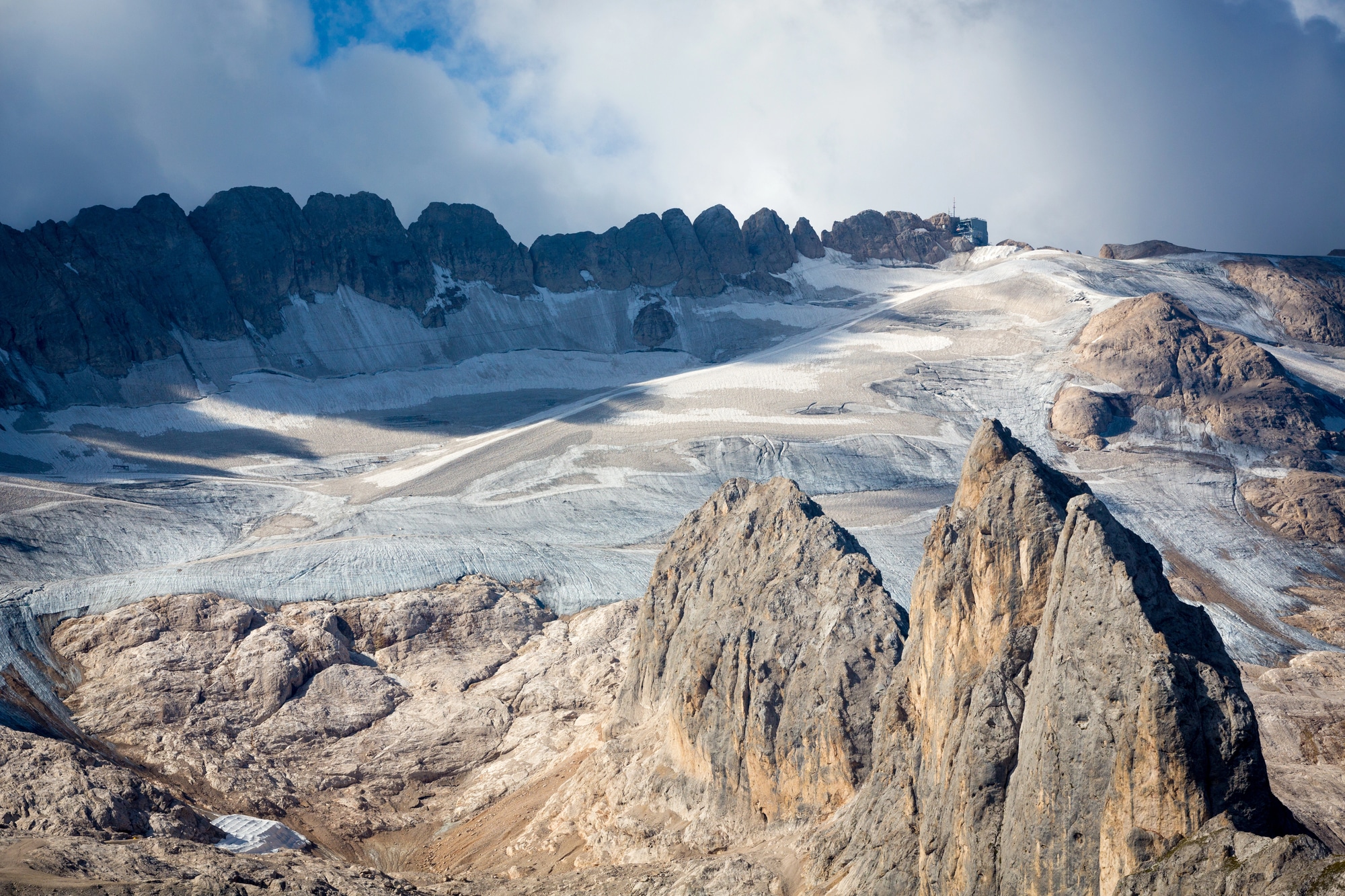
Marmolada summit cable-car fares (2024):
Return from Malga Ciapela (1,450 m) to Punta Rocca (3,265 m): 38 euros per person. Return from Malga Ciapela to Serauta (2,950 m): 32 euros per person. Return from Serauta to Punta Rocca: 18 euros per person.
What we would recommend
We visited a few of the headline spots, like Lago di Carezza, and the area around the Tre Cime, more towards the Sexten valley. We made a brief early-morning stop at Lago di Braies to dodge the crowds.
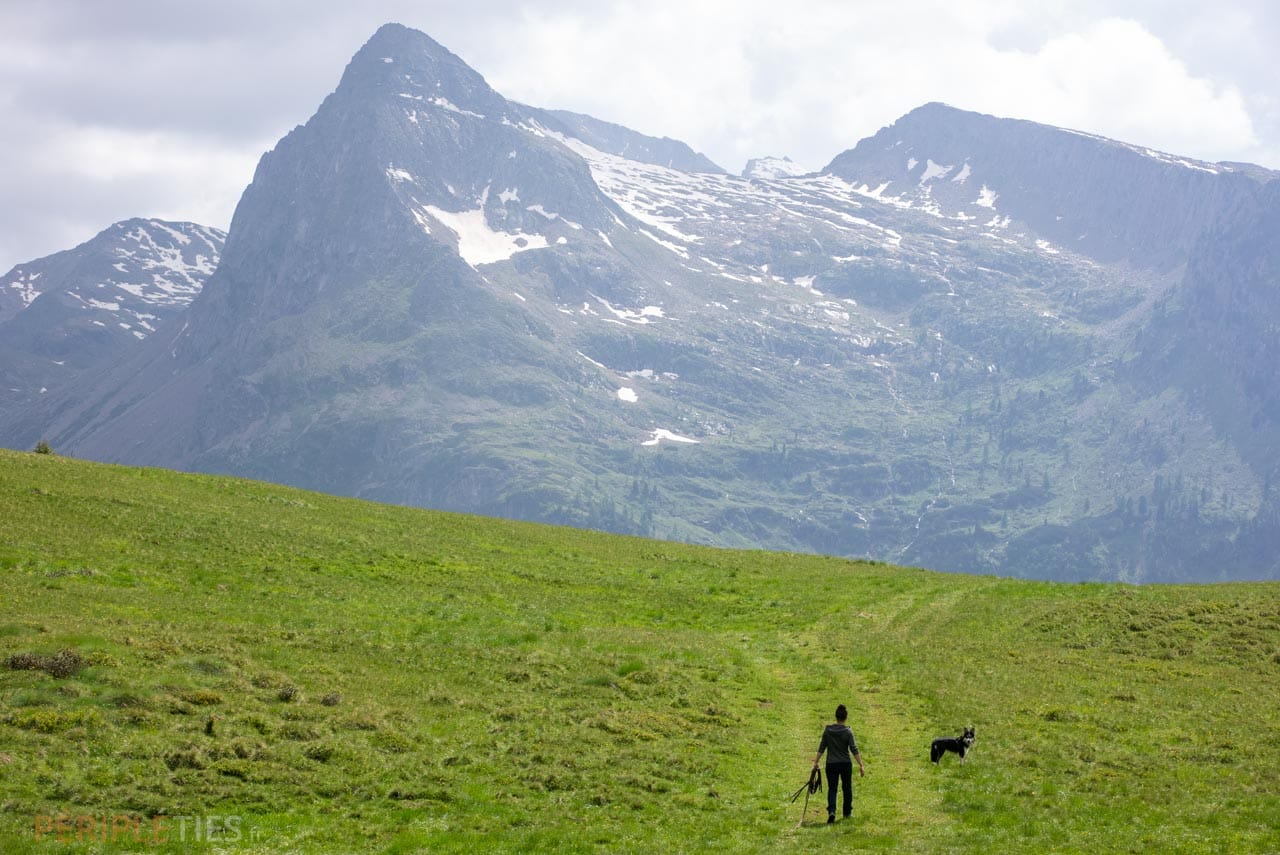
The Paneveggio and Belluno Dolomites parks
We then ventured into the Paneveggio - Pale di San Martino Nature Park to find some peaceful corners.
Here too there are hikes, perhaps a little further from the heart of the range, but the scenery is every bit as beautiful.
We also regret not having more time to explore the Belluno Dolomites National Park, which is probably much more our kind of place.
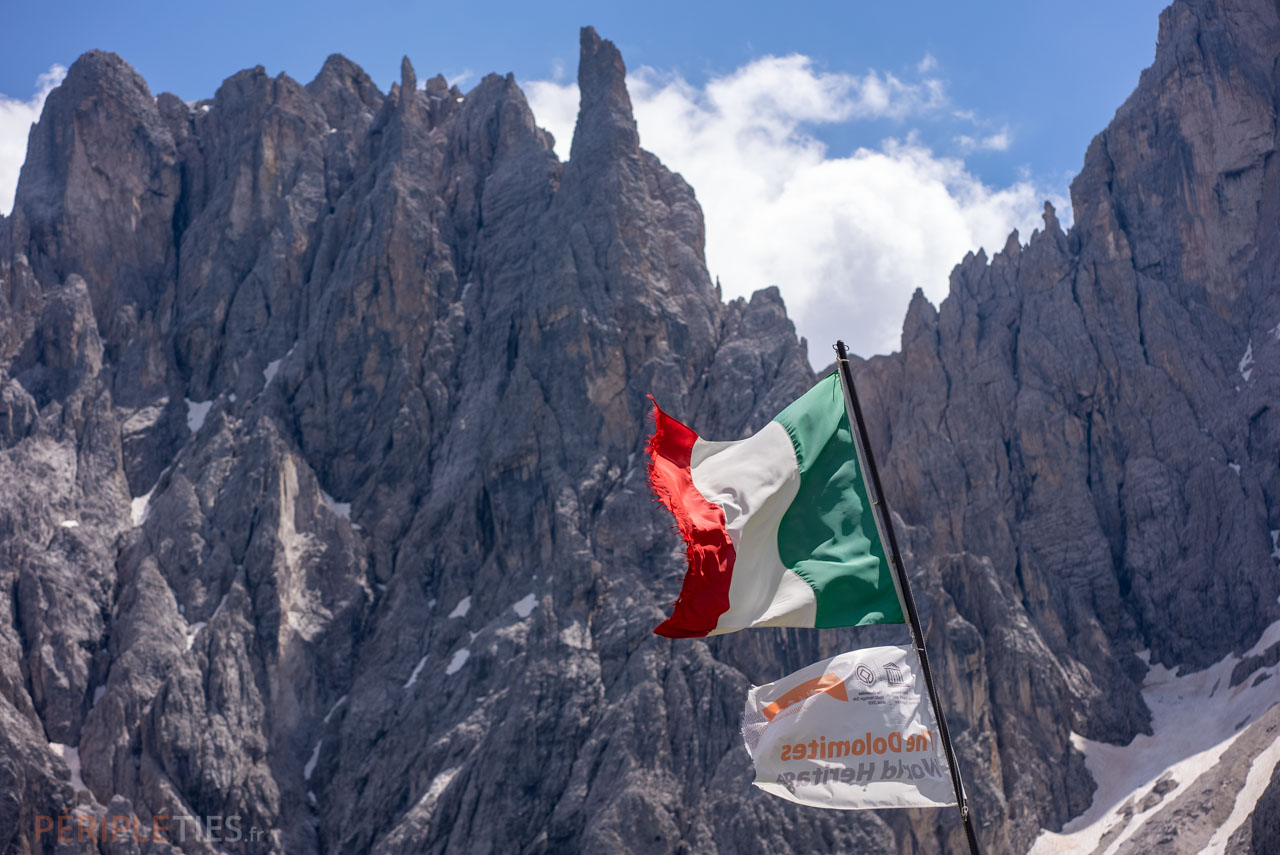
Again, as a rule, do not limit yourself to the hikes plastered all over Instagram, everyone does those!
(Yes, we are at war with Instagram. Well, mainly the accounts with millions of followers that throw fragile sites to the masses, places never built to handle thousands of people a day, until they are completely spoiled.)
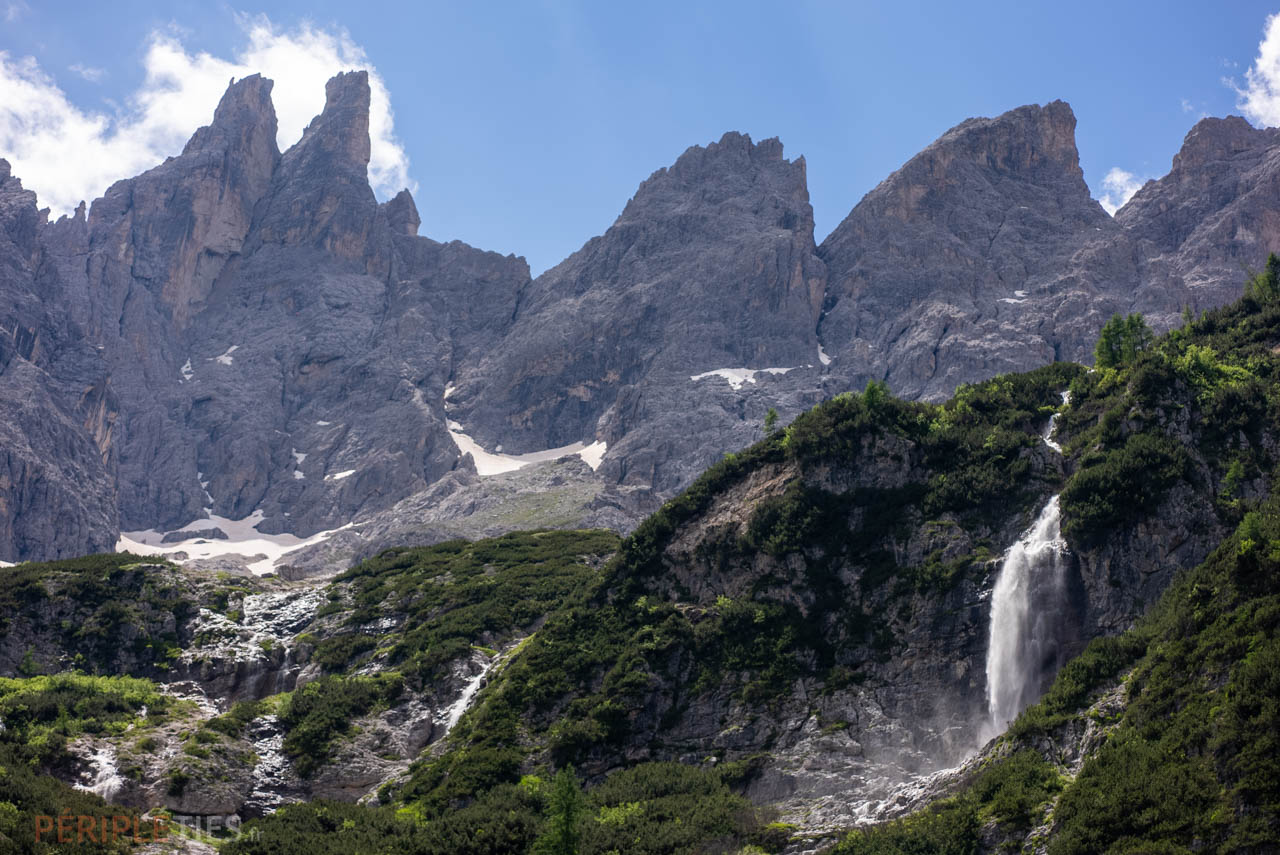
It effectively forces destinations to filter visitors by the size of their wallet, and we find that genuinely depressing.
Once more, we would encourage you to explore the alternatives yourself using hiking apps like AllTrails, or ask at the local tourist offices.
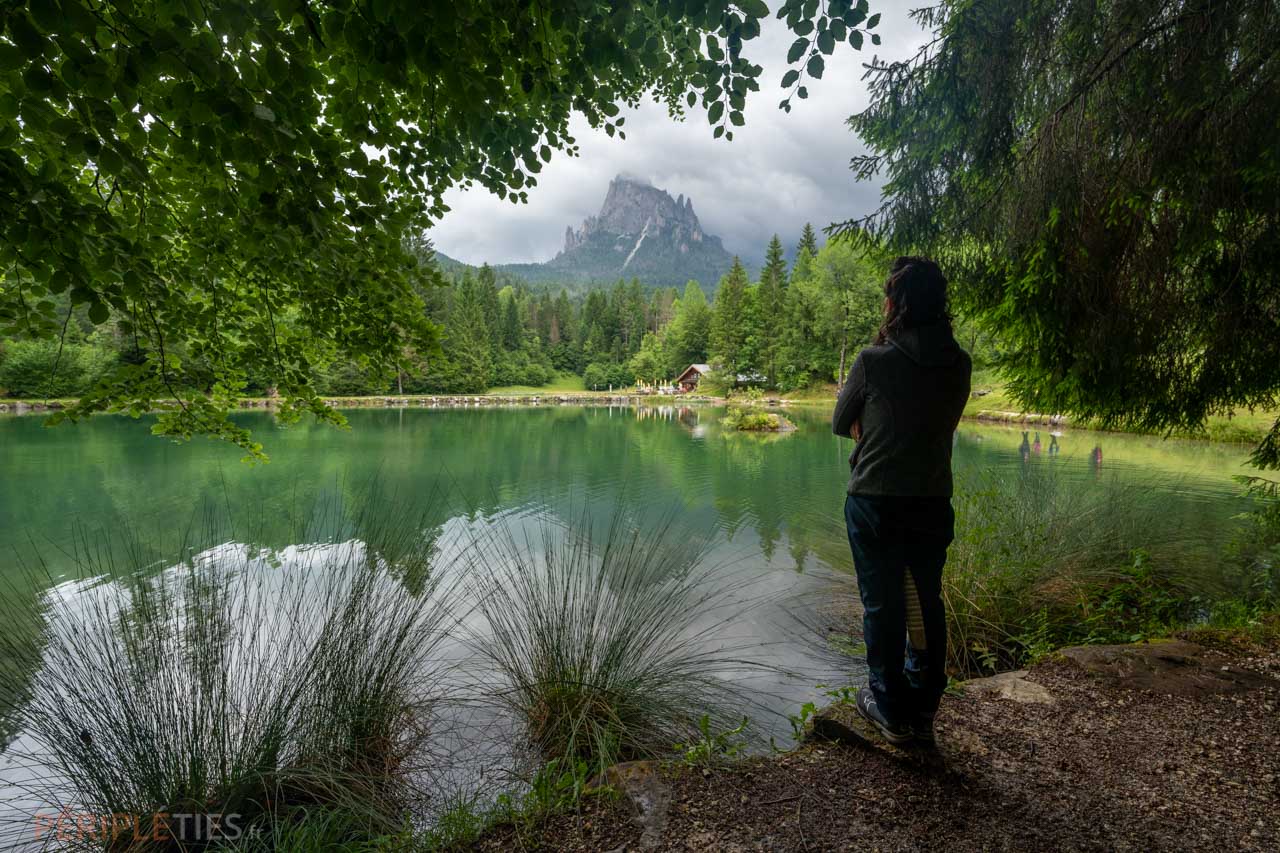
Where to base yourself for the Dolomites
We wonder whether booking a few well-placed campsites in different areas, then exploring each nature park from there, is not the best way to truly enjoy your stay.
Because if you have read this far, you will have gathered that constantly moving on each day in a destination like this has its limits (though, again, it depends on the season).
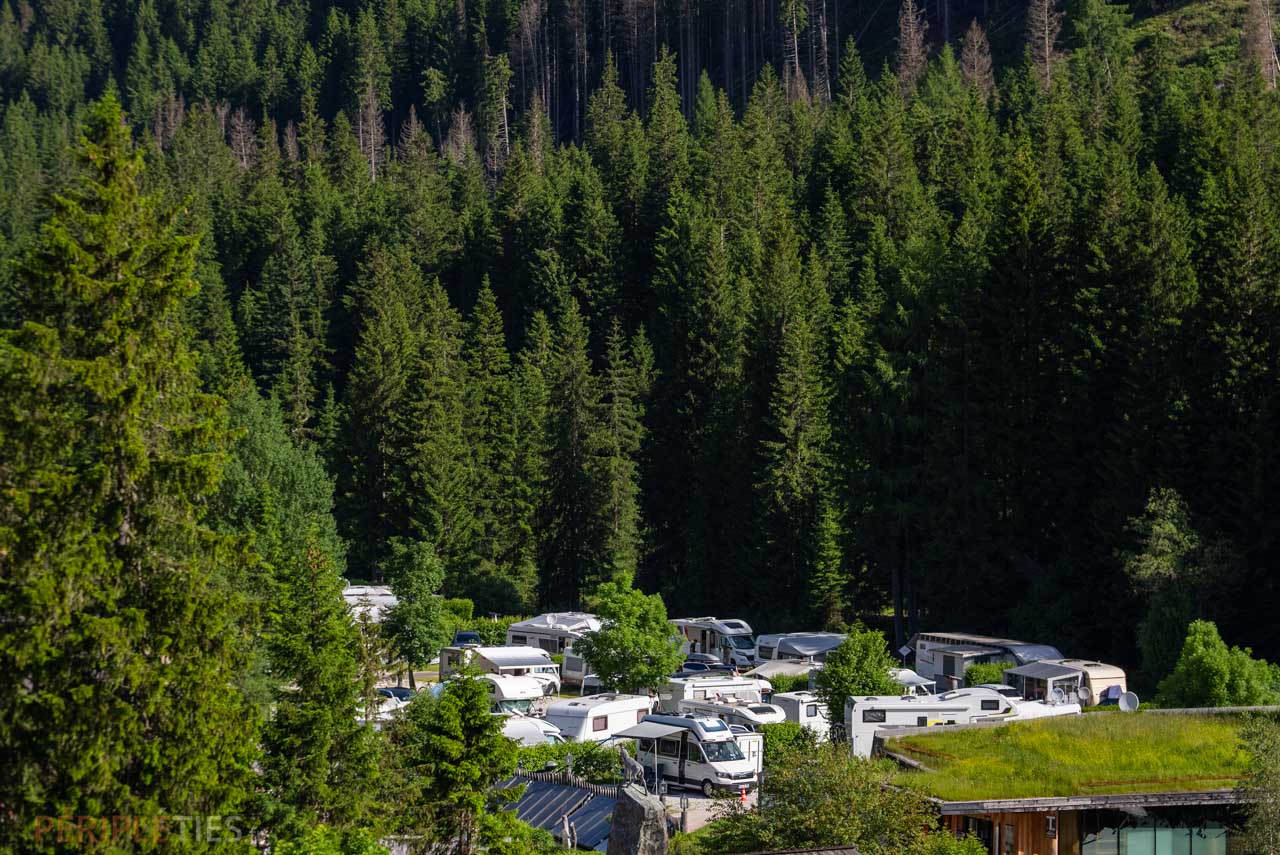
An expensive destination
Between the awkward parking restrictions, daytime parking fees, the cost of campsites and aires, and the price of cable cars to reach the trails, your road trip can quickly become stressful as well as expensive.
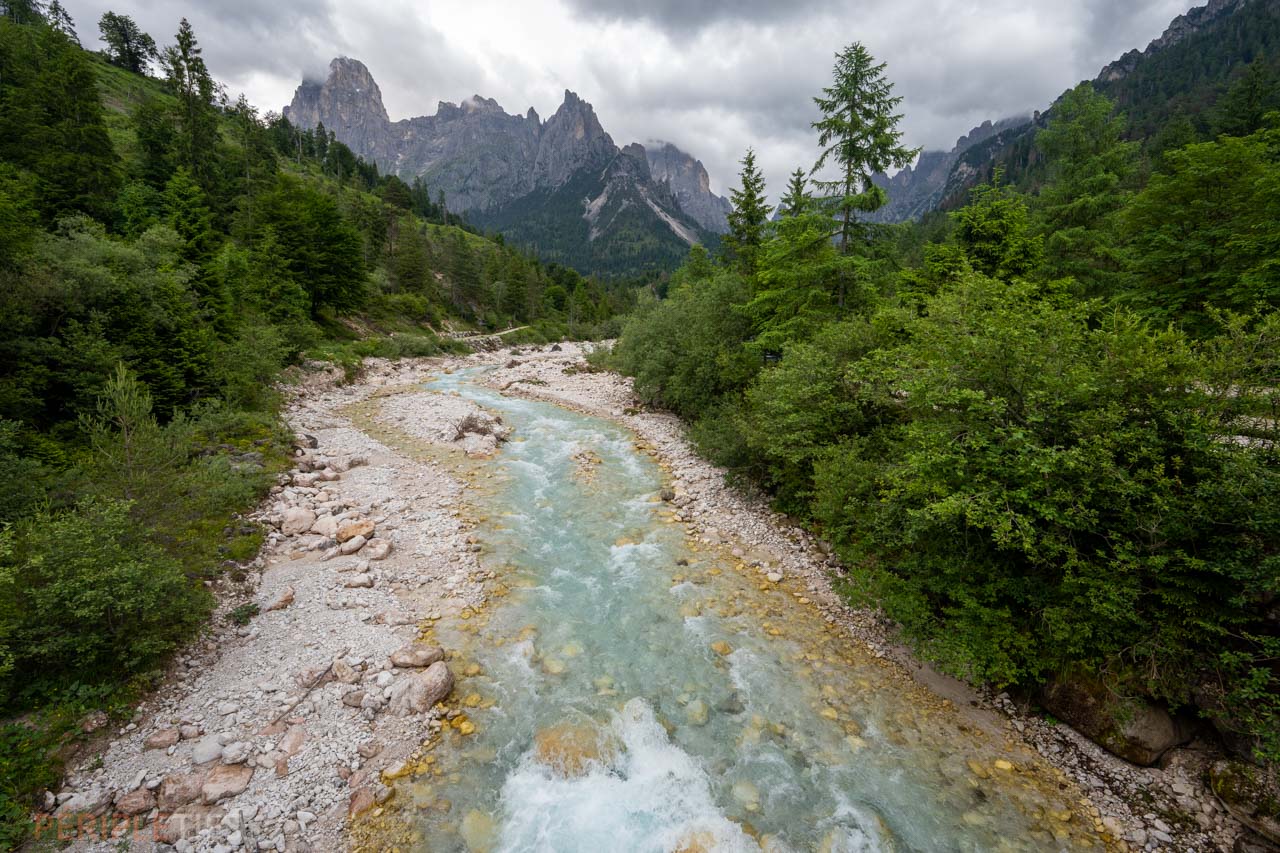
When we stayed at Caravan Park Sexten we were able to settle in and take our time. We hiked right next to the site and even got bus tickets to the trailheads (which we could not use, because our dog Ulysse did not have his muzzle!).
FAQ: other questions about the Dolomites
Can you visit the Dolomites with children?
No problem at all, even on a road trip. Like any tourist destination, the activities, hikes, campsites and swimming spots can be adapted for kids.
While there are plenty of hikes and treks for experienced walkers, there are also lots of easy walks suitable for children, plus cable cars to reach the trailheads with minimal effort.
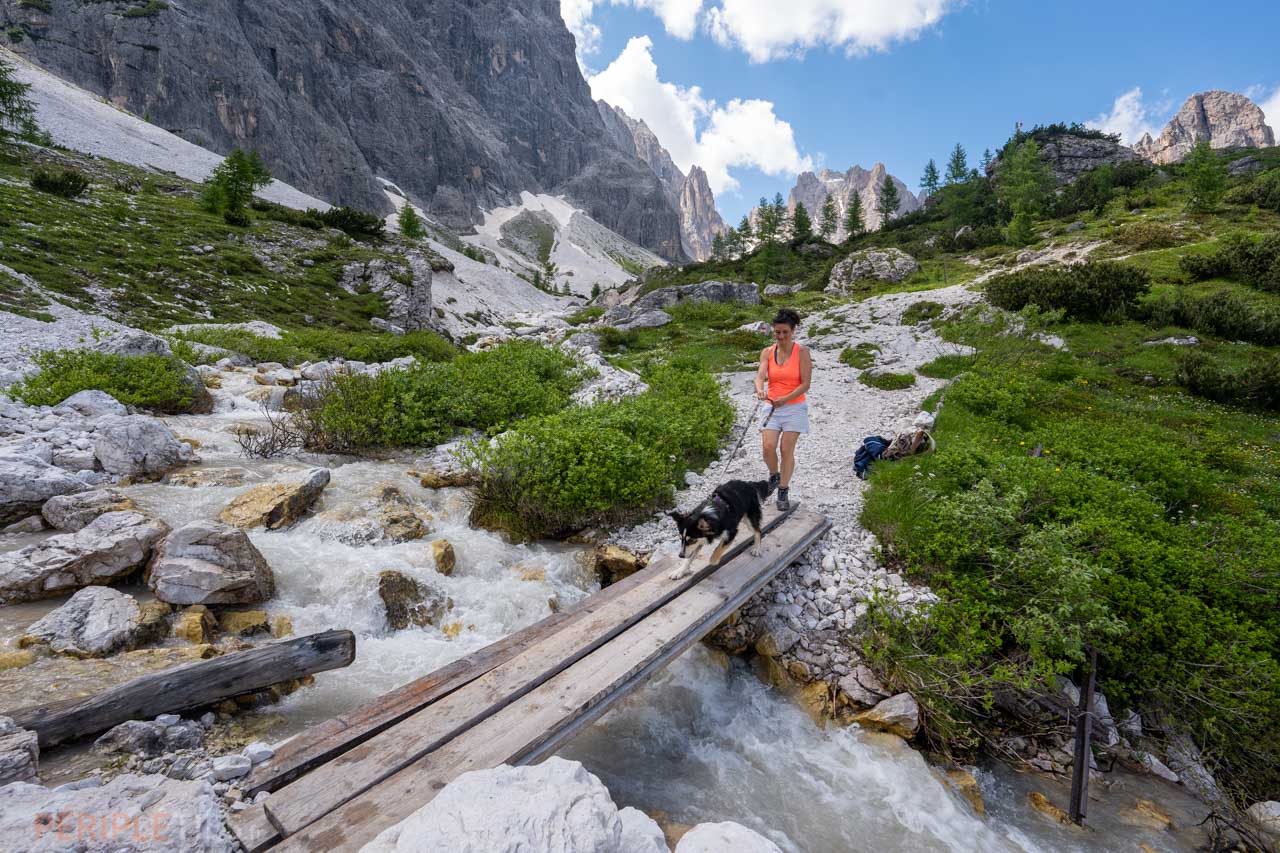
And the Dolomites with a dog?
This was our first trip abroad with our dog Ulysse, and travelling with him in the Dolomites was no trouble. You sometimes need to keep them on a lead, but there are plenty of places where they can run free, provided you keep them under control.
Dogs are even allowed on the cable cars, but they pay too (around 5 euros on average). Several campsites are dog-friendly, though again expect a surcharge: we paid 8 euros a day at the Sexten site! Yes, really.
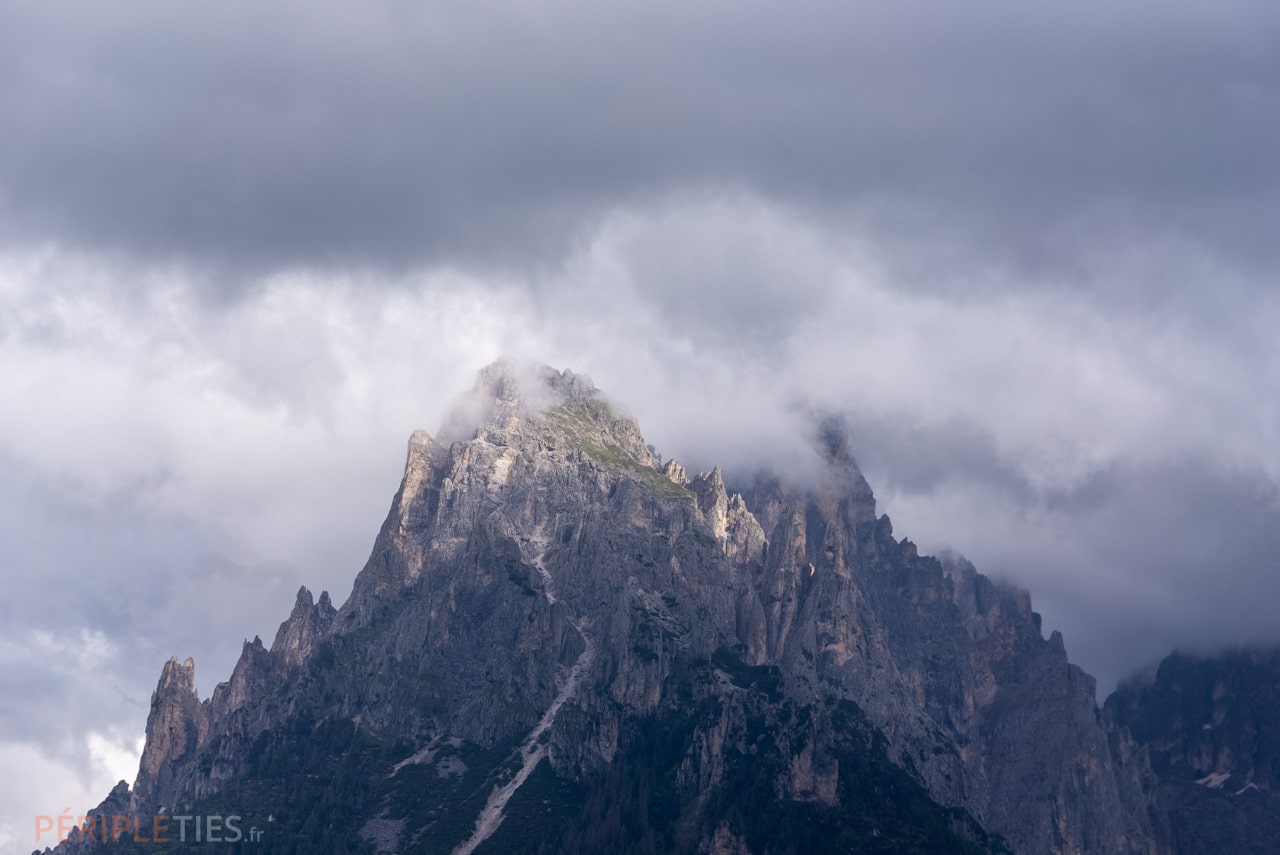
The Dolomites will stay with us as a beautiful memory, even if we found this kind of road trip came with its constraints.
The time of year you travel plays a genuinely crucial role in the experience, true of many destinations but especially this one.
Have you been to the Dolomites? Share your take in the comments and watch our YouTube video below!