
When EcoFlow launched the Delta 3 series, we asked ourselves the same question a lot of nomadic travellers did: another new line-up, is it really that different from the Delta 2 we knew so well, and above all, which one should you choose between the Delta 3 Classic (US) / Delta 3 Classic (UK), the Delta 3 Plus (US) / Delta 3 Plus (UK) and the Delta 3 Max (US) / Delta 3 Max (UK)? Three names, three prices, and on paper, spec sheets that look very much alike.
We spent several weeks using these power stations in the field — in our van, wild camping, working remotely on the road, and as a home backup. The goal of this article is to help you see clearly, without drowning you in jargon. You'll understand exactly what separates each model, who each one is for, and above all you'll avoid buying a station that's oversized (or, the other way round, too small) for how you'll actually use it.
A quick heads-up: we're not going to tell you the Delta 3 is "the best portable power station on the market". No product is perfect. Each model has its strengths, its limits and its ideal use cases. We'll simply give you our real field feedback, explain the technical nuances in plain English, and let you make your own choice.
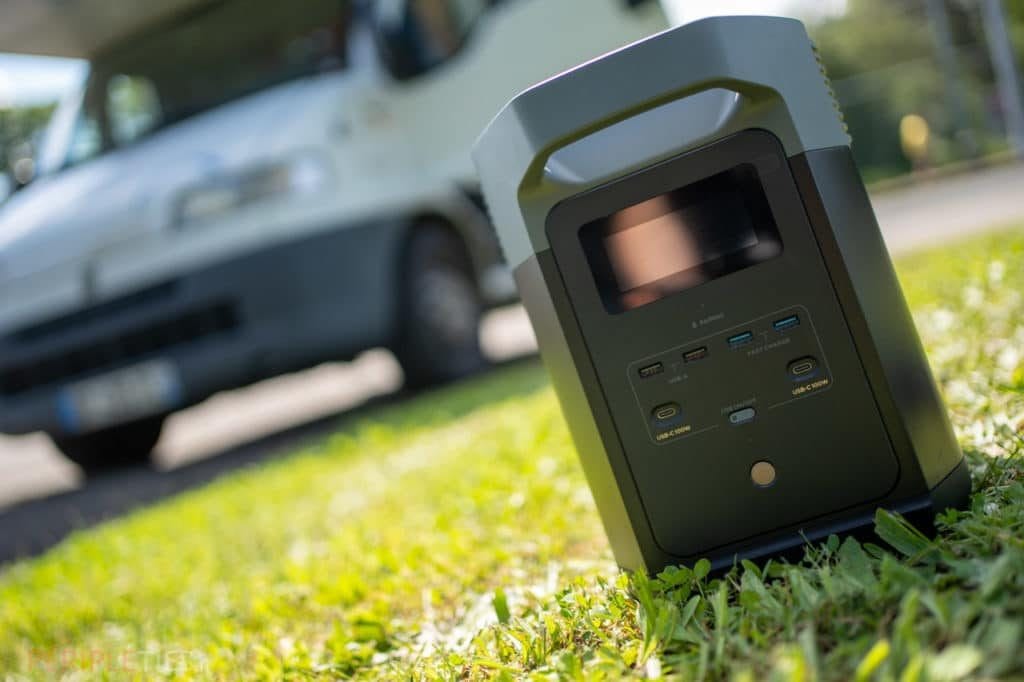
The EcoFlow Delta 3 range in two minutes: what you need to know
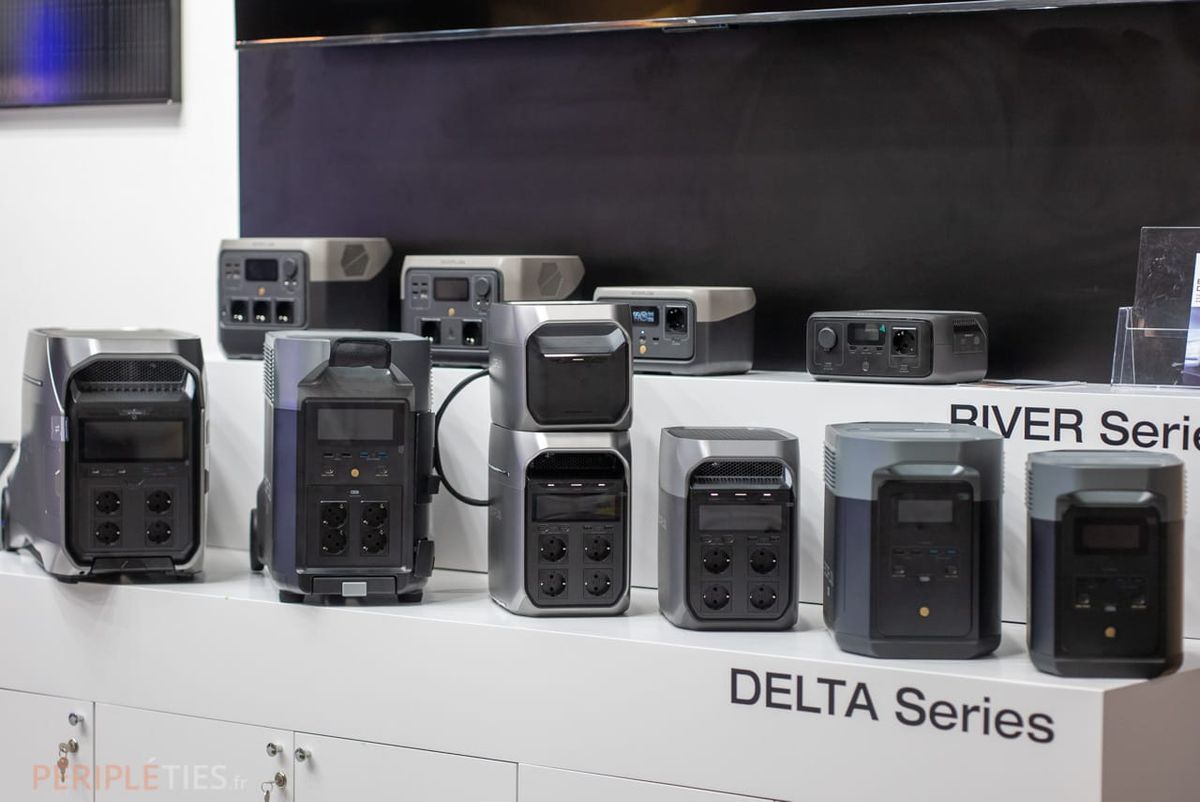
Before diving into each model, let's set the scene. EcoFlow built the Delta 3 series around a simple idea: gradually replace the ageing Delta 2 line with stations that recharge faster, run more quietly and are more modular. The whole Delta 3 family shares a common technology base called X-Core 3.0, which bundles four in-house technologies: X-Stream for ultra-fast charging, X-Boost to temporarily exceed the rated output, X-Quiet for quiet operation, and X-Guard for safety (shock resistance, water resistance, thermal protection).
Every Delta 3 uses the same battery chemistry: LFP (LiFePO4), better known as lithium iron phosphate. It's currently the most mature chemistry for this kind of product, because it offers a long lifespan (several thousand cycles), excellent thermal stability and a near-zero risk of thermal runaway. In practice, across the Delta 3 range, EcoFlow rates the cells at around 4,000 cycles before capacity drops to 80% of its original value — roughly 10 years of regular use for an average user. It's one of the best figures on the market in 2026.
Four main models make up the Delta 3 range today:
- The Delta 3 Classic (US) / Delta 3 Classic (UK) — the entry model in the series, around 1 kWh of capacity.
- The Delta 3 Plus (US) / Delta 3 Plus (UK) — which shares the same capacity but adds higher-end features (faster solar charging, a beefed-up UPS, more powerful USB-C).
- The Delta 3 Max (US) / Delta 3 Max (UK) — which breaks the 2 kWh barrier and climbs to 2,400 W of continuous output.
- The Delta Pro 3 (US) / Delta Pro 3 (UK) — the flagship, pushing up to 4 kWh of capacity and 4,000 W of output, designed for long off-grid stays or serious home backup.
Above these, EcoFlow also offers the Delta 3 Ultra Plus and the Delta Pro Ultra X, which move into the "stationary home storage" category and fall outside the scope of this article. We chose to focus on the four models above, which cover the bulk of nomadic and semi-nomadic uses. Those are the ones we spent real time with in real conditions.
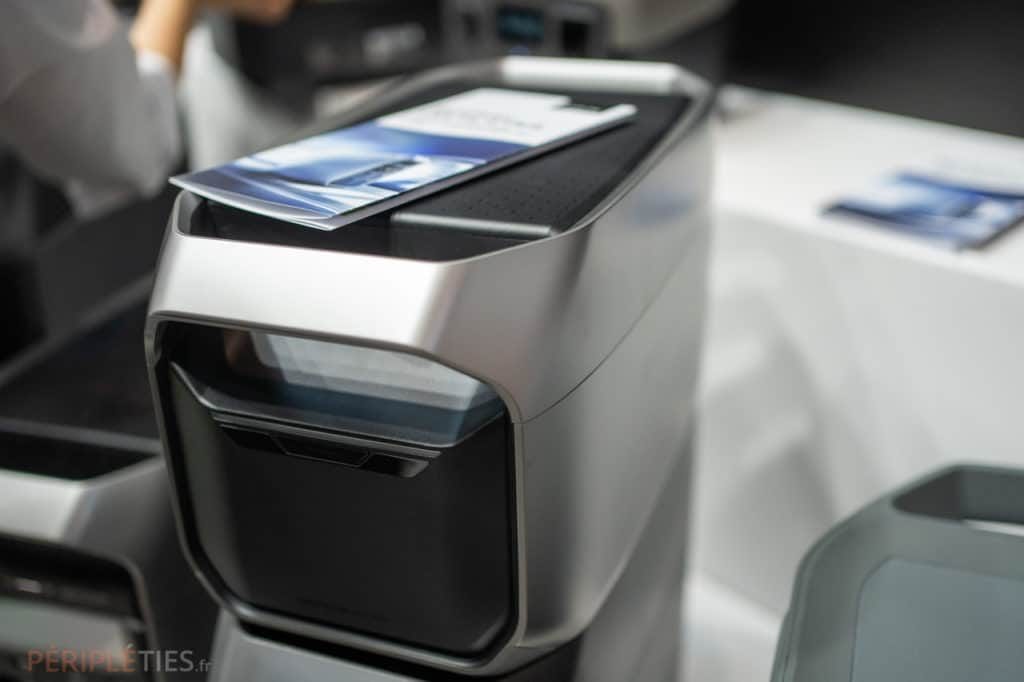
EcoFlow Delta 3 Classic: the balanced all-rounder under €1,000
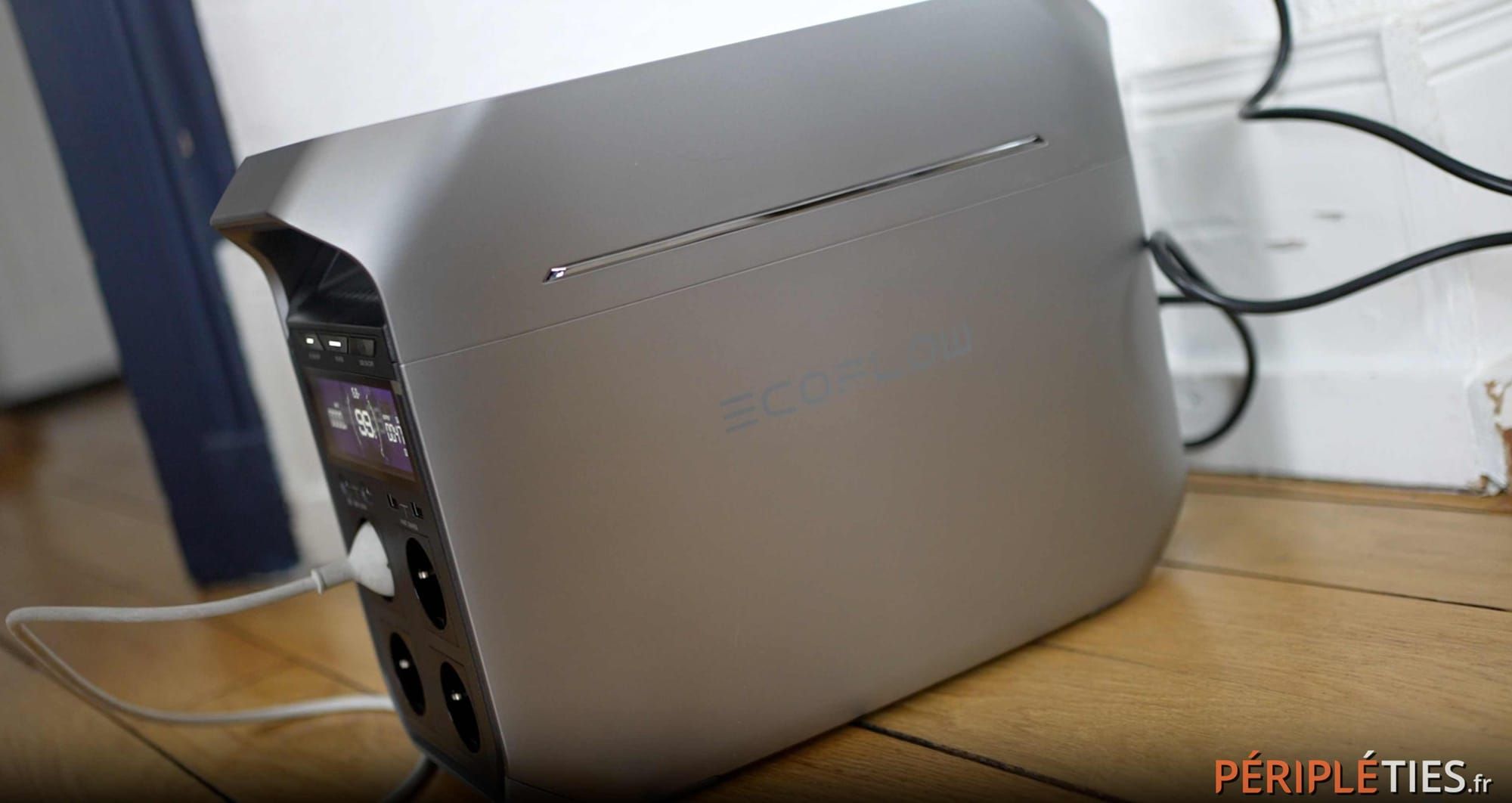
The Delta 3 Classic (US) / Delta 3 Classic (UK) is probably the model that will suit the most people. It's the "do-it-all" station of the range — the one you slot into a boot, take away for the weekend, drop into a campervan without it swallowing all your space, and keep at home as an electrical backup too.
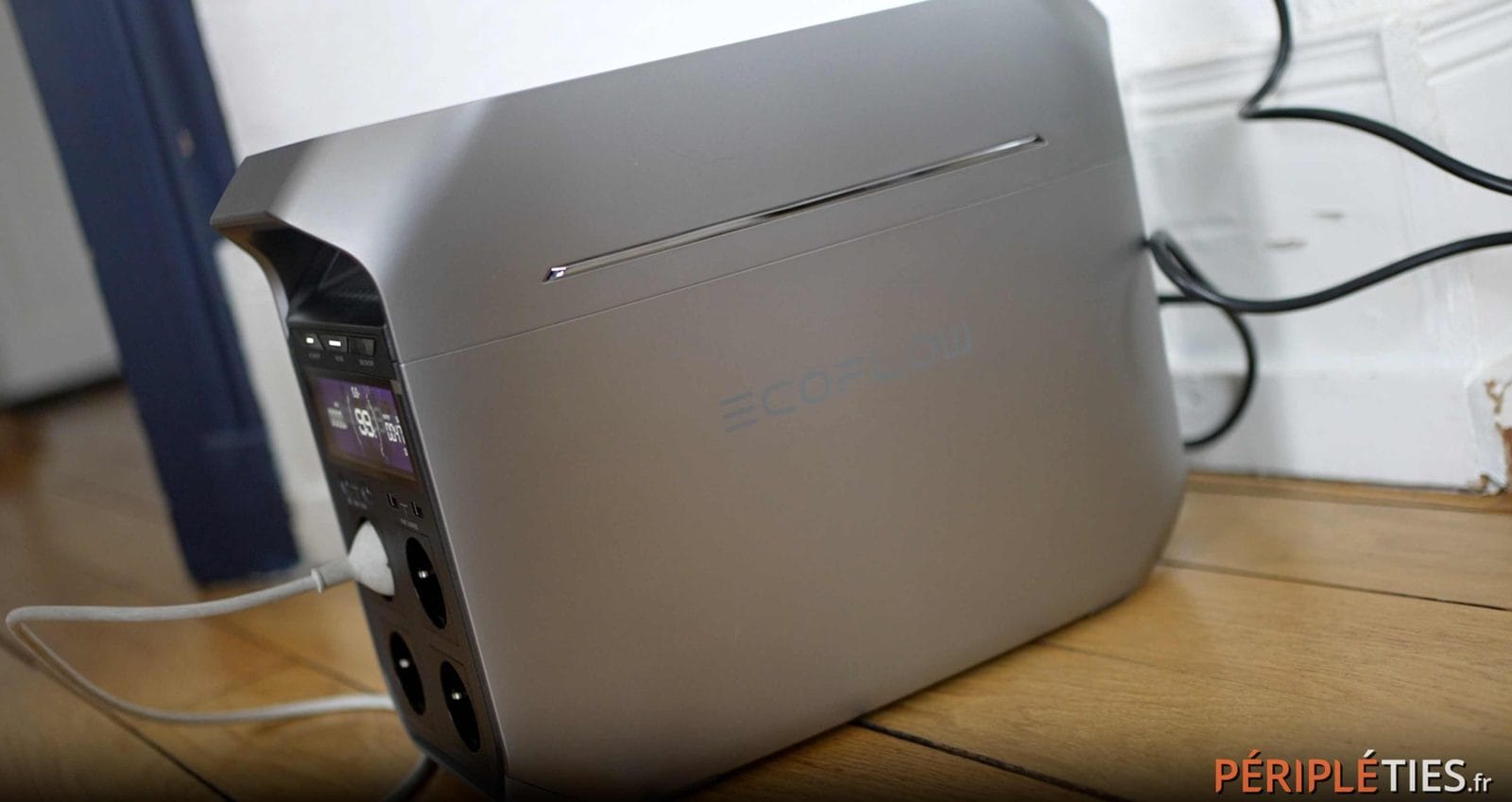
Capacity, output and real-world runtime
The Delta 3 Classic packs 1,024 Wh of usable capacity. To give you an idea, that's enough to run a campervan fridge for roughly 12 to 20 hours depending on its draw, recharge a drone, a camera and a laptop several times over a weekend, or power a compressor cool box through a full night. In short, it's a comfortable capacity for short to medium trips — provided you can recharge in parallel (solar, 12V socket, alternator or AC mains).
On the output side, the Delta 3 Classic delivers 1,800 W continuous from its AC sockets, with a 3,600 W surge and an X-Boost mode that climbs to 2,400 W for power-hungry appliances. In plain terms, you can run almost all household appliances: kettle, coffee machine, (compact) microwave, hairdryer, a low-power induction hob, a drill, an air fryer, and so on. The only limits are very large resistive appliances (a full-power ceramic hob, an electric space heater above 2,000 W, a big air conditioner), for which you'd want to look at the Delta 3 Max (US) / Delta 3 Max (UK) or Pro 3 instead.
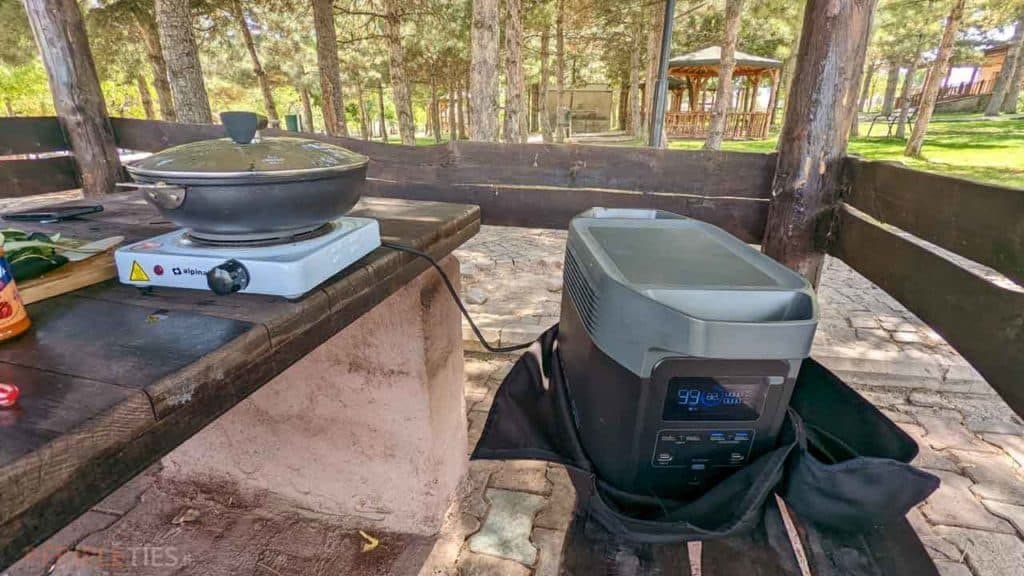
The weight stays reasonable: around 12.5 kg (about 28 lb), which makes it a station you can move on your own without hurting your back. Its compact dimensions (roughly those of a large toolbox) make it easy to tuck under a bench seat, in a van's storage locker or in the boot of a converted car.
Genuinely fast AC charging
This is one of the Delta 3's big selling points, and it's not marketing fluff. Thanks to X-Stream technology, the Classic recharges from 0 to 100% in around 56 minutes from a 230V wall socket (1,500 W maximum AC input). In practice, you plug it in before heading out and it's full by the time you're back from your lunch break. It's a clear improvement over the Delta 2, which took over an hour just to reach 80%.
Out in the field, it genuinely changes things. When you're parked at a motorhome service area — what the French call an "aire", a dedicated stopover with water and waste facilities, often with a 230V hookup — you can top right up in under an hour while you empty the waste water or take a shower. No more planning your recharge over several hours.
The Classic's solar input accepts up to 500 W peak, with a full recharge possible in around 2 hours in good sunlight. That's decent, without being revolutionary — and that's exactly where the Plus takes over (more on that below). On a standard 12V socket, expect more than 8 hours for a full charge, which is only useful as a top-up. With EcoFlow's 800 W alternator charger (US) / alternator charger (UK) (sold as an accessory), the Classic recharges in around 1 hr 20 while you drive, which is genuinely handy for travellers who spend time on the road.
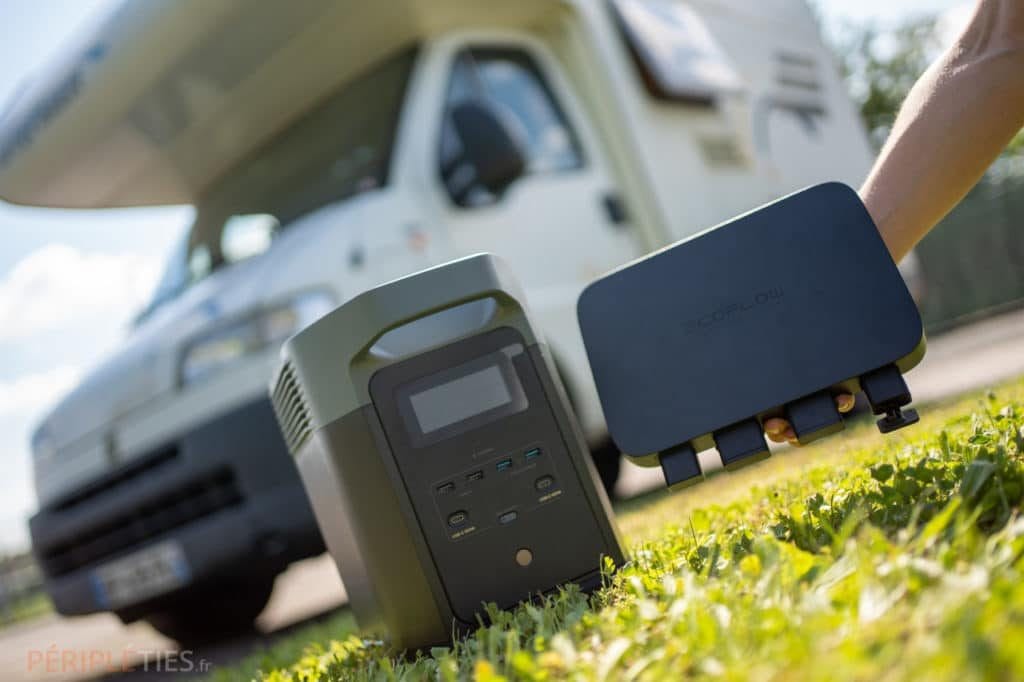
Who is the Delta 3 Classic for?
From experience, the Classic is the best compromise for users who want a versatile station without breaking the bank. We warmly recommend it to couples or solo travellers in a campervan or converted van for weekends and one- to two-week trips, as long as you have a complementary charging option (solar panel (US) / solar panel (UK), alternator). It also suits long wild-camping stays, converted-car users, nomadic photographers and videographers who recharge gear in the field, and remote workers who want stable power for their laptop, screen and 4G router.
It's also perfect as a home backup battery for power cuts: a fridge, an internet router, a few lights and a computer will comfortably last half a day to a full day depending on consumption.
On the other hand, we'd advise against it for anyone planning to live full-time fully off-grid, or to regularly run very power-hungry appliances (air conditioner, permanent electric heating, high-power induction hob): for those uses, 1 kWh of capacity will quickly become limiting.
→ See the Delta 3 Classic on the official EcoFlow store: US store / UK store
EcoFlow Delta 3 Plus: the beefed-up version for solar and professionals
At first glance, the Delta 3 Plus (US) / Delta 3 Plus (UK) looks like its little sister, the Classic. Same 1,024 Wh capacity, same 1,800 W output, same 2,400 W X-Boost, same LFP chemistry. So why pay more? Because EcoFlow added several features that don't immediately show up on the spec sheet, but that make a real difference for certain user profiles.
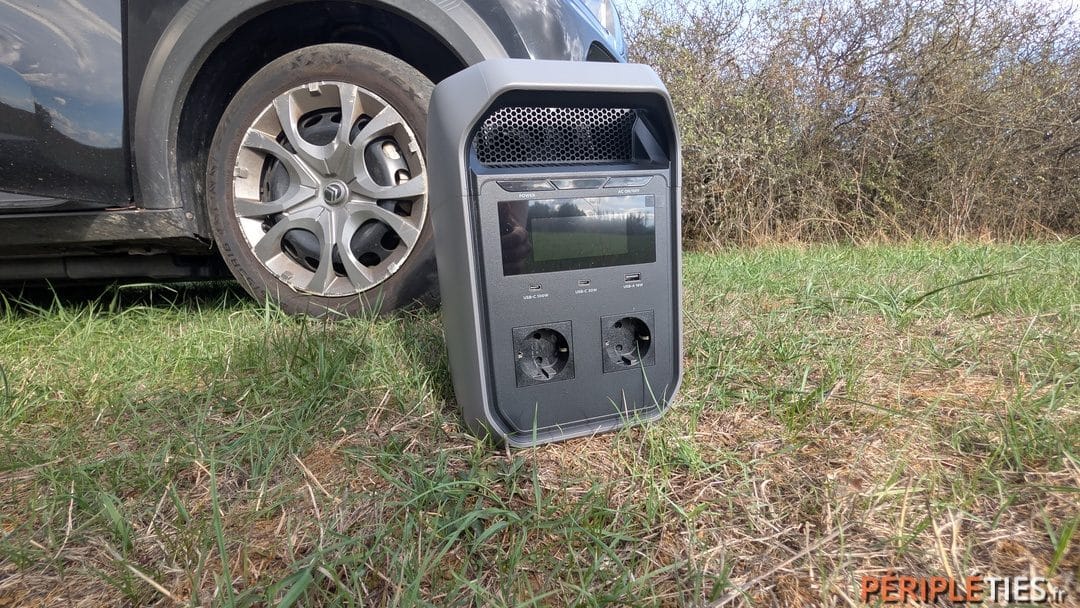
What really changes compared with the Classic
The big upgrade is the solar input, which jumps to 1,000 W (versus 500 W on the Classic). That nearly doubles the pure-solar recharge speed. EcoFlow quotes a full charge in around 70 minutes in optimal conditions, where the Classic takes two hours. For those travelling with two 200 W flexible panels or a fixed 400 W panel on a van roof, that's a concrete difference: you can realistically aim for a "recharge within the day" even when the sun isn't ideal.
Second important upgrade: a reinforced uninterruptible power supply (UPS) function, with a switchover time under 10 ms and compatibility with sensitive equipment such as NAS servers, 3D printers, and certain medical devices (CPAP machines — though EcoFlow rightly points out that this medical use shouldn't be presented as a guaranteed service). In short, if the power cuts out at home, the Plus instantly takes over without your devices switching off. The Classic does this too, but with narrower compatibility for demanding IT equipment.
Third upgrade: the USB-C ports climb to 100 W (Power Delivery), versus a 65 W maximum on the Classic in some batches. If you regularly charge a 16-inch MacBook Pro, a gaming laptop or a mobile workstation, those 100 W let you charge at full speed without reaching for the bulky mains adapter.
Finally, the Plus benefits from more advanced energy management via the EcoFlow app, including a "Time of Use" mode that lets you schedule charging and discharging around your electricity provider's peak/off-peak hours — mainly useful for a sedentary home setup paired with EcoFlow's PowerStream microinverter.
Worth noting: the Plus is slightly heavier than the Classic (also around 12.5 kg / 28 lb according to the official sheets, sometimes reported at 16.5 kg / 36 lb on some US sources, the gap probably coming from whether the dual MPPT controller is included). In real life, the felt difference in weight stays very marginal and hasn't changed how we carry it.
Exemplary quiet operation
The other strong point we particularly appreciated on the Plus is its quiet operation — under 30 dB at 600 W of load. In practice, that's inaudible. We ran it all night in a van to power a cool box and recharge phones, without hearing a thing. Above 1,200 W the fans kick in more and you climb to around 40 dB, but it stays very acceptable.
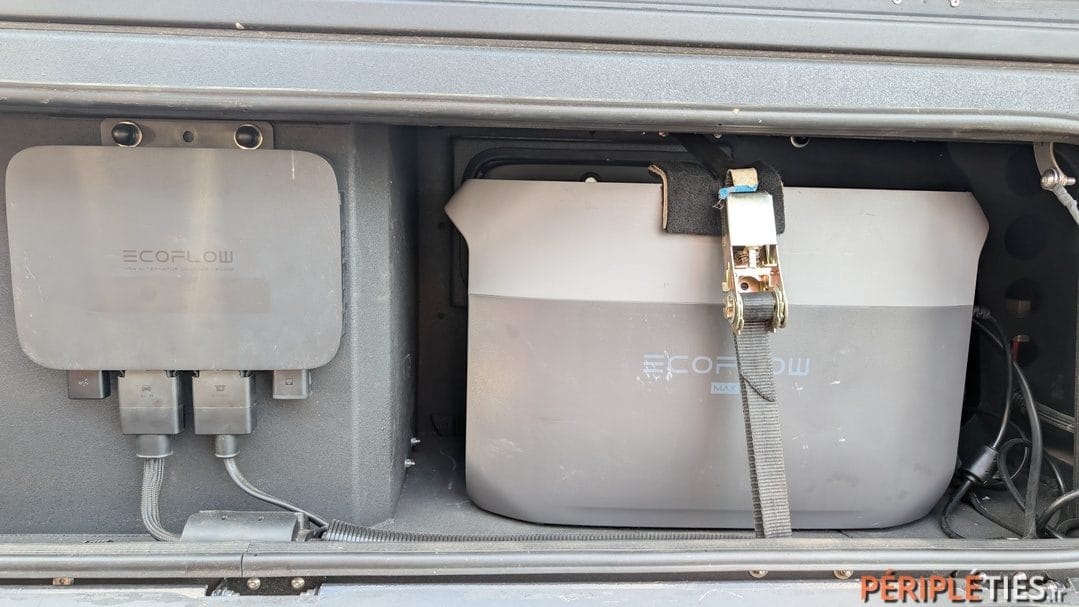
For those camping in a tent, sleeping in their vehicle, or wanting to work near the station without noise, it's a real comfort. EcoFlow calls this technology X-Quiet, and it relies on a single variable-speed fan and better conversion efficiency (which reduces the heat that needs dissipating).
Who is the Delta 3 Plus for?
The Plus is aimed at three main profiles. Solar travellers, who invest in 600 W to 1,000 W of panels and want to maximise their off-grid recharging: here, the doubled solar input makes all the difference. Demanding remote workers, who need a reliable uninterruptible supply for a sensitive computer setup (high-end laptop, NAS, workstation). And home users who want to pair the station with a PowerStream microinverter to optimise their electricity consumption using off-peak hours.
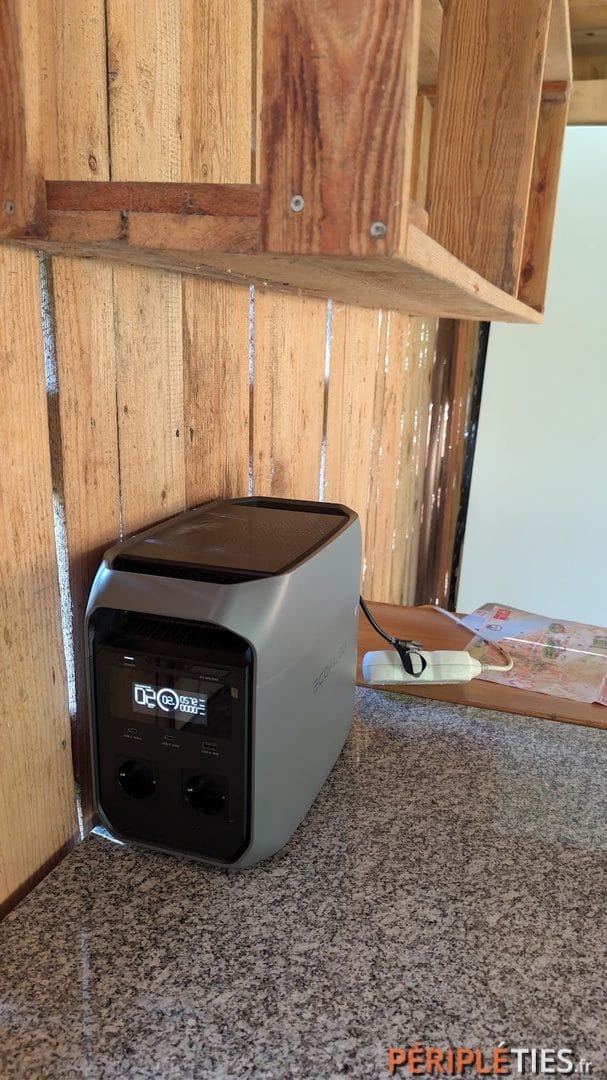
If you don't fit any of those three cases and you're just after a versatile portable station, the Classic is probably better value. We'd rather tell you that honestly than push you towards the pricier model.
→ See the Delta 3 Plus on the official EcoFlow store: US store / UK store
EcoFlow Delta 3 Max: the high-capacity station for long stays and big needs
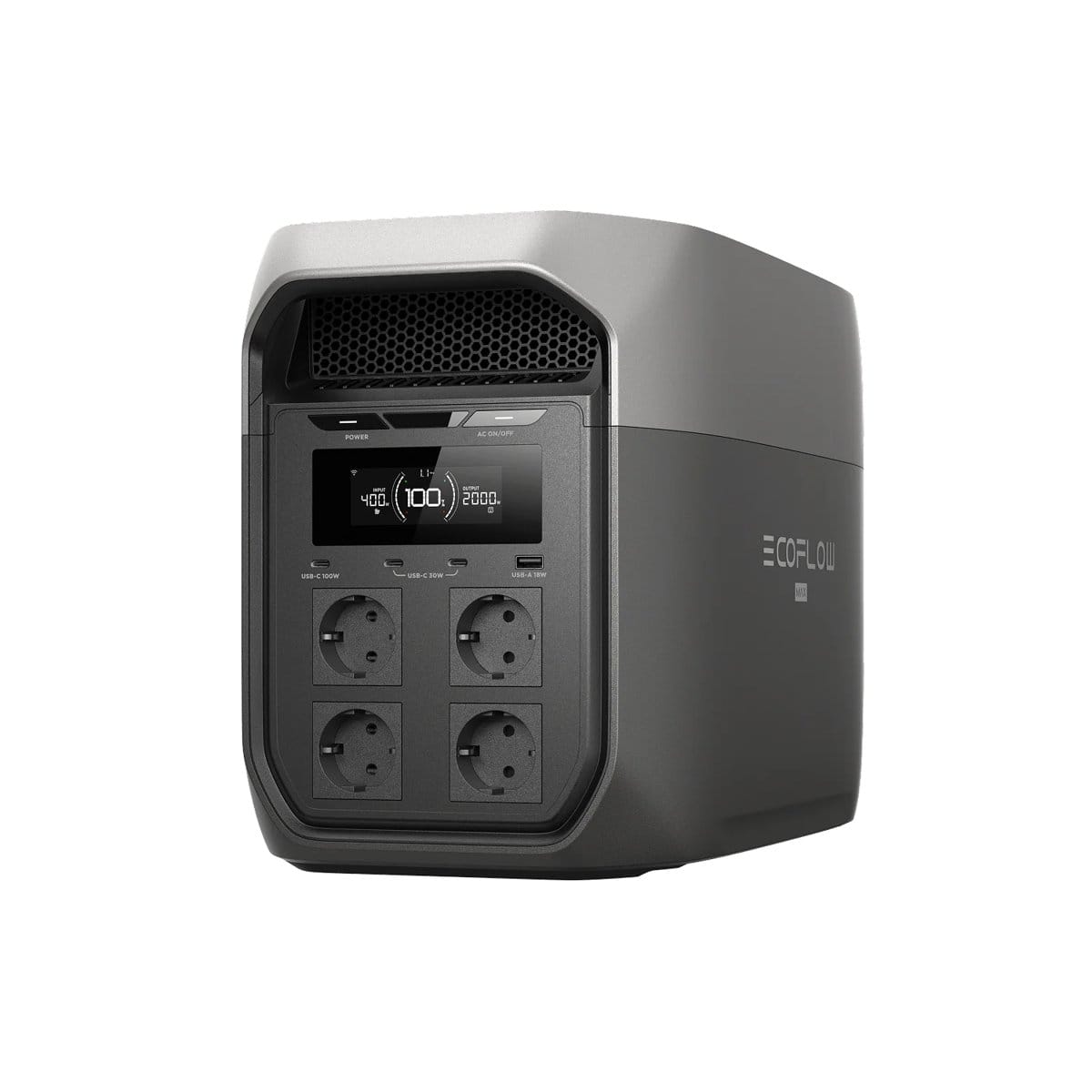
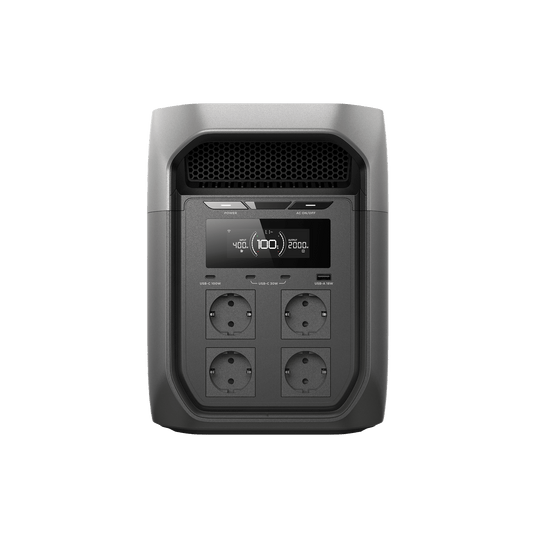
We change category with the Delta 3 Max (US) / Delta 3 Max (UK). Where the Classic and Plus share a 1 kWh capacity, the Max nearly doubles it with 2,048 Wh, and breaks the 2,400 W continuous-output barrier (with X-Boost up to around 3,400 W). It's not a station you choose by accident: it targets more demanding, longer or more versatile uses.
2 kWh — how much runtime in real life?
It's the question we get asked most often. The honest answer: it depends enormously on what you plug in. With 2,048 Wh, you can theoretically run a typical motorhome fridge for 24 to 40 hours, recharge a laptop more than 25 times, power a 1,500 W induction hob for about 1 hr 15 (plenty to cook two meals), run a 1,000 W space heater for roughly 1.5 to 2 hours, and keep a full remote-work setup (laptop + screen + router) going for over 20 hours.
Obviously, these figures are ballpark numbers. Real runtime depends on inverter efficiency (around 85% on average), ambient temperature, the number of devices on standby, and power spikes. When a manufacturer quotes you "30 hours of runtime for a fridge", you should always divide by 1.2 to 1.5 in real life.
Output, X-Boost and noise
With its 2,400 W continuous output, the Delta 3 Max can power just about anything you'd find in a motorhome or a home: a portable air conditioner, an induction hob, a full-power microwave, a high-end hairdryer, heavy power tools (circular saw, sander). X-Boost climbs to around 3,400 W, which lets it absorb the start-up spikes of motors (fridge, compressor, pump).
We particularly appreciated its noise level, even lower than the Plus: EcoFlow quotes under 25 dB at 1 metre under 600 W, making it one of the quietest in its class. When you're working next to it or sleeping in the same space, you forget it completely.
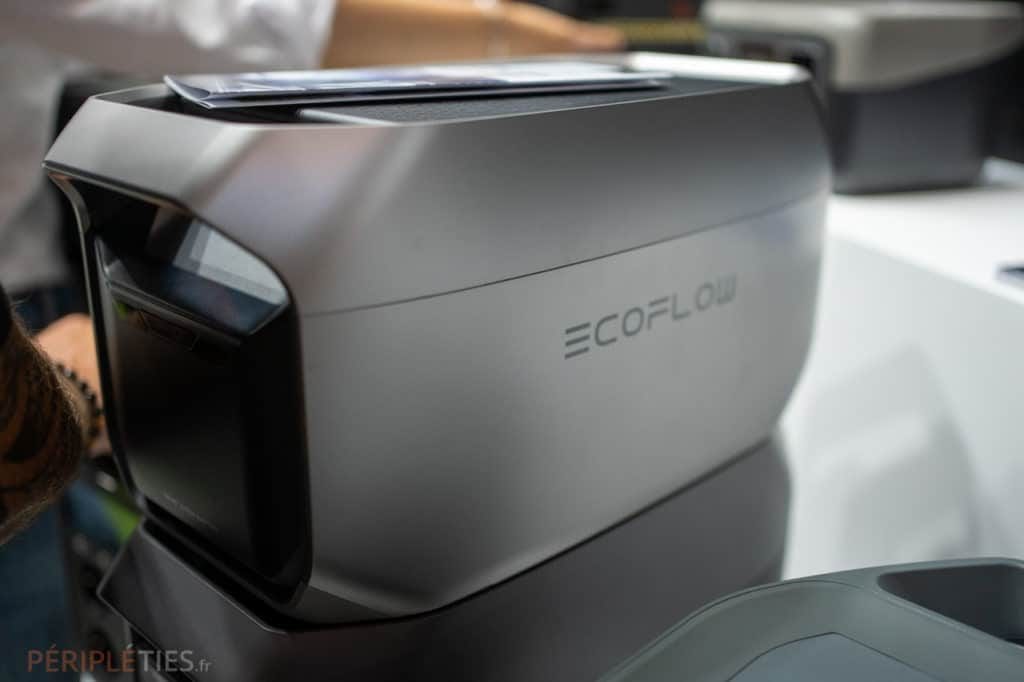
On charging, the Max accepts 1,800 W AC input (0 to 80% in around 47 minutes, 100% in a little over an hour), and up to 1,000 W of solar. It also works with EcoFlow's alternator charger (US) / alternator charger (UK) and a petrol generator.
There are plenty of outputs (around nine ports in total depending on configuration): several 230V sockets, a 100 W USB-C, two 30 W USB-C, USB-A ports, and a 12V DC output. Enough to manage a full setup in parallel.
The flip side: the weight
This is where the Max imposes its constraints. It weighs around 20 kg (about 44 lb), nearly double the Classic. It's no longer a station you move one-handed: you need two hands, and ideally two people to lift it out of a boot. The dimensions (around 494 × 239 × 305 mm / 19.4 × 9.4 × 12 in) also make it a bulkier object. For van use, you need to plan a fixed spot for it.
It's important to say this honestly: the Max isn't made to be lugged around daily from one place to another. It's a semi-fixed station that you install in your vehicle, your workshop or your backup room, and move occasionally. For "light" nomadic use (cycling, hiking, festivals, frequent car trips), the Classic or Plus remain better suited.
Who is the Delta 3 Max for?
The Max becomes relevant as soon as your needs exceed a day of runtime or you use power-hungry appliances. We recommend it to motorhome and van travellers on long journeys who go several days without recharging, to families (two or three people always consume more than expected), to mobile tradespeople running heavy power tools in the field, to professional videographers and photographers with a substantial setup (lights, screens, computers), and of course for extended home backup (a cut of several hours, or even a full day).
Paired with an extra battery (US) / extra battery (UK) (the Delta 3 range accepts 1 kWh to 4 kWh expansions depending on compatibility), the Max can reach high capacities and become a true hub for an off-grid installation.
→ See the Delta 3 Max on the official EcoFlow store: US store / UK store
EcoFlow Delta Pro 3: the top of the range, for genuinely heavy needs
We finish our tour of the range with the top model: the Delta Pro 3 (US) / Delta Pro 3 (UK) (sometimes written "Delta 3 Pro" by some retailers, though EcoFlow's official name is indeed "Delta Pro 3"). And here, we change worlds entirely. We're no longer talking about a portable station you move from weekend to weekend, but a genuine semi-stationary power plant, built for long fully off-grid stays, extended power cuts, partially powering a home, or intensive work in the field.
4,096 Wh and 4,000 W: real power
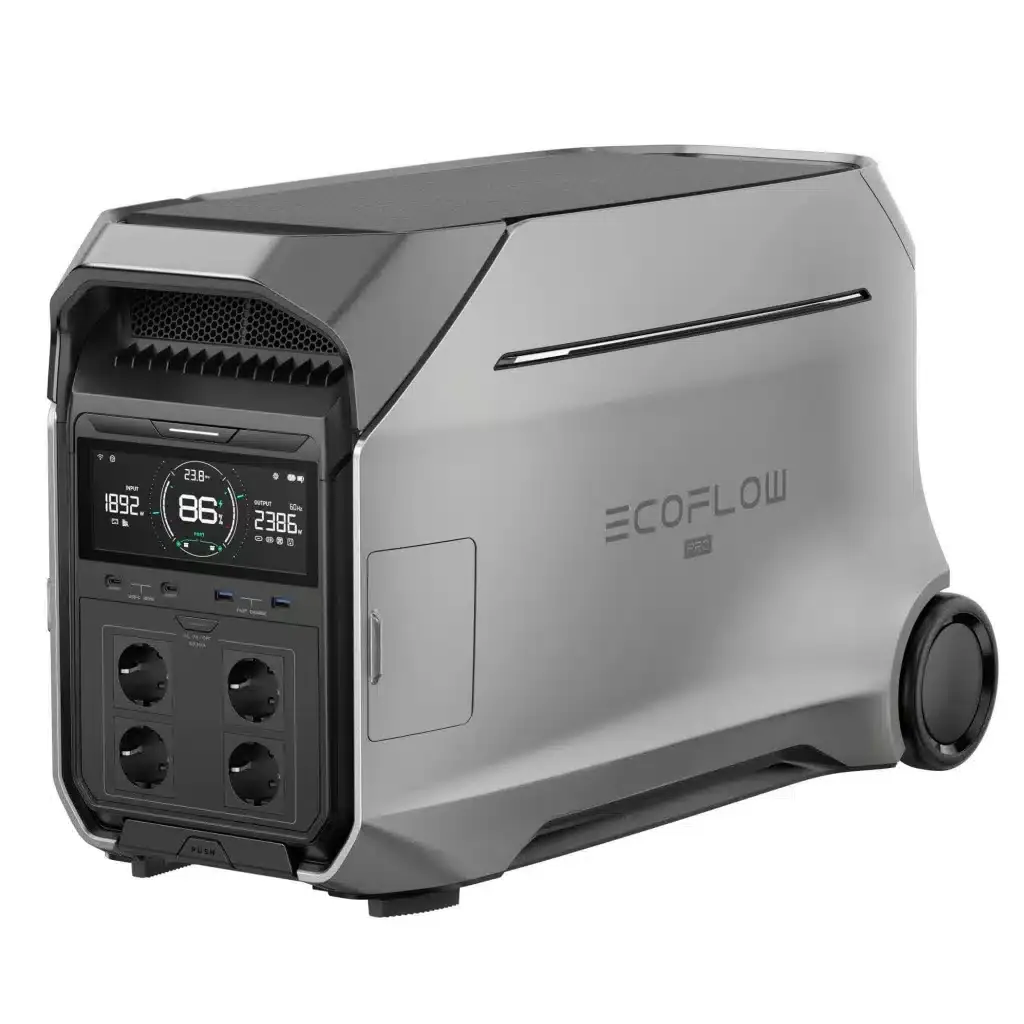
The Delta Pro 3 packs 4,096 Wh of capacity, double the Max and roughly four times that of a Delta 3 Classic (US) / Delta 3 Classic (UK). On output, it delivers 4,000 W continuous from its 230V sockets, with an 8,000 W surge and the ability, via X-Boost, to push to around 6,000 W on certain appliances. That's more than most ordinary household electrical installations call for.
In practice, with these 4 kWh, you can run a home fridge for 24 to 48 hours, a 1,500 W portable air conditioner for around 2.5 hours, a 2,000 W induction hob for a little over 1.5 hours, a 1,500 W electric heater for 2 hours, or a full remote-work setup (computer, screen, router, lights) for more than 40 hours. You can also simultaneously power a freezer, the internet router, lighting and a few essential sockets in a home for half a day to a full day depending on your consumption. It's this versatility that makes it a real backup tool for extended outages, the kind we've seen more and more of in recent years (storms, grid problems, extreme weather events).
Massive expansion up to 48 kWh
This is probably the most impressive argument. The Delta Pro 3 connects to extra batteries (US) / extra batteries (UK) (DELTA Pro 3 extra batteries (US) / DELTA Pro 3 extra batteries (UK)) to reach up to 12 kWh with two additional batteries, and up to 48 kWh in a multi-station configuration with extra modules. That's enough to cover several days of home runtime, or even to switch to permanent off-grid living in a cabin, a workshop or an isolated second home.
Of course, these expansions come at a cost (around €2,500 to €3,000 per additional 4 kWh battery), and you need to plan the physical space to store it all. But for anyone building a serious multi-year off-grid project, it's genuine modularity that few competitors offer at this level.
Charging, outputs and noise level
Like the whole Delta 3 range, the Pro 3 benefits from X-Stream technology. AC charging reaches around 1,800 W input and goes from 0 to 80% in about 50 minutes, 100% in a little over an hour. That's extremely fast given the 4 kWh capacity. Solar charging accepts up to 2,600 W (two MPPT inputs), which lets you fully top up in around 1.5 hours with a substantial solar kit.
On outputs, you get five 230V AC sockets, two 100 W USB-C ports, two USB-A ports, DC outputs (Anderson, DC5521) and compatibility with EcoFlow's Smart Generator Hub to integrate the station into a larger electrical installation. Connectivity is via Wi-Fi, Bluetooth and CAN bus, opening the door to professional or smart-home integrations.
The noise level stays very contained for a product of this power: under 30 dB at 2,000 W of load, thanks to X-Quiet technology. It's remarkable, and genuinely different from the experience of a petrol generator of the same calibre, which would run at 70-80 dB continuously. Under heavy load (above 3,000 W), the fans obviously ramp up, but it stays at very acceptable levels for home use.
The downside: weight, bulk and budget
This is where the Pro 3 shows its limits in terms of portability. It weighs around 51 kg (about 112 lb) and measures 695 × 341 × 410 mm (27.4 × 13.4 × 16.1 in). Fortunately, EcoFlow fitted it with built-in wheels and a telescopic handle: you move it like a large piece of wheeled luggage. But we're no longer in "portable station you take away for the weekend" territory. It's a product you install somewhere (motorhome habitation area, workshop, utility room, outbuilding) and move only occasionally.
On budget, expect around €3,100 to €3,300 for the bare station, without an additional battery. With a capacity expansion you quickly pass €5,500, and with two expansions you reach €8,000. It's a substantial investment that needs to be justified by real, lasting use.
Who is the Delta Pro 3 for?
Let's be clear: the Delta Pro 3 isn't for the general public. If you head off for a weekend in a van, get a Classic and save €2,500. The Pro 3 targets specific, demanding profiles.
It's aimed at near-full-time motorhome and large-van travellers who spend several weeks fully off-grid with a fridge, induction, air conditioning or electric heating. At families in large vehicles who really do consume a lot. At mobile tradespeople running heavy tools on site (compressor, radial saw, light welder). At owners of isolated properties who want genuine electrical backup in case of an extended cut, capable of covering several hours to a day of essential use. At professional videographers heading out to shoot with a substantial setup (LED panels, motorised gimbal, several editing stations). And at off-grid-minded users building a serious medium-term self-sufficiency project.
Conversely, we'd advise against it for those hesitating between the Max and Pro 3 "just to have more margin": if your needs are happy with 2 kWh, the Max is enough and you save €1,800. The Pro 3 is only really justified once you regularly saturate the capacity or output of a 2 kWh station.
→ See the Delta Pro 3 on the official EcoFlow store: US store / UK store
Full comparison: Delta 3 Classic vs Plus vs Max vs Pro 3
To help you picture it, here's a concise summary of the models, with EcoFlow's official figures cross-referenced against our field observations.
EcoFlow Delta 3 Classic, Plus, Max & Pro 3: comparison table
Data cross-referenced between EcoFlow's official spec sheets and our field measurements. Indicative prices observed in May 2026 (excluding seasonal promotions and the PERIPLETIES –5% code). ★ = clear advantage on that row.
| Specification | Delta 3 Classic US / UK versatile · entry-level |
Delta 3 Plus US / UK versatile · solar + UPS |
Delta 3 Max US / UK high capacity |
Delta Pro 3 US / UK very high capacity |
|---|---|---|---|---|
| EcoFlow · Delta 3 Series | ||||
| Product overview |  UK / US |
 UK / US |
 UK / US |
 UK / US |
| Capacity | 1,024 Wh | 1,024 Wh | 2,048 Wh | 4,096 Wh |
| Continuous AC output | 1,800 W | 1,800 W | 2,400 W | 4,000 W |
| X-Boost (extended power) | up to 2,400 W | up to 2,400 W | up to 3,400 W | up to 6,000 W |
| Peak / surge | 3,600 W | 3,600 W | 4,800 W | 8,000 W |
| Battery chemistry | LFP (LiFePO4) | LFP (LiFePO4) | LFP (LiFePO4) | LFP (LiFePO4) |
| Cycles to 80% capacity | 4,000 | 4,000 | 4,000 | 4,000 |
| Max AC input | 1,500 W | 1,500 W | 1,800 W | 1,800 W |
| AC recharge 0–100% | ~56 min | ~56 min | ~65–70 min | ~70 min |
| Max solar input | 500 W | 1,000 W | 1,000 W | 2,600 W |
| Solar recharge 0–100% | ~2 h | ~70 min | ~2 h | ~1 hr 30 |
| USB-C max (Power Delivery) | 65–100 W | 100 W | 100 W | 100 W |
| Number of outputs | 11 | 11 | 9–10 | 10–12 |
| Weight | ~12.5 kg (28 lb) | ~12.5 kg (28 lb) | ~20 kg (44 lb) | ~51 kg / 112 lb (wheels) |
| Noise (moderate load, 1 m) | ~30 dB at 600 W | ~30 dB at 600 W | ~25 dB at 600 W | < 30 dB at 2,000 W |
| UPS (switchover < 10 ms) | Yes | Yes (NAS / HID) | Yes | Yes |
| Capacity expansion | up to 5 kWh | up to 5 kWh | up to 6 kWh | up to 48 kWh |
| Warranty | 5 years | 5 years | 5 years | 5 years |
| Indicative price (May 2026) | from €619 | from €761 | from €1,212 | from €3,102 |
| The entire Delta 3 range uses LFP (LiFePO4) chemistry and X-Core 3.0 technology (X-Stream, X-Boost, X-Quiet, X-Guard). Prices taken from the official EcoFlow sites and idealo in May 2026 — always combinable with the code PERIPLETIES for an extra 5% off the official store. |
These are public prices observed in May 2026, but EcoFlow runs promotions very regularly (launches, sales events, Black Friday, seasonal sales) that can bring prices down by 15 to 30%. We recommend always comparing against the actual current prices before buying.
Our PERIPLETIES promo code to save 5%
As official EcoFlow partners, we can offer you a promo code valid across the entire official EcoFlow store: PERIPLETIES.
You get an extra 5% off the whole range, including the Delta 3 Classic (US) / Delta 3 Classic (UK), Plus and Max, the solar panels (US) / solar panels (UK), the extra batteries (US) / extra batteries (UK) and accessories like the 800 W alternator charger (US) / 800 W alternator charger (UK). The code can be combined with most current promotions on the official site (just check it's applied at checkout).
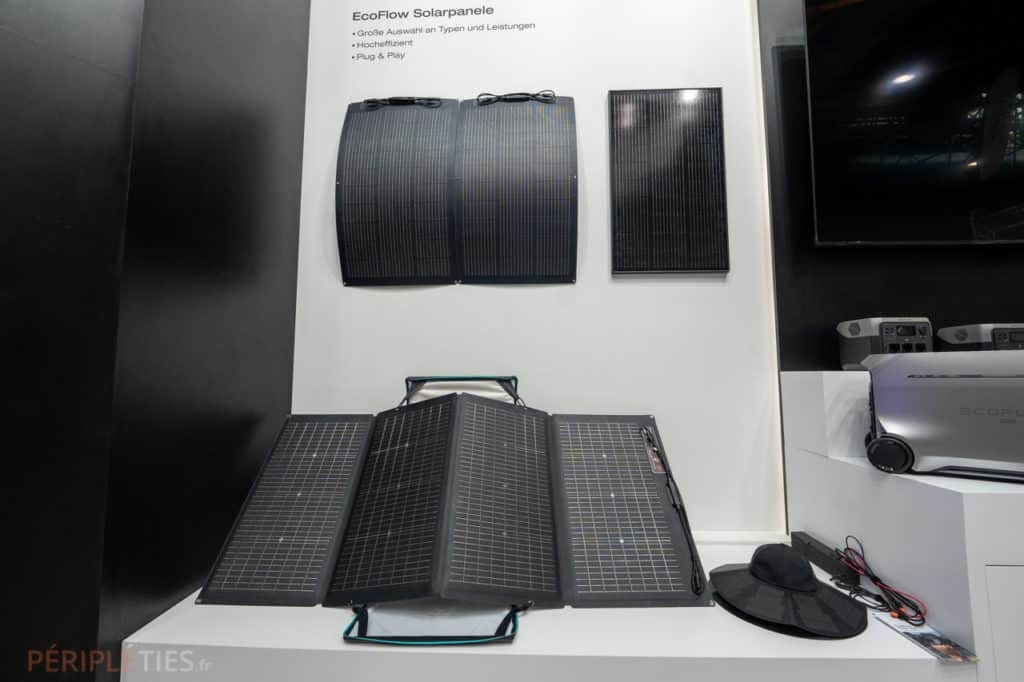
On a Delta 3 Max (US) / Delta 3 Max (UK) at €1,212, that's around €60 saved. On a Delta 3 Classic at €619, that's an extra €30 in your pocket. It won't change your life, but stacked with a current promo, it starts to add up.
A small note for transparency: if you go through our links and use our promo code, we earn a small affiliate commission from EcoFlow. It doesn't change your purchase price, and it lets us keep testing gear and publishing articles like this one. Thank you in advance if you support us this way.
Our field verdict after several weeks of use
Beyond the spec sheets, here's what we honestly take away after living with these stations.
The Classic is the obvious choice for most travellers. It's the station we recommend to 70% of the people who write to us. It does everything well, it's compact, affordable, versatile, and the ultra-fast AC charging genuinely changes the game when you're on a service area with a hookup. Its main "flaw" is the solar input capped at 500 W: if you rely heavily on solar, that's its only real limit.
The Plus is a niche choice. It's better than the Classic on three specific points: solar charging, UPS for sensitive IT equipment, and 100 W USB-C. But those three improvements only justify the extra cost (around €140 more) if you're affected by at least one of them. If you're not an intensive solar traveller, a demanding remote worker or a home user with PowerStream, the Plus doesn't bring much more than the Classic to your daily life.
The Max is another world. We really do change category. More capacity, more power, and the ability to run just about anything. It's the station we recommend to people who want to go several days without recharging, who run power-hungry appliances or who want a real home backup solution. The trade-off is that 20 kg (44 lb) is heavy and you won't move it every day. If you have a fixed spot for it in your vehicle or home, it's an excellent long-term investment. For light or occasional nomadic use, it's too much.
The Pro 3 is the long-term investment for demanding profiles. We leave the classic nomadic category entirely: 51 kg (112 lb) with wheels, 4 kWh, 4,000 W, expansion up to 48 kWh, a price of €3,000 and up. It's a genuine power plant, and it's only justified if you really need it: long journeys with a large vehicle, serious off-grid, ambitious home backup, intensive professional use. For 90% of readers, it's oversized. But for the 10% who have that need, it's probably the most versatile and most scalable station on the market in 2026.
A word on the warranty: EcoFlow offers a 5-year warranty on the Delta 3 range (sometimes 3 years base, extended to 5 years by registering in the app — check your specific case). It's a good signal of confidence, and it's at the high end of what you'll find on the market.
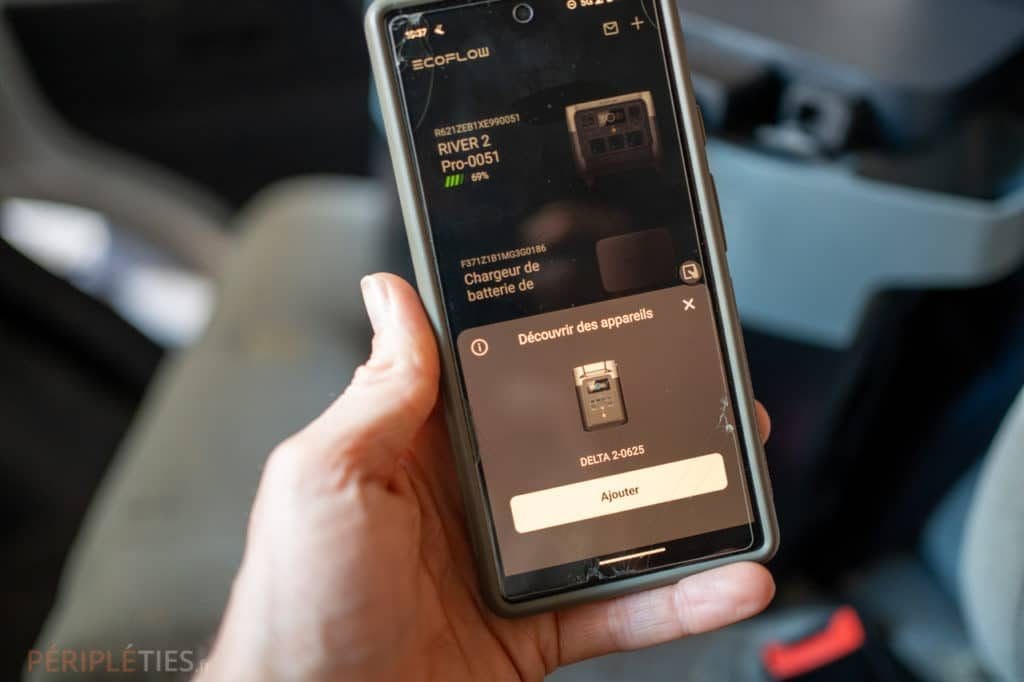
On software, the EcoFlow app is very complete: real-time monitoring, charge scheduling, weather alerts, power-cut alerts, smart "Time of Use" management, OTA firmware updates. It connects via Wi-Fi and Bluetooth. In the field, it's a real plus for monitoring consumption and adapting your usage. The only criticism we'd make is that it's sometimes a bit slow to connect, especially after a long period without use.
The limits to know before buying
To stay honest, here are the real weak points we identified over the course of our use.
First, the runtime figures EcoFlow publishes are theoretical, optimal numbers. In real life, expect 15 to 25% less depending on your inverter efficiency, standby losses and ambient temperature. That's normal and it's the case with every manufacturer, but you need to know it before buying.
Next, ultra-fast AC charging heats the battery. EcoFlow manages this very well thanks to X-Stream and thermal regulation, but if you want to maximise your cell's lifespan over 10 years, the app lets you reduce the charging speed ("long-life" mode). Worth favouring when you're not in a hurry.
Finally, the Delta 3 range's extra batteries (US) / extra batteries (UK) aren't cheap. Expect around €600 to €700 for a 1 kWh expansion, which is almost the price of a new Delta 3 Classic (US) / Delta 3 Classic (UK). Factor it into your overall thinking if you're considering expanding later. Compatibility between models is good (the Delta 3 and the Plus accept the same extra batteries), but it has its limits (the Max uses specific batteries).
Which Delta 3 should you choose for your profile?
To sum up simply and without beating around the bush:
If you travel as a couple or solo, for weekends or one to two weeks, with a contained budget and classic use (fridge, recharging, computer, lighting), get the Delta 3 Classic (US) / Delta 3 Classic (UK). You won't be disappointed and you'll save several hundred euros.
If you're equipped with solar (600 W and up), or you're a remote worker with a sensitive IT setup that absolutely must stay powered, or you want to optimise your home consumption with PowerStream, get the Delta 3 Plus (US) / Delta 3 Plus (UK). It's the "enhanced versatility" version.
If you go several days without recharging, travel with several people (family, big-travelling couple), want genuine long-duration autonomy or to run power-hungry appliances (air conditioner, induction, professional tools), get the Delta 3 Max (US) / Delta 3 Max (UK). It's the right long-term investment.
If you live several weeks a year fully off-grid, need real home backup capable of absorbing several hours to several days of outage, work with heavy tools on site, or are building a serious off-grid project, get the Delta Pro 3 (US) / Delta Pro 3 (UK). It's the long-term investment, only justified when your real need exceeds 2 kWh per day.
If you're hesitating between Classic and Plus and you're not sure you'll actually use the Plus's specific features, get the Classic. It's the most honest advice we can give you. You'll get the same experience for €140 less.
If you're hesitating between Plus and Max and you mostly hover around 1 kWh of daily use, get the Plus. You'll gain in compactness and mobility, without losing much in power for standard uses.
If you're hesitating between Max and Pro 3, ask yourself a simple question: do I regularly saturate the 2 kWh mark in my daily use? If the answer is no, get the Max and save nearly €2,000. If yes, the Pro 3 is the right choice and will save you time and comfort in the long run.
FAQ: common questions about the EcoFlow Delta 3 range
What's the difference between the Delta 3 and the Delta 3 Classic?
In the current EcoFlow line-up, "Delta 3" and "Delta 3 Classic (US) / Delta 3 Classic (UK)" broadly refer to the same product, namely the entry-level model at 1,024 Wh and 1,800 W. EcoFlow has sometimes used the "Classic" label to distinguish the standard version from the "Plus". If you see a "Delta 3 Classic" reference on some recent listings (notably those launched in 2026 in the US), it may be a simplified version with slightly different software features. In Europe, it's mainly the EcoFlow Delta 3 model (around €619) that's sold.
How long does an EcoFlow Delta 3 battery last?
The whole range uses LFP (LiFePO4) with around 4,000 cycles to 80%, i.e. 8 to 10 years of regular use for an average user (one full cycle per day). After 4,000 cycles, the battery keeps working but at 80% of its original capacity, i.e. around 820 Wh for a Classic or Plus. It's one of the best longevity/price ratios on the market in 2026.
Does the Delta 3 really work during a power cut?
Yes, all Delta 3 models have a UPS function with a switchover time under 10 ms. In practice, if you plug your internet router, computer or fridge through the Delta 3 and the power fails, your devices keep running without switching off. The Plus goes further with extended compatibility for sensitive equipment like NAS servers and certain HID peripherals.
Can you use it to power a whole house?
It depends on the model. The Delta 3 Classic and Plus (1 kWh) are portable stations suited to partial backup: fridge, router, lighting, computer, a few recharges. The Delta 3 Max (US) / Delta 3 Max (UK) (2 kWh) can cover half a day of essential needs for a standard home. The Delta Pro 3 (US) / Delta Pro 3 (UK) (4 kWh, expandable up to 48 kWh with extra batteries (US) / extra batteries (UK)) is the only one in the range capable of providing genuine backup power for a household's essential needs for several hours to several days, especially paired with EcoFlow's Smart Generator Hub.
What's the difference between the Delta 3 Max and the Delta Pro 3?
The Delta 3 Max packs 2,048 Wh and 2,400 W for around €1,200, weighs 20 kg (44 lb) and stays relatively transportable. The Delta Pro 3 doubles the capacity (4,096 Wh) and the power (4,000 W), accepts up to 48 kWh of expansion versus 6 kWh for the Max, and weighs 51 kg (112 lb, with wheels). On budget, expect around €3,100 for the Pro 3 versus €1,200 for the Max. The right choice depends on your real daily consumption: if you regularly run above 2 kWh a day or need genuine long-duration autonomy, the Pro 3 is the one. Otherwise, the Max is plenty.
Which Delta 3 for a converted van?
For a converted van used on weekends or short trips (1 to 2 weeks), the Delta 3 Classic is plenty, especially paired with a solar panel (US) / solar panel (UK) and/or the 800 W alternator charger (US) / 800 W alternator charger (UK). For a van used on long journeys or near full-time, with a permanent fridge, occasional heating and several people, the Delta 3 Max will be better suited. The Plus, for its part, only makes sense in a van if you rely heavily on solar (600 W and more of panels).
Can you recharge a Delta 3 while driving?
Yes, in two ways. Via the 12V socket (but it's slow, more than 8 hours for a full charge, mainly useful as a top-up). Or via EcoFlow's 800 W alternator charger (an accessory sold separately), which connects directly to the vehicle's battery and allows a full recharge in around 1 hr 20. For travellers who spend time on the road, it's the accessory to plan for.
Does the PERIPLETIES promo code work on accessories and solar panels?
Yes, the PERIPLETIES code gives 5% off the entire official EcoFlow store: power stations, extra batteries, solar panels (flexible and rigid), the alternator charger, the PowerStream microinverter, accessories. Use it at checkout on the EcoFlow site.
EcoFlow or Bluetti, which to choose?
That's a topic in its own right, which we cover in dedicated articles (notably on the Bluetti Elite 200 V2 and the Bluetti Elite 300). In short, EcoFlow stands out for its charging speed (X-Stream) and a particularly polished app. Bluetti often offers better capacity-for-money on certain ranges, and slightly more "industrial"-looking stations. Both brands make good kit; the right choice depends on the specific models being compared.
Our conclusion: a range that delivers on its promises
All in all, EcoFlow's Delta 3 series does its job without any major missteps. The Classic is the best entry point for anyone discovering portable power stations, with a price/quality ratio we've rarely seen this well balanced. The Plus is a considered choice for specific profiles, and you need to know whether you fit the target before paying the premium. The Max is a true high-capacity station, built for the long haul and intensive use, as long as you accept its 20 kg. And the Pro 3 targets the most demanding profiles: it's oversized for most nomadic uses, but becomes irreplaceable the moment you're talking about full autonomy, serious home backup or off-grid.
Four models, four levels of use, and ultimately very few "losers" in this range. EcoFlow did the work, and the X-Core 3.0 technology brings real improvements over the Delta 2 generation.
If we had to keep just one for the majority, it would be the Delta 3 Classic (US) / Delta 3 Classic (UK), because it ticks 90% of a nomadic traveller's needs at the most accessible price. If we had to recommend a long-term investment for demanding travellers, we'd go with the Delta 3 Max (US) / Delta 3 Max (UK) for its versatility and autonomy. And if you're building a serious off-grid project or looking for genuine home backup, the Delta Pro 3 (US) / Delta Pro 3 (UK) has no direct competitor at the same quality level in the range.
Whatever your choice, remember to use our PERIPLETIES code for 5% off. And if you have specific questions about a particular use or a compatibility issue, don't hesitate to write to us: we reply personally to every message.
Safe travels, and good energy to you.
Our partner links (with 5% off using code PERIPLETIES):
→ EcoFlow Delta 3 Classic (US) / EcoFlow Delta 3 Classic (UK)
→ EcoFlow Delta 3 Plus (US) / EcoFlow Delta 3 Plus (UK)
→ EcoFlow Delta 3 Max (US) / EcoFlow Delta 3 Max (UK)
→ EcoFlow Delta Pro 3 (US) / EcoFlow Delta Pro 3 (UK)
 Pauline & Simon