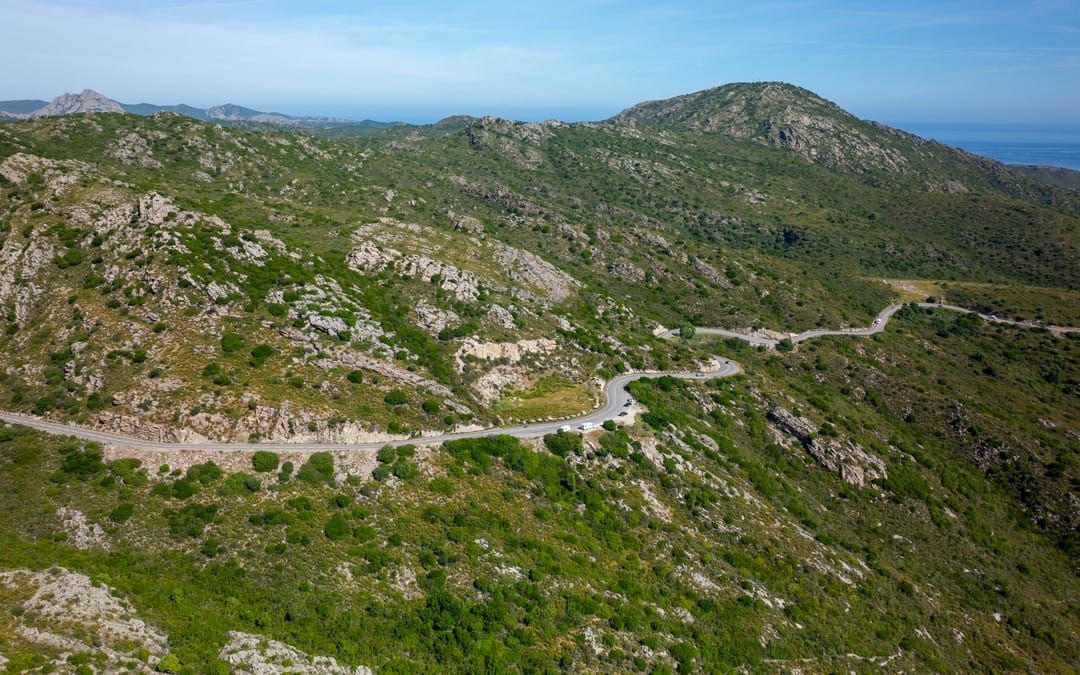
In May, we set off in our converted electric car to explore northern Corsica. Between wild hikes, hilltop villages and heavenly stretches of coast, this Haute-Corse road trip — with a few hops into the south — handed us a concentrated dose of raw nature and some genuinely memorable encounters.
Getting to Corsica and getting around
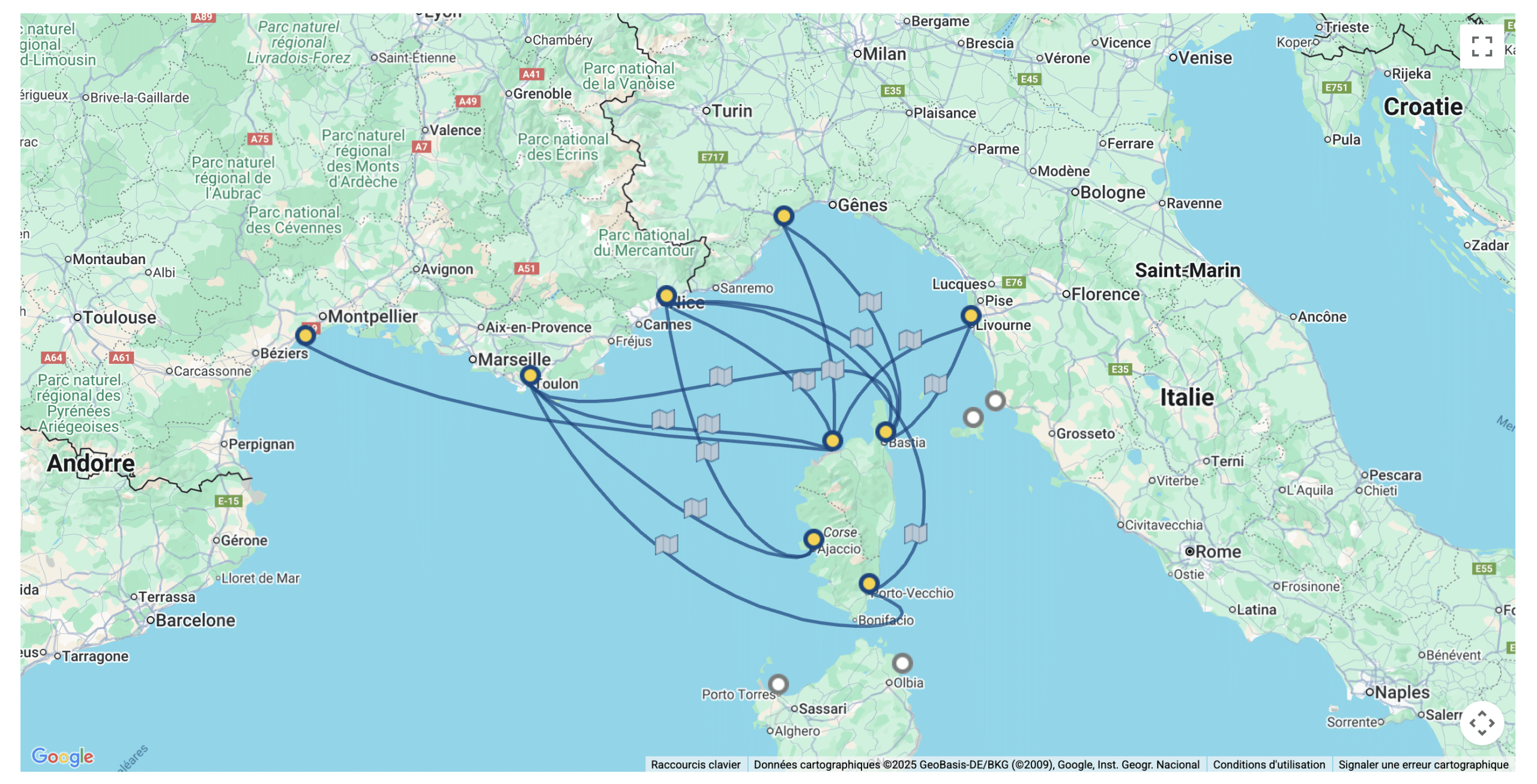
Ferry : from Toulon, Marseille, Nice or Italy (Savona, Livorno) across to Bastia, Ajaccio, Île-Rousse or Porto-Vecchio. Crossings take 6 to 10 hours with Corsica Ferries. Corsica Linea and Sailcoop (under sail) run the route too.
By air : airports at Bastia, Ajaccio, Calvi and Figari, with direct flights from the UK and across Europe.
Car hire : €30 to €60 a day depending on season and model. Hire with Europcar.
Van/campervan hire : €80 to €140 a day. Hire with CamperDays or Yescapa.
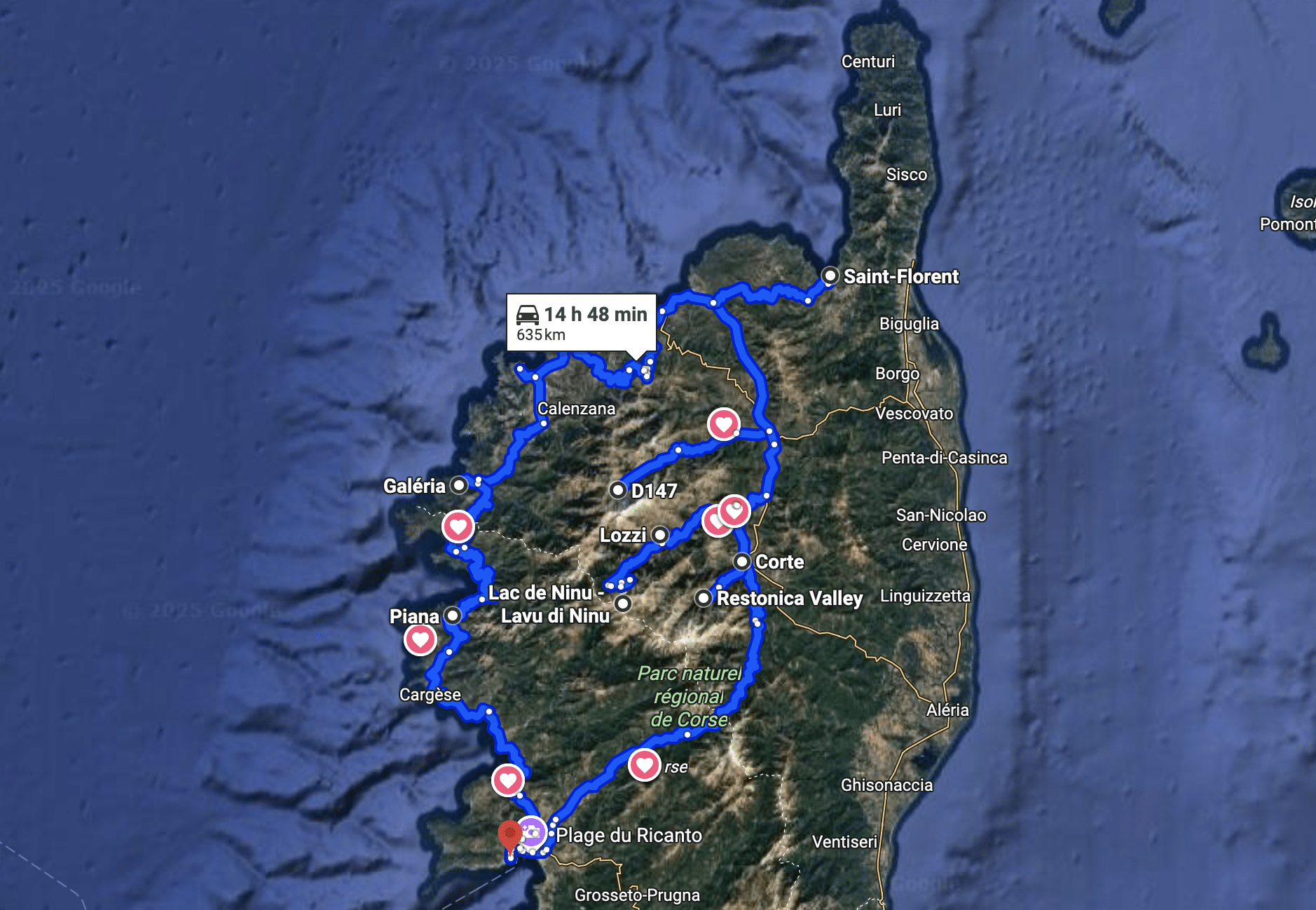
Map of our central & northern Corsica road trip
What to do in northern Corsica: the must-sees
Let's be clear from the off: the north of Corsica is for lovers of hiking and wild nature — download the Maps.me and AllTrails apps before you go — far more than for beach loungers… though you'll still find beautiful coves and beaches along the coast, not least in the famous Agriates desert, reachable only by 4x4 or by boat.
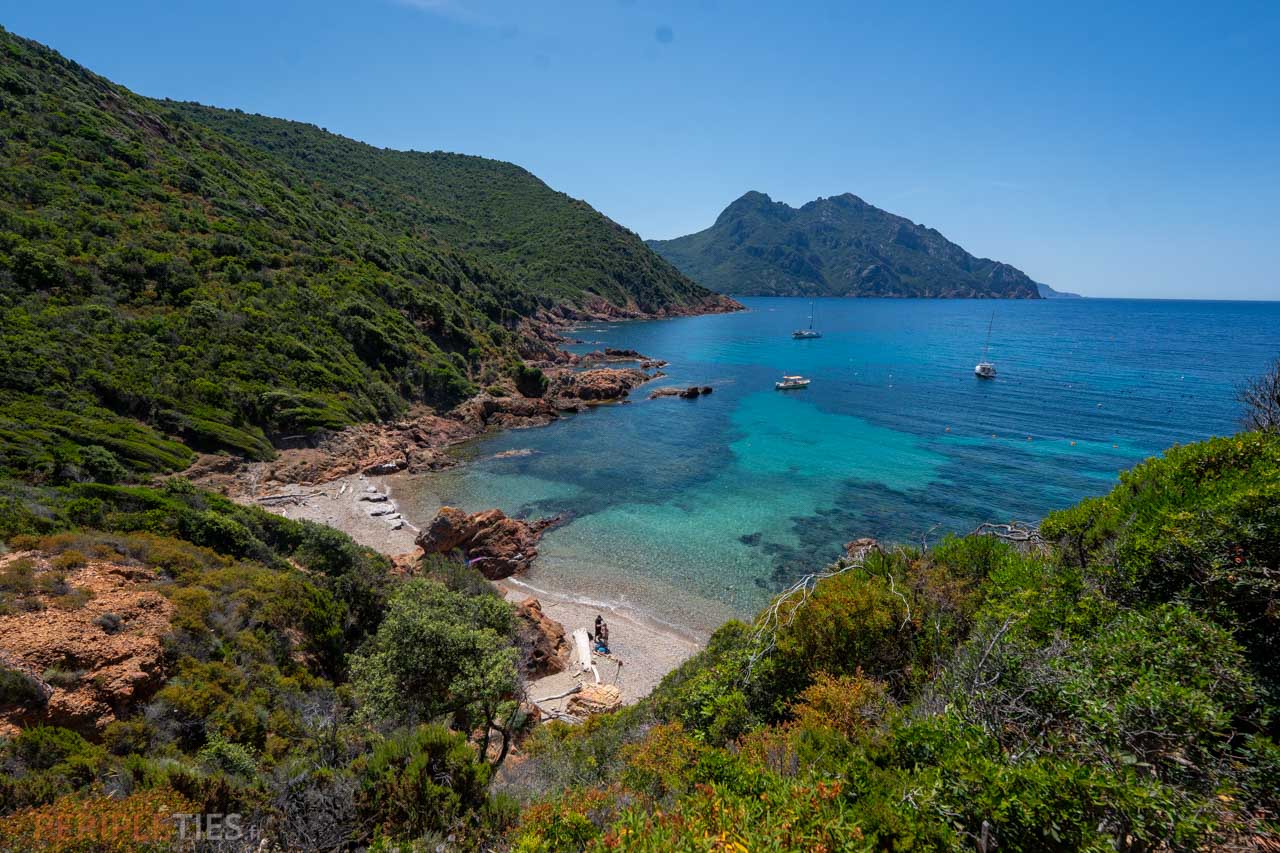
Northern Corsica is often described as more authentic and unspoilt than the south. But the two halves are every bit as beautiful as each other, each with its own character and appeal.
Hiking, nature and scenery
- The Restonica valley: a hiker's classic, with the Melo and Capitello lakes
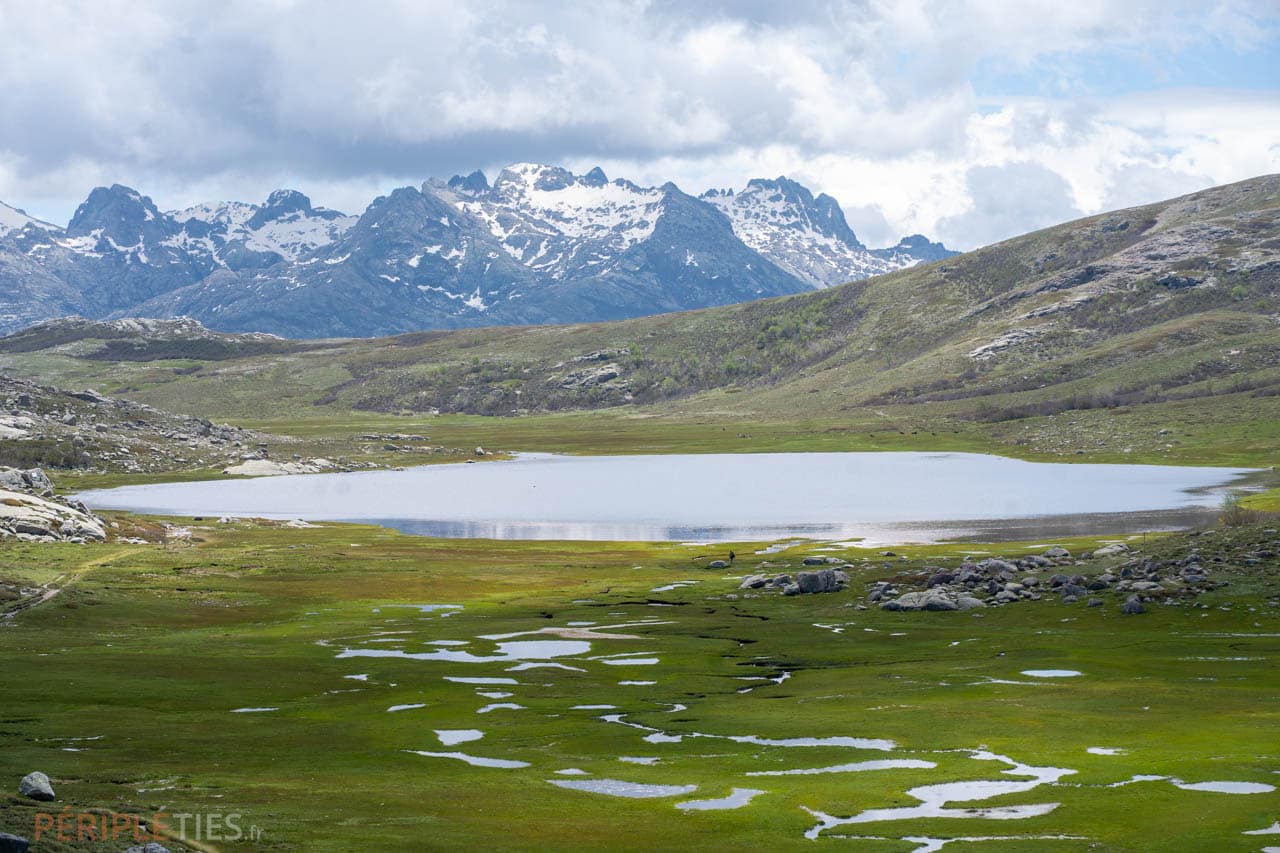
- Lake Nino — green, gentle scenery and an incredible pastoral feel. Hike it solo or with a guide.
- Corte : Corsica's historic and cultural capital. Horse riding, canyoning, microlight flights and other activities.
- Saint-Florent and the Agriates desert — a unique nature reserve and legendary beaches. By boat or by Jeep & 4x4.
- Cap Corse : a scenic coast road, villages, Genoese watchtowers, Nonza and Centuri. By car, by bus or by boat.
- The Scandola reserve : one of Corsica's natural jewels, reachable by boat only.
Villages and heritage
- The hilltop villages of the Balagne — classic perched villages, craftspeople and a real sense of authenticity.
- L'Île-Rousse : its market, its beaches reached by boat and its easy Mediterranean charm
- Calvi : the bay and the Genoese citadel, a beginner scuba dive, Corsican wine tastings.
- The Calanques de Piana (and Porto) : iconic UNESCO-listed scenery (you cross into southern Corsica here), by car or by boat.
How long do you need for Haute-Corse?
In theory you can cover the highlights of northern Corsica in 10 days. But we'd really urge you to give it more time.
If you want to linger longer in places, hike, take a boat trip and get to grips with Corsican crafts and the local way of life, two weeks won't feel like too much — especially if you want to add the Cap Corse !
Should you include Cap Corse in a northern Corsica road trip?
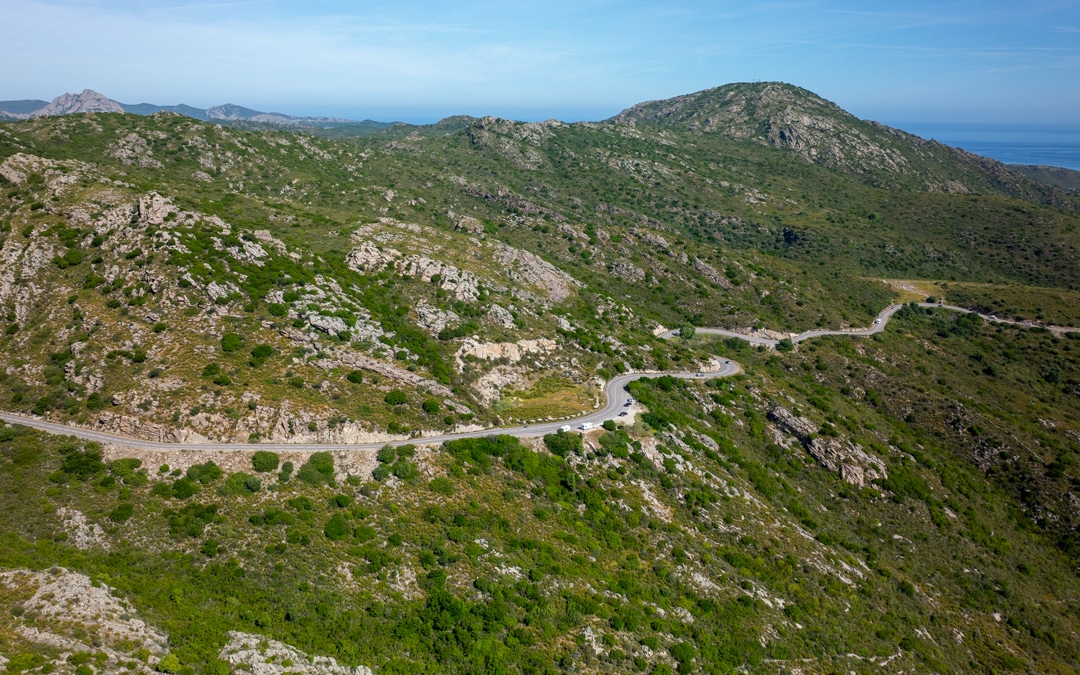
The Cap Corse is a fairly compact peninsula (around 25 miles / 40 km long), but the roads — as so often in Corsica — are winding and beg you to slow down. Allow two days minimum to enjoy it, and three days if you want to add Bastia, some hikes and a few quiet stops. We reckon you can fit Cap Corse into a northern Corsica road trip if you've got 15 days.
For our part, arriving by ferry into Ajaccio from Toulon with 13 full days on the island, we didn't include Cap Corse in our route.
We felt this area is easier to explore by arriving directly into Bastia by ferry, and could be paired with a southern Corsica loop. The various ferry crossings to reach Corsica are detailed at the end of this article.
Where to stay in Haute-Corse
Hotels & guesthouses : comfort and a local welcome, on the coast and in the villages alike. See on Expedia
Campsites : from simple back-to-nature pitches to fully equipped sites (pool, services). See on Campings.com or ACSI (family campsites).
Host stays / wild spots : through platforms like Campspace (formerly Gamping — a 'camp in someone's garden' network; 10% off with our code PERIPLETIES2025) for a more authentic stay.
Holiday lets : houses, gîtes or flats, ideal for families or groups. See on Abritel (the Vrbo network).
Blog: our favourite spots in northern Corsica
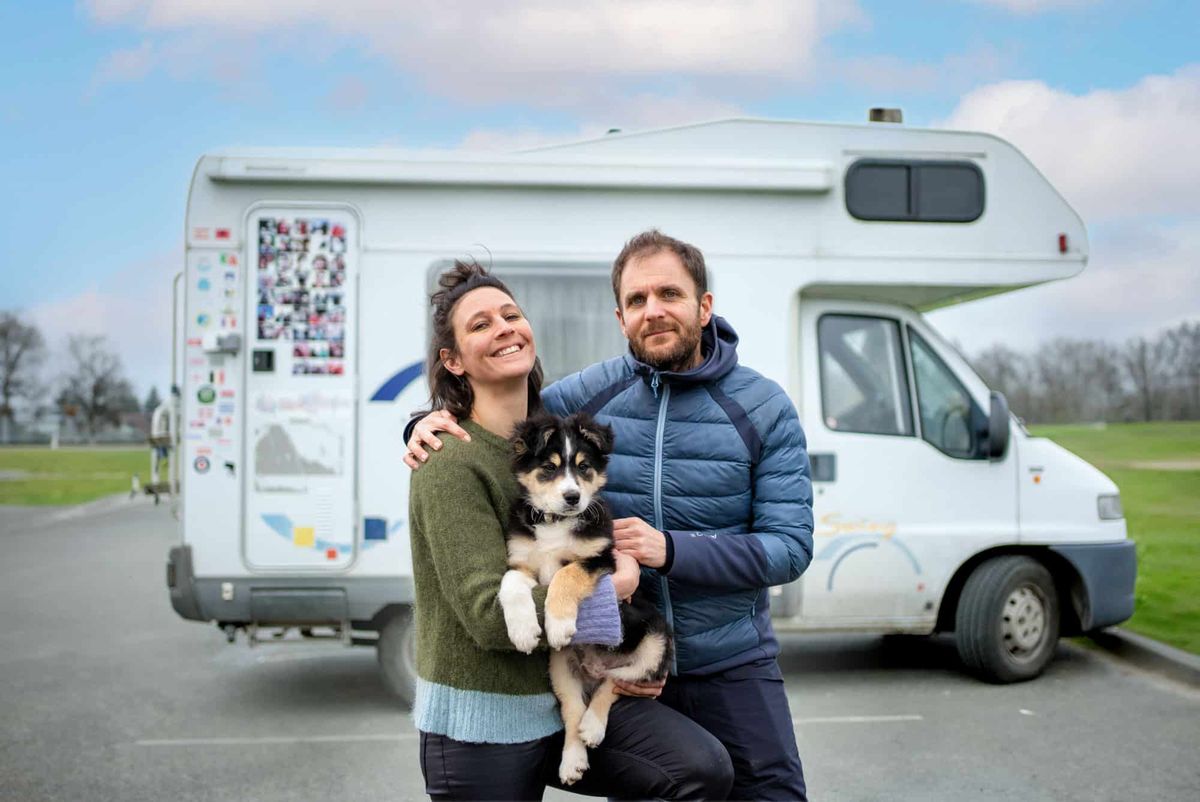
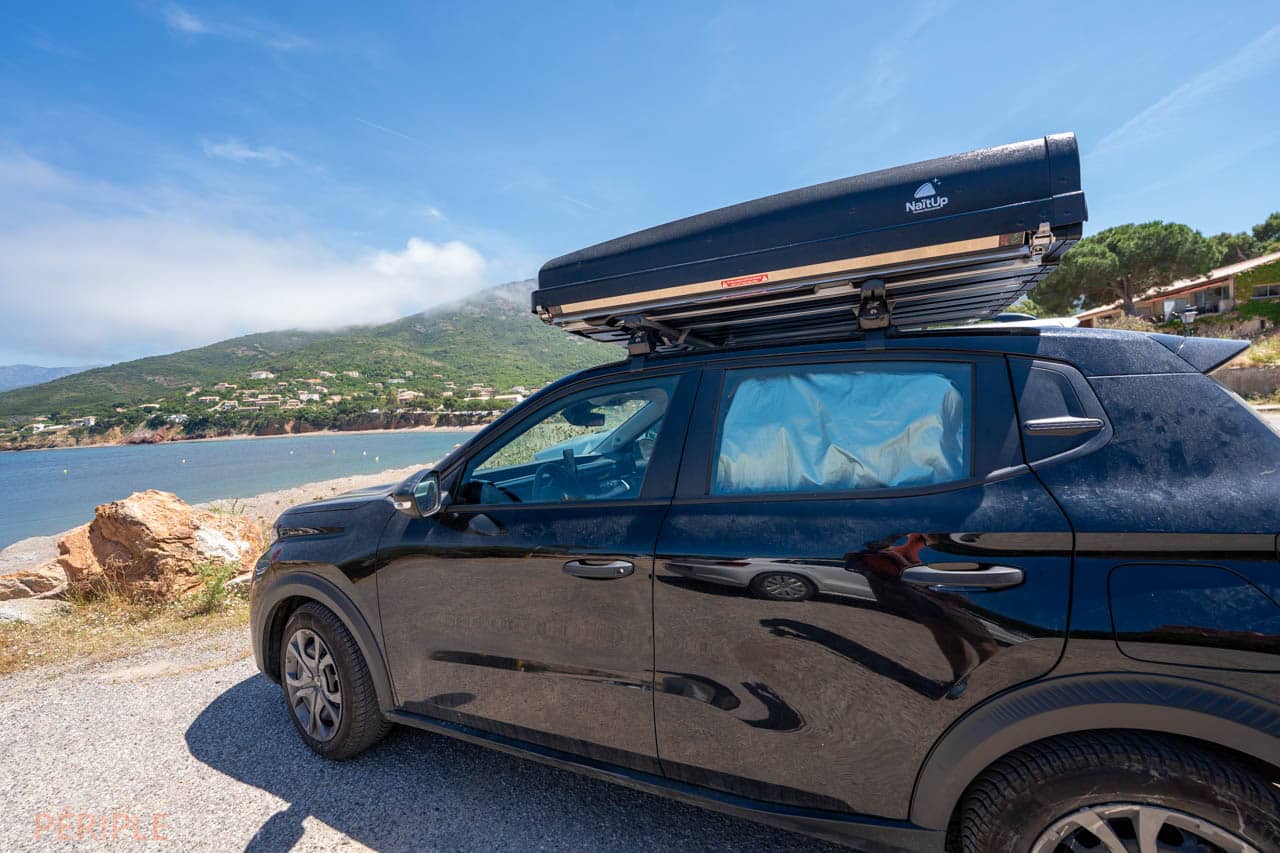
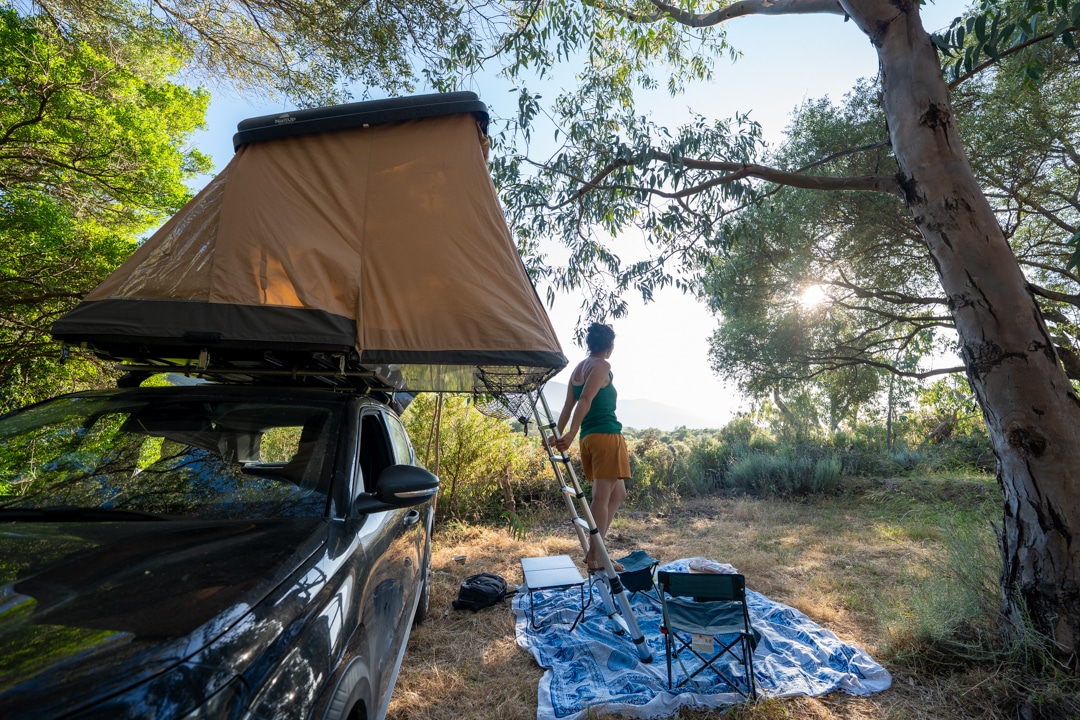
For this spring road trip we chose to travel light, with our converted car, a rooftop tent and a camping trunk. A discreet, go-anywhere setup that let us reach isolated corners and small, authentic campsites — plenty of Campspace host stays — without too many constraints.
Could the same route be done in a motorhome? Yes, but almost certainly with more compromises on the roads you take, where you wild-camp… and your peace of mind (see further down: is Corsica a good idea by motorhome?).
A Corsica itinerary: a week in Haute-Corse with a taste of the south
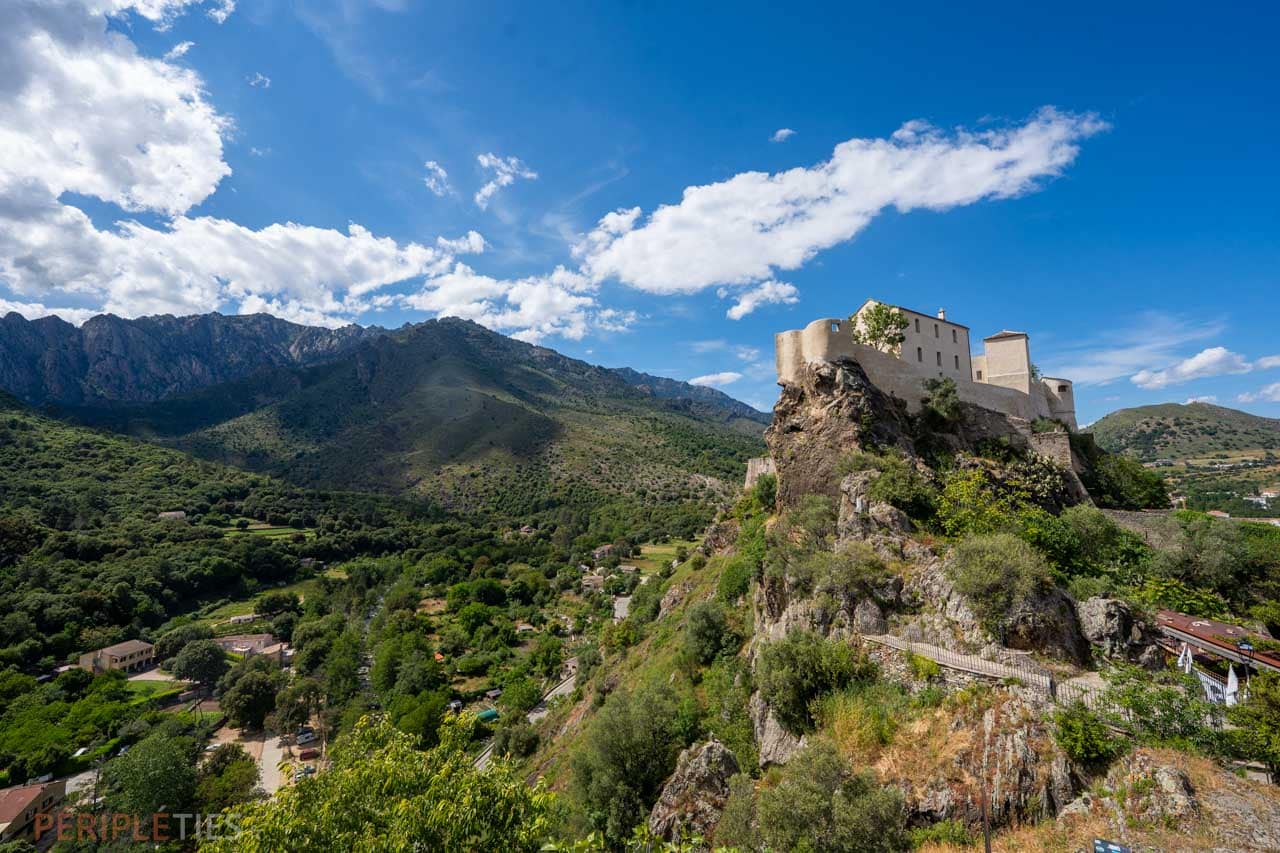
Our northern Corsica road trip route is a loop starting from Ajaccio, taking in Corte, Haute-Corse, the Restonica and Asco valleys, then Saint-Florent and the Agriates desert, the hilltop villages of the Balagne, before finishing at the Scandola reserve and the Calanques de Piana.
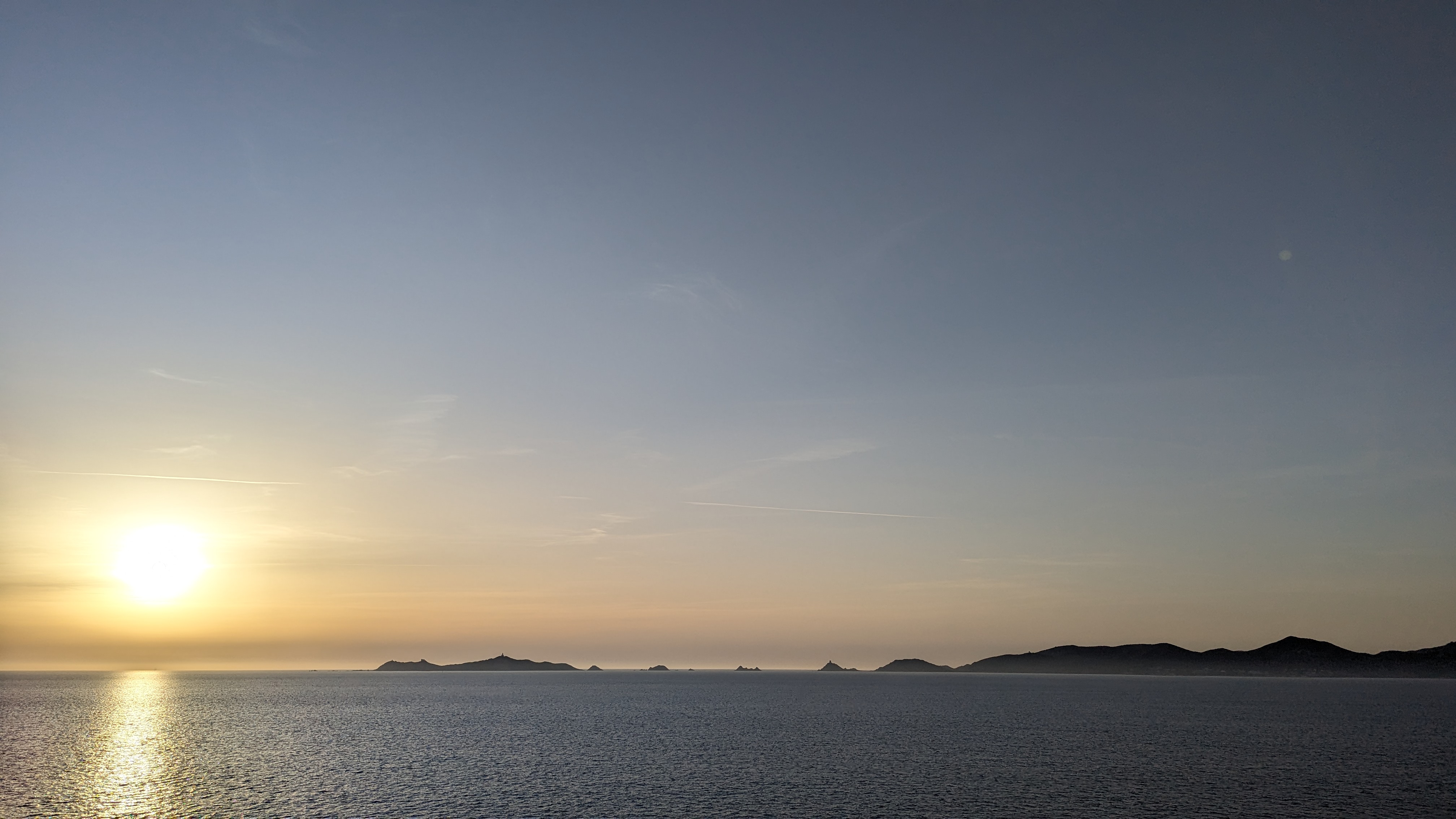
The Sanguinaires islands — the one that got away!
We'd wanted to end the trip in style at the famous Sanguinaires islands, but our timing made it impossible: campervans and motorhomes are banned from the car parks after 8pm, there are few campsites and receptions close early. It took the shine off the idea.
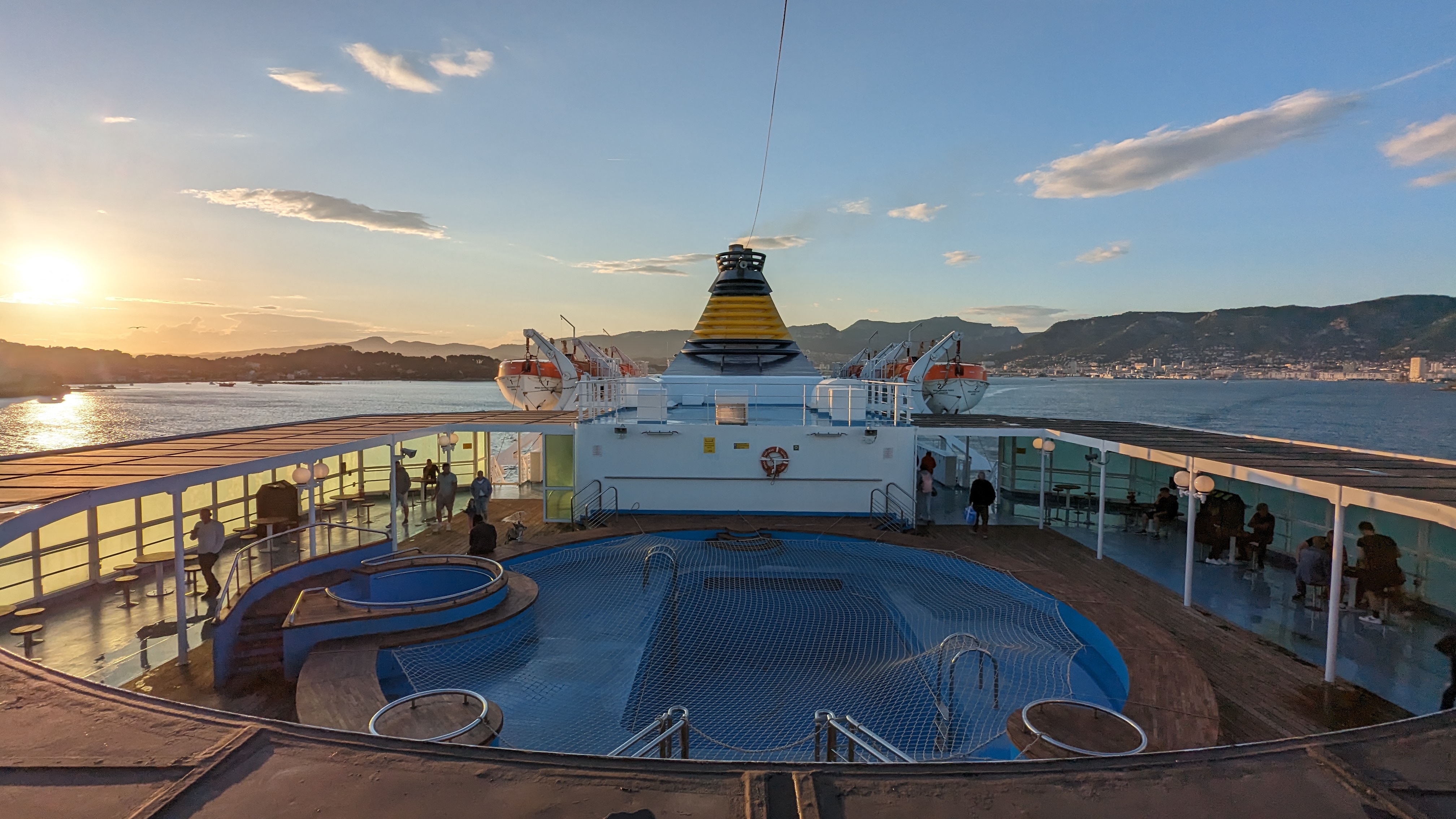
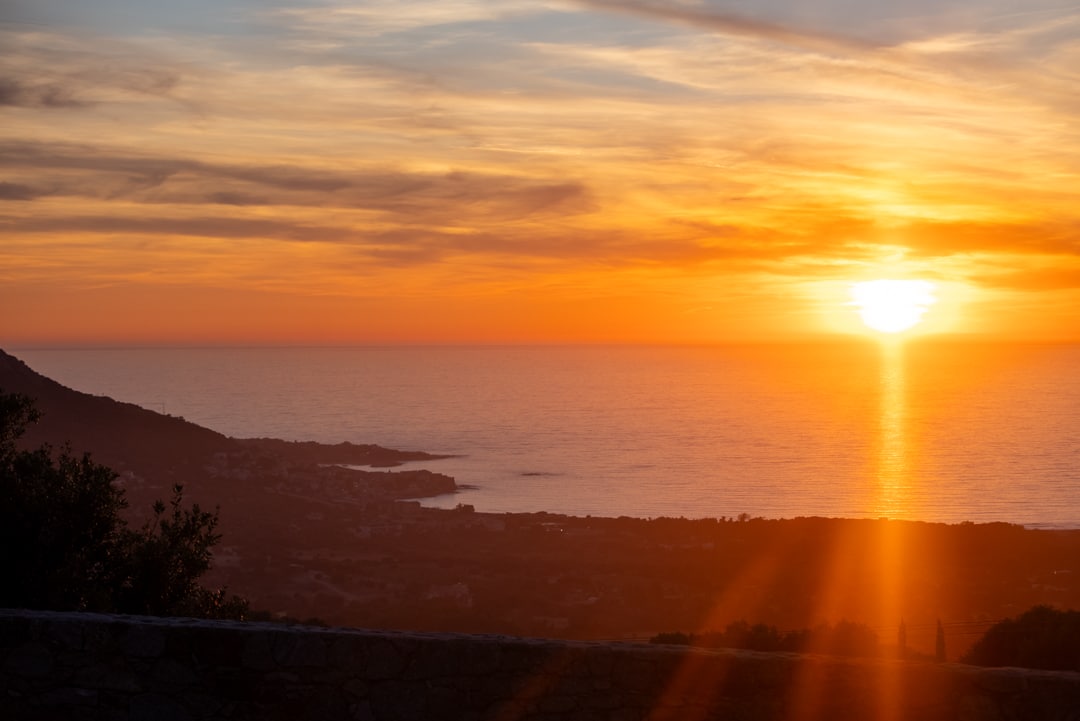
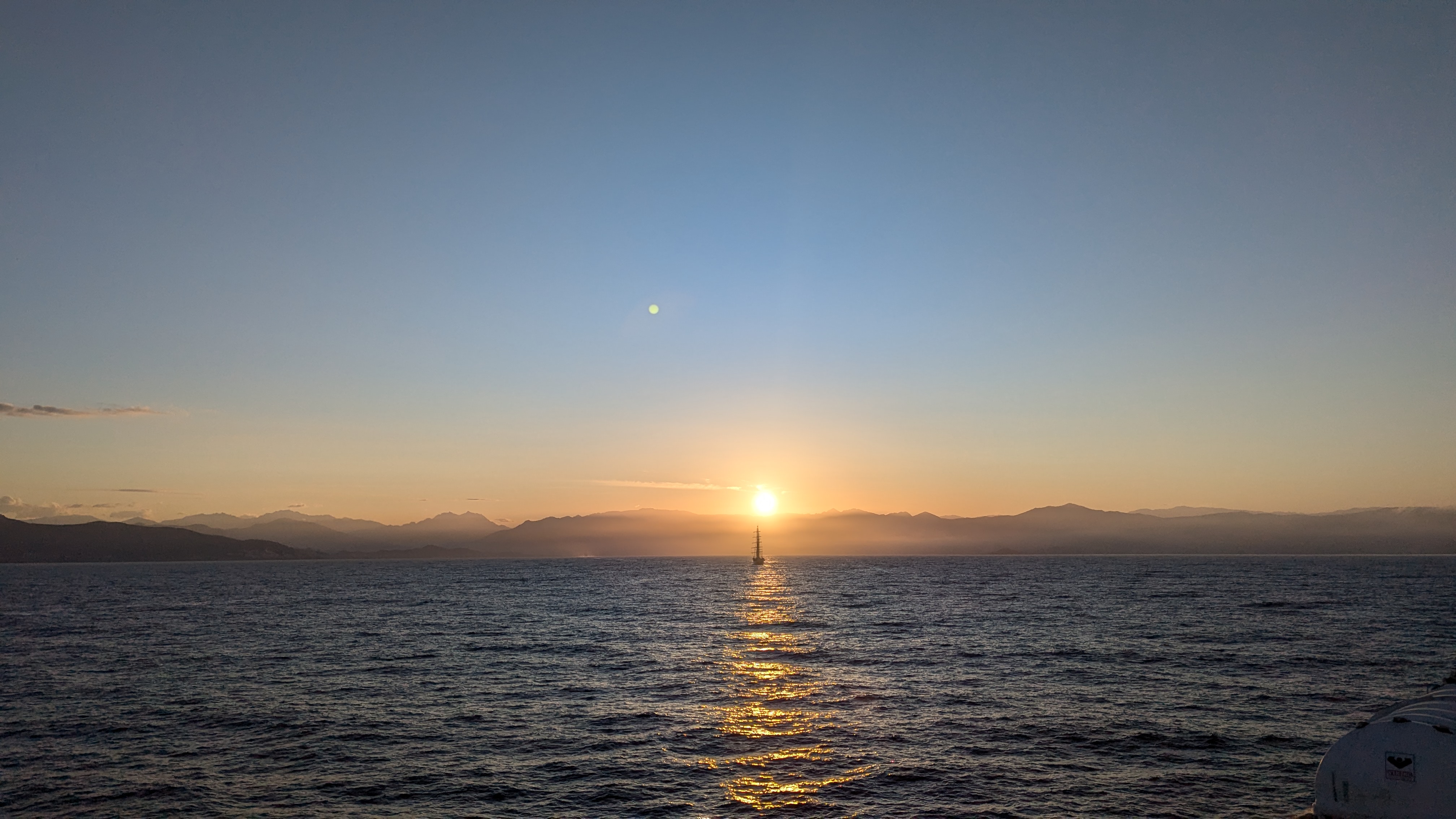
With hindsight, we'd have preferred to spend an extra day inland rather than end on that slightly frustrating note — especially as you actually catch sight of the Sanguinaires from the ferry as you leave the island at sunset!
Our highlights of northern Corsica
Haute-Corse is, above all, an incredible playground for hikers. Honestly, we think that's its greatest asset: spectacular trails, often demanding, but always rewarded with breathtaking panoramas.
Hiking to Lake Melo
In the Restonica valley, this hike is a gem. Since 2024 the access road has been closed after rockfalls, which lengthens the route (8 hours instead of 1.5).
But what a payoff: forests, waterfalls and natural pools with incredible reflections… before a steeper final climb. We reached the lake after 3.5 hours, legs heavy but hearts light. We gave up on pushing on to Lake Capitello (still under snow in May), but Melo alone was worth the effort.
On to Lake Nino
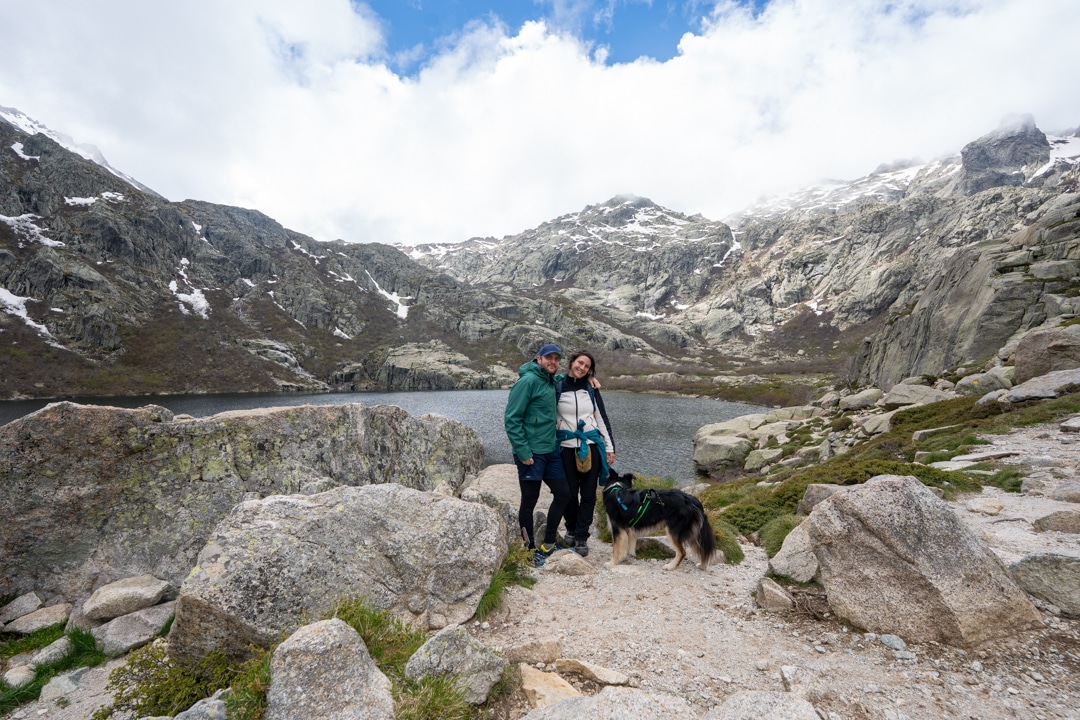
Lake Nino is easily one of our biggest highlights in Haute-Corse. From the Popaghja forest lodge (Col de Vergio), allow around 2.5 hours to cover 2.8 miles (4.5 km) on the way up — which tells you all you need to know about the climb!
The hike is physically demanding and technically tricky : the final section crosses big scree fields where you end up using your hands, almost scrambling. We even passed walkers who chose to turn back… Note that you can do the Lake Nino hike with a guide.
But once you're up there, the effort pays off many times over: a magical setting, lush pozzines — spongy alpine peat meadows like a soft carpet, the lake glinting among the mountains, and free-roaming horses and cattle that complete a scene worthy of the great Patagonian plains (yes, it earns the superlative).
The Agriates desert: wild country between sea and maquis
Despite what the name suggests, the Agriates desert is anything but arid. It's a vast protected area of 37,000 acres (15,000 ha), with no village or surfaced road, where the maquis (Corsican scrubland) rules.
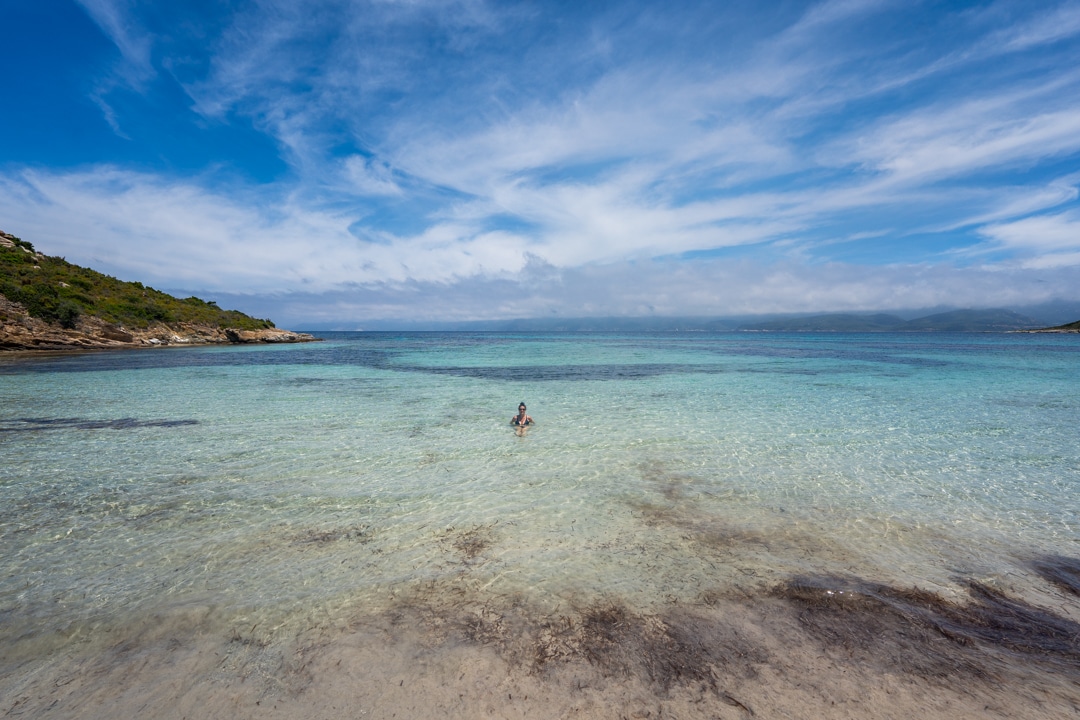
Between Saint-Florent and the Ostriconi, you find raw, spectacular nature dotted with turquoise coves and pristine beaches.
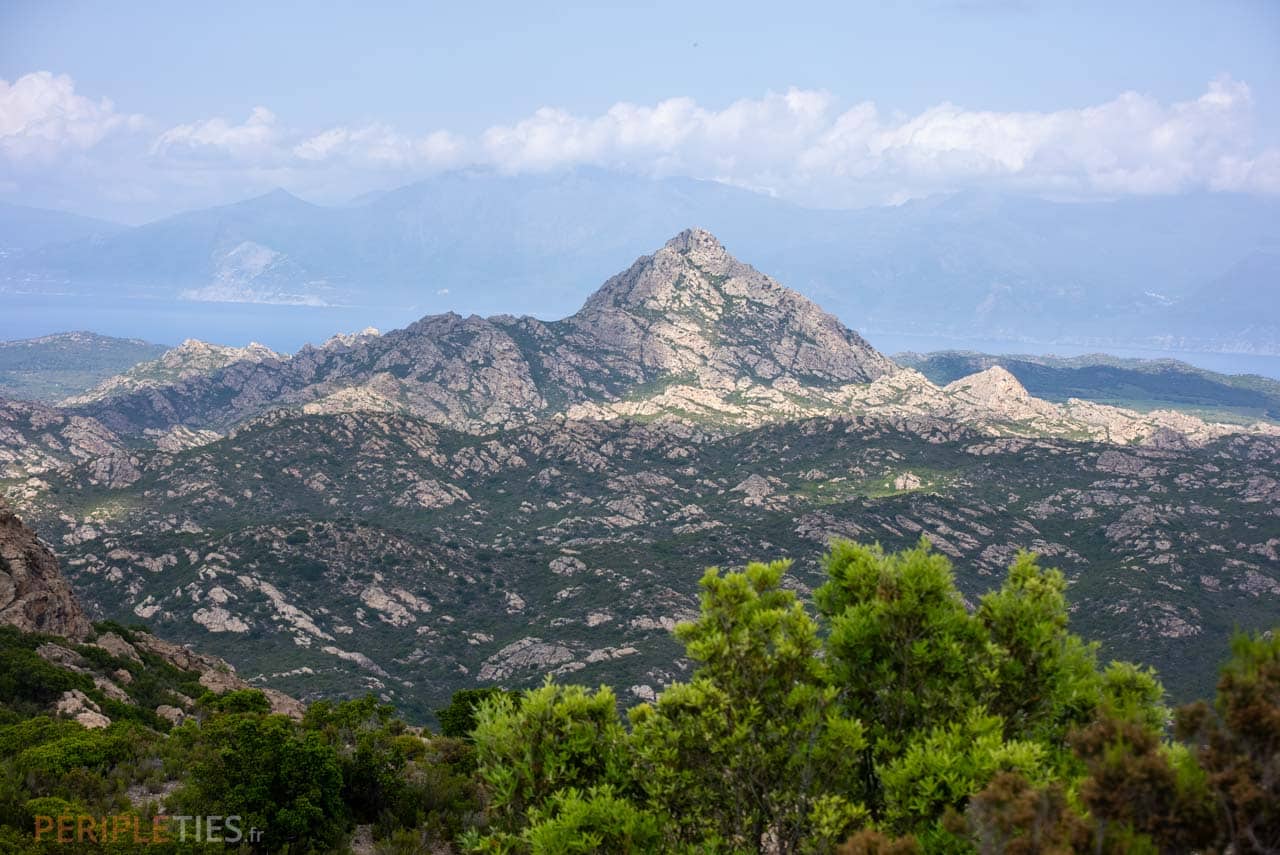
The famous beaches of Saleccia and Lotu are reachable by water taxi from Saint-Florent or via tracks reserved for 4x4s far tougher than our converted car…
Rather than taking a 4x4 shuttle or a boat, we chose another option: walking the sentier des douaniers (the old customs officers' coast path), which crosses the Agriates desert — and it was magical.
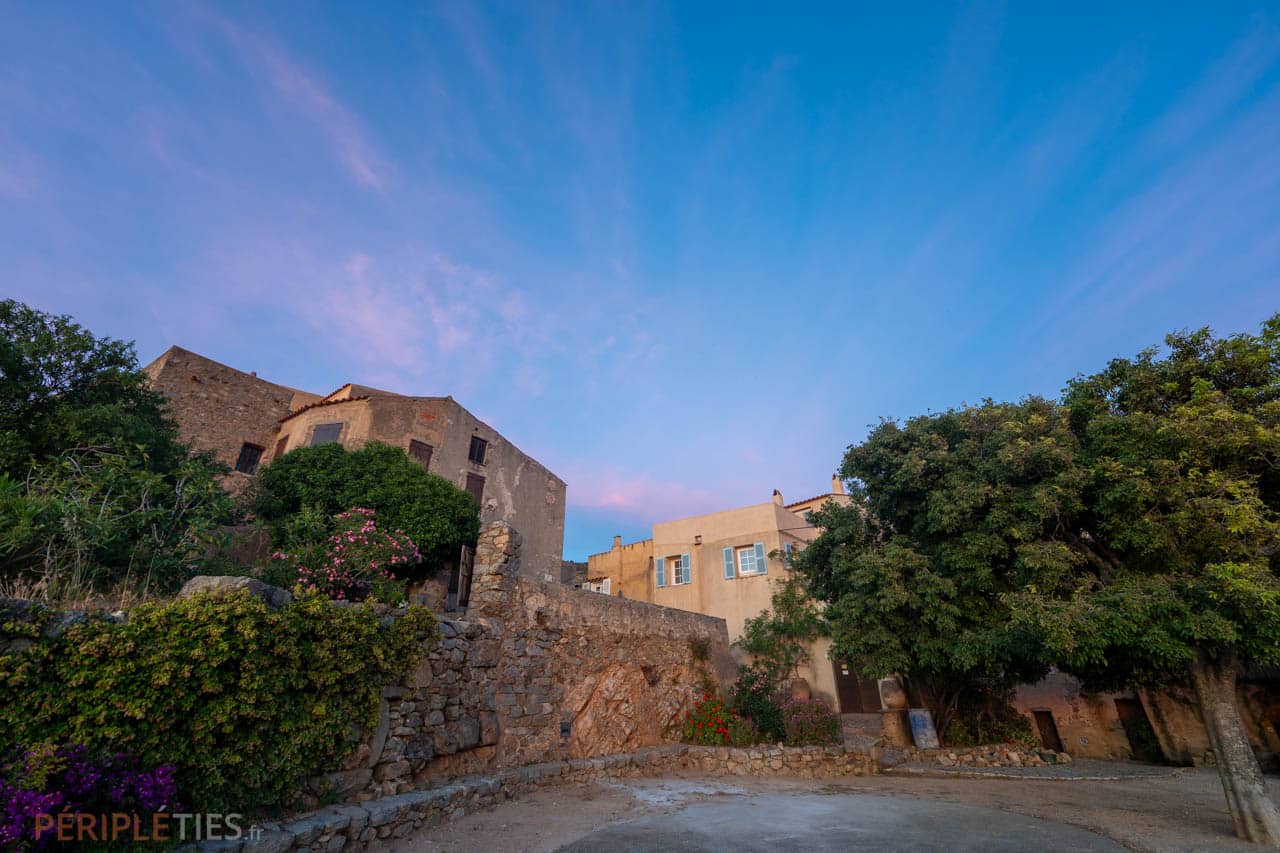
The Balagne: hilltop villages and the craftspeople's road
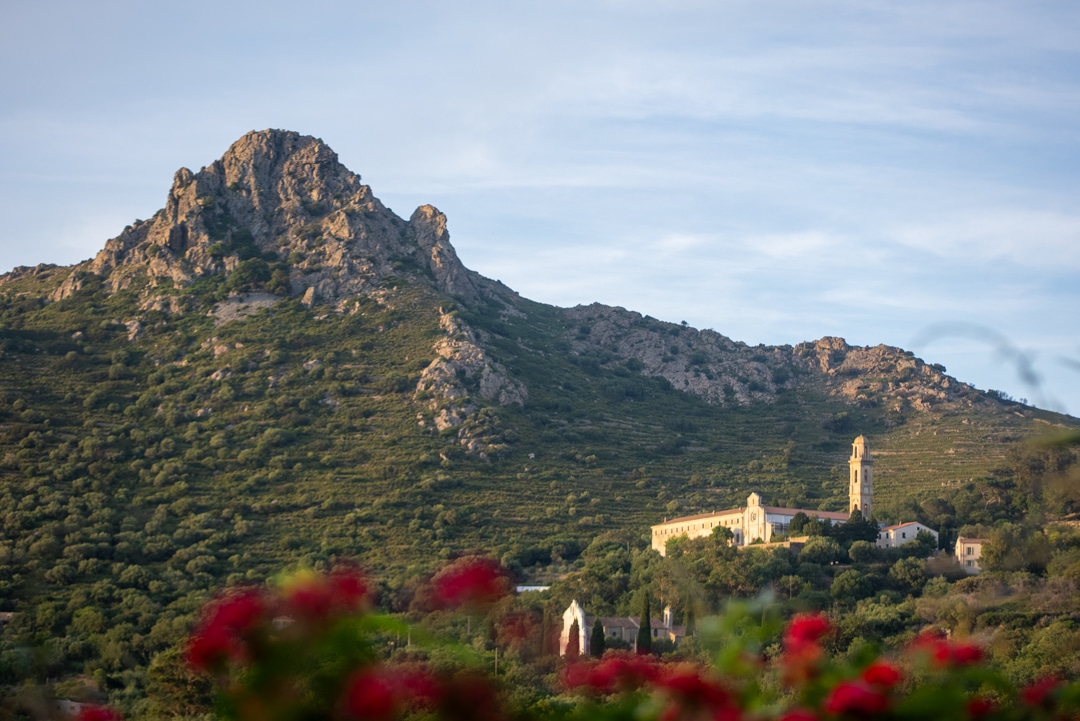
Nicknamed the 'garden of Corsica', the Balagne won us over with its gentle feel and perched villages, each with its own charm and crafts. Our favourites: Pigna, a little gem of artisans and musicians, and Sant'Antonino, perched on its rocky spur with a 360° view.
We also loved wandering lesser-known villages like Cateri, Aregno, Speloncato and Corbara, perfect for a coffee stop or some local shopping.
We didn't visit Île-Rousse or Calvi, as the parking options didn't appeal. But we do think wandering Calvi's Genoese citadel — its ramparts, the view over the bay and the narrow lanes up to Notre-Dame de la Serra — is worth the detour if you have time.
The Scandola reserve by boat: a magical — and responsible — moment
It was one of our most memorable moments: leaving land to discover the Scandola nature reserve, a UNESCO site. Reachable only by boat, it stuns with its red cliffs, sea caves and protected wildlife.
We went with Scandola Marine, hiring a boat for the day — though there are plenty of others — a passionate local outfit we can only recommend: a warm welcome (Ulysse included), clear commentary and, above all, respect for the place. At the end of the day we kept the magic going with a quiet night in the Fango valley.
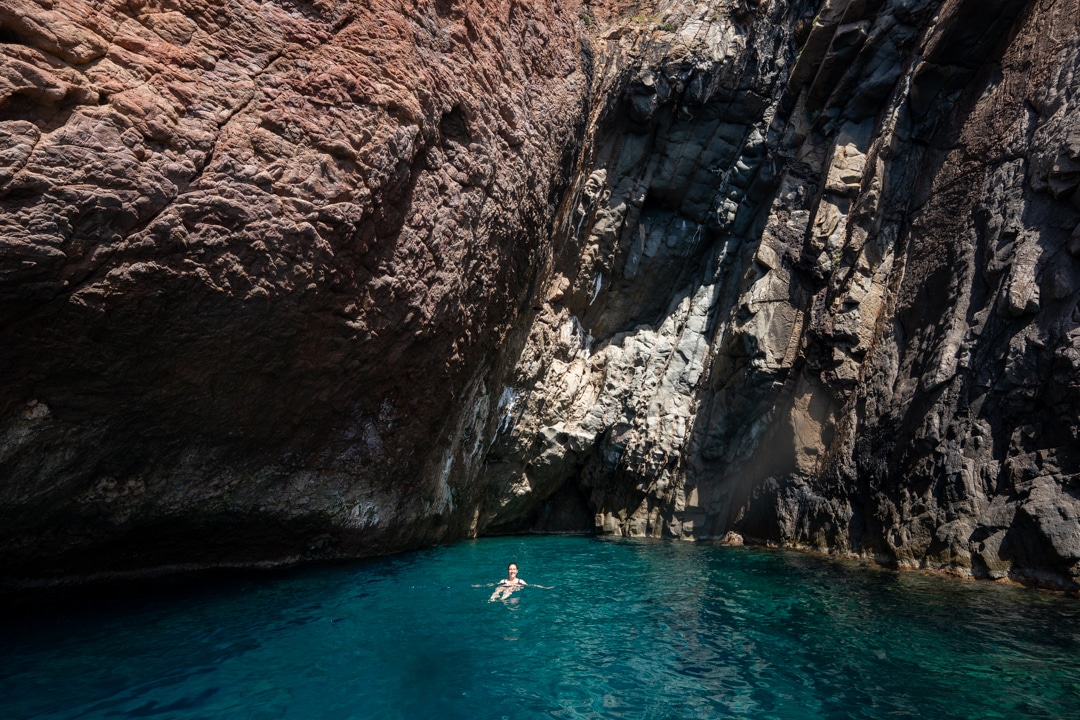
Contact: Scandola Marine (departing from Galéria). Booking strongly advised. Around €40 to €50 per person depending on the option (€170 for the boat without a skipper's licence). Duration: roughly 2.5 to 3 hours, or a full day. Dogs allowed (let them know in advance).
Hiking to Girolata: on postman Guy's trail
Among the most beautiful spots in Corsica is surely Girolata, a tiny isolated village you can only reach on foot or by sea. Rather than going by boat, we chose to follow in the footsteps of the legendary postman Guy, who delivered the mail here every day for over 30 years.
From Tuarelli (in the commune of Osani), the path first drops towards the sea before winding through the maquis and skirting crystal-clear coves. Then comes the climb up to the village, with the turquoise bay as a backdrop.
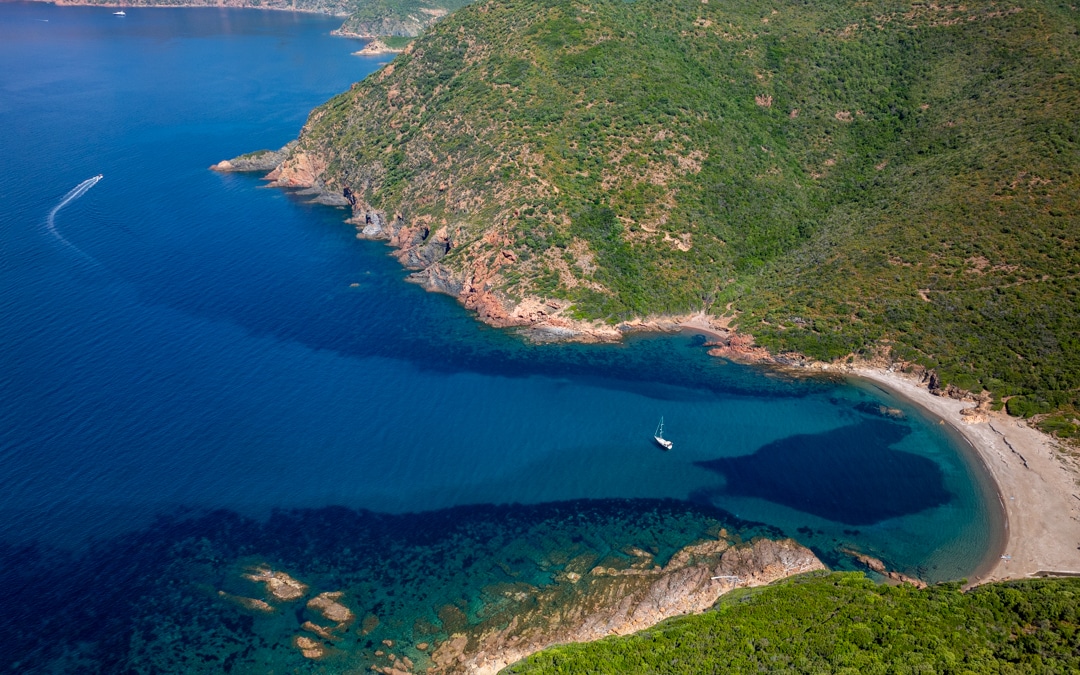
Allow 4 to 6 hours there and back depending on your pace, and bring plenty of water and good shoes (the sun is fierce and some sections are slippery). There's a shorter variant via the Col de la Croix, though it's a little technical in places — the real difficulty being the heat.
The Calanques de Piana
We'd been told it was probably one of the most beautiful roads in Corsica : red cliffs plunging into turquoise sea, fragrant maquis, tight bends. The setting really is splendid, but after all the wonders we'd already seen, we'll admit it wasn't our biggest highlight (sorry!).
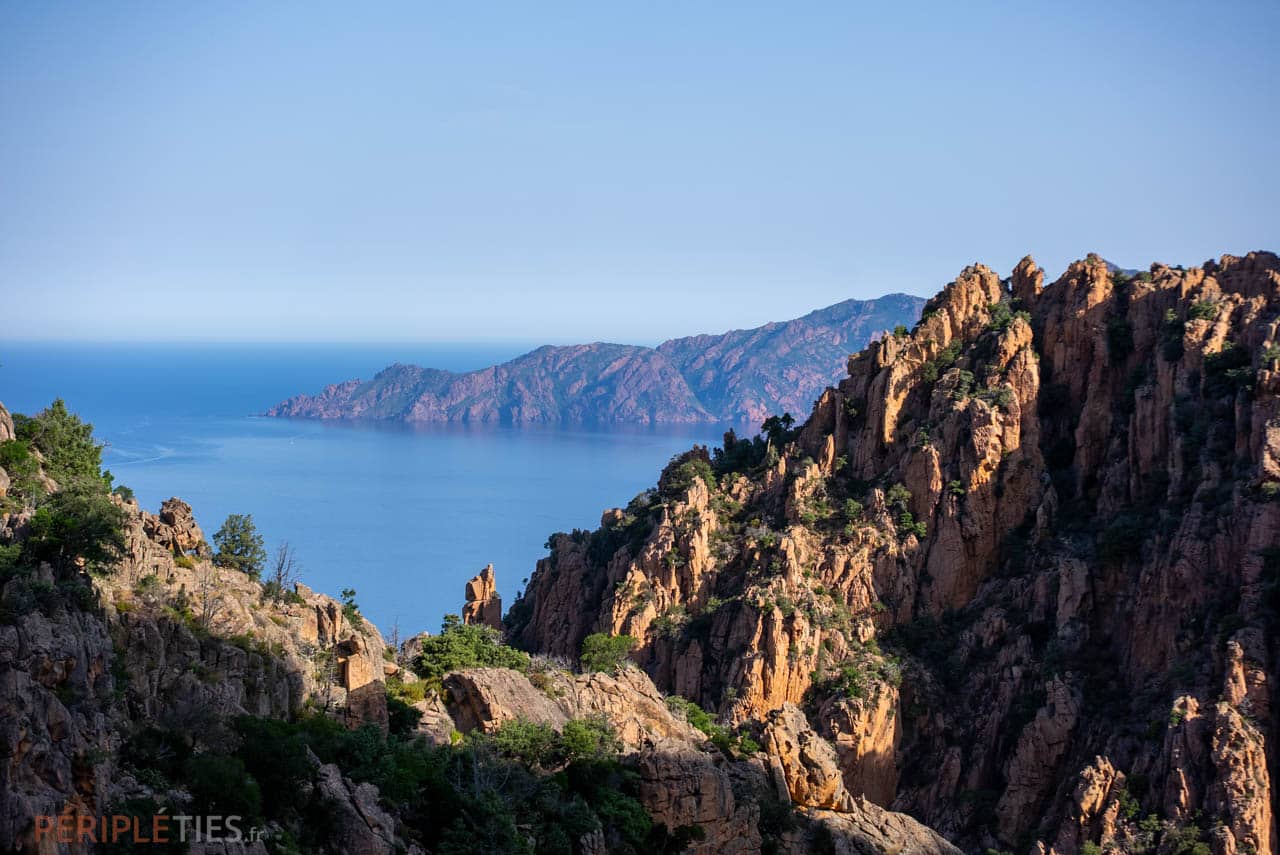
A local told us the calanques truly reveal all their magic from the sea, setting off from Porto. That might be why we felt a little more lukewarm, especially having already had an unforgettable boat trip at Scandola.
Our tip : set off early to dodge the tour coaches, as the road quickly gets clogged and very narrow.
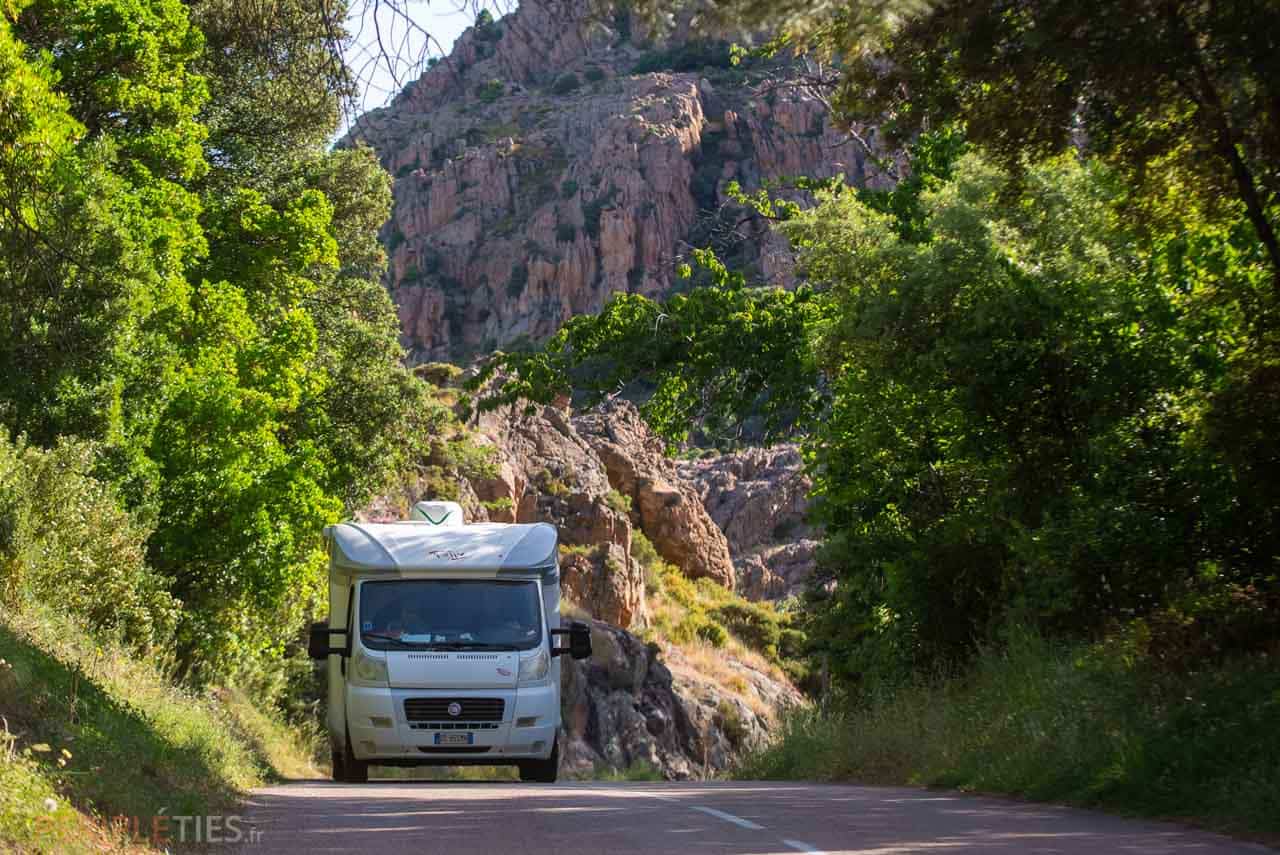
By motorhome, the road is of course doable, but it can be stressful when you meet oncoming traffic, all the more so with the motorbikes and people stopping roadside for photos.
Is Corsica a good idea by motorhome?
Corsica by motorhome isn't mission impossible, but it does take some adapting. Narrow roads, often limited parking, recurring bans on 'habitable vehicles'… We don't think the islanders are closed to touring travellers, but there genuinely is a slight wariness, especially towards large motorhomes, no doubt fed by the bad behaviour of a few. And honestly, anyone who tells you otherwise hasn't talked to the locals — because while Corsicans are very welcoming, they're also frank and direct, and won't hesitate to let you know when they're unhappy.
Our advice: keep a spirit of discretion and openness to conversation, respect local rules, and accept staying on campsites more often. During our stay we favoured host stays (Campspace), family campsites and farm pitches through the Bienvenue à la Ferme (Welcome to the Farm) network.
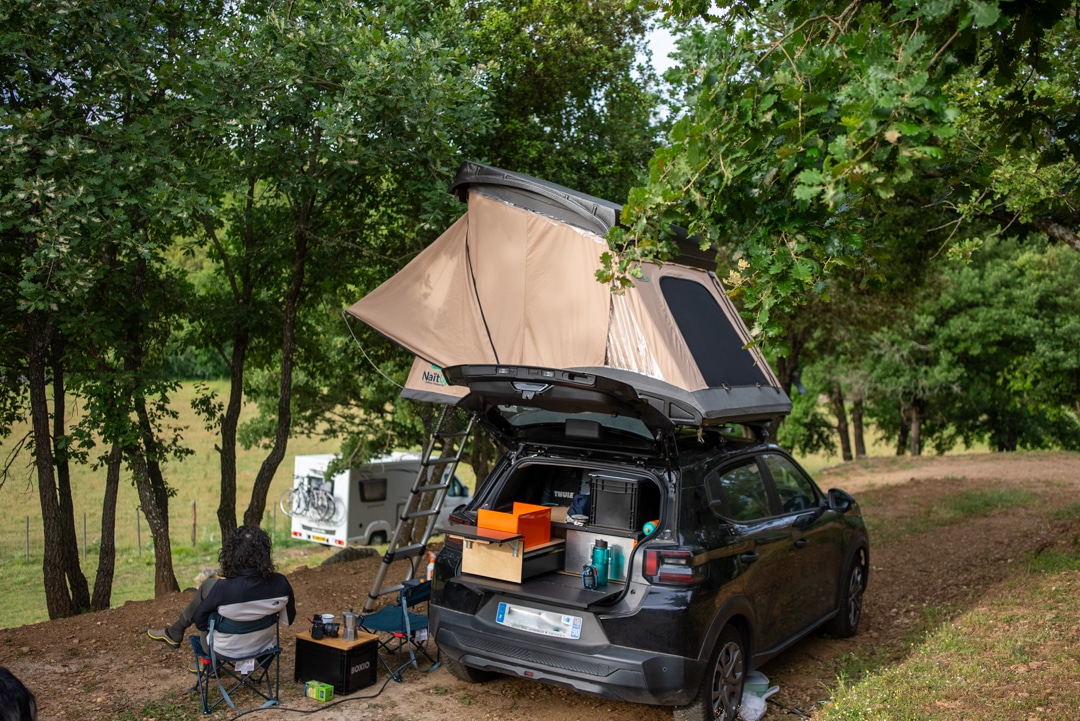
Kit yourself out with bikes to reach the little gems, avoid rush hour on the roads (which are also the locals' commuting hours)… and, if you can, steer clear of July and August!
Travelling in Haute-Corse with a dog
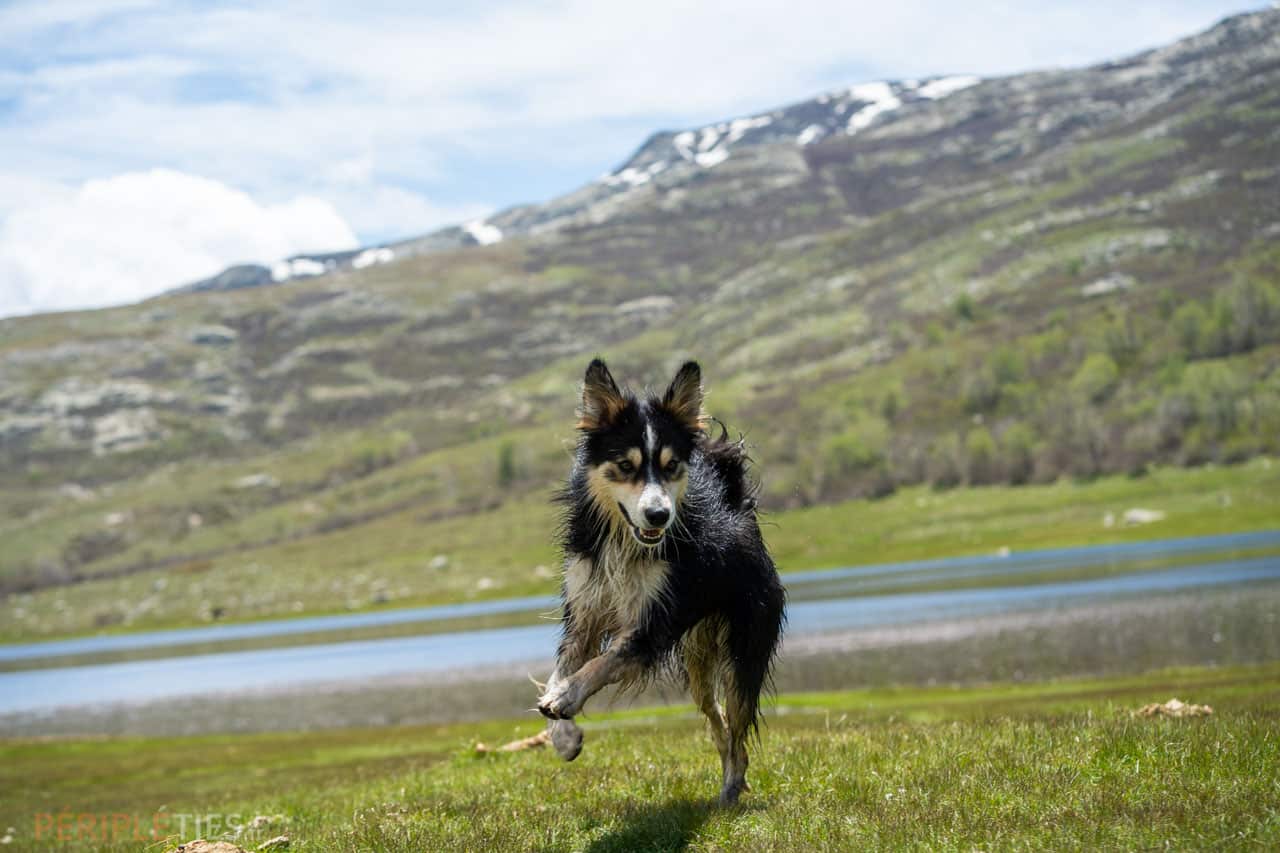
What about the four-legged crew? Haute-Corse is well suited to travelling with a dog — a paradise, even, as long as you adapt the pace to your dog's fitness (some hikes have very technical sections). Ulysse, our border collie, came everywhere with us: hikes (Restonica, Nino, Girolata…), the wild Agriates beaches, even by boat (Scandola Marine takes dogs on board). Bring plenty of water, watch out for hot, steep rocks, the heat (best to set off early) and processionary caterpillars (toxic to dogs) in spring. On the wild beaches, no problem at all, but do check in touristy areas — dogs are generally welcome, though you'll need them on a lead when it's busy.
Our 15-day northern Corsica road trip on YouTube
We packed our trip around the Isle of Beauty (Corsica's nickname) into the YouTube video below! We share our mishaps (often memorable), our finest gems, the surprises we didn't see coming… and our honest take on how converted vehicles are received in Corsica.
-
Taking the ferry to Corsica with your vehicle
We sailed from Toulon at 8pm aboard Corsica Ferries, bound for Ajaccio. A relaxed crossing in a private cabin, perfect for resting — and ideal when travelling with a dog. At 7am the next morning we landed fresh and ready to start our Haute-Corse road trip.
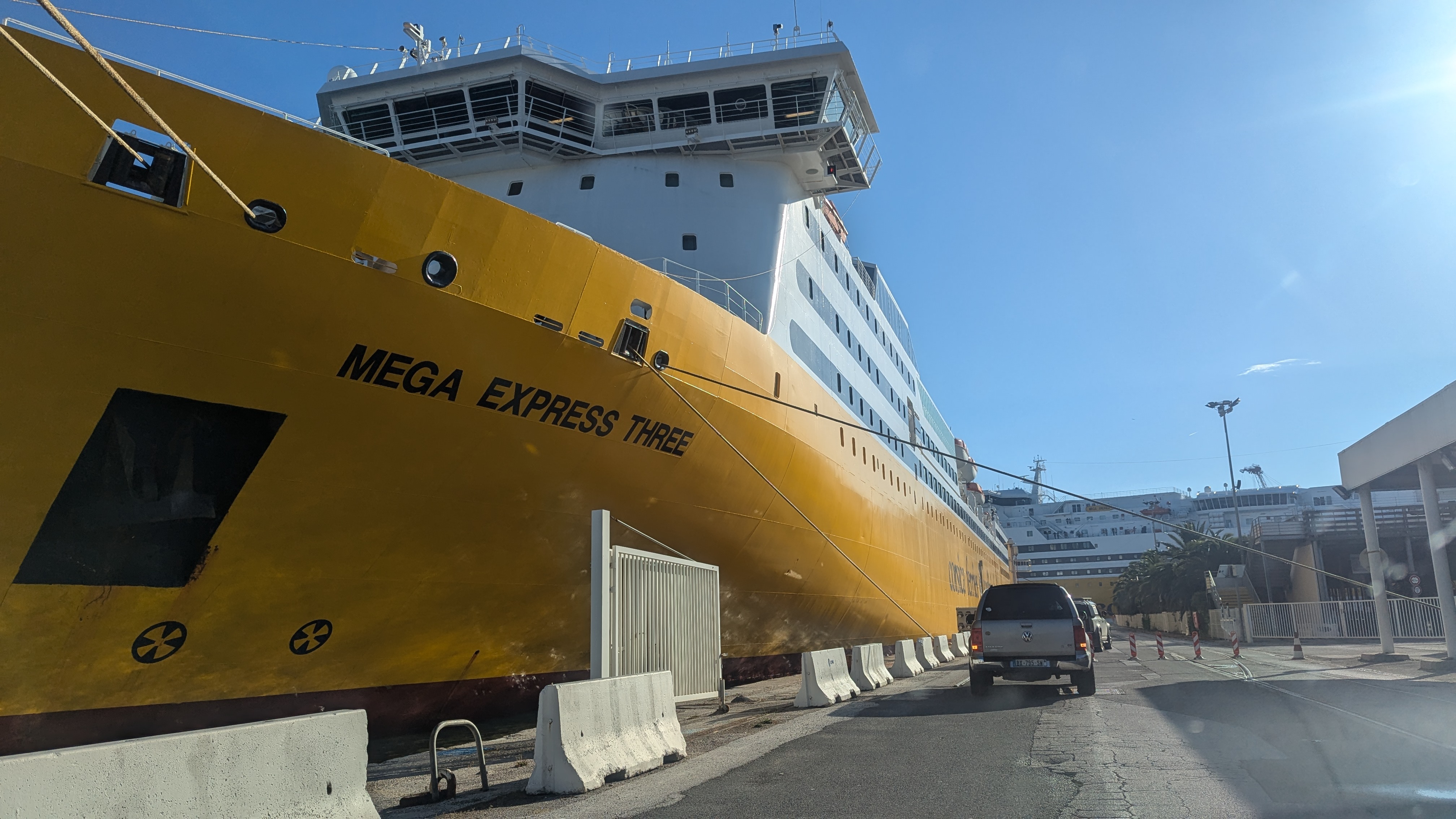
How much does it cost?
Bear in mind there are different crossing options depending on the route you want to do. Prices vary a lot with the season, the vehicle you bring, and whether you take a cabin, a single or a return. Booking early often gets you better fares.
We managed to get a return for two passengers in a cabin + car + dog between Toulon and Ajaccio for a total of €500 (around £430).
How long do ferry crossings from France take?
On average, ferry crossings take 6 to 10 hours depending on the line and the type of crossing (day/night). Toulon–Bastia is about 10 hours overnight / 6-7 by day, Nice–Bastia about 7 hours, and Savona (Italy)–Bastia roughly 4 to 6 hours.
Ferries to Corsica from France
- Toulon ↔ Corsica (year-round, regular sailings)
To Bastia
To Ajaccio
To L'Île-Rousse
To Porto-Vecchio (in season) - Nice ↔ Corsica
To Bastia
To Ajaccio
To L'Île-Rousse
To Porto-Vecchio - Marseille ↔ Corsica (mainly run by La Méridionale and Corsica Linea — but sometimes seasonal Corsica Ferries sailings)
Map of ferry crossings to Corsica
Ferries to Corsica from Italy
- Savona (near Genoa) ↔ Corsica
- To Bastia
- To L’Île-Rousse
- Livorno ↔ Corsica
- To Bastia
-
One thing's for sure: Corsica isn't just lived, it's felt! We're leaving with images burned into our minds, memorable encounters… and already the urge to return — perhaps to explore Cap Corse more deeply, or carry on south.
Have you been to Corsica? What are your own highlights on the Isle of Beauty? Leave a comment and join us over on YouTube to keep the adventure going!
Safe travels! Pauline & Simon
Note: this article contains affiliate links. If you decide to book or buy through them, you help us keep producing guides like this one — at no extra cost to you, we may earn a small commission.