
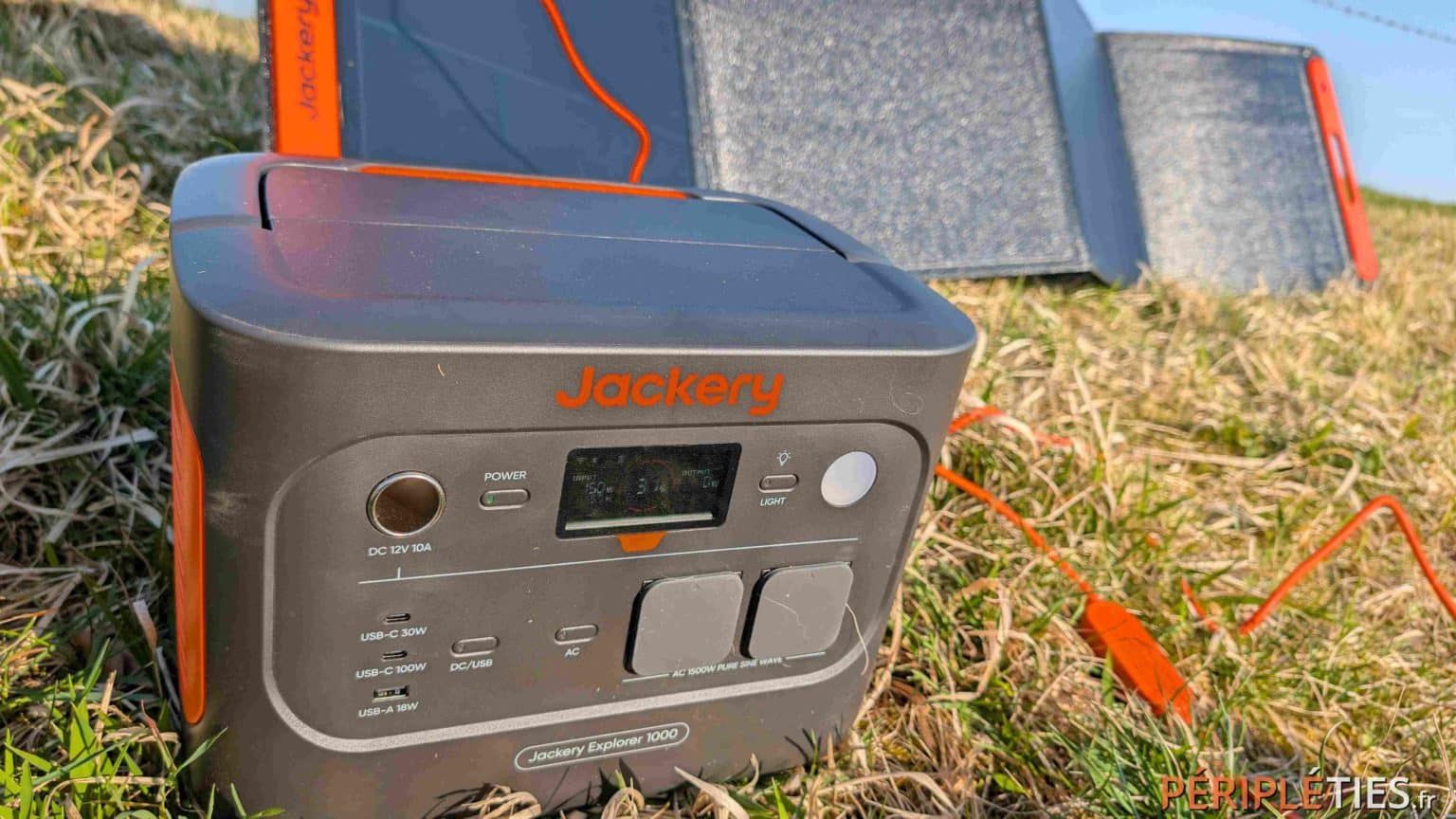
Capacity, output, real-world runtime, charging, lifespan and price: the Jackery Explorer 1000 v2 (US) / Jackery Explorer 1000 v2 (UK) is one of the most popular 1kWh portable power stations on the market. Is it the right one for a van, a campervan or a converted car? We have been using it with our converted Citroën ë-C3, and here is our honest verdict, with official data we checked and realistic scenarios for future buyers.
This article contains affiliate links. If you buy through them, we earn a small commission at no extra cost to you. It helps us keep testing gear independently and publishing free guides.
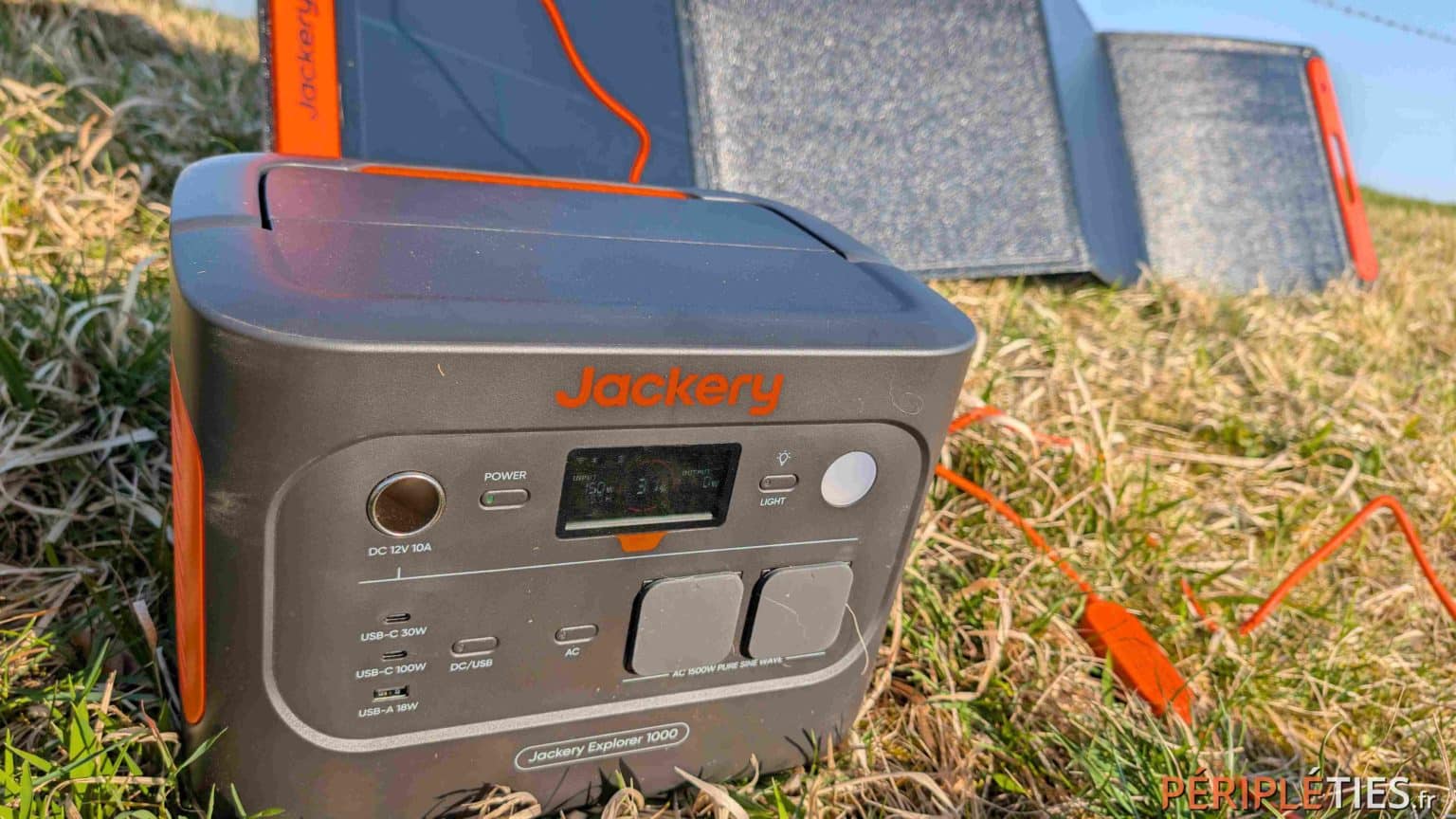
Jackery Explorer 1000 v2: a classic, rebuilt around LiFePO4
Launched in 2024, the Explorer 1000 v2 replaces the original Explorer 1000, one of Jackery's best-selling power stations. It is not a simple refresh: new LiFePO4 battery chemistry instead of NMC lithium-ion, 50% more output, one-hour emergency charging, a smaller body and app control.
The question is whether that is enough in a segment where competition is fierce, with the EcoFlow Delta 3 (US) / EcoFlow Delta 3 (UK), the Bluetti Elite 100 V2 (US) / Bluetti Elite 100 V2 (UK) or the Anker SOLIX C1000 all chasing the same buyers.
Key specifications
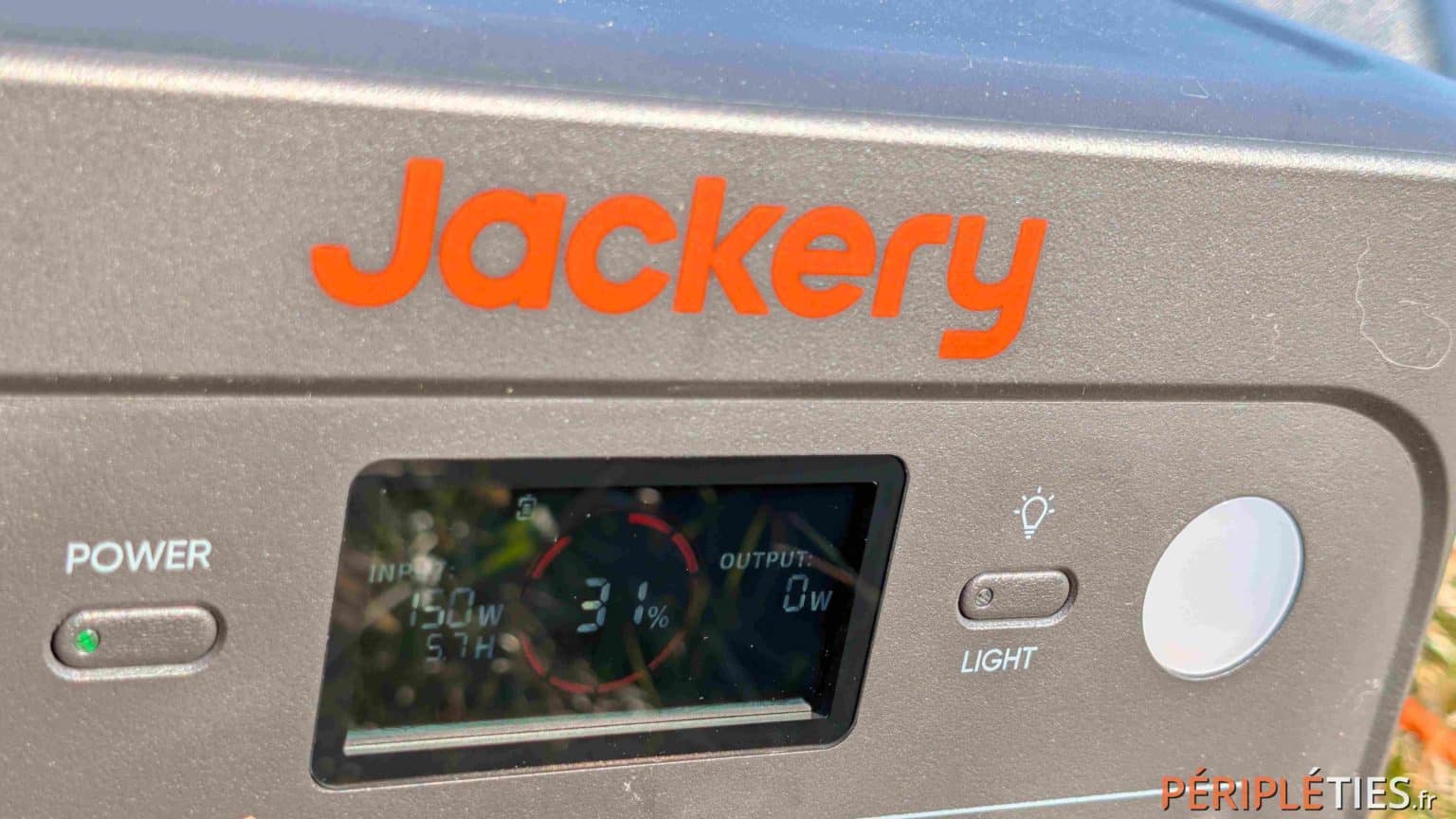
- Capacity: 1,070Wh
- Battery chemistry: LiFePO4 (lithium iron phosphate)
- Continuous AC output: 1,500W (3,000W surge)
- Lifespan: 4,000 cycles to 70% capacity
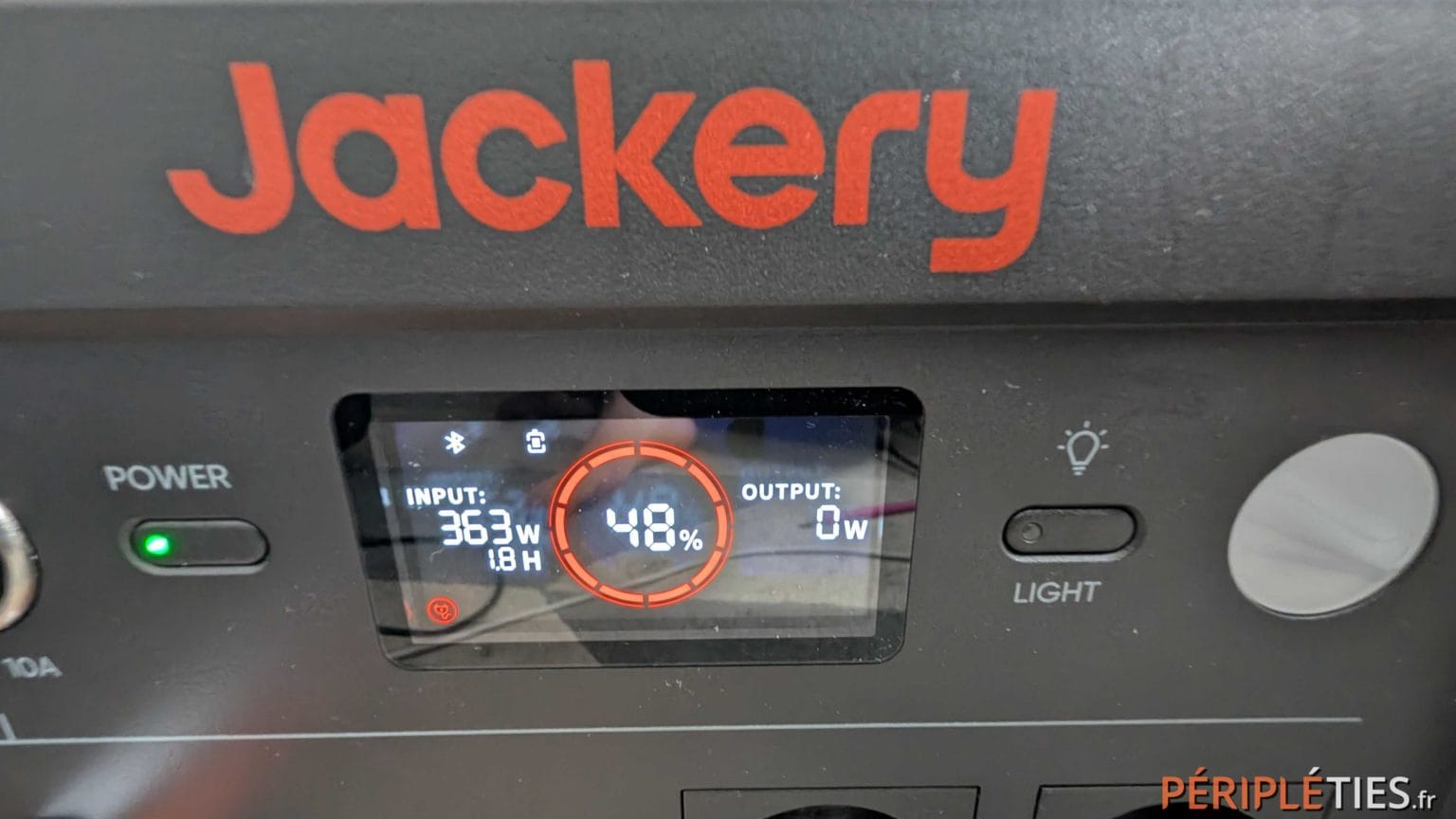
- Mains charging: about 1.7 hours by default, under 1 hour in Emergency mode (via the app)
- Solar input: up to 400W, across two DC8020 inputs
- 12V car charging: about 12 hours
- UPS: switchover in 20ms or less
- Weight: 10.8kg (23.8lb)
- Dimensions: 32.7 x 22.4 x 24.7cm (12.9 x 8.8 x 9.7in)
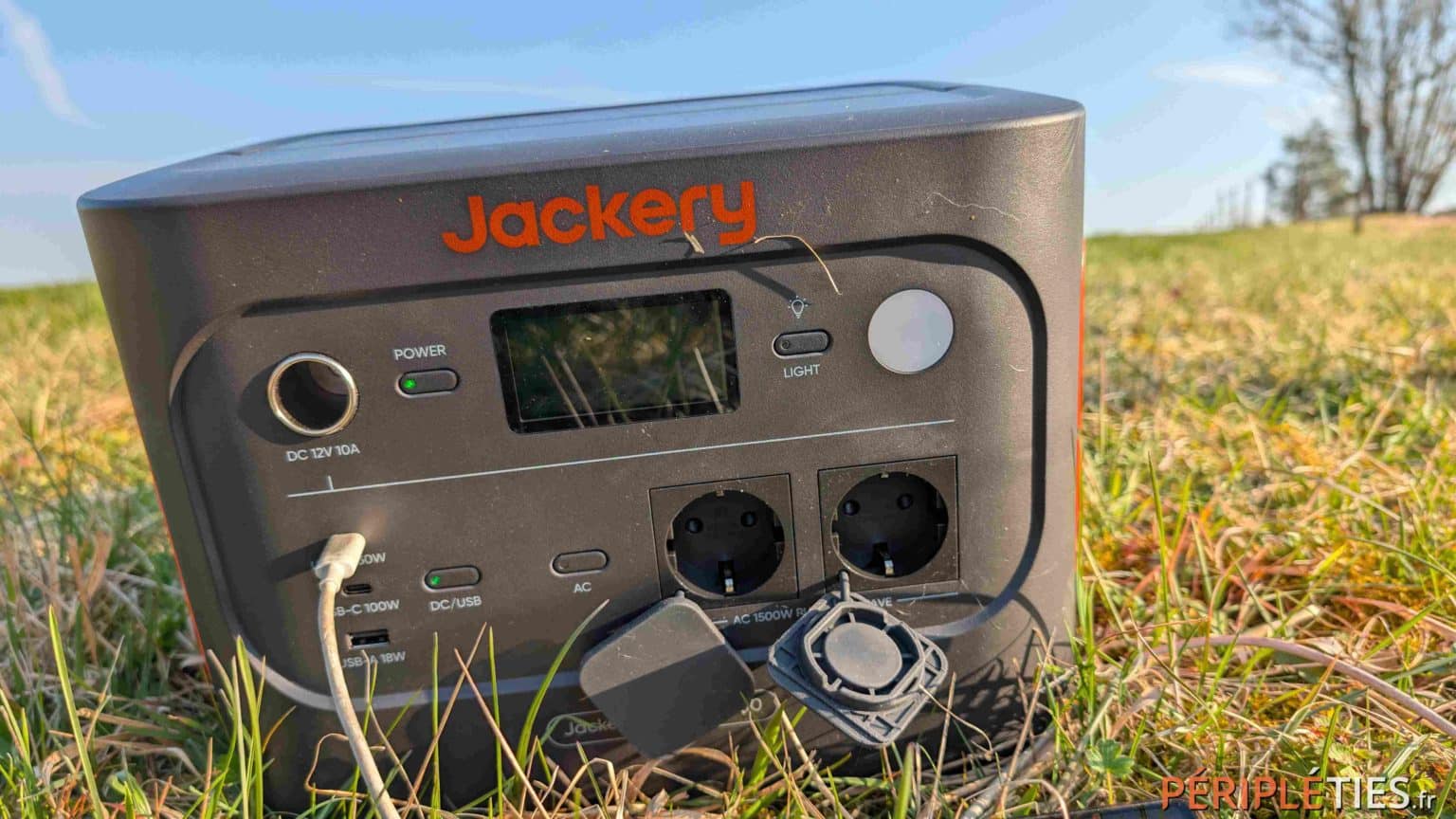
- Ports (UK/EU version): 2 AC outlets, 2 USB-C up to 100W, 1 USB-A, 1 12V car socket. The US version has 3 AC outlets (120V).
- App: Wi-Fi and Bluetooth (iOS and Android)
- Warranty: 3 years, plus 2 extra years when bought from official Jackery channels
First impressions: compact, light and genuinely portable
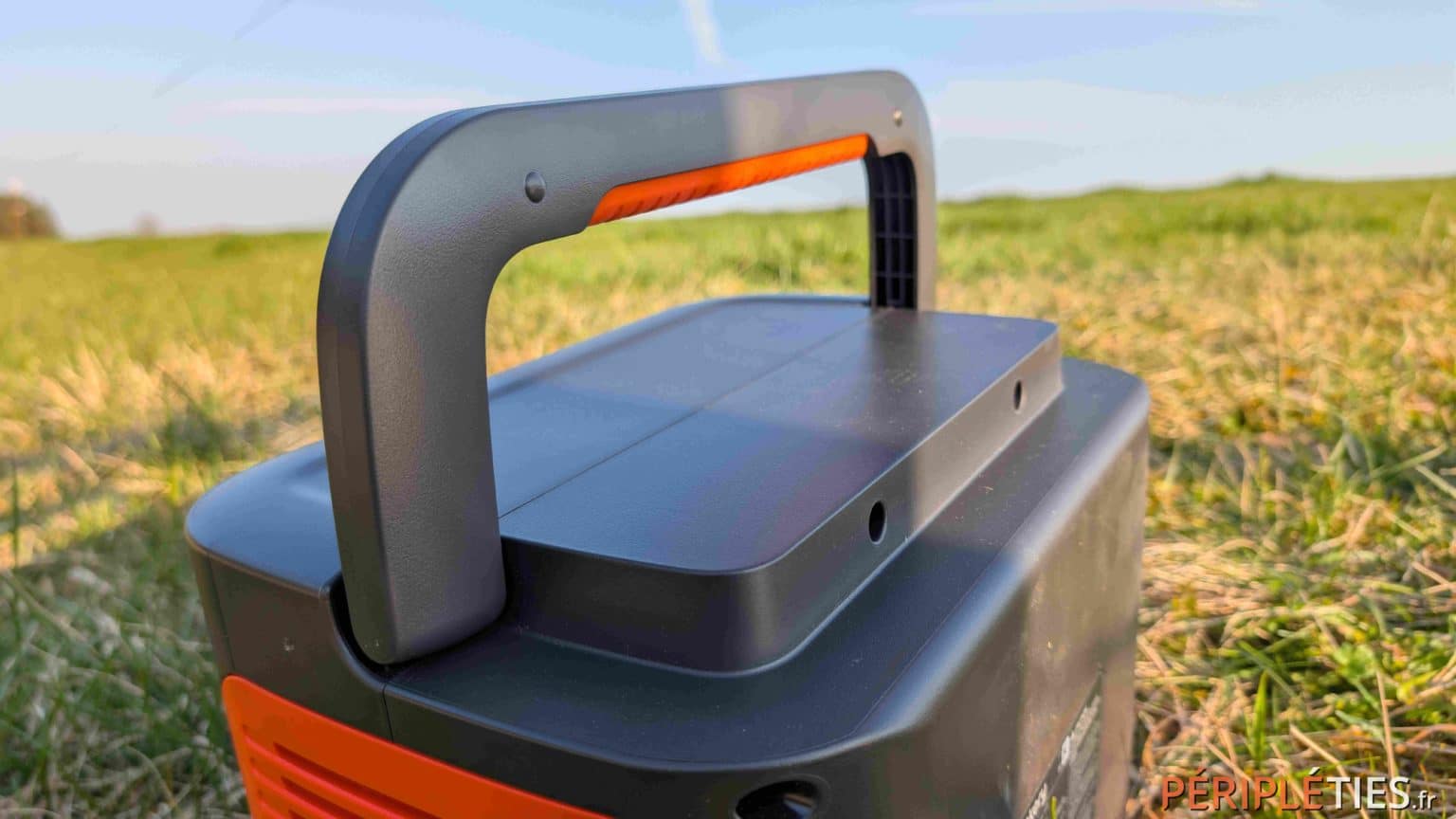
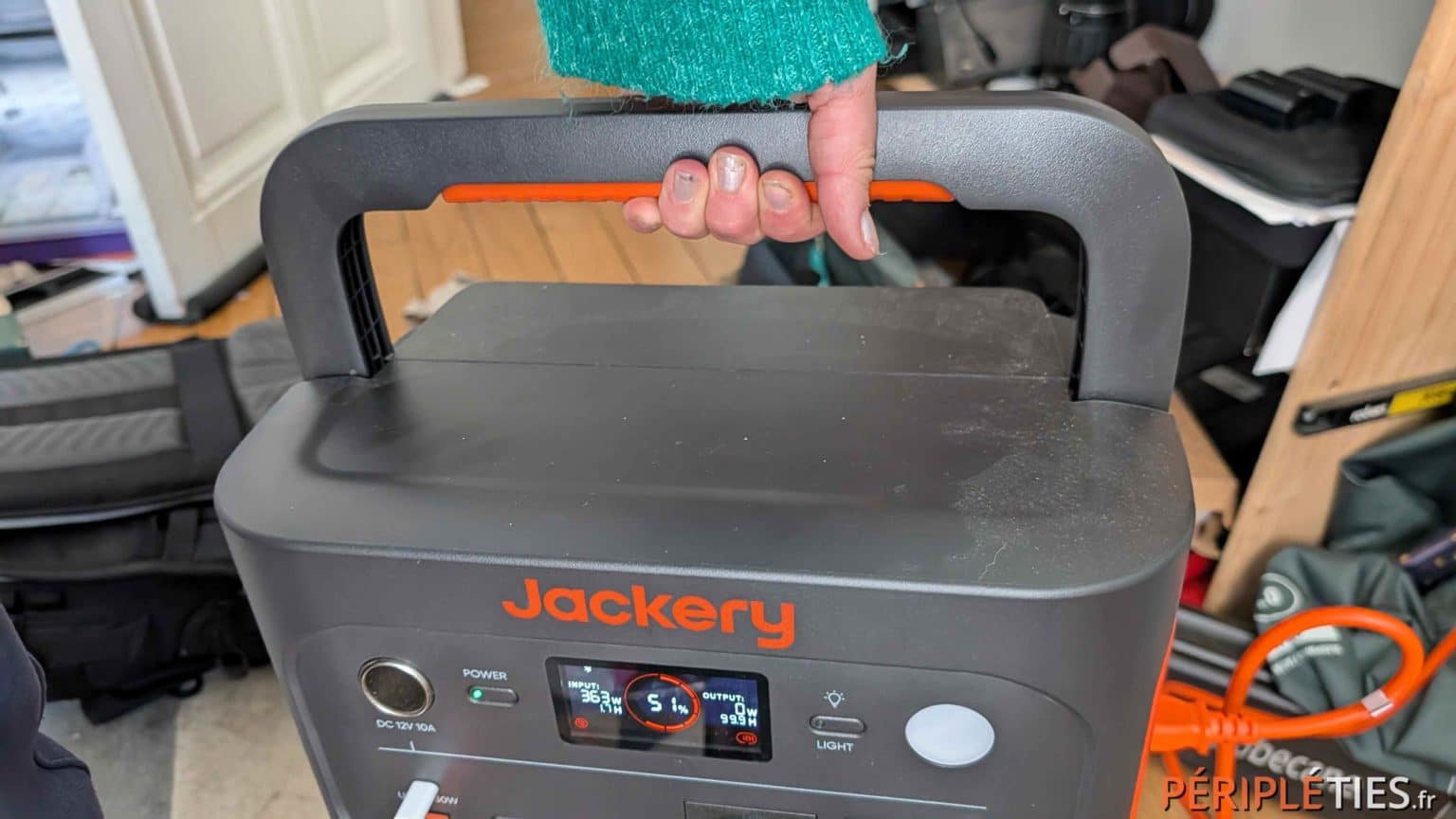
The first thing you notice is its size. At 32.7cm long and 10.8kg (23.8lb), it is one of the lightest 1kWh LiFePO4 power stations on the market. For comparison, an EcoFlow Delta 3 weighs around 12.5kg and the Bluetti AC180, a station of similar capacity, around 16kg. You can grab the Jackery with one hand and move it from the boot to the ground without hurting your back.
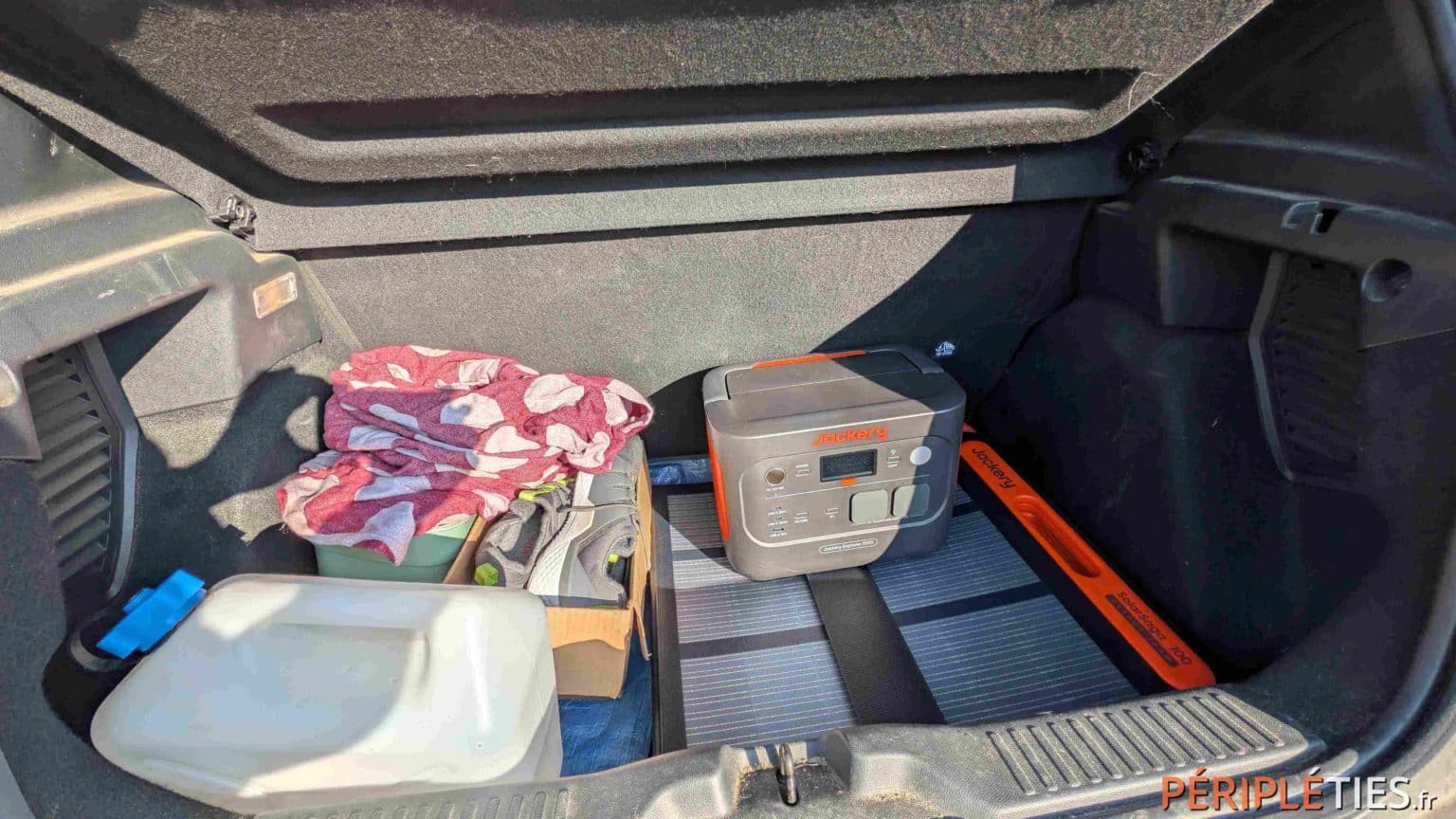
In a small vehicle, that changes everything. In our ë-C3, where the boot is already taken up by our camping trunk, every centimetre counts. The handle folds into the casing, so nothing sticks out when the battery is stored. The finish is classic Jackery: sturdy plastic, the familiar orange and dark grey design, and reassuring build quality.
Our test: the Jackery in our Citroën ë-C3
We have been using the Jackery with our Citroën ë-C3, the small electric car we converted into a travel vehicle with a roof tent and a camping trunk. If you are thinking of converting a car to sleep in and travel, a power station of this size is a logical companion.
Cleaning the car, anywhere
Our first use is very down to earth: vacuuming and cleaning the car far from any socket. After a camping weekend with a dog, the interior needs it. We plug a household vacuum cleaner into one of the AC outlets, and the job is done, wherever the car is parked.
Can you charge an electric car with it?
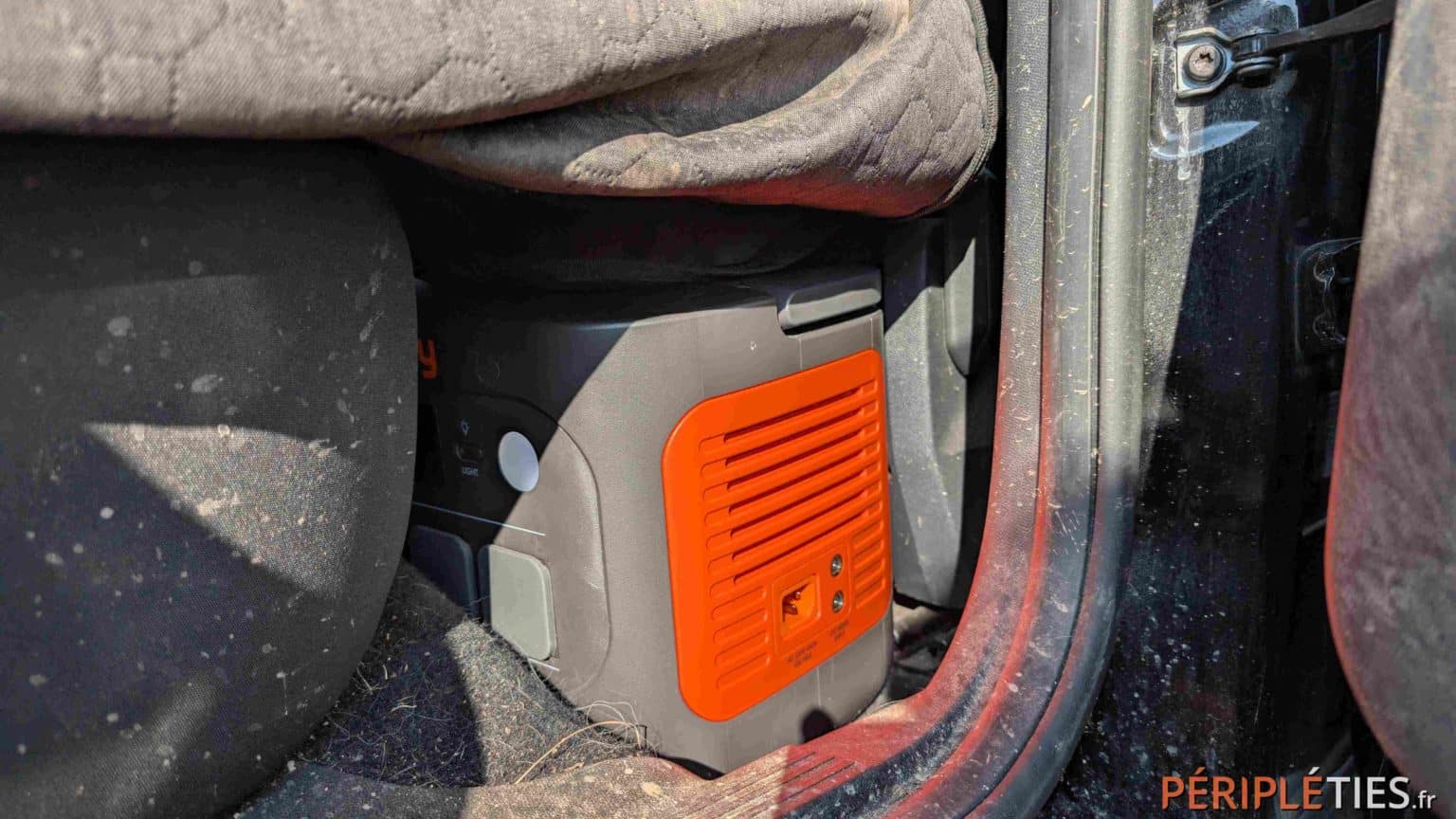
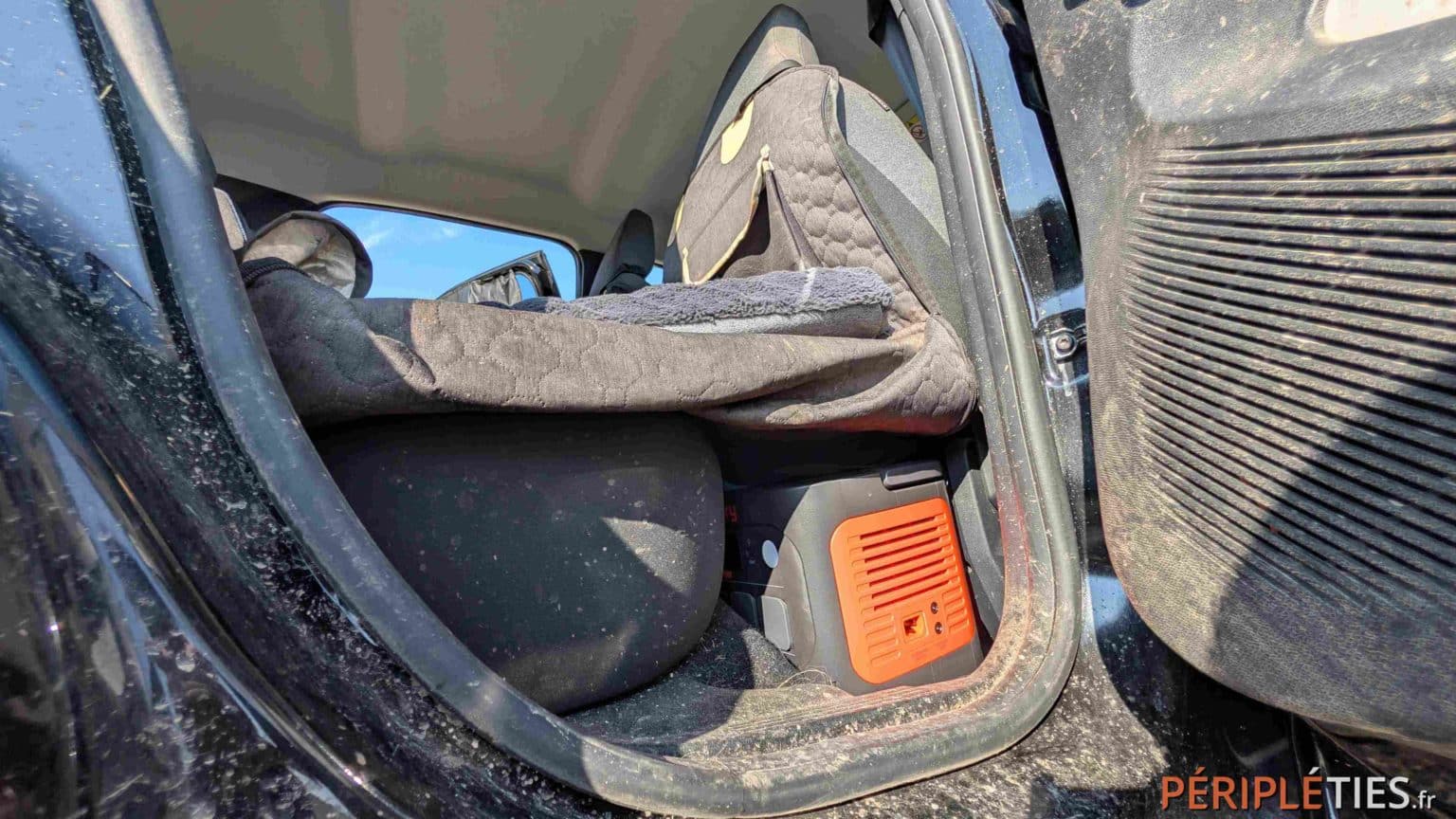
We also tried what many electric car owners wonder about: charging the car with the Jackery. We used our home charging cable (the kind that plugs into a standard socket, adjustable from 6 to 12 amps), set to the lowest setting. At 6A, the car draws about 1.4kW, just under the 1,500W the Jackery can deliver continuously.
It works, but keep the orders of magnitude in mind. The Jackery stores 1,070Wh; the ë-C3's battery holds 44,000Wh. After conversion losses, you recover in theory a little under 1kWh, which is roughly 2% of the car's battery and only a few miles of range.
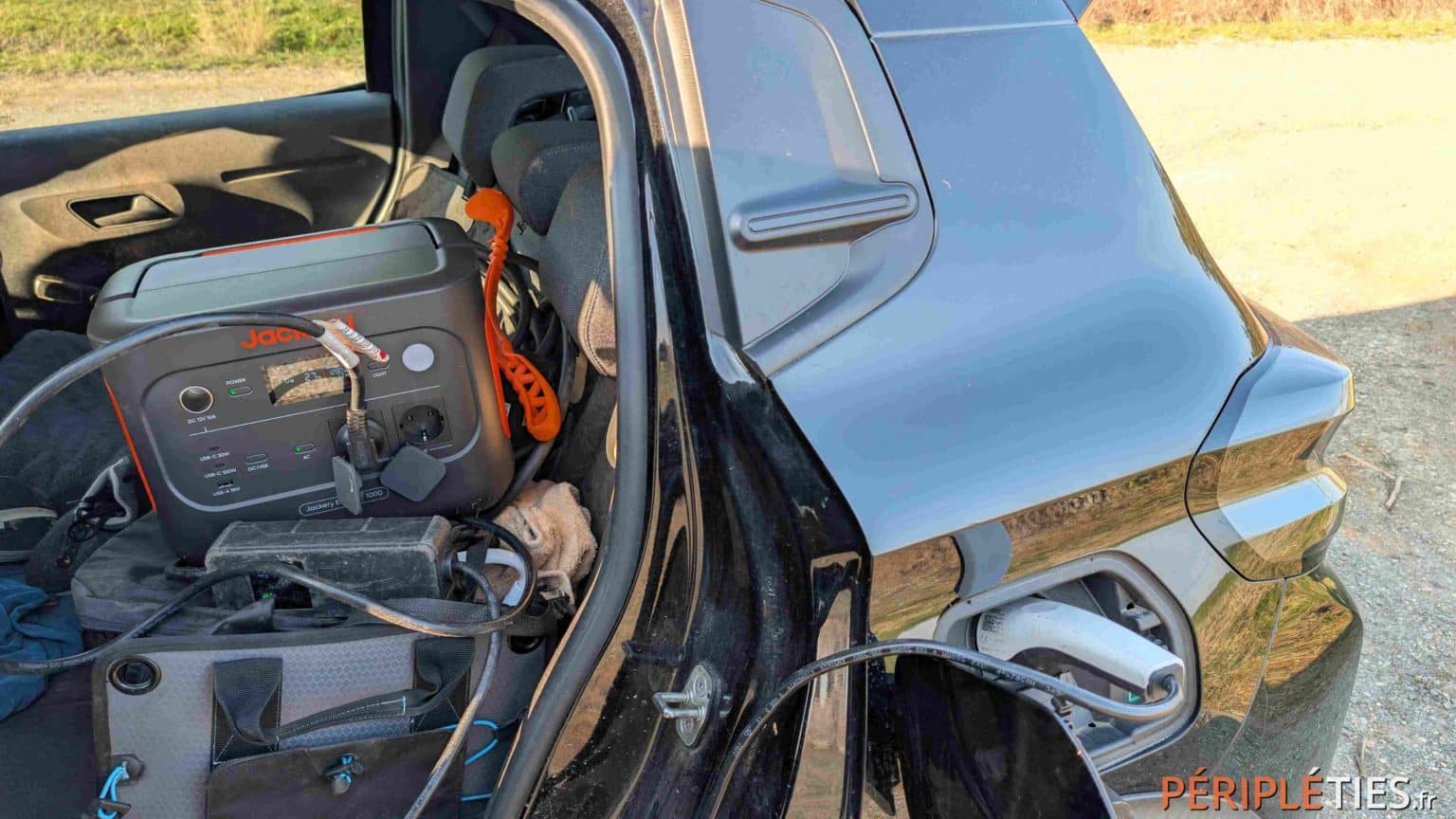
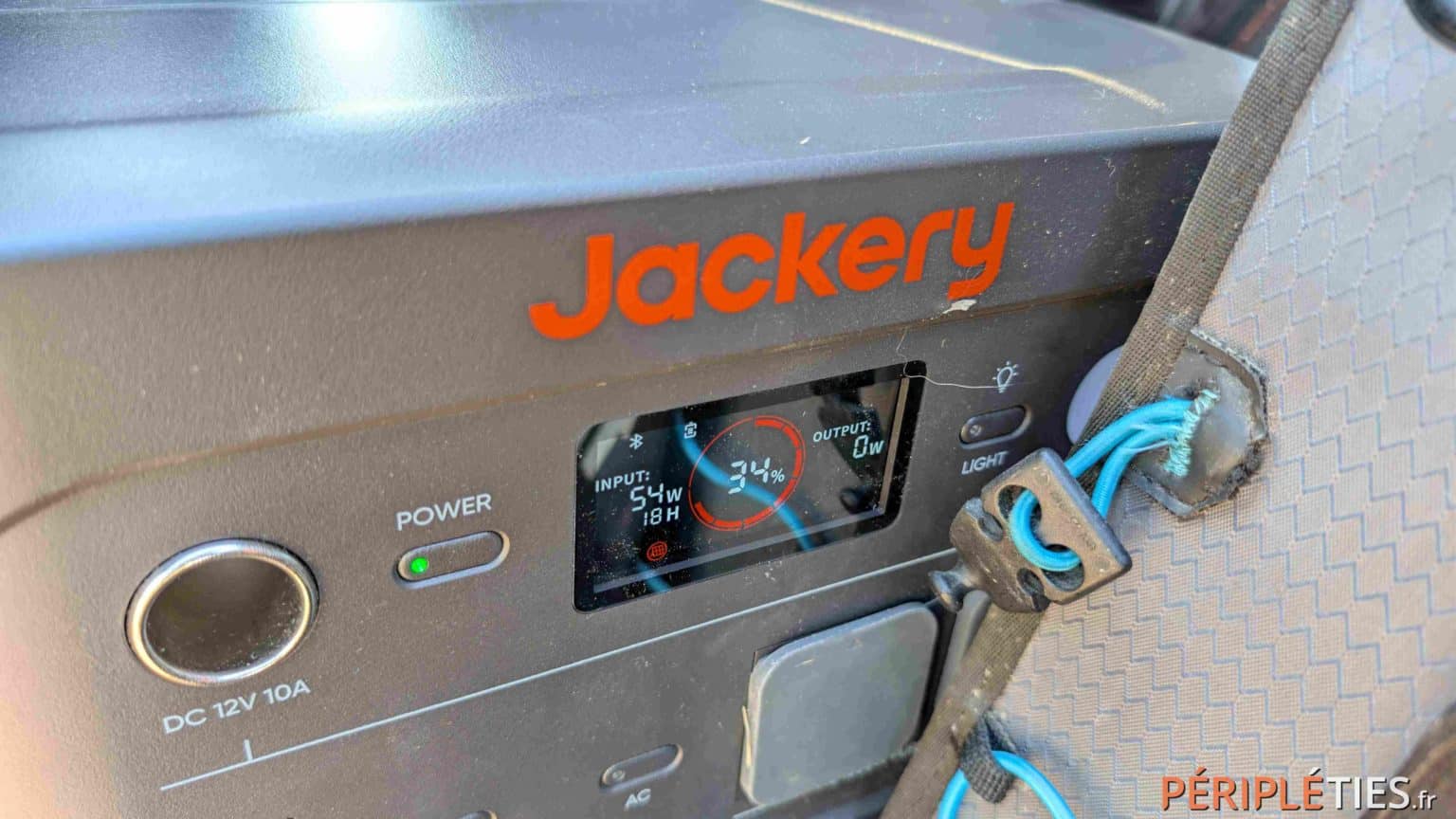
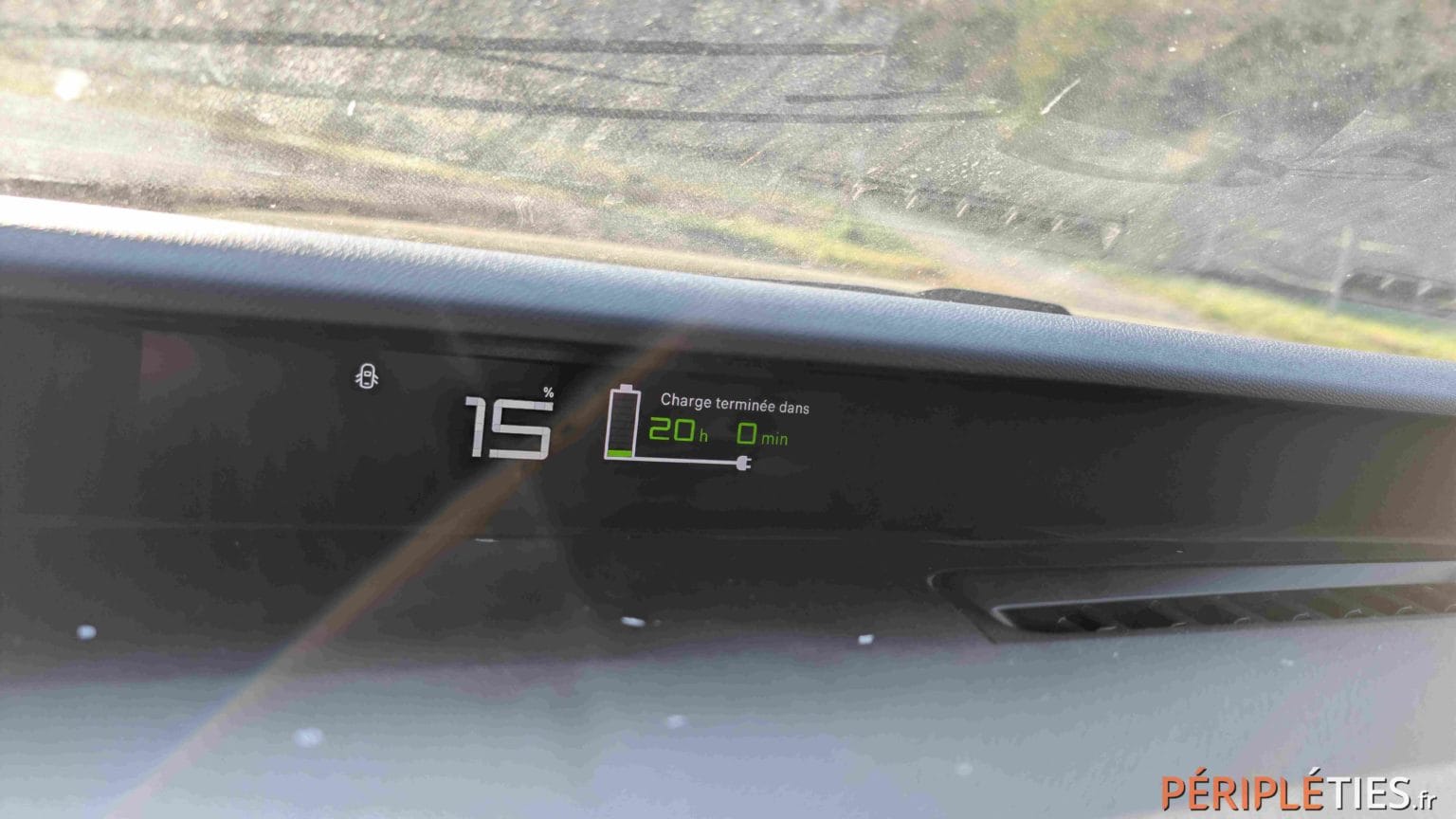
Our conclusion: it is an emergency trick to gain a few miles and reach a charging point, not a charging solution. If your real need is to charge an electric car, a portable power station is not the right tool.
What can you power with it? Realistic runtimes
With 1,070Wh and 1,500W of continuous output, the Explorer 1000 v2 is built for typical nomadic uses. It will not run a whole motorhome with heating and air conditioning, but it covers a lot of everyday needs. These are estimates, based on the capacity and a real-world efficiency of around 85%:
- Laptop (50W): around 17 to 18 hours
- 12V compressor cool box (40 to 60W average): around 15 to 22 hours
- Smartphone (about 10Wh per charge): around 80 to 90 full charges
- Drone battery (around 90Wh): around 10 charges
- Portable projector (100W): around 9 hours
- Electric blanket (100W): around 9 hours
- Coffee machine (1,000W): around 50 minutes of heating time, so plenty of coffees
- Kettle (1,200W): around 45 minutes of boiling time
- Microwave (1,000 to 1,200W): around 45 to 50 minutes
- Starlink Mini (25 to 40W): around 20 to 35 hours

A note for UK readers: many British kettles are rated at 3kW, twice the Explorer 1000 v2's 1,500W limit. Use a low-wattage travel kettle (under 1,500W) or boil water on gas.
Use cases for future buyers
We have not tested every scenario below ourselves, but they are the situations where a station of this size makes the most sense, based on its specifications:
- Weekend road trips in a van or converted car: laptop, phones, camera, lights and a cool box for two or three days. With a 100 to 200W solar panel, you can stretch that a lot further.
- Remote work from a campsite or an aire: a laptop, a second screen and a Starlink Mini draw around 100 to 150W together, roughly a full working day. If you are new to French aires, read our guide to motorhome aires in France.
- A top-up for a motorhome leisure battery: a mobile 230V (or 120V) source for the appliances your inverter cannot handle, or for days without hook-up.
- Home backup during a power cut: UPS mode switches over in 20ms or less, enough for a router, a computer or a fridge.
- Cleaning, DIY and outdoor tools: like our vacuum cleaner, any tool under 1,500W runs without a cable reel.
- Photo and video work on the road: the two 100W USB-C ports charge a MacBook, an iPad Pro or camera batteries directly.
Charging: mains, solar and on the road
From the mains: under an hour in Emergency mode
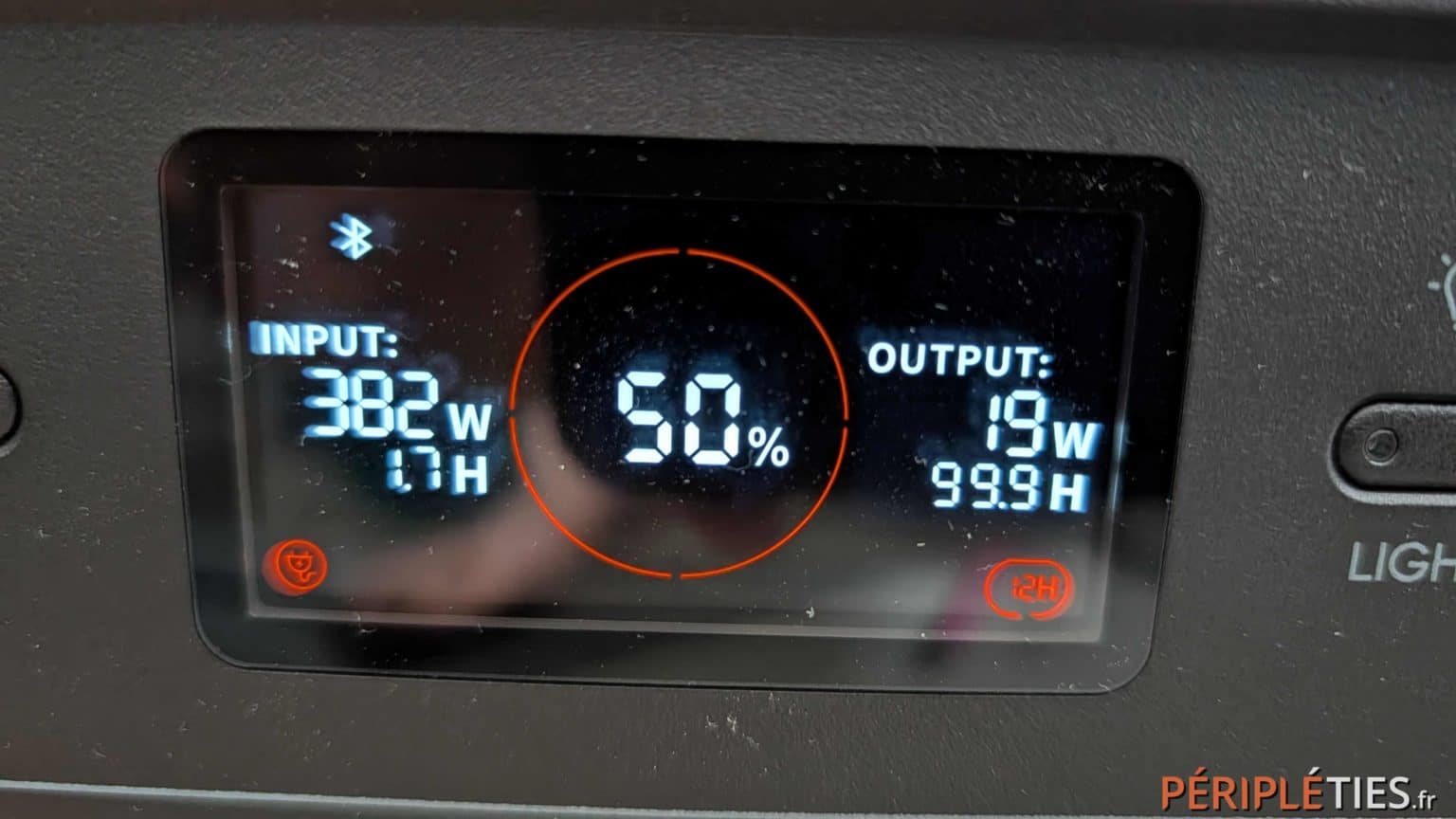
By default, it charges from 0 to 100% in about 1.7 hours. Emergency Super Charging, activated only in the Jackery app, brings that under an hour: very handy before an unplanned departure, but best kept for occasional use. A quiet charging mode slows things down to keep the fan as discreet as possible, for overnight charging in a van.
Solar charging
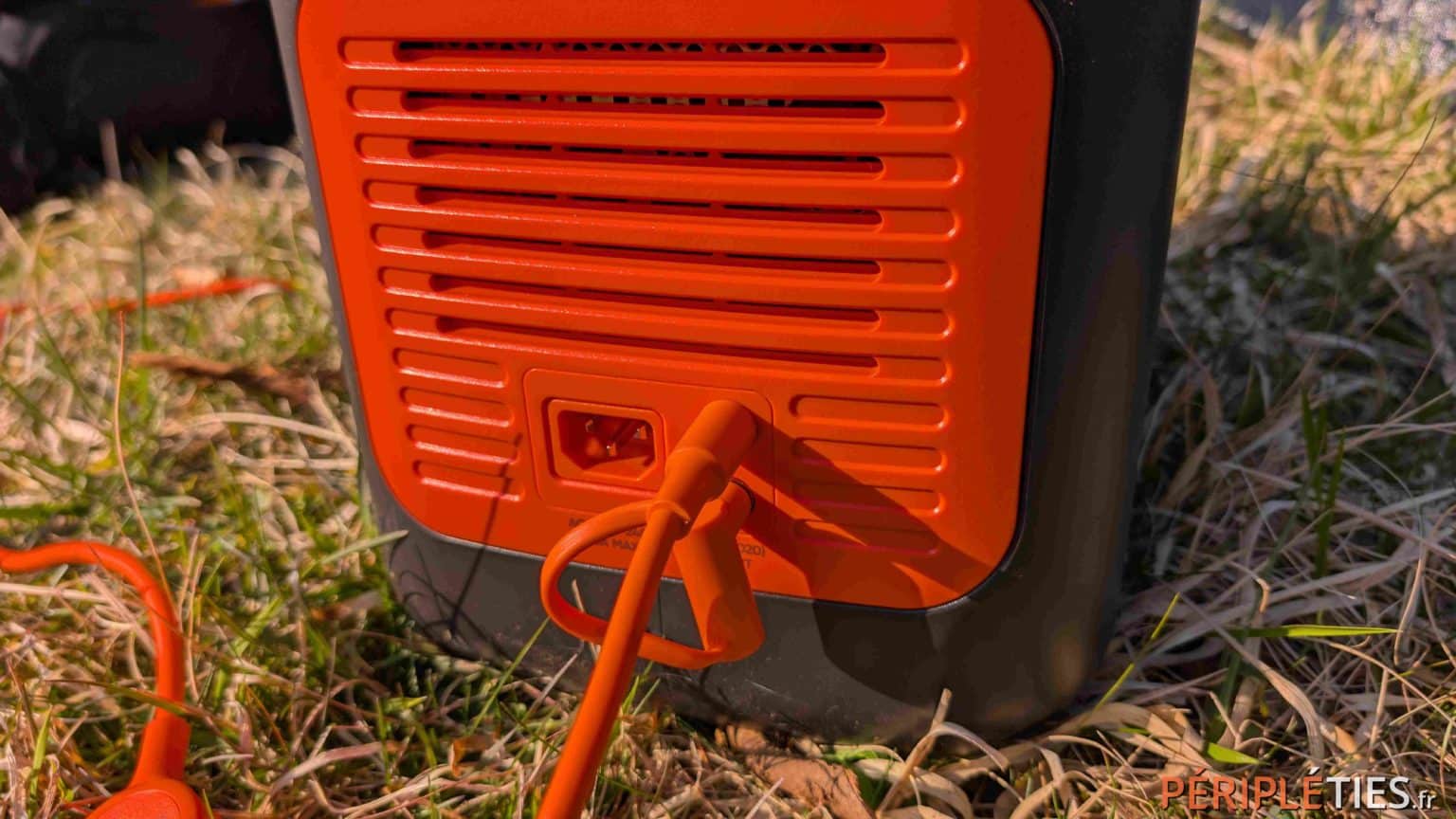
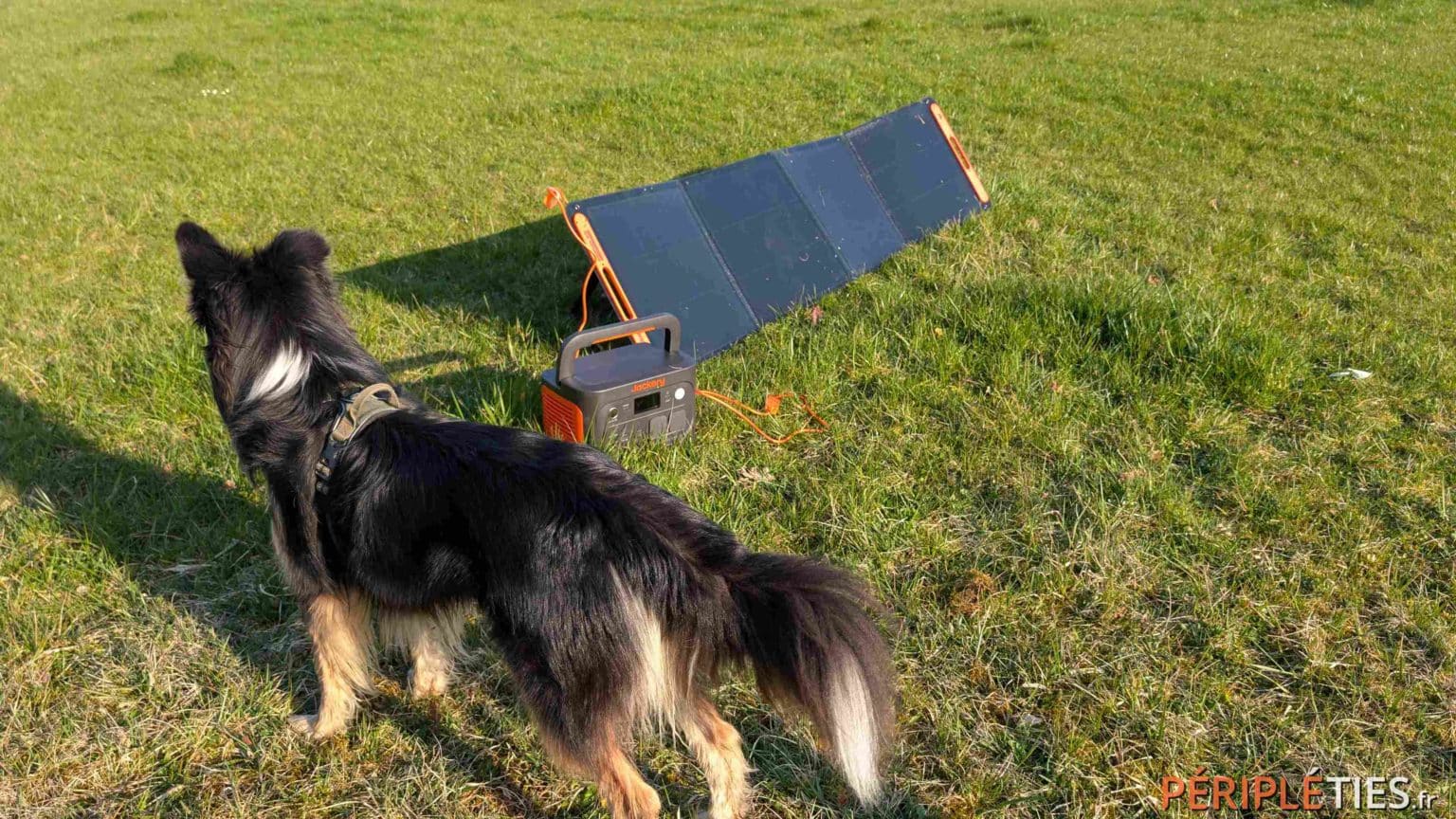
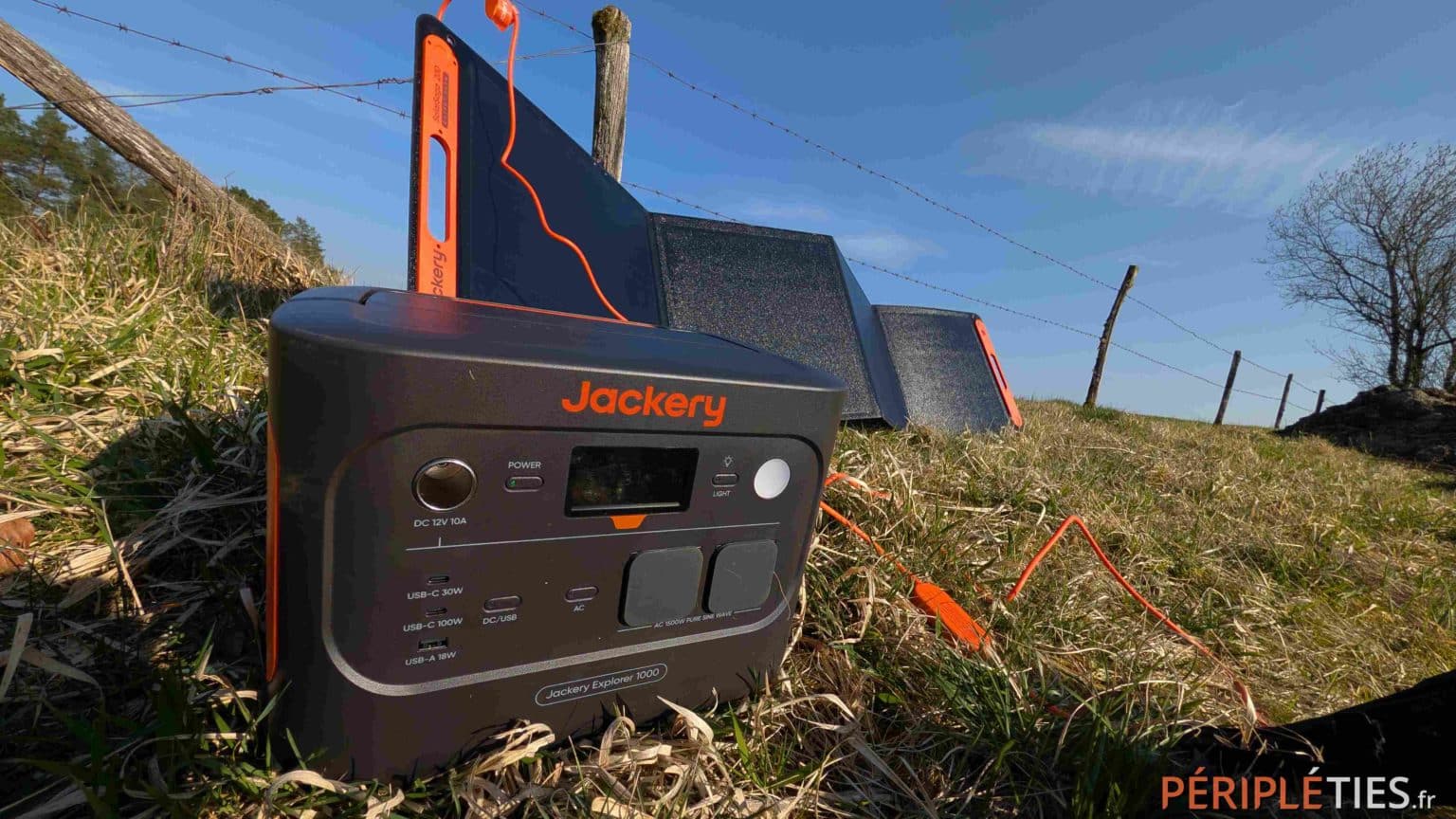
The v2 accepts up to 400W of panels, split across two DC8020 inputs at the back. Expect around 7.5 hours with two 100W panels in good sun, and around 3.8 hours with two 200W panels, such as the Jackery SolarSaga 200W (US) / Jackery SolarSaga 200W (UK). Important: on the two inputs, you need identical panels, in the same number.
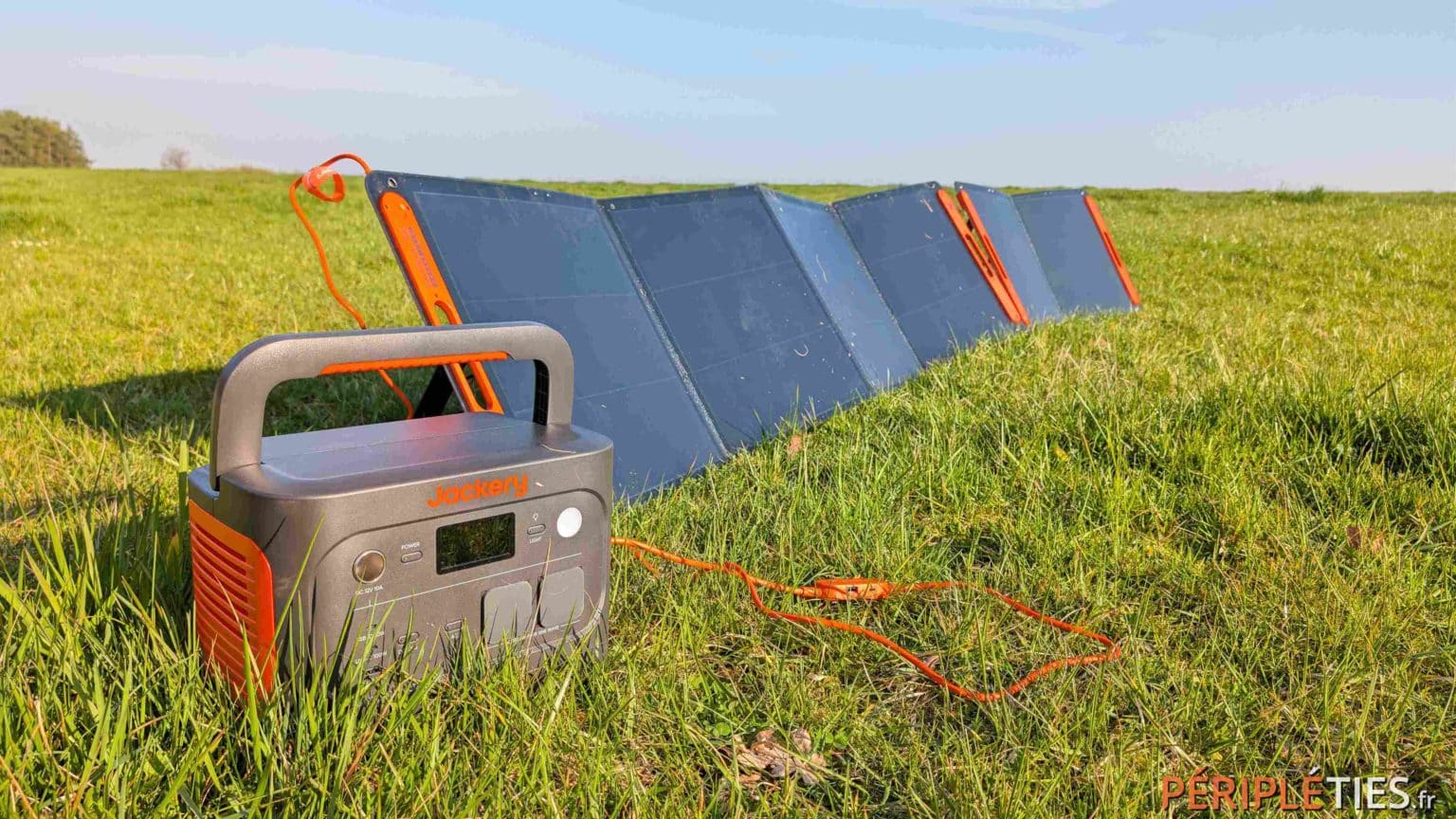
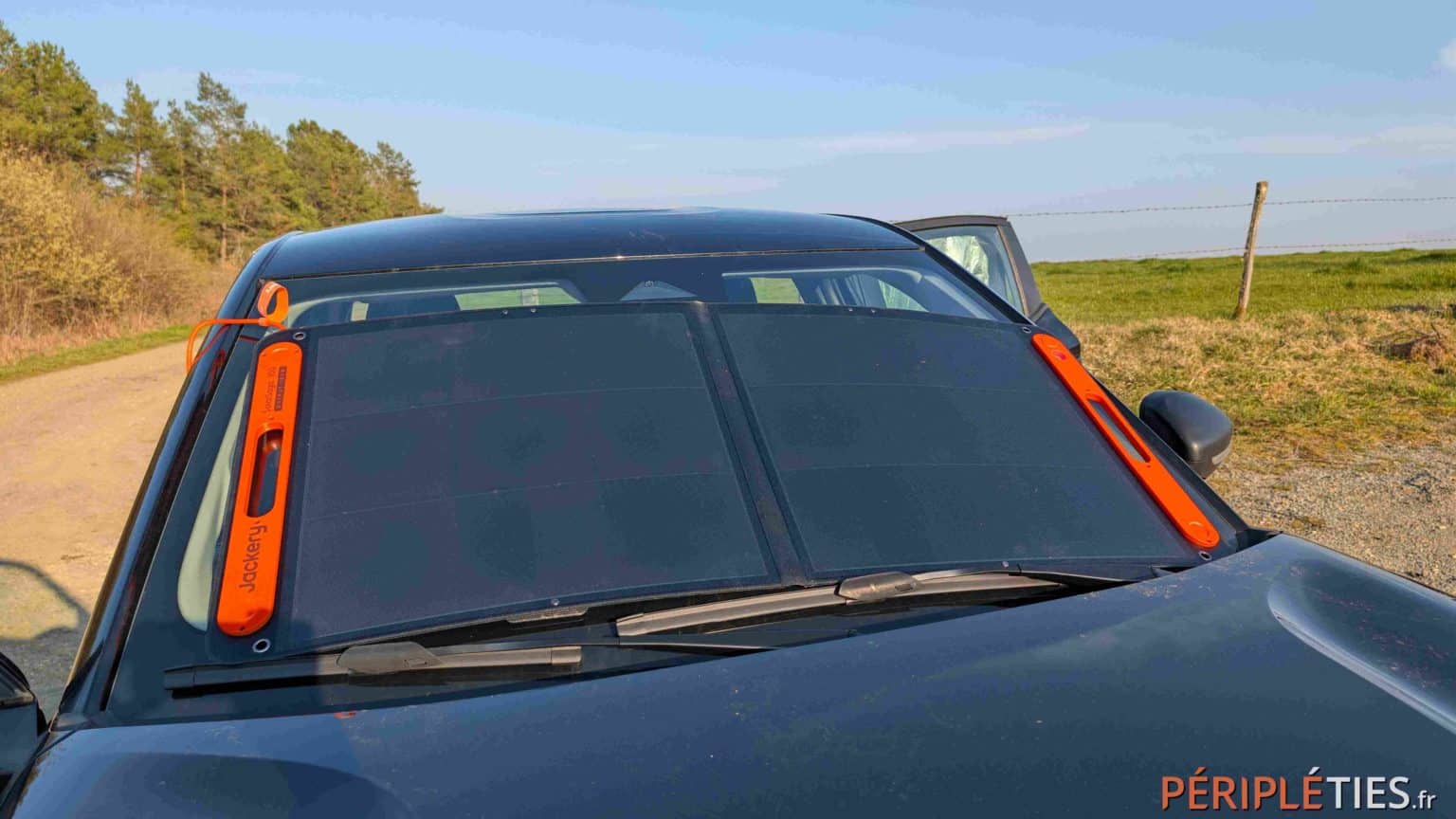
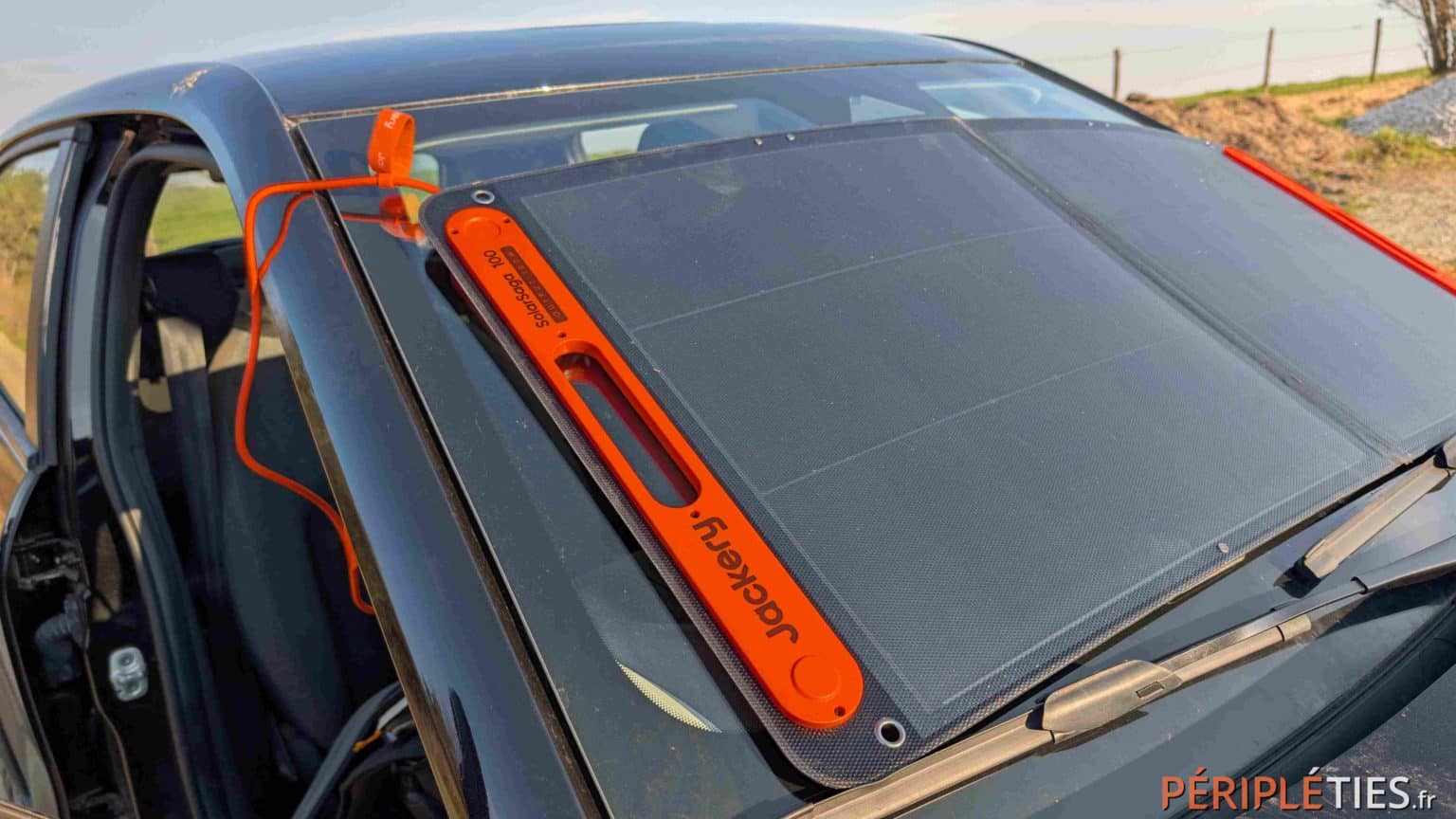
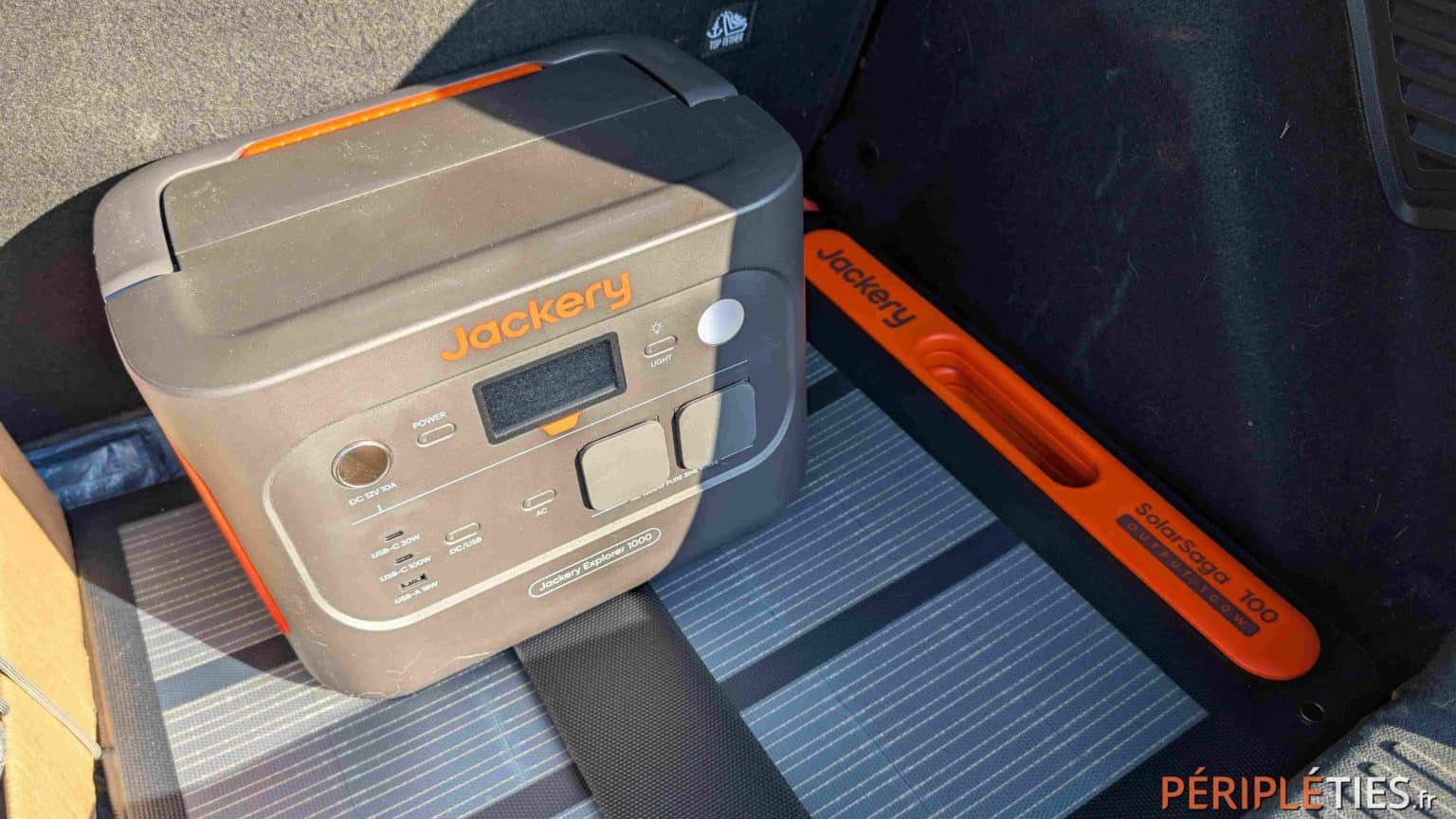
A tip from our trips: a light foldable panel can simply be placed on the car's windscreen. Handy for topping up in a car park or at a picnic spot. A 100W panel is the easiest size to handle: Jackery SolarSaga 100 Air (US) / Jackery SolarSaga 100W (UK).
Charging while driving
Through a 12V car socket, expect about 12 hours for a full charge: slow, but useful as a top-up. To go faster, Jackery now sells a 600W DC-DC alternator charger compatible with the Explorer 1000 v2, to be installed by a professional: Jackery DC-DC Alternator Charger (US) / Jackery DC-DC Alternator Charger (UK). We have not tested it with the Jackery, but we have tested the principle with EcoFlow's alternator charger (EcoFlow 800W Alternator Charger (US) / EcoFlow 500W Alternator Charger (UK)): it is the most effective way to reach your overnight stop with a full battery. Note that you cannot charge from solar and from the vehicle at the same time.
Ports, app and everyday use
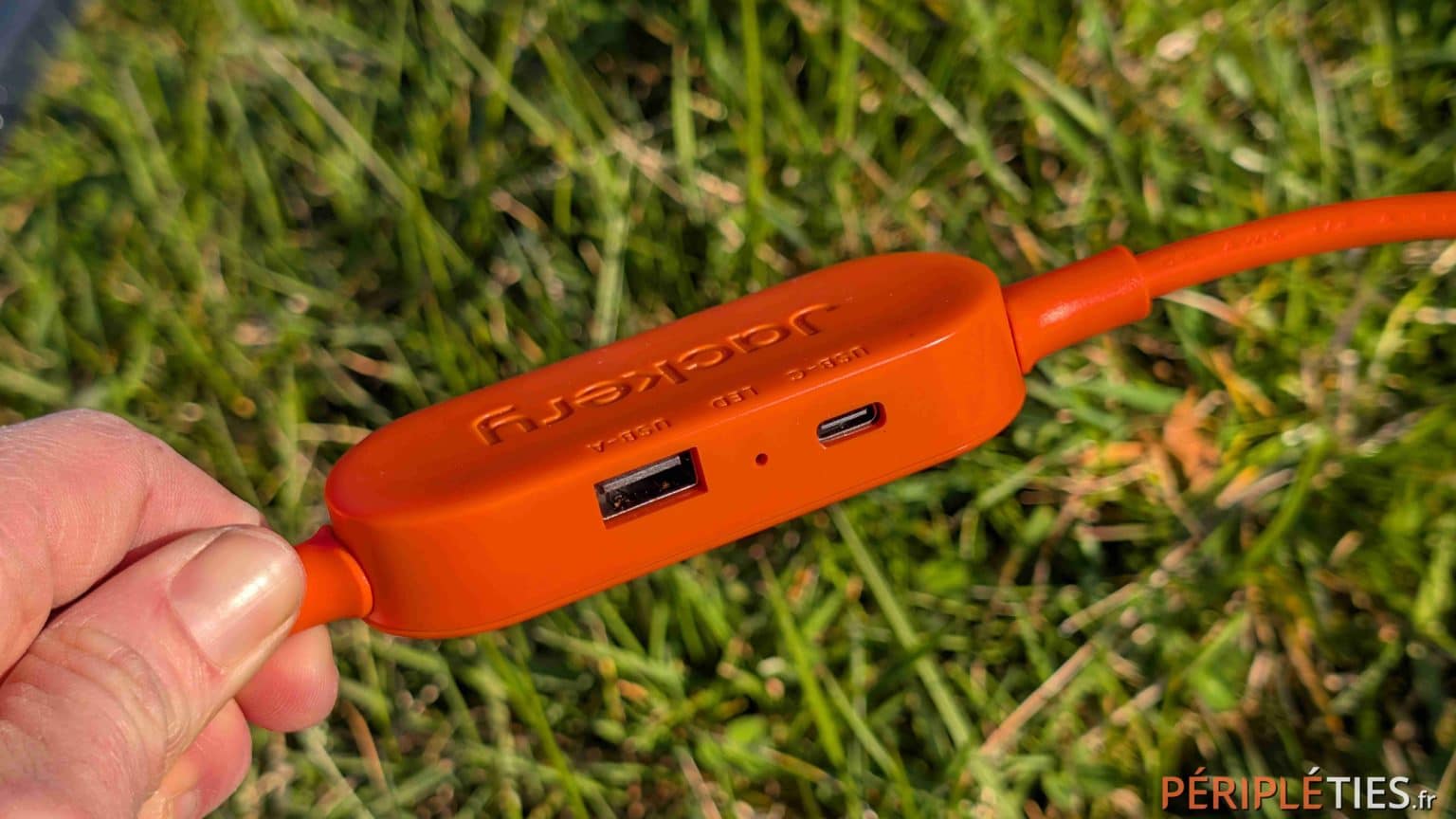
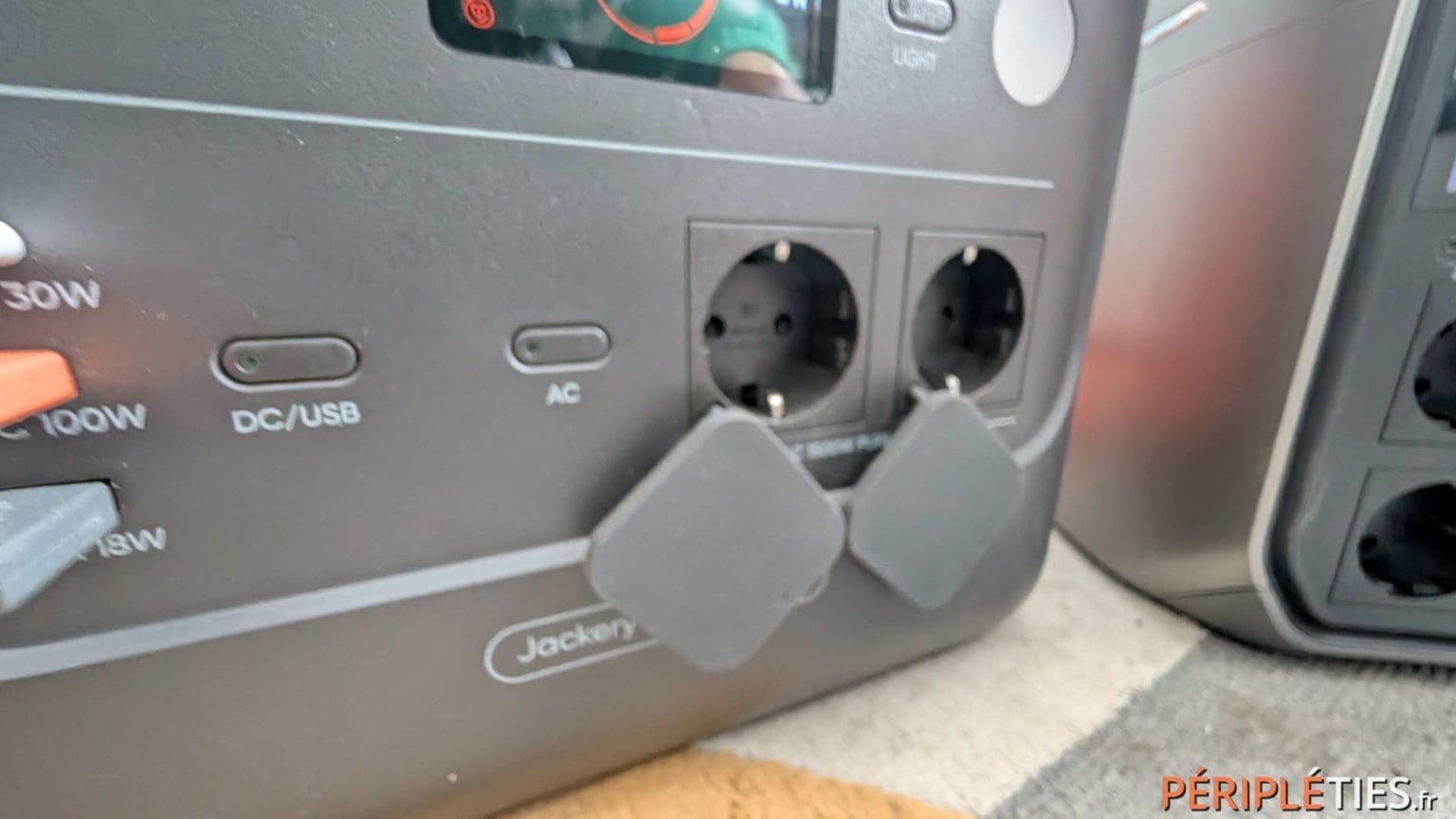
The ports cover the essentials: 2 AC outlets (230V), 2 USB-C up to 100W each, 1 USB-A and 1 12V car socket (10A) on the UK/EU version. Two AC outlets are enough in most situations (a laptop and a coffee machine, or a camera charger and a lamp). For more 230V devices you will need an extension lead, and it is a little tight if you plan to use it as home backup.
The Jackery app, over Bluetooth or Wi-Fi, lets you see input, output and remaining charge in real time, switch on Emergency charging, choose the quiet charging mode and set automatic standby. Note that Wi-Fi only works on 2.4GHz networks. The app is not the most complete on the market (EcoFlow's goes further), but it is clear and enough for everyday use.
Lifespan: what 4,000 cycles really means
The big change in this v2 is the move to LiFePO4. It is rated for 4,000 cycles to 70% capacity: even with one full cycle a day, that is more than ten years, and at 70% it is still perfectly usable. LiFePO4 is also more thermally stable than NMC. As with all lithium batteries, never charge it below 0°C (32°F): in winter, keep it inside the heated living area.
Jackery Explorer 1000 v2 vs the competition
| Model | Capacity | AC output | Surge | Cycles | Weight | Mains charging | Price |
|---|---|---|---|---|---|---|---|
| Jackery Explorer 1000 v2 | 1,070Wh | 1,500W | 3,000W | 4,000 | 10.8kg (23.8lb) | under 1h (Emergency) / 1.7h | Check price (US)Check price (UK) |
| Bluetti Elite 100 V2 | 1,024Wh | 1,800W | 2,700W (Lifting) | 4,000 | 11.5kg (25lb) | 80% in 45 min | Check price (US)Check price (UK) |
| EcoFlow Delta 3 | 1,024Wh | 1,800W | 3,600W | 4,000 | 12.5kg (27.6lb) | 56 min | Check price (US)Check price (UK) |
| Anker SOLIX C1000 | 1,056Wh | 1,800W | 2,400W | 3,000 | about 12.9kg (28lb) | about 58 min | - |
| Jackery Explorer 1000 Plus v2 (HomePower 1000 Plus v2 in the US) | 1,024Wh, expandable to 11kWh | 1,800W | 3,600W | 6,000 | 10.8kg (23.8lb) | about 50 min | Check price (US)Check price (UK) |
Manufacturer specifications. Scroll sideways on mobile.
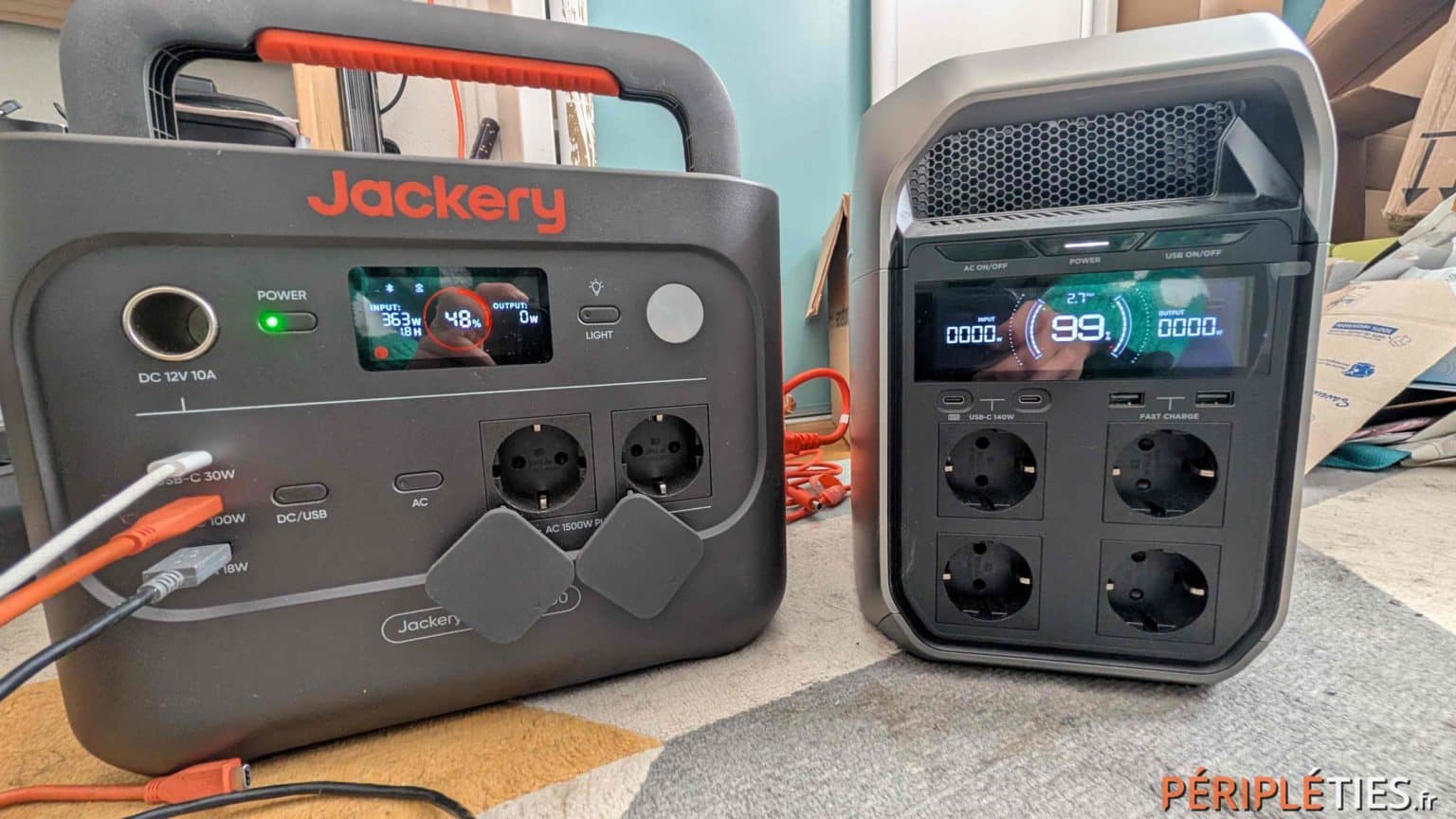
Its strengths: one of the lightest in this group, the best rated cycle life, a very fast emergency charge, and frequent sales that make it one of the cheapest 1kWh LiFePO4 stations.
Its weaknesses: 1,500W of output where rivals offer 1,800 or 2,000W, so an induction hob or a 2,000W heater is out of reach. It is also not expandable, unlike all its competitors here. If you want to add capacity later, the Jackery HomePower 1000 Plus v2 (US) / Jackery Explorer 1000 Plus v2 (UK) is the logical alternative at Jackery (sold as the HomePower 1000 Plus v2 in the US). For EcoFlow, see our EcoFlow Delta 3 comparison, and for a full overview, our guide to the best portable power stations.
Price and warranty
Jackery lists the Explorer 1000 v2 at $799 in the US and £899 in the UK, but it is almost always on sale: at the time of writing (October 2026), it sells for around $499 to $519 on Jackery's US store, and regularly drops to around £400 to £550 in the UK during promotions. Bundles with a SolarSaga panel are also available. Prices move a lot around Prime Day and Black Friday, so check the current deal: Jackery Explorer 1000 v2 (US) / Jackery Explorer 1000 v2 (UK).
The warranty is 3 years, extended by 2 extra years when you buy from official Jackery channels, for 5 years in total.
It is not for you if
- you want to power a whole vehicle with heating, cooking and power-hungry appliances at once: look at the Jackery Explorer 2000 v2 (US) / Jackery Explorer 2000 v2 (UK) or the Bluetti Elite 200 V2, which we have tested: Bluetti Elite 200 V2 (US) / Bluetti Elite 200 V2 (UK)
- you need more than 1,500W continuous for powerful tools or appliances
- you want to add batteries later: the v2 is not expandable, look at the Jackery HomePower 1000 Plus v2 (US) / Jackery Explorer 1000 Plus v2 (UK)
- your needs are more modest: a 250 to 500Wh battery will do, like the EcoFlow River 3 Plus (US) / EcoFlow River 3 (UK) (see our River 3 review)
Our verdict
The Jackery Explorer 1000 v2 is one of the most balanced power stations in its class. It is neither the most powerful nor the most expandable, but it is probably the easiest to live with for light travel or home backup.
We like its compact size, its genuinely fast charging, its durable LiFePO4 chemistry, its 5-year warranty and a price that has become very attractive. We are less keen on its 1,500W limit, its two AC outlets and the lack of expansion. None of that is a deal-breaker for most uses, but it is worth knowing before you buy.
For a first serious portable power station, in a van, a converted car or at home during power cuts, we recommend it.
- What we like: light and compact, LiFePO4 with 4,000 cycles, under one hour emergency charging, 100W USB-C ports, UPS mode, 5-year warranty, frequent sales, optional 600W alternator charger
- What we like less: 1,500W output, only two AC outlets on the UK/EU version, not expandable, Wi-Fi limited to 2.4GHz
Jackery Explorer 1000 v2 FAQ
Can you charge an electric car with the Jackery Explorer 1000 v2?
Technically yes, with a home charging cable set to the lowest setting (6A), which we tried on our Citroën ë-C3. But you only recover a little under 1kWh, a few miles of range. It is an emergency trick, not a charging solution.
How long does the Jackery Explorer 1000 v2 last?
Jackery rates it for 4,000 cycles to 70% capacity, which means more than ten years even at one full cycle a day.
Can it run a campervan fridge?
Yes. A 12V compressor fridge or cool box drawing 40 to 60W on average will run for roughly 15 to 22 hours on a full charge, longer with a solar panel.
How long does it take to charge?
About 1.7 hours from the mains in standard mode, under one hour in Emergency mode via the app. With two 200W solar panels in good sun, around 3.8 hours; from a 12V car socket, around 12 hours.
Can I charge it while driving?
Yes, slowly from the 12V socket (about 12 hours), or much faster with Jackery's 600W DC-DC alternator charger, professionally installed.
What is the difference between the Explorer 1000 and the 1000 v2?
- LiFePO4 instead of NMC lithium-ion, with 4,000 cycles
- 1,500W of output instead of 1,000W, 3,000W surge instead of 2,000W
- charging in about 1 to 1.7 hours instead of around 7 hours
- app control over Wi-Fi and Bluetooth
- slightly more capacity: 1,070Wh instead of 1,002Wh
Does it work in winter?
It discharges normally in cold weather within Jackery's operating range, but like every LiFePO4 battery it should not be charged below 0°C (32°F).
Safe travels!
Pauline & Simon
N.B. This article contains affiliate links. If you are planning a purchase, using them helps us create new articles and videos. We receive a small commission at no extra cost to you. Our opinion remains independent.