
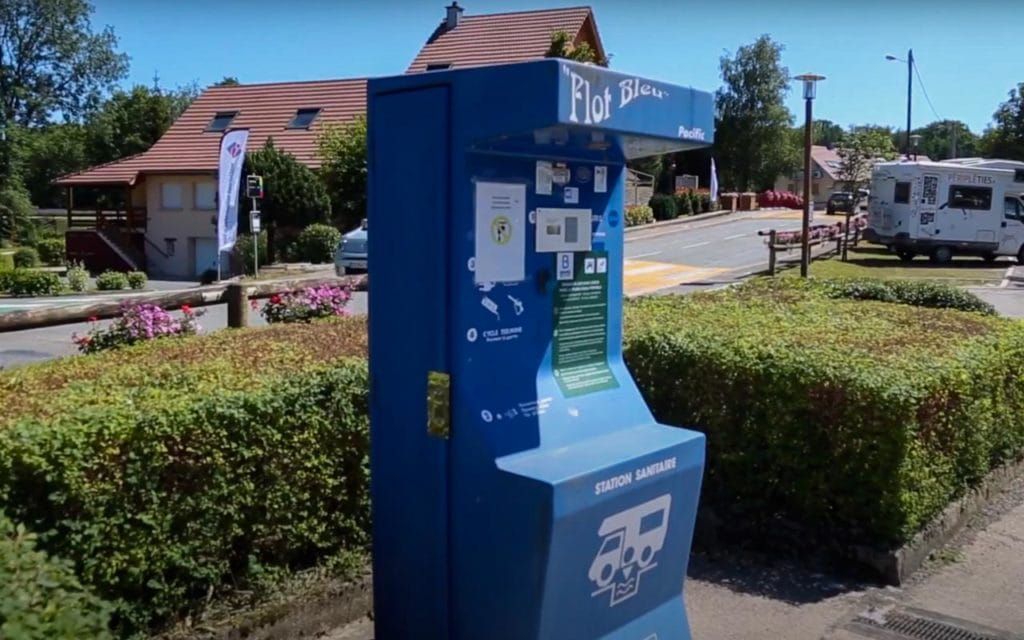
You have driven your first miles in France, enjoyed the freedom of the open road, and now the inevitable moment arrives: the waste tanks are filling up and the fresh water tank is running low. Time to find an aire de service, the motorhome service points you will see signposted all over France.
Don't worry, it is much simpler than it looks. In this guide, we explain what French aires are, how much they cost, how to pay, and how to use a service point step by step, with the photos from our own stops and the small tips we have picked up over many years on the road.
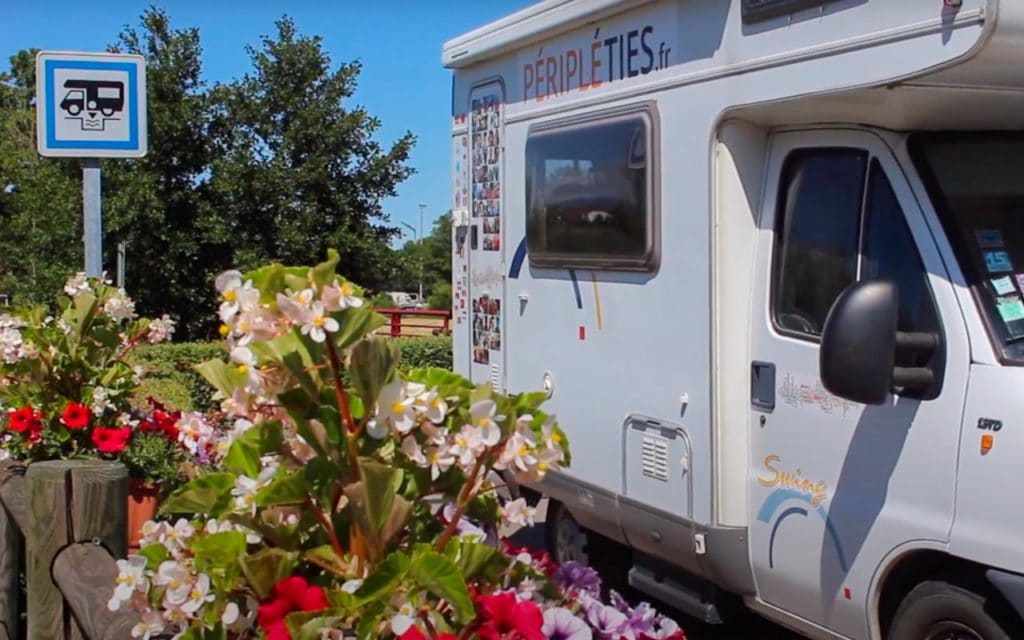
What is an aire in France?
In France, the word aire simply means an "area". For motorhome travellers, it refers to places set up specifically for motorhomes and campervans, usually run by the local town council (the mairie). There are two kinds, often on the same site:
- Aire de service (service point): a terminal, called a borne, where you fill up with fresh water, empty your grey water (from the sink and shower) and your toilet cassette, and sometimes plug in to recharge your batteries. UK readers would call the toilet emptying point an Elsan point; in North America, this is your dump station.
- Aire de stationnement (motorhome parking area): dedicated spaces where you can park and usually spend one or two nights, often close to the town centre, a lake or the sea.
Many aires combine both. Some are free, others charge a small fee, and the maximum stay is generally limited (often 24 to 48 hours, sometimes up to a week). Always read the sign at the entrance.
Other places to stay overnight
- Camping-Car Park: the largest network of paid aires in Europe, with more than 800 aires and campsites. You register for a free Pass'Étapes access card, and the barrier opens with it. Prices depend on the site (for example, around €10 for 24 hours with electricity and services included at some coastal aires).
- France Passion: a network of farms, wineries and producers who welcome motorhomes for a free night. See our France Passion guide.
- Campsites: many accept motorhomes for a single night, and some have a service point open to non-residents for a fee.
Are aires free in France?
Some are, some are not. Parking on an aire typically costs nothing to around €12 a night depending on the location and facilities, while the service point itself is often cheap or free. In our experience, emptying grey water and the toilet cassette is usually free, and you pay only for fresh water and electricity, typically around €2 for 100 litres of water or about one hour of electricity. On some aires, services are included in the overnight fee.
How do you pay at a service point?
Payment systems vary from one town to another:
- Free: just press the button.
- Coins: less common now, but worth carrying a few euros in change.
- Tokens (jetons): sold at the tourist office, the town hall, a bakery or a nearby shop. The sign on the terminal usually says where to buy them, and a token is often valid for 100 litres of water or a set time of electricity.
- Bank card: more and more terminals accept cards, sometimes contactless. Card readers do not always accept every foreign card, so having a token or coins as a backup is wise.
- Network card or app: on Camping-Car Park sites, the access card or the app handles everything.
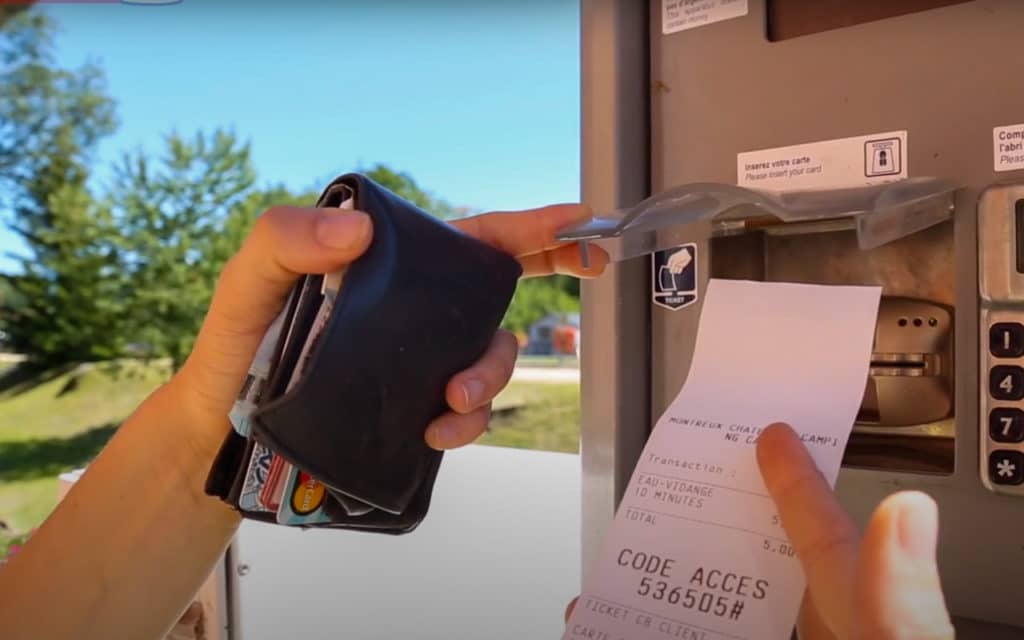
The two most common terminal brands are Euro-Relais and Flot Bleu, but you will come across others. They all work on the same principle, with instructions on the front, usually including pictograms.
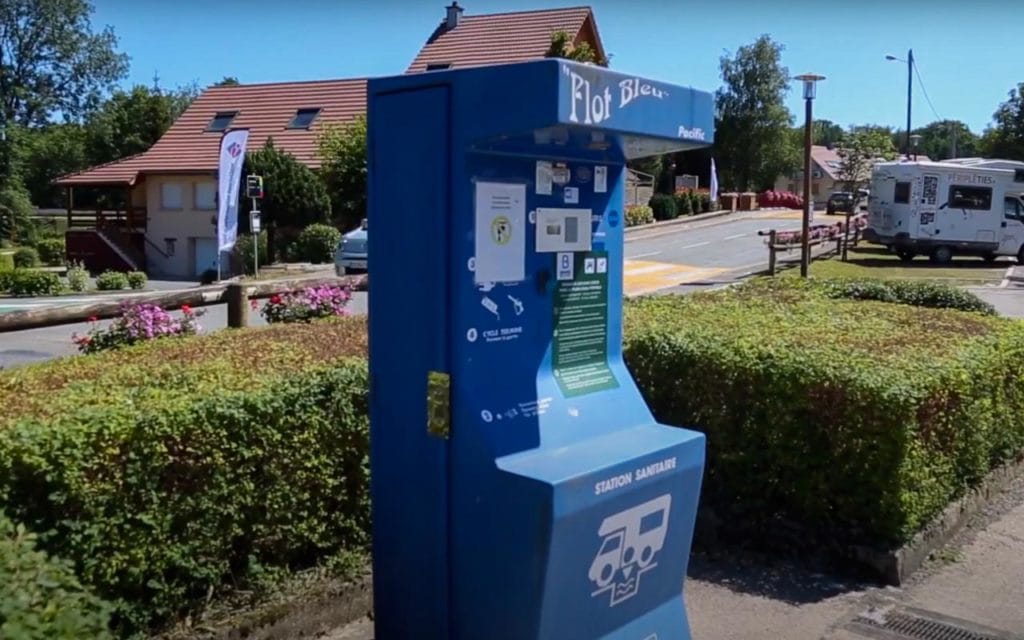
Before you go
Don't wait until the last minute to empty your tanks or fill up with water. Service points can be out of order, closed in winter or busy in summer, so plan your next stop in an app such as Park4Night or Campercontact, and always keep a little margin in your tanks.
How to use a motorhome service point in France: 4 steps
Step 1: Empty your grey water
When you arrive at the aire, you will find a terminal and, next to it or in front of it, a drain grid set into the ground. This is usually where all the services take place.
The first thing to do is to position the motorhome so that the grey water outlet (the waste water from your sink and shower) sits right above the drain. It is not always easy on your first trips, so unless you have a reversing camera, the best thing is to ask your co-pilot to guide you!
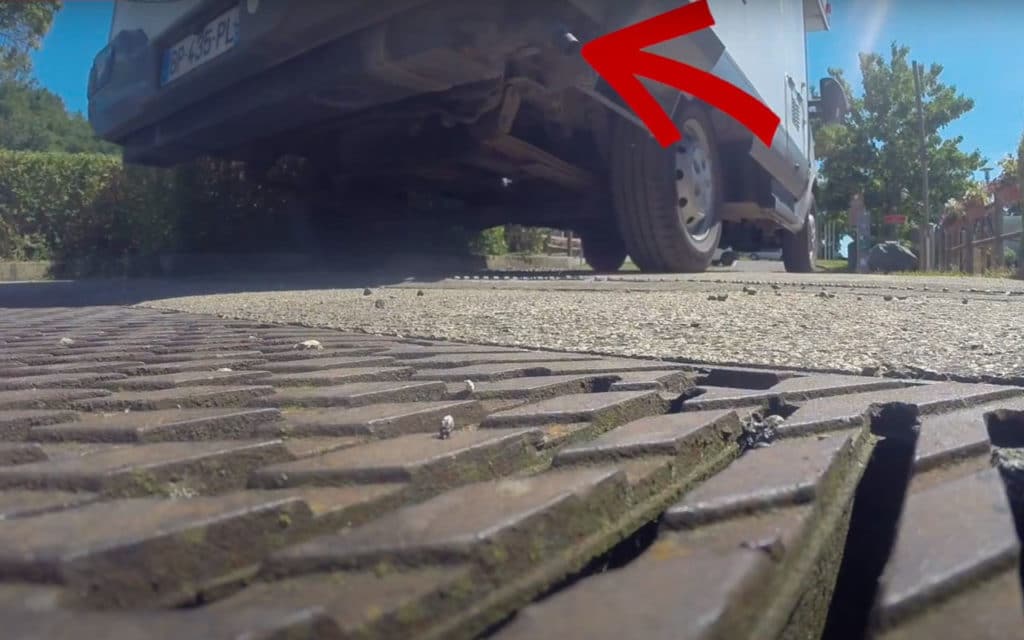
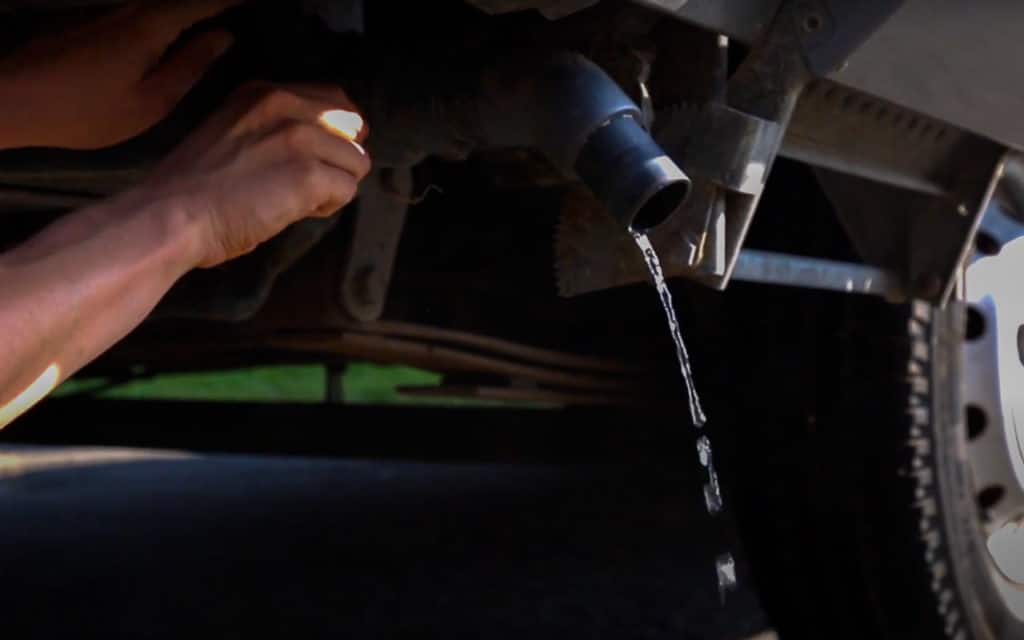
If you are not perfectly positioned, you can always use an extension pipe or a flexible hose to reach the drain.
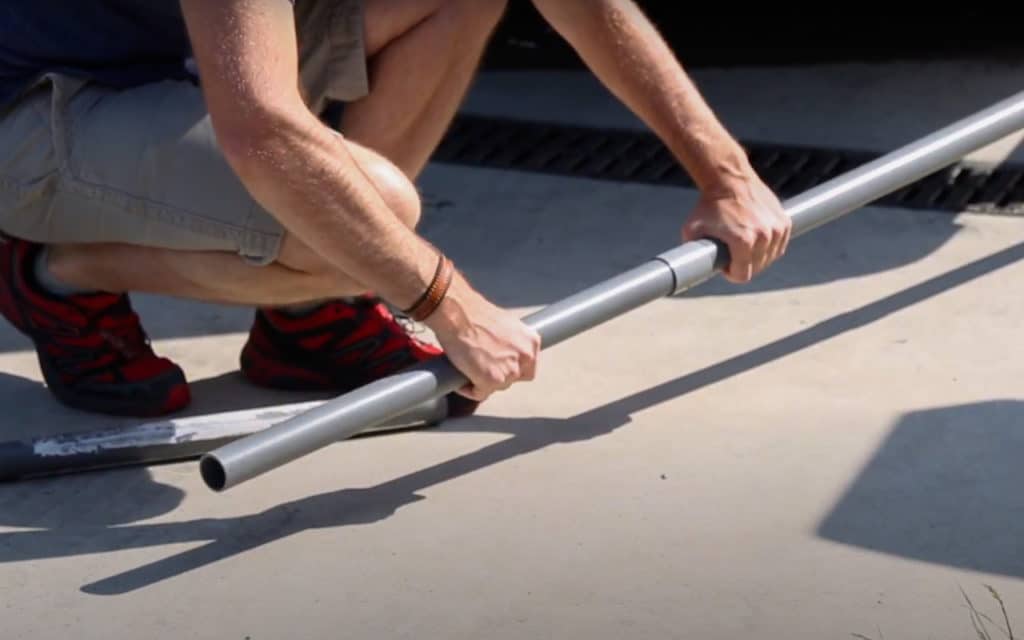
Don't forget to close the grey water valve afterwards, or the next time you wash up or take a shower, the water will end up on the ground.
Step 2: Empty the toilet cassette (black water)
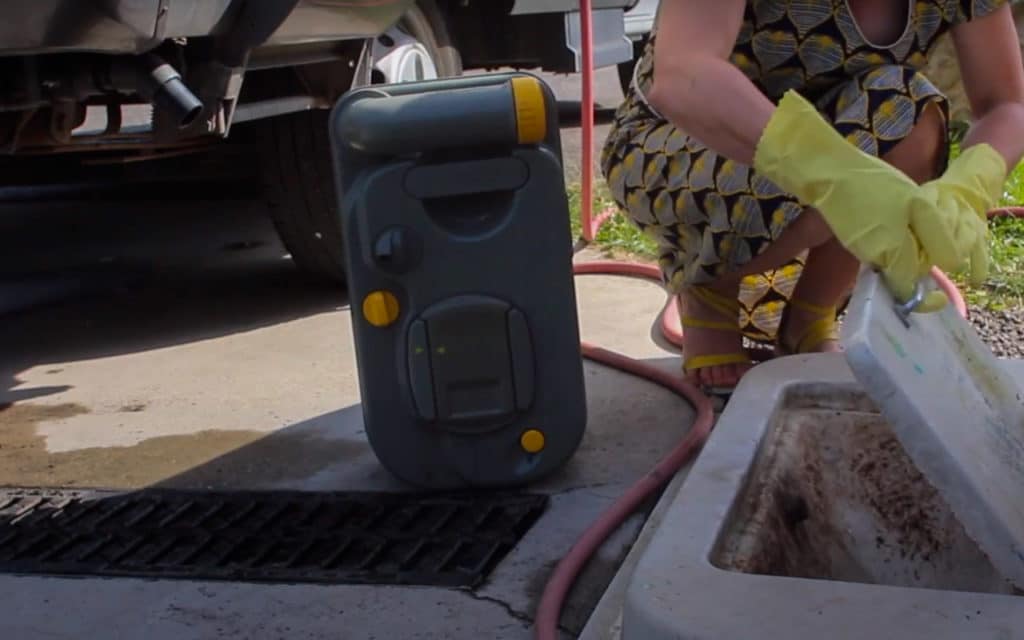
Most motorhomes and campervans in Europe have a chemical toilet with a removable cassette, which you take out through a small hatch on the outside of the vehicle. Always empty it at the dedicated toilet emptying point, never into the grey water drain: black water goes to a separate treatment circuit.
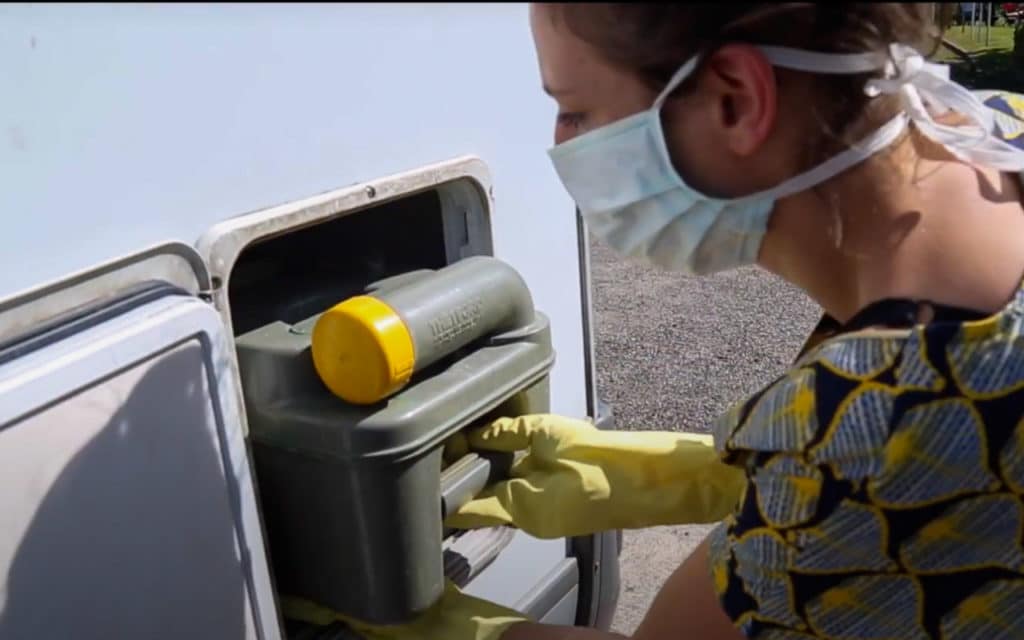
Lift the cover of the emptying point, unscrew the cassette spout, and pour out the contents. Rinse and empty it several times. Use the tap provided for rinsing, not the drinking water tap: it is a matter of hygiene and courtesy to the travellers who come after you.
If you would rather avoid chemicals and cassettes altogether, a composting or separating toilet is an alternative: read our guide to dry toilets in vans and motorhomes.
Step 3: Fill up with fresh water
Most terminals have a drinking water tap, often activated by a push button or after payment.
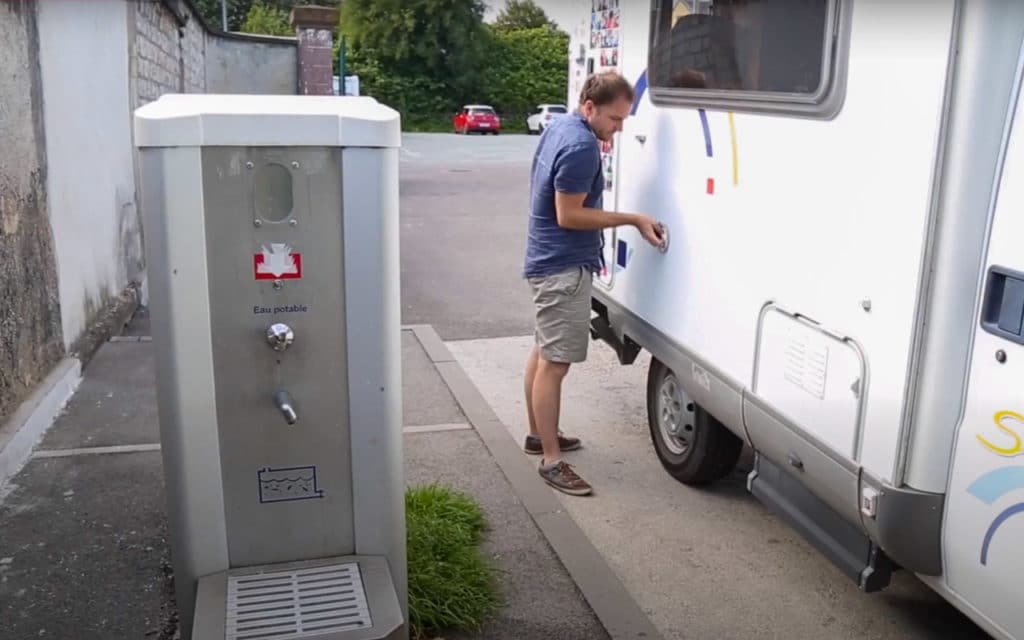
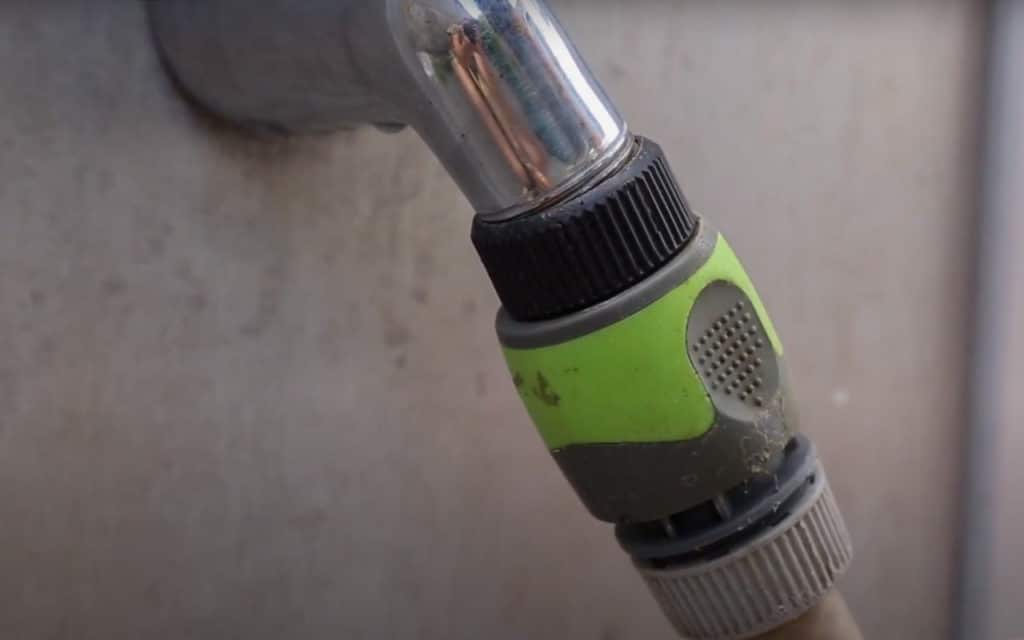
The taps are usually threaded, but the diameter varies from one terminal to the next. Carry a set of tap adapters and a quick-connect hose fitting to avoid any bad surprises. A dedicated drinking water hose (never the one you use for rinsing the cassette) is a must.
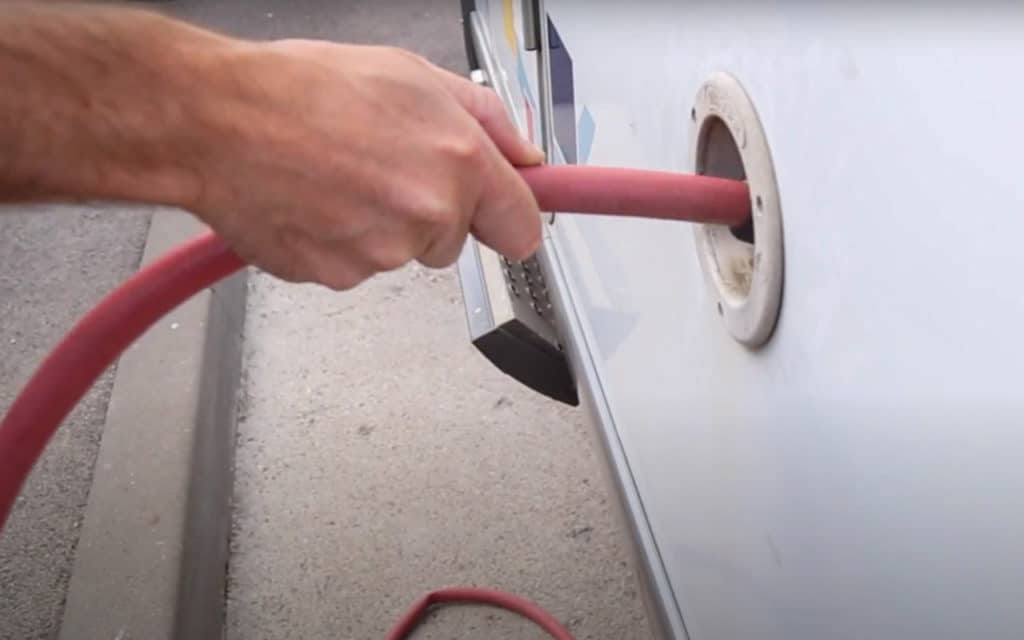
When you have finished, put your things away and leave the space clean for the next travellers.
A word on free water
Some motorhomers fill up at cemeteries, where water taps are often free. For us, that is a solution for emergencies only, when there is no other option. Filling up at a service point usually costs around €2 and helps towns cover the cost of the facilities they built to welcome motorhomes. Contributing to the upkeep of the infrastructure we rely on every day only seems fair.
Step 4: Recharge your batteries
Some service points also offer a 230V electricity hook-up. Prices vary, but you can generally expect around €2 for about an hour of charging, sometimes paid with tokens.
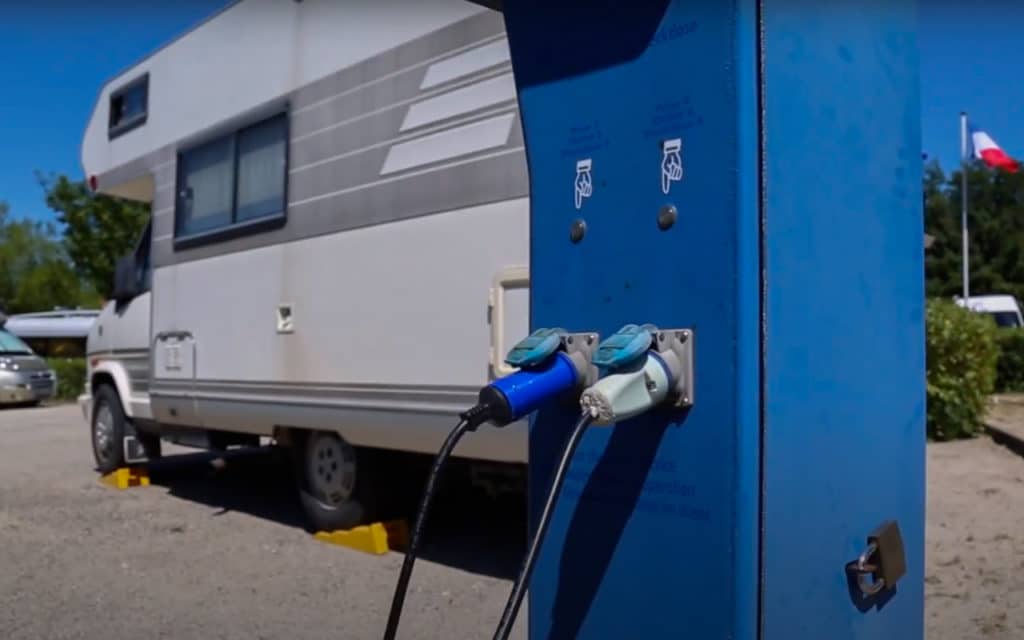
A tip for UK motorhomes: French service points may have either a blue industrial (CEE) socket or a standard French domestic socket. Carry an adapter from your blue hook-up cable to a French domestic plug, as well as a long enough cable.
An hour on the mains will not fully charge your leisure battery. If you want to rely less on hook-ups, solar panels or a portable power station make a real difference: see our guide to the best portable power stations and our Bluetti Elite 200 V2 review, the one we use in our own motorhome.
Aire etiquette: unwritten rules
- Don't occupy the service area longer than necessary, especially if others are waiting. Park first, and come back later if you want to do a full clean.
- Don't camp on a parking aire: no chairs, tables or awnings out unless the aire allows it. You are parked, not camping.
- Never empty grey water anywhere other than a drain, and never empty a cassette in nature or into a road drain.
- Respect the maximum stay and the height or length limits shown at the entrance.
- Use the right tap for the right job: drinking water for your tank, the rinsing tap for the cassette.
Where to find aires in France
Apps like Park4Night and Campercontact list most aires, with photos, prices and recent reviews from other travellers, which are useful to check that a service point is working. The Camping-Car Park app covers its own network. Wherever you go, aires make it easy to explore France at your own pace: in Brittany, in the Dordogne or along the Alsace wine route. Aires also exist across Europe, with similar systems in Belgium and Italy, where farm stays through Agricamper are another option.
Stay connected on the road
Apps like Park4Night need mobile data, and many UK networks now charge for roaming in France. We use a Holafly eSIM when we travel outside France: unlimited data, installed in a few minutes with a QR code. Holafly eSIM for Europe · Read our Holafly review
FAQ: motorhome aires in France
Can I stay overnight on an aire in France?
Yes, on an aire de stationnement or a combined aire, within the maximum stay shown on the sign (often 24 to 48 hours). A pure service point (aire de service) is not meant for overnight stays.
How much does it cost to use a service point?
Emptying grey water and the toilet cassette is often free. Fresh water and electricity usually cost around €2 each, for about 100 litres of water or one hour of electricity. Parking ranges from free to around €12 a night.
Where do I buy tokens (jetons)?
Usually at the tourist office, the town hall, a bakery or a nearby shop. The terminal normally indicates where. Buy a couple in advance if you arrive in the evening or on a Sunday.
Do service points accept UK or US bank cards?
Many terminals now accept bank cards, but not every reader accepts every foreign card. Carry some coins or tokens as a backup.
Can I empty a cassette toilet at any aire?
Most service points have a dedicated toilet emptying point. Check the pictograms on the terminal or the aire listing in an app before you go.
Are aires open all year?
Many are, but some service points close in winter to protect the pipes from frost. Check recent reviews before relying on one between November and March.
What equipment do I need?
A drinking water hose, a set of tap adapters, a grey water extension pipe, disposable gloves, a few euros in coins, and for UK vehicles, an electrical adapter for French sockets.
Do you have your own tips for using service points? Share them in the comments.
Safe travels!
Pauline & Simon

