
1kWh of storage in a compact unit weighing just 10.7kg (23.6lb): the Bluetti Elite 100 Mini (US) / Bluetti Elite 100 Mini (UK) is aimed squarely at travellers who are short on space. What can you actually run on it? How long will it last? We have been testing it in our car, at home and on the road, and here is what we found: specs, charging options, real-world uses and who this new power station is really for.
The Bluetti Elite 100 Mini at a glance
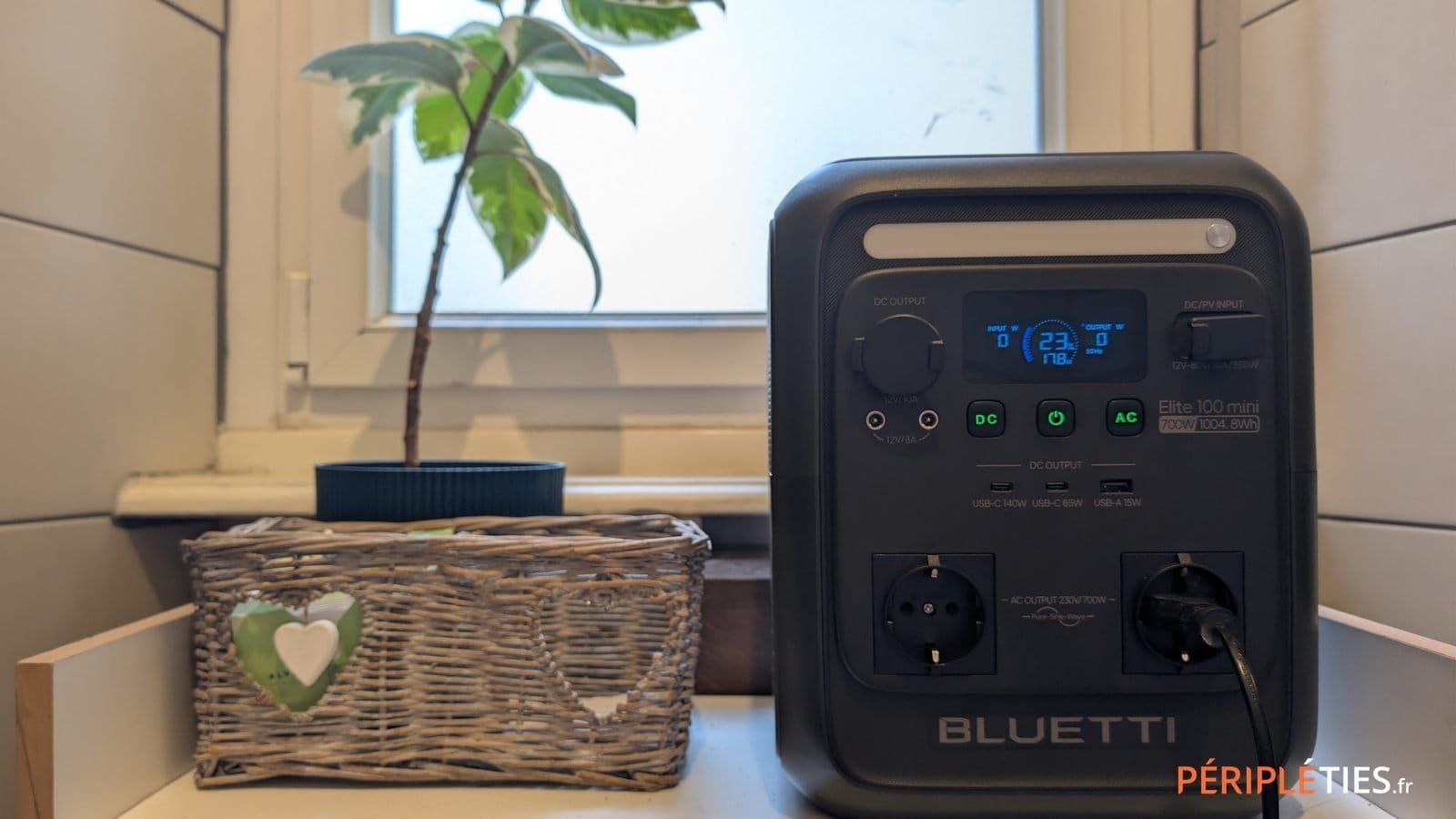
With the Elite 100 Mini, Bluetti has gone all in on compactness. This new portable power station packs a 1,004.8Wh LiFePO4 battery and a 700W inverter into an upright, 10.7kg (23.6lb) body. It is an unusual shape for a 1kWh unit, and one that makes it much easier to stow in small campervans, converted cars and micro-campers.
Key specifications
- Capacity: 1,004.8Wh
- Battery chemistry: LiFePO4 (lithium iron phosphate)
- Rated lifespan: 6,000 cycles to 80% capacity
- Continuous AC output: 700W
- Power Lifting mode: up to 1,400W (resistive appliances only)
- Surge: 1,050W (manufacturer figure)
- AC outlets: 2 on the UK/European version we tested (230V). The US version has 3 AC outlets (120V).
- USB-C: 1 × 140W + 1 × 65W
- USB-A: 1 × 15W
- 12V car socket: 12V / 10A (120W)
- DC5521 outputs: 2 × 12V / 5A
- Mains charging: up to 700W
- Solar input: up to 350W
- Alternator charging: up to 349W with the Bluetti Charger 1
- UPS: switchover in 10ms or less
- Dimensions: 235 × 215.5 × 293mm (9.3 × 8.5 × 11.5in)
- Weight: about 10.7kg (23.6lb)
- Connectivity: Bluetooth and Wi-Fi (Bluetti app)
- Lighting: built-in LED light bar
First impressions: an unusual upright design
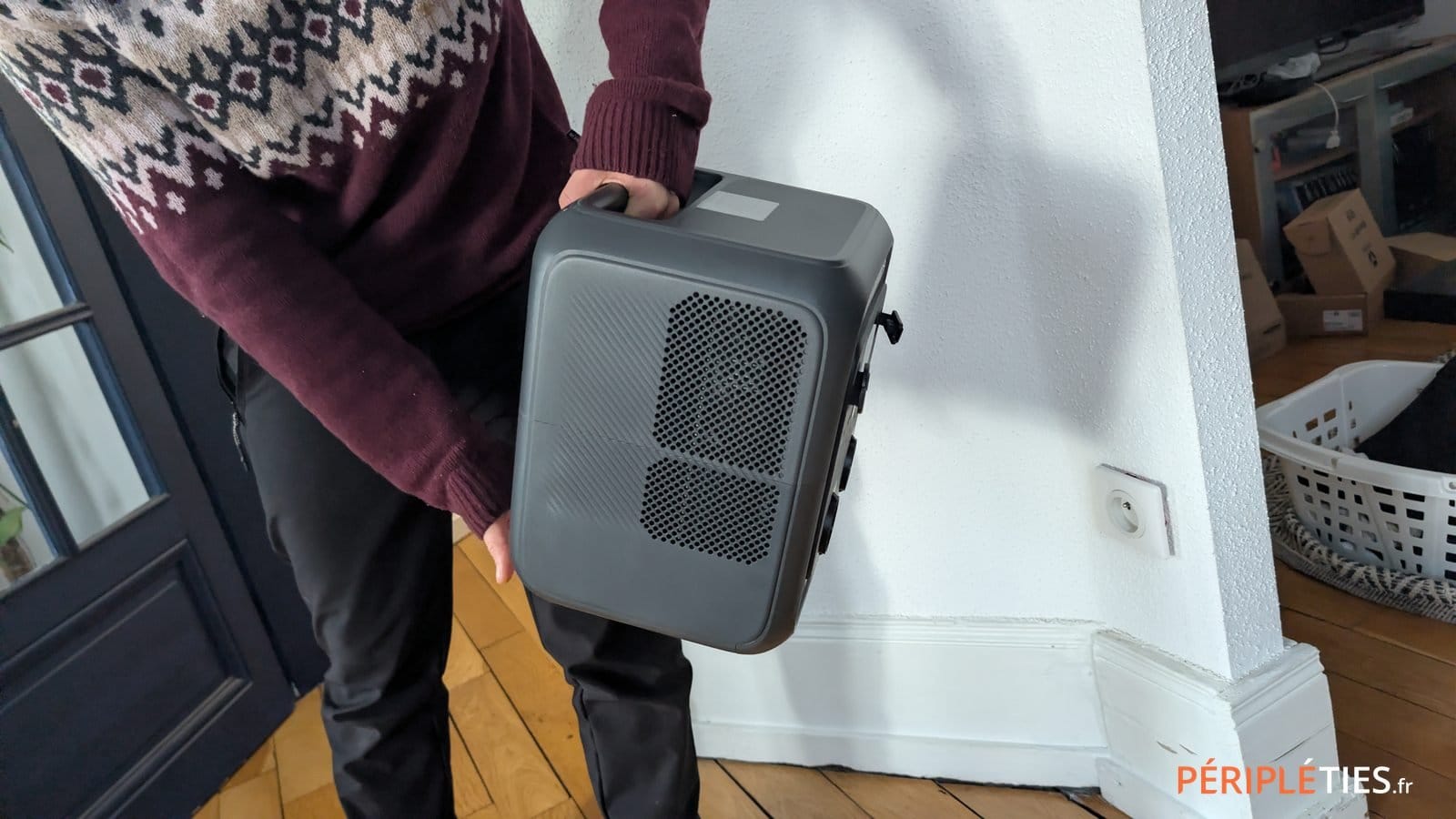
The first thing you notice when you lift the Elite 100 Mini out of its box is that it stands up!
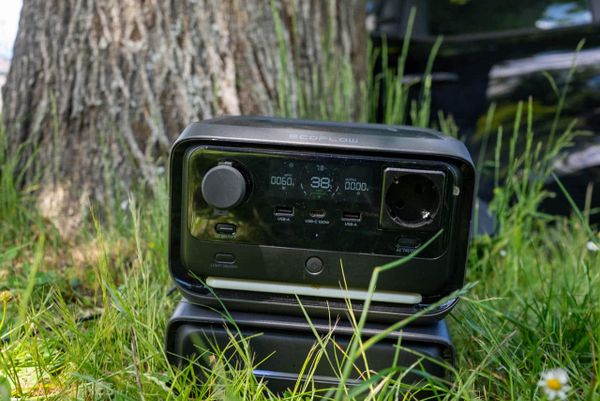
Most 1kWh power stations look like small suitcases lying on their side (think Bluetti AC180P (US) / Bluetti AC180P (UK) or Bluetti Elite 100 V2 (US) / Bluetti Elite 100 V2 (UK)). This one takes up a footprint of just 23.5 × 21.5cm (9.3 × 8.5in) and stands 29.3cm (11.5in) tall. In other words, it is taller than it is wide.
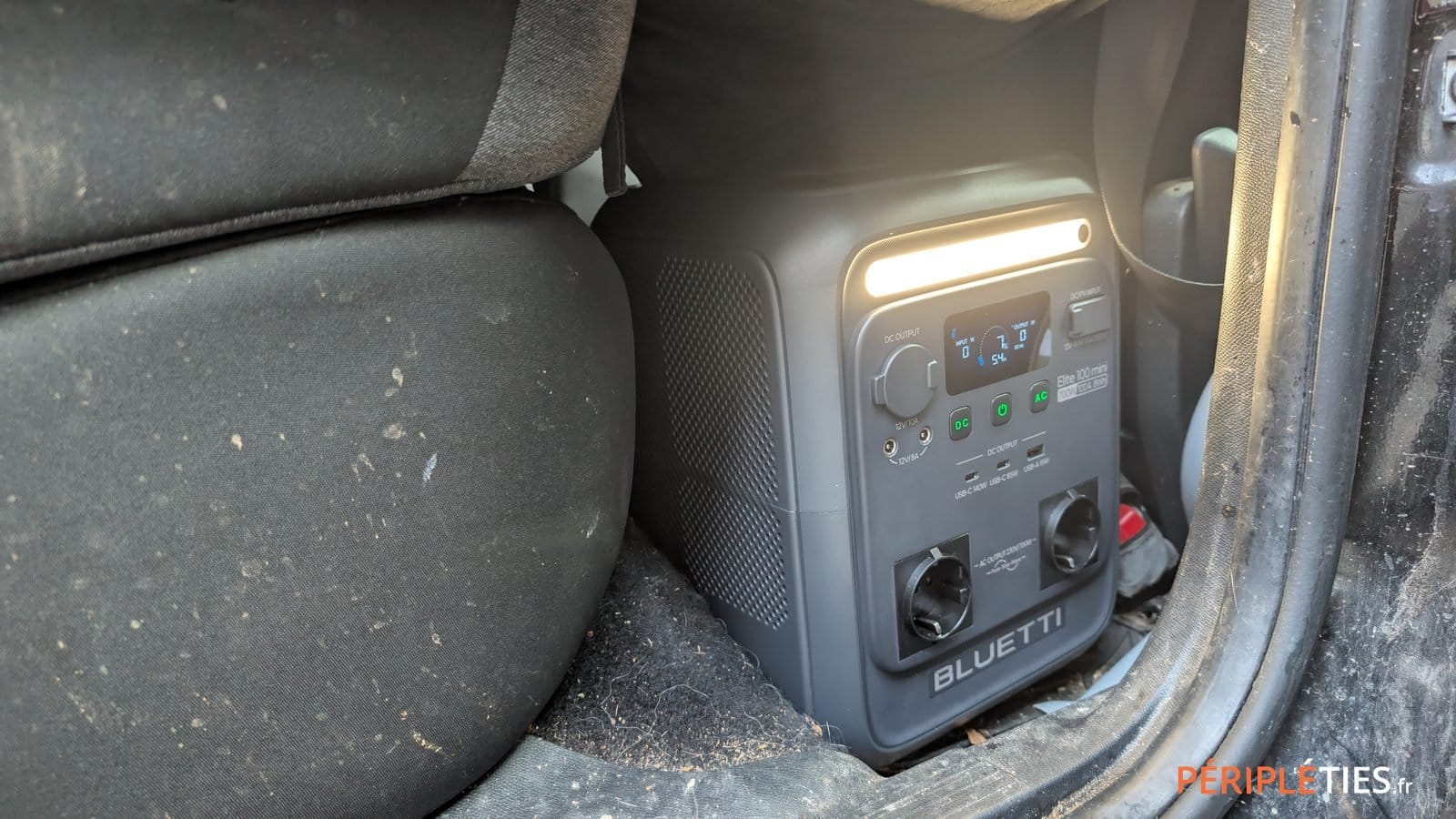
That shape lets it slip into a small vehicle: in a footwell, between a storage box and the side wall, or into a tall cupboard.
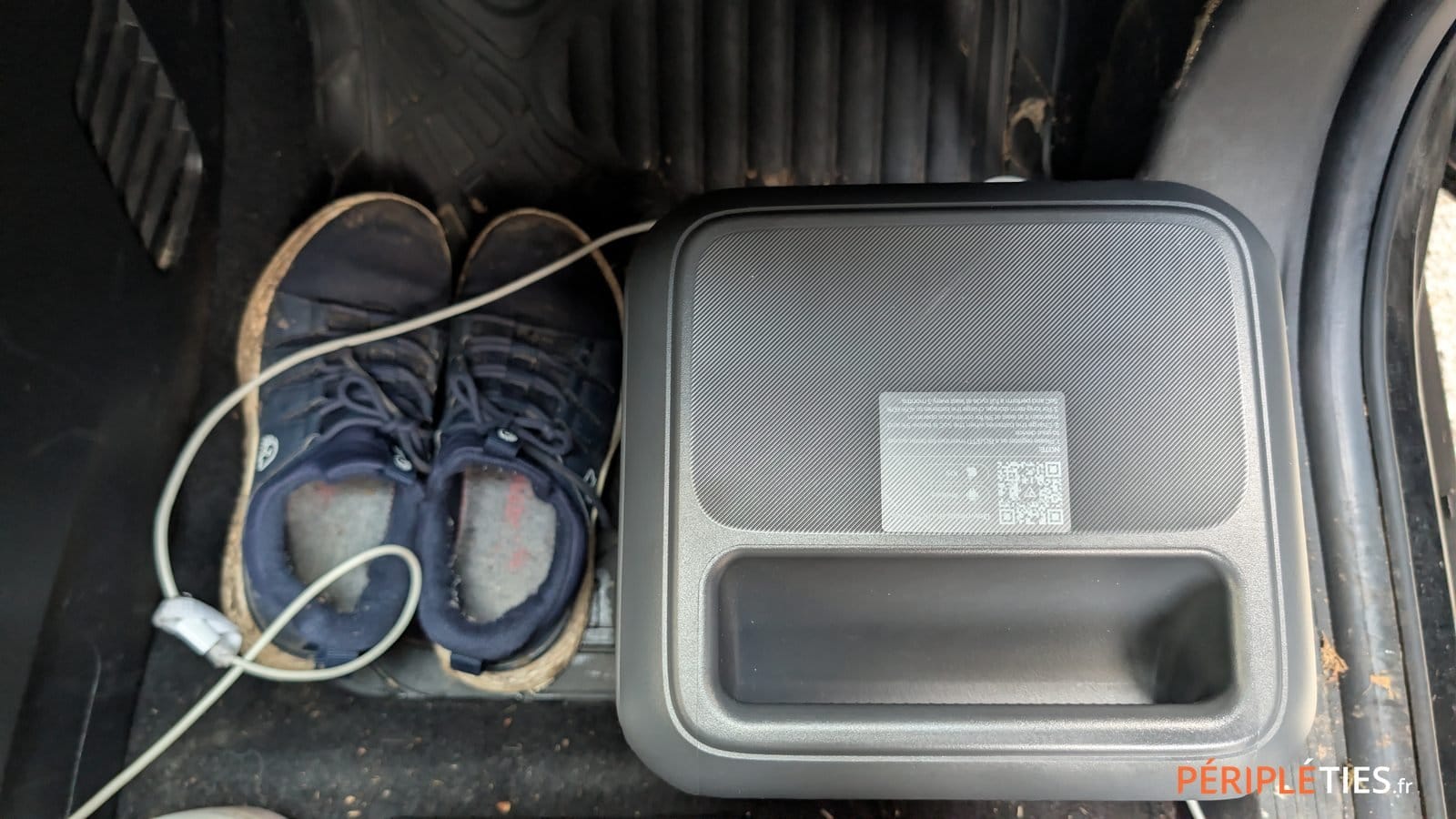
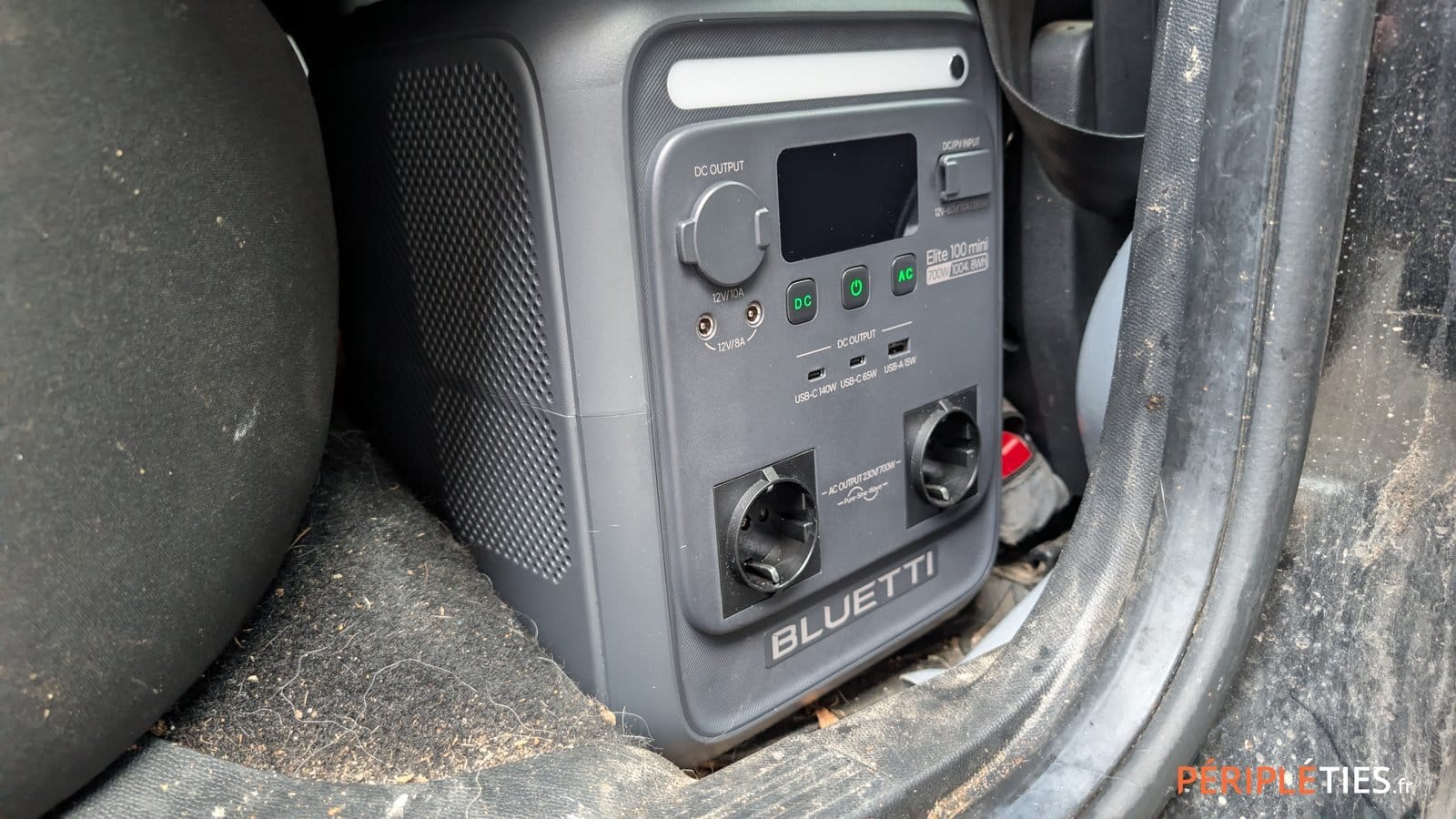
In short, it is exactly the kind of battery you appreciate when space is tight but you still want an energy reserve to keep food cold, work for a few hours or charge your everyday devices.
10.7kg (23.6lb): light and easy to carry
At 10.7kg, it is fairly easy to move around for a station of this capacity. The rear handle lets you carry it with one hand, or you can grab it with both. It goes from the house to the boot, then from the boot to the picnic table, without any fuss.
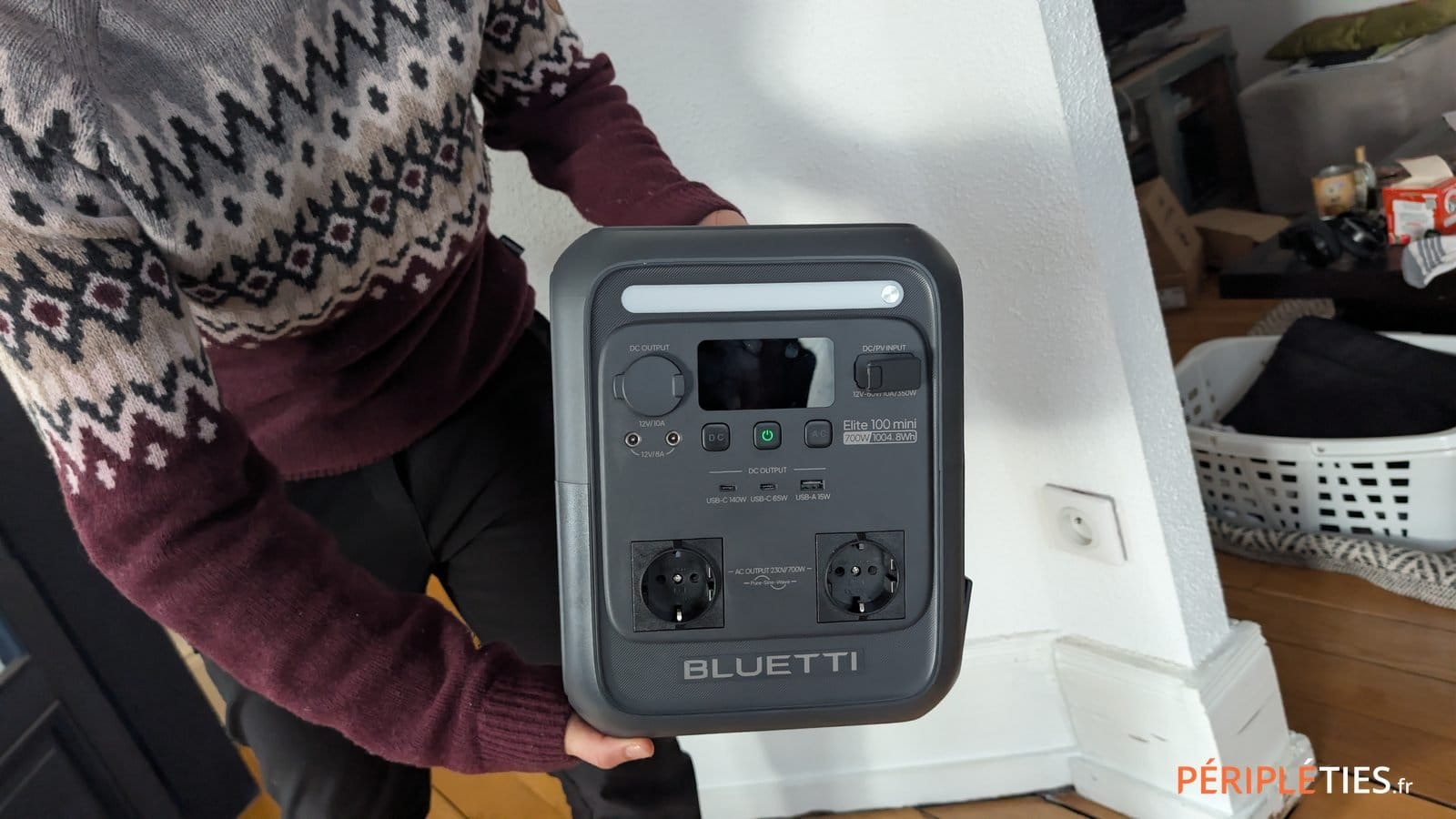
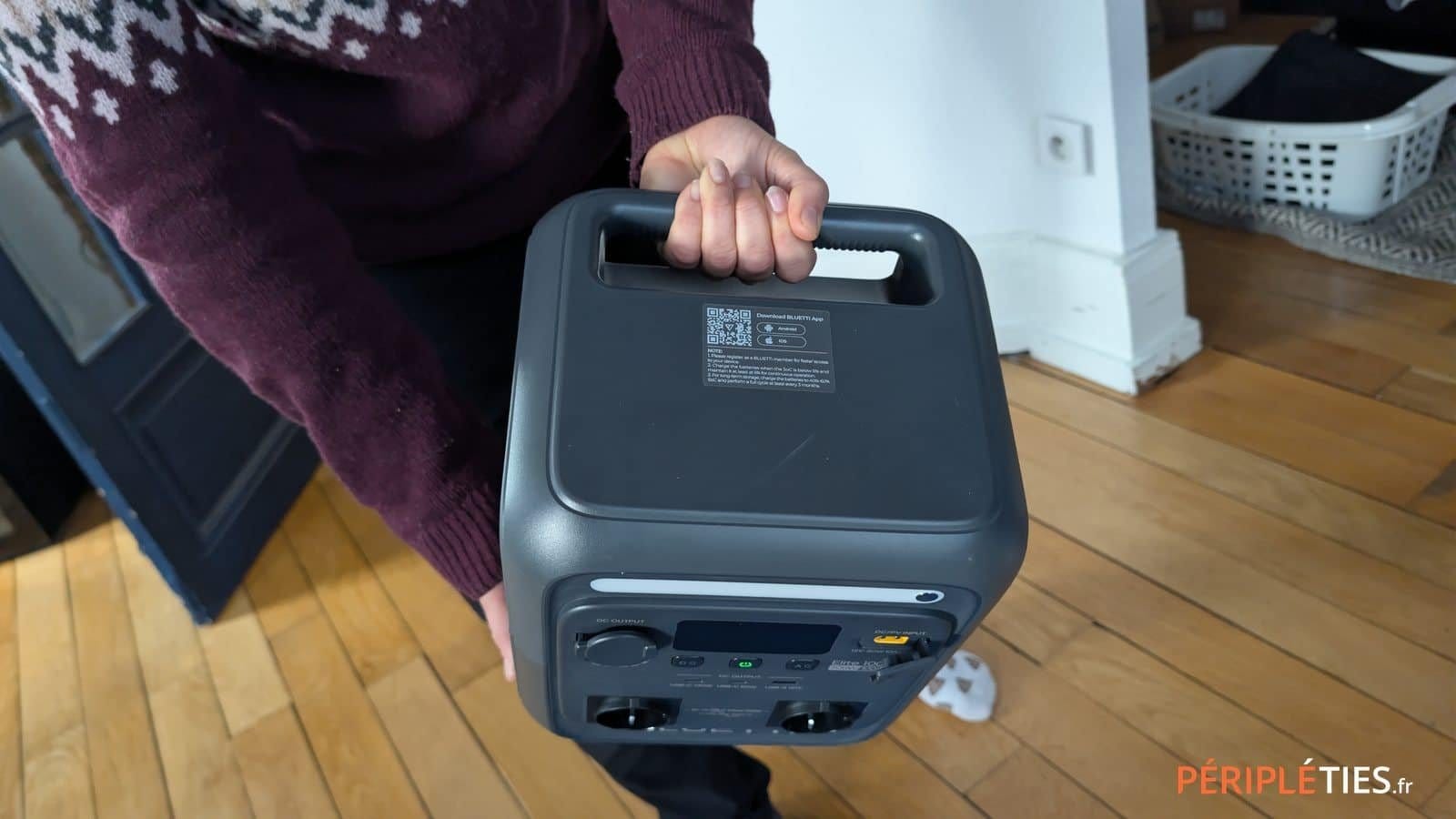
That said, do not let the "Mini" name fool you: this is not a battery you will slip into a hiking backpack.
The ports: 8 outputs, well thought out for life on the road
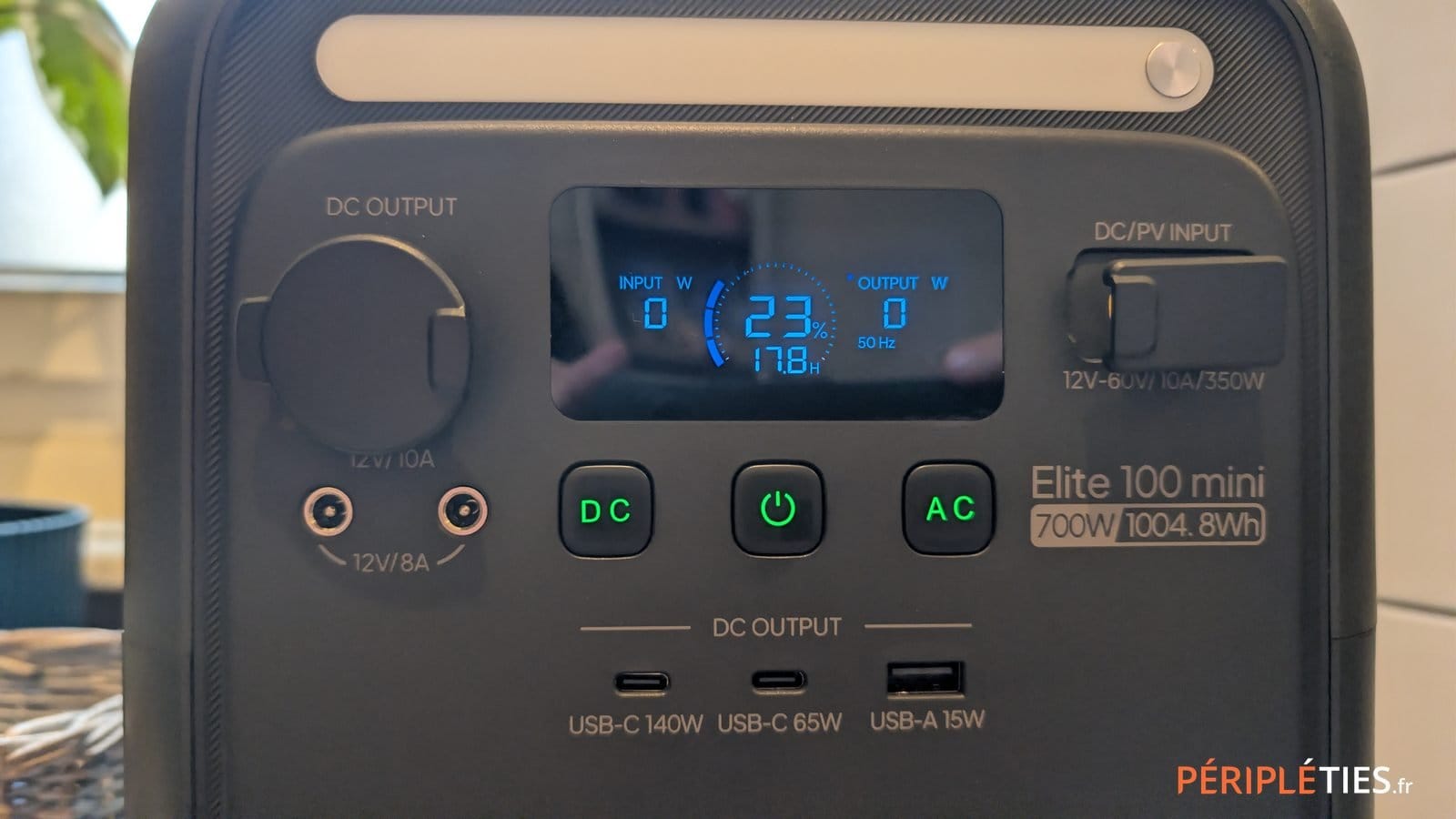
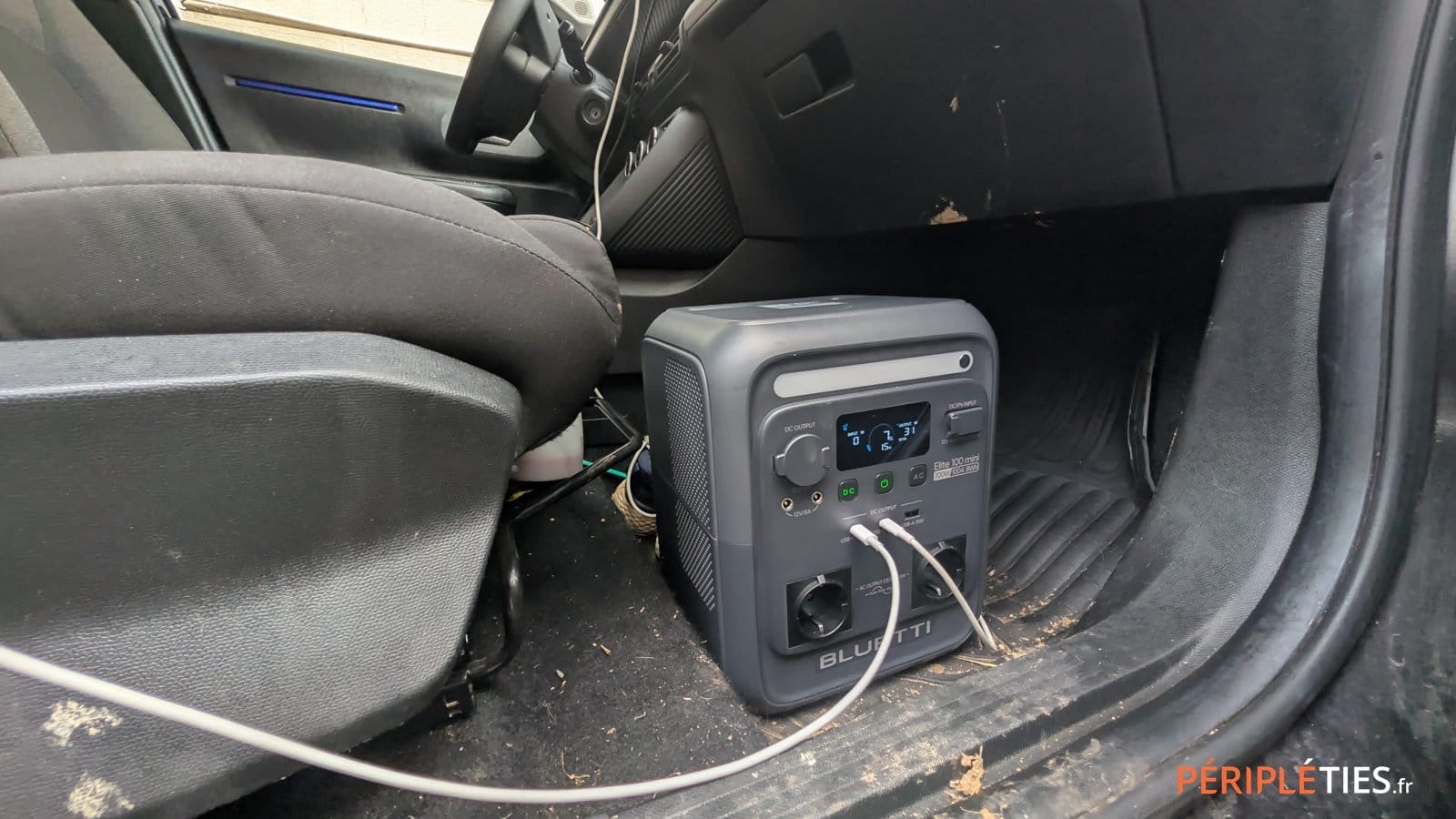
For its size, the selection of ports is generous. On the UK/European version, you get two AC outlets, two USB-C ports (140W and 65W), one 15W USB-A port, a 120W 12V car socket and two 12V DC5521 outputs (5A each). The US version adds a third AC outlet.
In our view, USB-C is the most useful port day to day. It charges most laptops directly, without going through their mains adapter. That is actually what we do: it avoids using the inverter, which reduces energy losses and stops the fan from running for nothing.
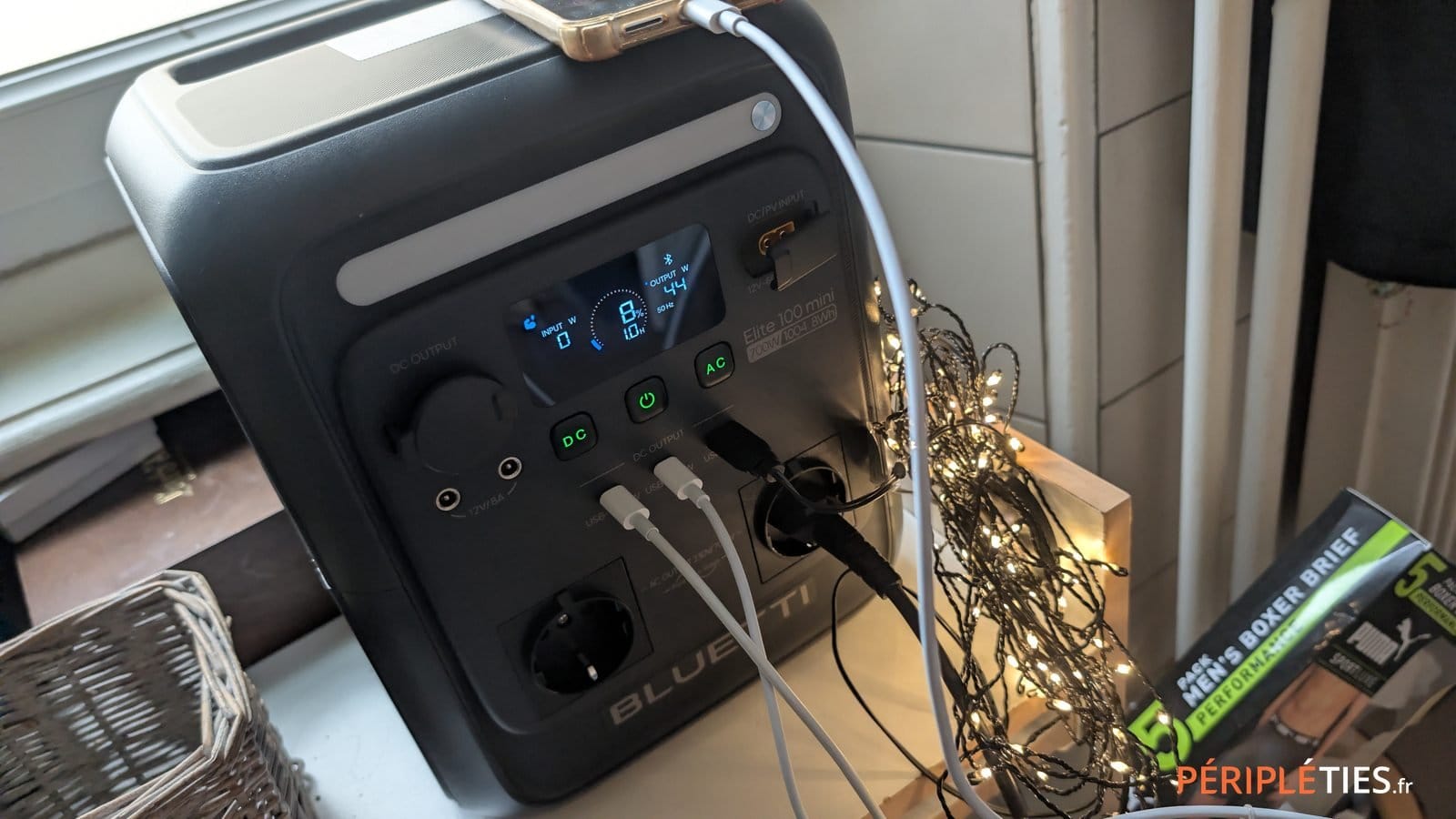
The 12V car socket is the one to use for a compressor cool box or fridge. Running it on 12V rather than through the inverter (230V in the UK and Europe, 120V in the US) avoids an extra conversion and helps preserve your runtime.
A clear screen, a complete app and a genuinely useful light
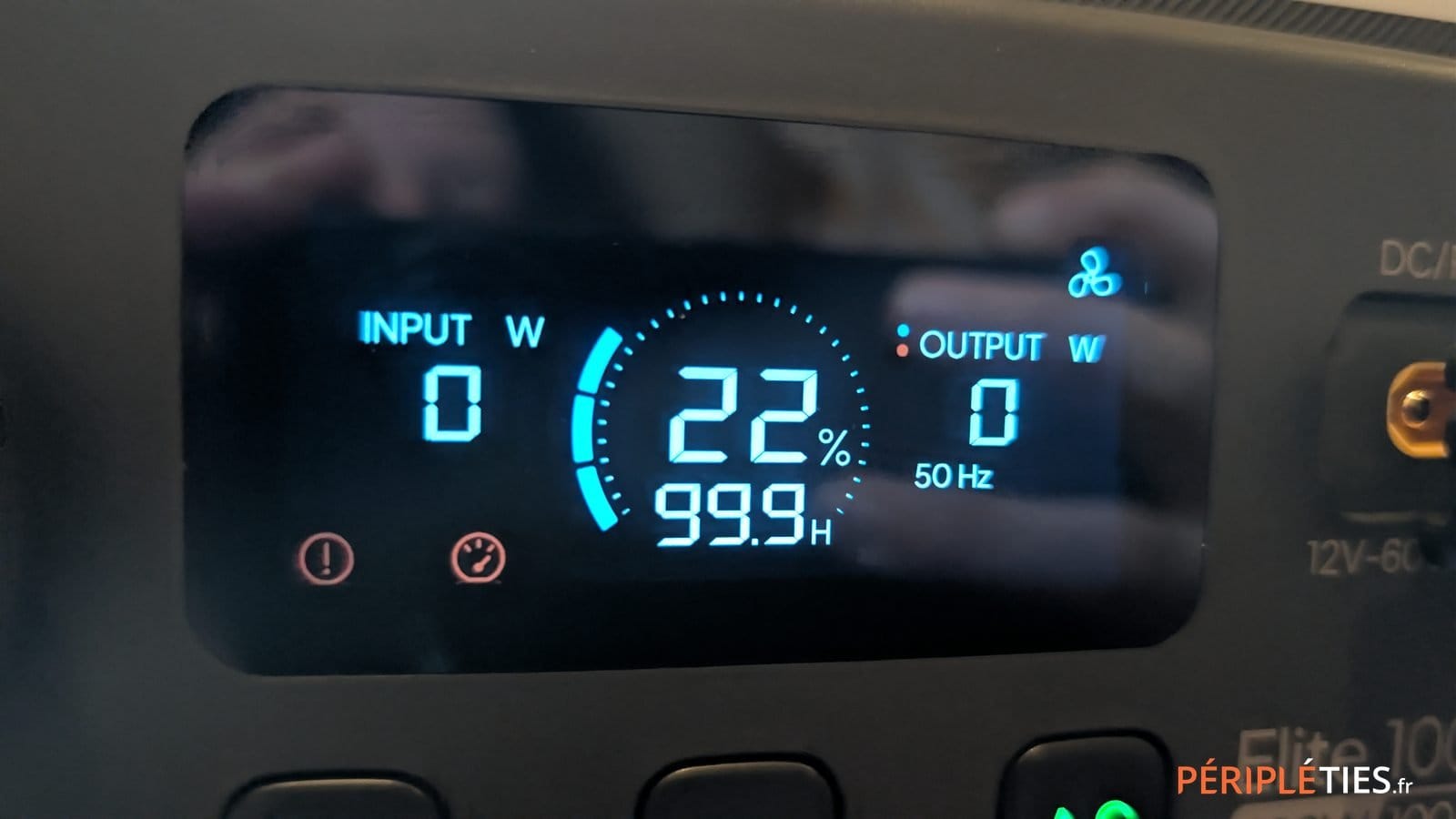
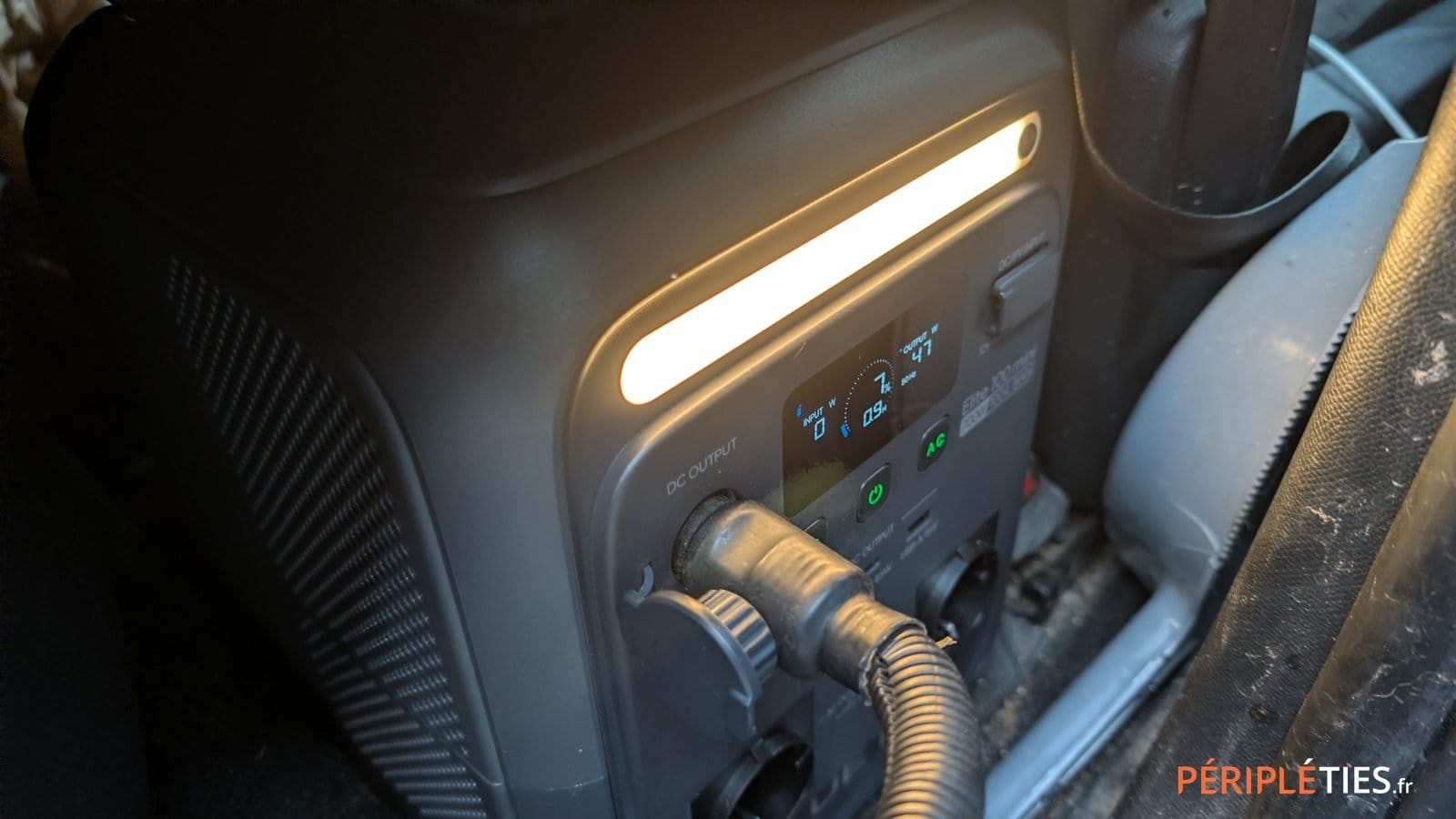
The screen is easy to read and shows, among other things, input power, output power and estimated runtime. The Bluetti app works over both Bluetooth and Wi-Fi, so you can keep an eye on solar charging from inside the van without going outside to check the battery.
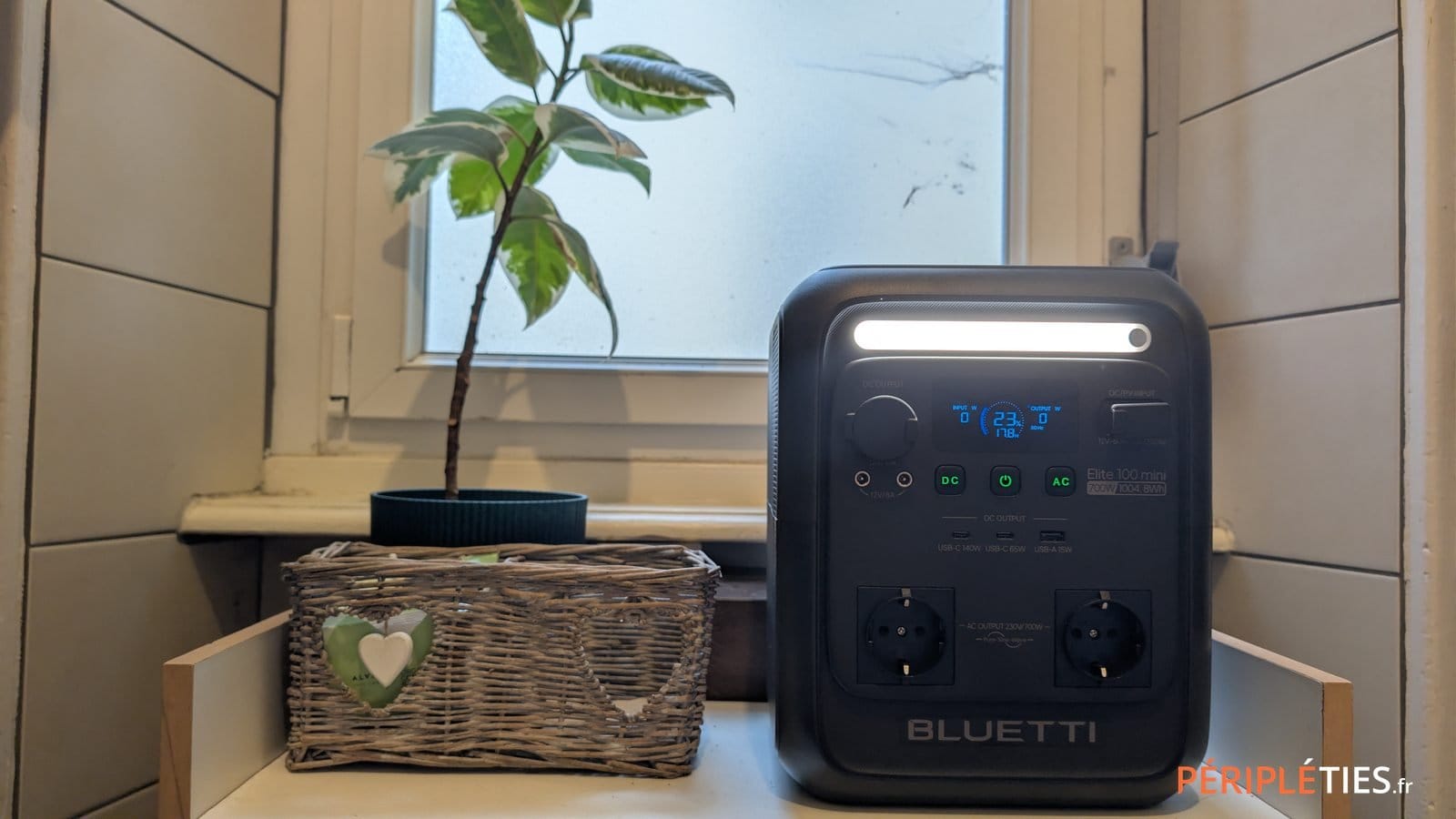
A bonus we did not expect: an LED light bar on the front, with three modes (warm white, cool white and SOS). It sounds like a gimmick, until your first night at a wild spot when you are hunting for your head torch in the dark!
What can you plug into the Bluetti Elite 100 Mini?
With 1,004.8Wh of capacity, the Elite 100 Mini is a genuinely practical energy reserve, and broadly enough for everyday needs on the road.
You can use a laptop, charge cameras, phones and drones, and run a cool box. Some small household appliances, such as a low-power 500W vacuum cleaner, also work, as long as you stay under the 700W available.
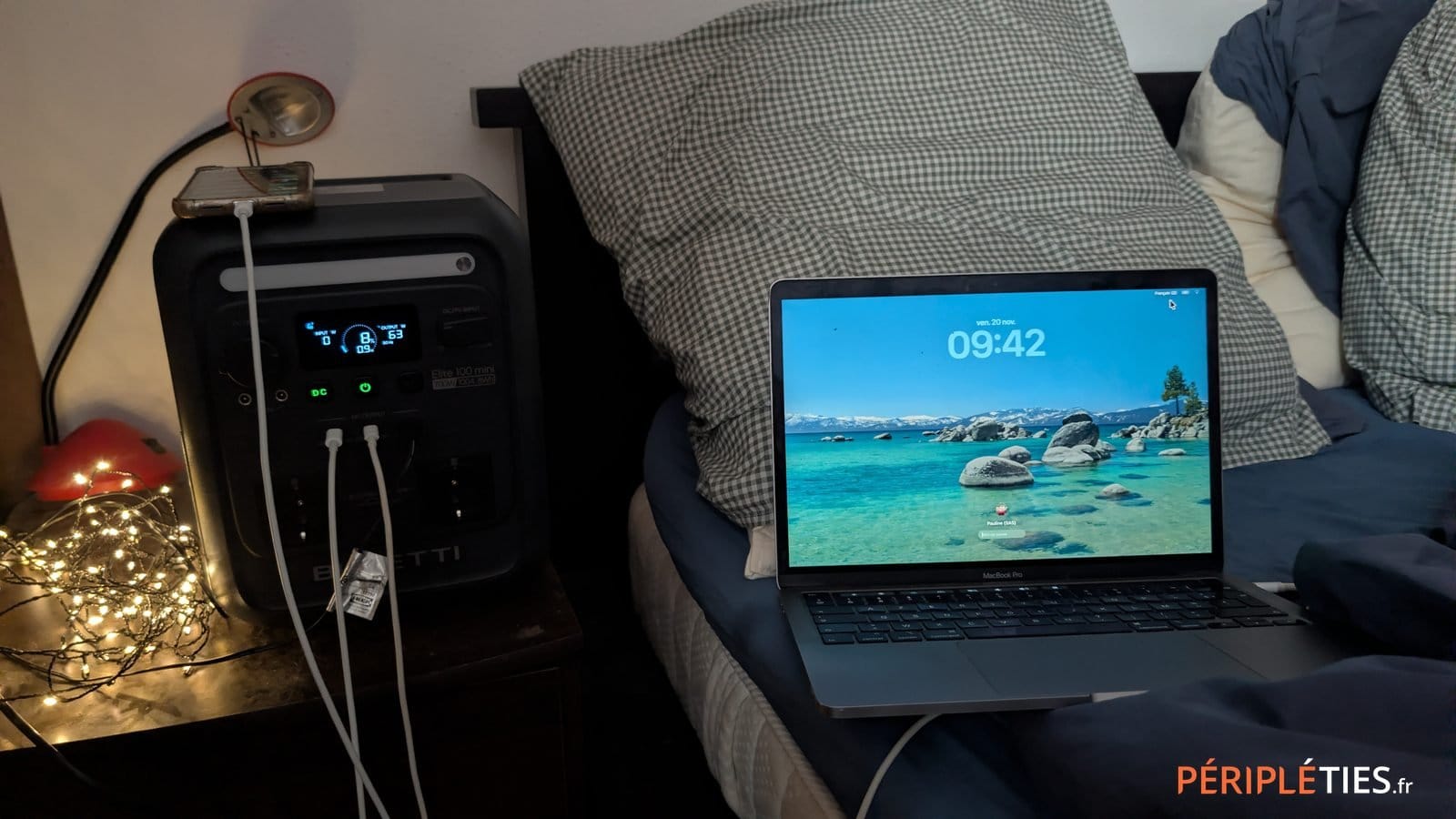
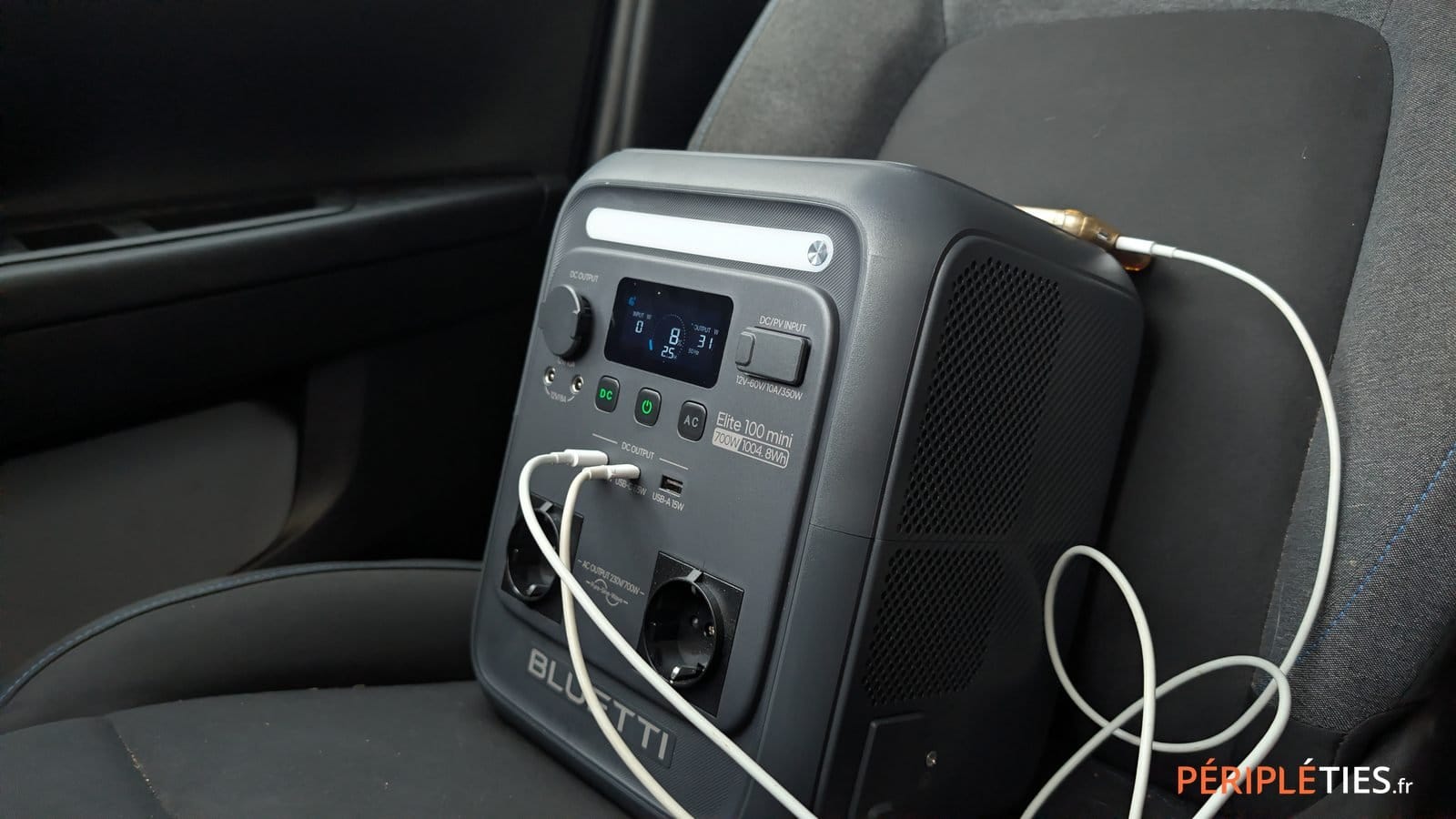
And that is its main limitation: despite its comfortable capacity, output is capped at 700W. Power Lifting mode, rated up to 1,400W, does let some more power-hungry resistive appliances run at a reduced voltage. Performance drops, though, so this mode is no substitute for a higher rated output and does not suit every appliance.
Our hair dryer test in Power Lifting mode
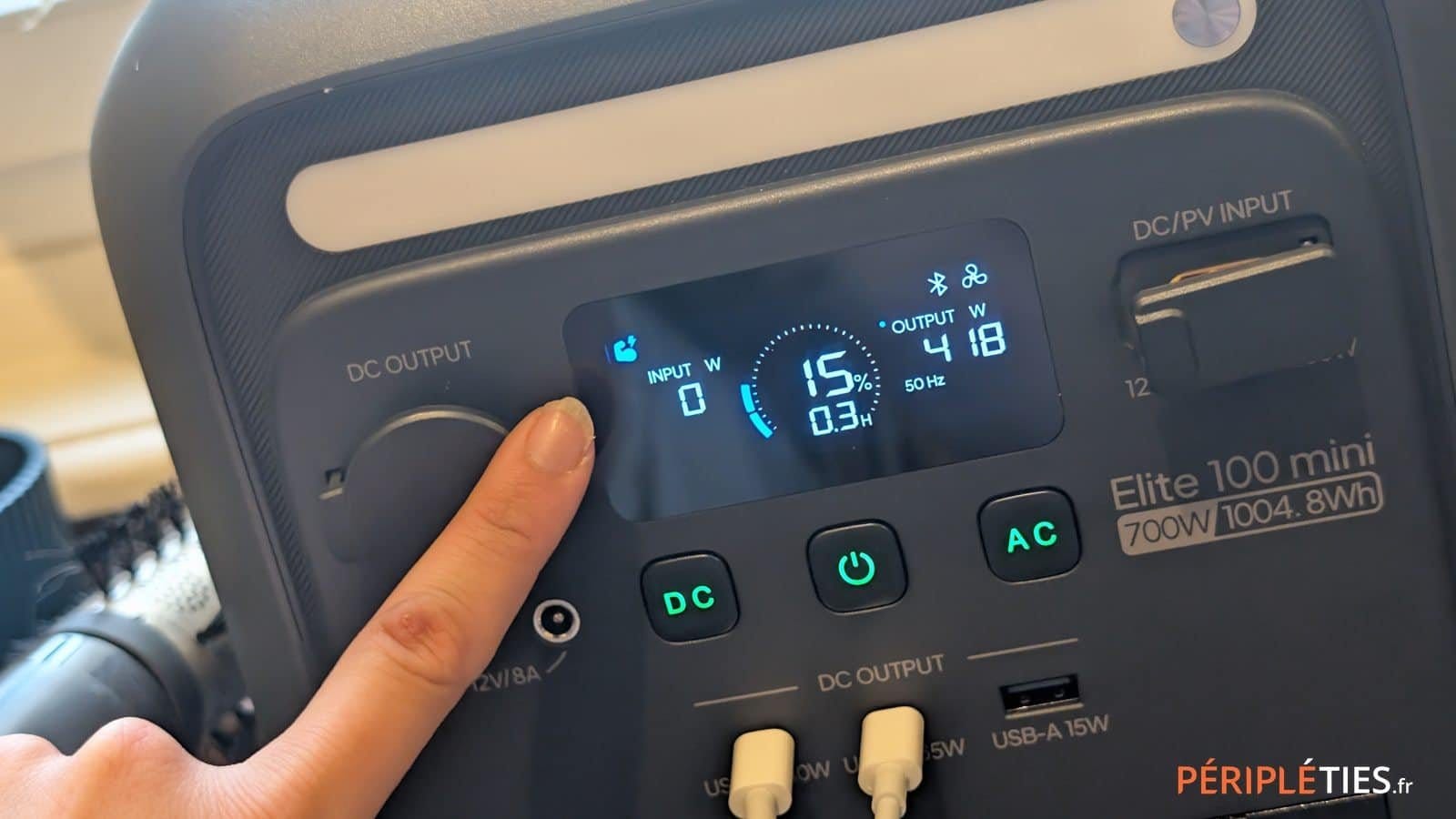
We wanted to push this station a little, so we tried two hair dryers: a good example of an appliance you do not strictly need on the road, but that is handy all the same. With our small 700W travel model, no problem at all: it worked normally and used about 10% of the battery to dry our hair (around 10 minutes).
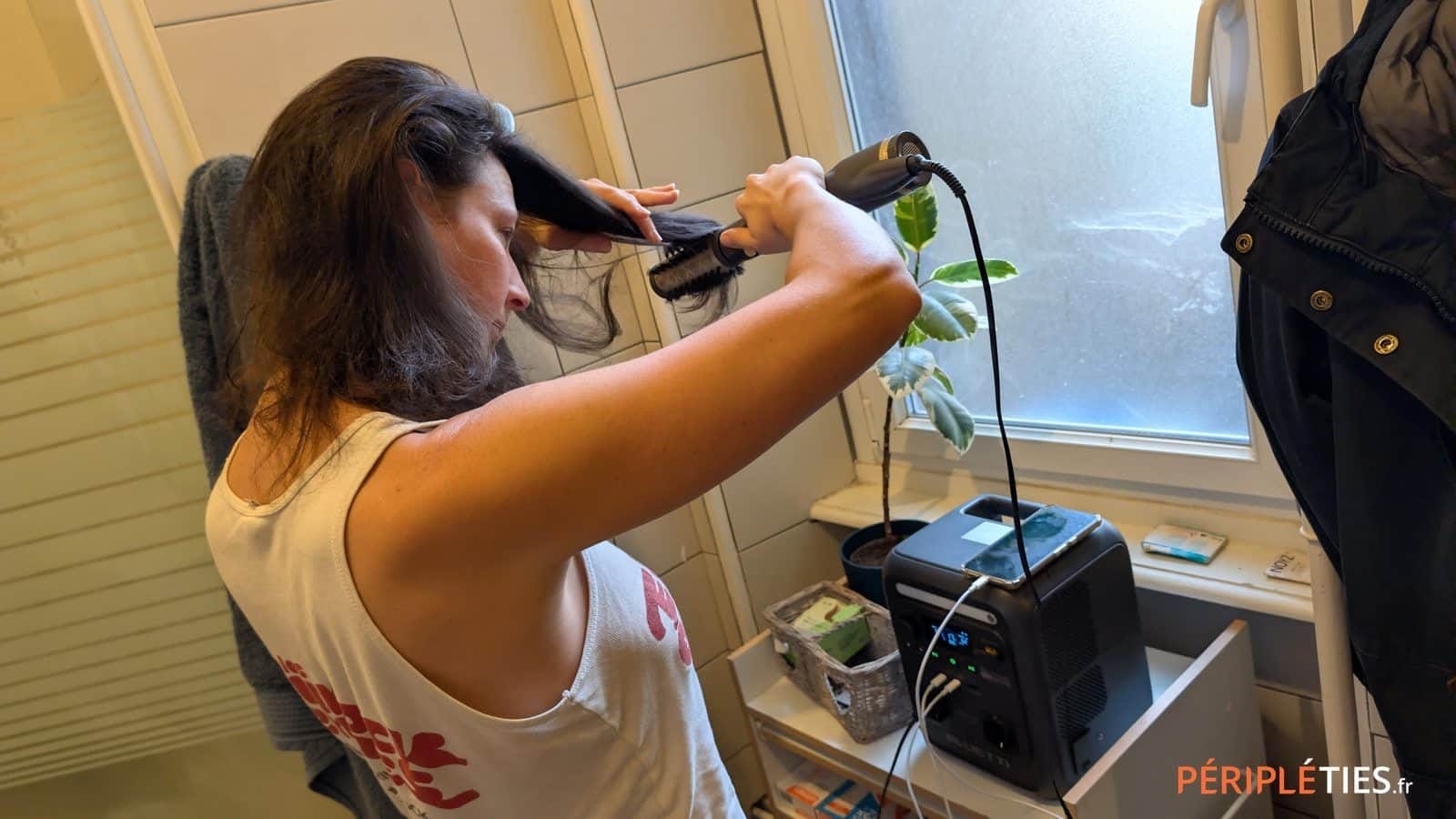
We then tried a BaByliss hair dryer rated at 1,800W. Without manually activating Power Lifting mode, the station faulted instantly.
With Power Lifting on, medium heat and the lowest fan speed, the hair dryer worked and the station showed about 590W. But as soon as we turned up the heat, the airflow dropped sharply. And as soon as we turned up the fan, the station cut out for safety after three seconds.
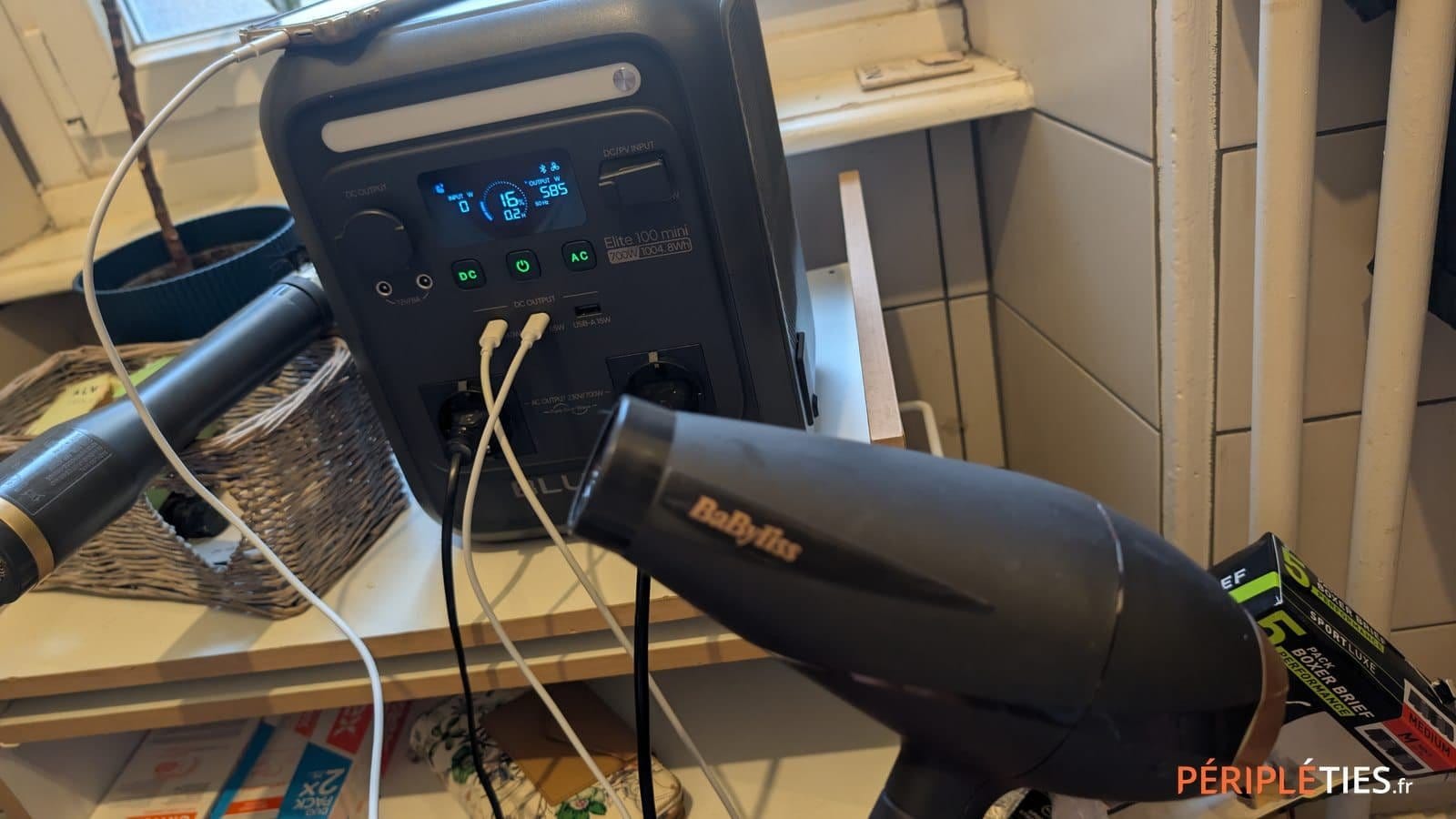
So Power Lifting keeps its promise of running some hungrier resistive appliances, with reduced performance. Do not bother trying a powerful kettle or hair straighteners: that is clearly beyond what a station like this can handle. A note for UK readers: most British kettles are rated at around 3kW, so use gas or a low-wattage travel kettle instead.
A noticeable fan, but not a particularly annoying one
When you run power-hungry devices, the inverter fan kicks in quickly. We measured around 50dB during our tests. You can definitely hear it, but it is a fairly low-pitched sound, which makes it less unpleasant than a high-pitched whine. It is not silent, but it is perfectly acceptable for occasional use.
Why did Bluetti go for 700W?
The 700W figure is a deliberate choice. By limiting the inverter's power, Bluetti favours a more compact design, a longer lifespan and a lower manufacturing cost (a more powerful inverter needs more space and more cooling).
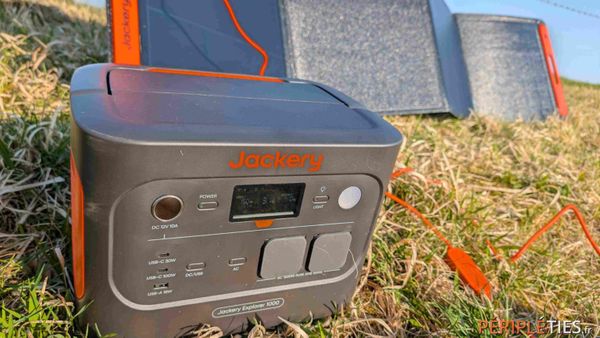
If you need more power, Bluetti also makes more versatile models. We previously tested the Bluetti AC180P (US) / Bluetti AC180P (UK), which offers 1,800W of output and 1,440Wh of capacity, but in a much bulkier and noticeably heavier package.
In Bluetti's current range, though, the most relevant comparison is the Bluetti Elite 100 V2 (US) / Bluetti Elite 100 V2 (UK): with almost identical capacity (1,024Wh), it delivers 1,800W for only 800g (1.8lb) more than the Elite 100 Mini. The two models target different buyers, as Bluetti itself explains. The Elite 100 Mini stands out mainly for its very compact shape, designed for small vehicles, and for its long rated lifespan (6,000 cycles).
Elite 100 Mini vs other 1kWh power stations
| Model | Capacity | AC output | Solar input | Cycles | Weight | Price |
|---|---|---|---|---|---|---|
| Bluetti Elite 100 Mini | 1,004.8Wh | 700W (1,400W Power Lifting) | 350W | 6,000 | 10.7kg (23.6lb) | Check price (US) Check price (UK) |
| Bluetti Elite 100 V2 | 1,024Wh | 1,800W | 1,000W | 4,000 | 11.5kg (25.4lb) | Check price (US) Check price (UK) |
| Jackery Explorer 1000 v2 | 1,070Wh | 1,500W | 400W | 4,000 | 10.8kg (23.8lb) | Check price (US) Check price (UK) |
Manufacturer specifications. Scroll sideways on mobile.
For a closer look at the Jackery, read our Jackery Explorer 1000 v2 review.
How long will the Elite 100 Mini run your devices?
For a weekend in a van with a cool box, two phones, a laptop used for a few hours and a bit of lighting, consumption can quickly reach 500 to 800Wh a day, depending on the cool box, the weather and your habits. The Elite 100 Mini will therefore last a good day, or even two if you are careful with energy. Beyond that, you will need solar input or charging while driving.
Here are a few examples of devices and runtimes on the Elite 100 Mini:
| Device | Consumption | Indicative runtime |
|---|---|---|
| 12V cool box / car fridge | 0.6kWh per day | 34.4 hours |
| Fridge-freezer cool box | 80W | 9.6 hours |
| LED lighting | 10W | 43.1 hours |
| Small fan | 20W | 28.7 hours |
| Travel kettle | 450W | 1.9 hours |
| Smartphone | 15Wh per charge | 34.5 charges |
| Laptop | 60Wh per charge | 12 to 13 charges |
| Drone battery | 62Wh per charge | 11.9 charges |
| Camera | 50W | 14.3 hours |
These runtimes are indicative. They vary with each device, its real consumption and conditions of use.
How do you charge the Bluetti Elite 100 Mini?
The Elite 100 Mini charges in four ways: from the mains, from solar panels, from the vehicle's 12V socket or with Bluetti's alternator charger. Each option has its pros and cons depending on how you travel.
Mains charging: about 2 hours
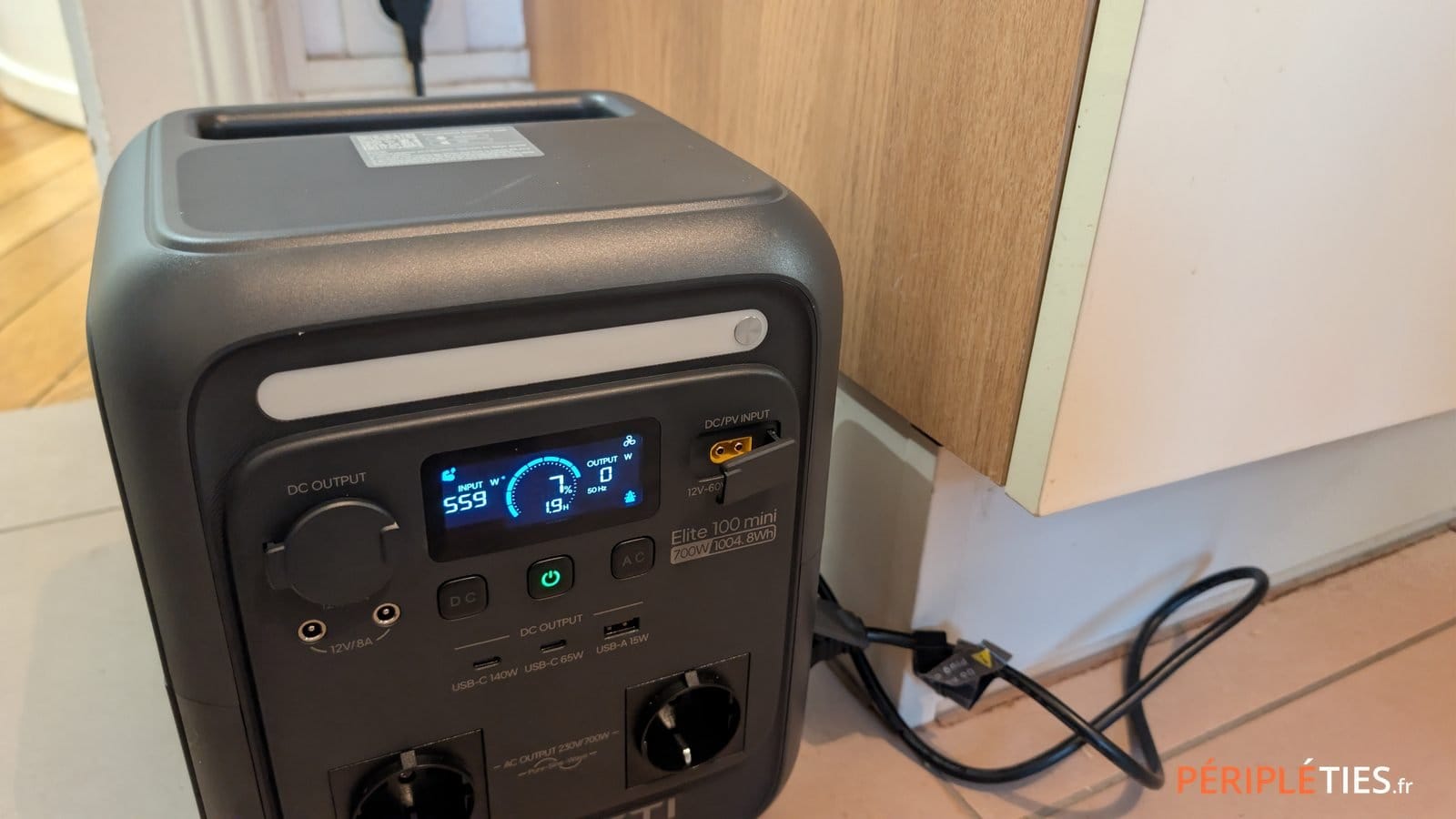
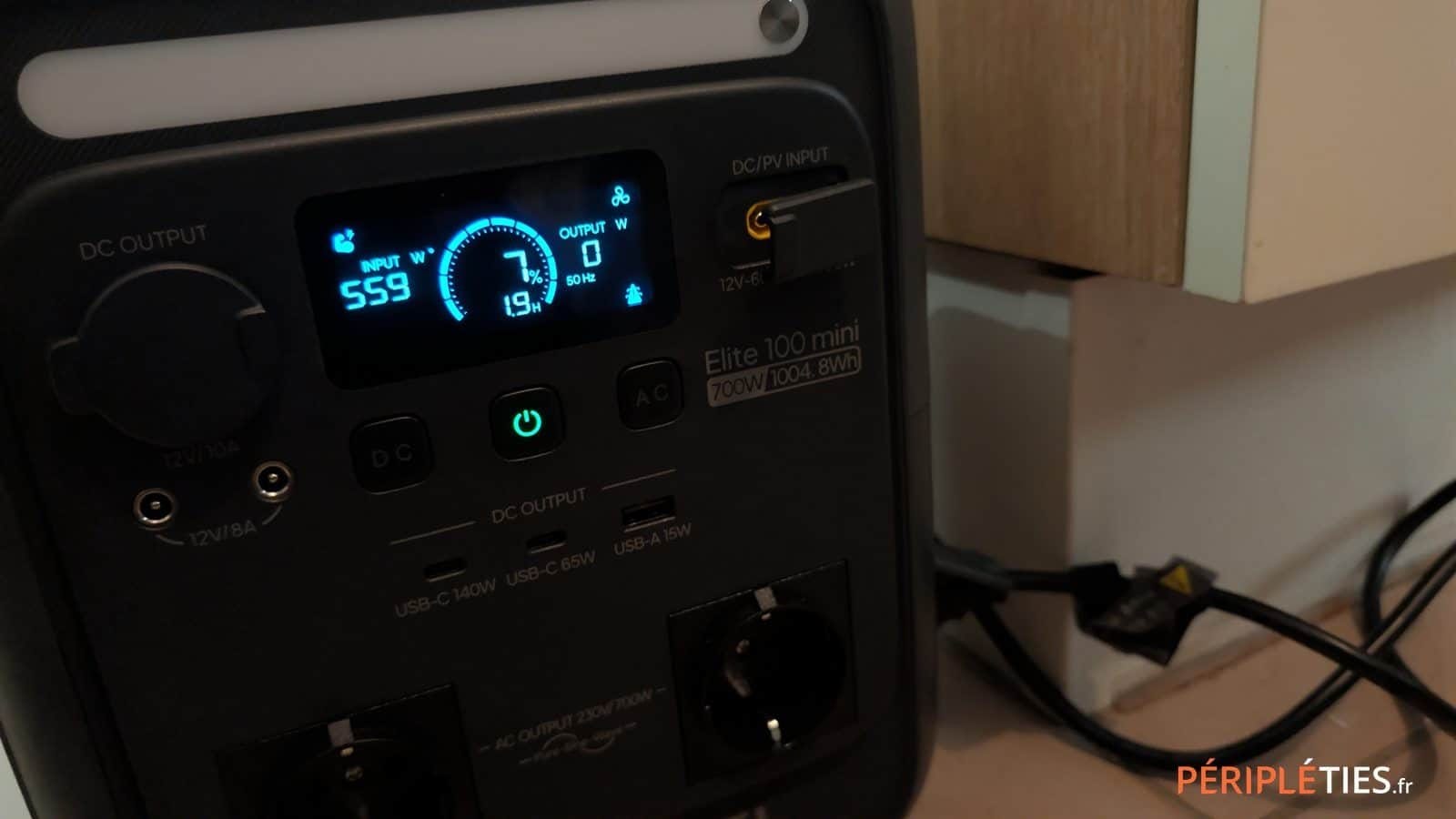
The AC input accepts up to 700W. Bluetti claims 80% in about 1 hour 30 minutes. For a full charge, allow around 2 hours. That is quick enough to top up overnight at a campsite or during a stop at a serviced aire (a dedicated motorhome stopover, very common in France: see our guide to motorhome aires in France).
Solar charging: up to 350W
The solar input accepts up to 350W. In theory, with that much panel power and excellent sunshine, a full charge takes about 4 hours. Those figures are optimistic, though. In real conditions, allow more: a long, sunny summer day may do it. With a 200W panel, expect two full days of good sunshine to refill it.
That solar input is enough to keep topping up the battery day after day, but it can become a limitation if you want to live off-grid on solar for several weeks. You will then need to add charging while driving.
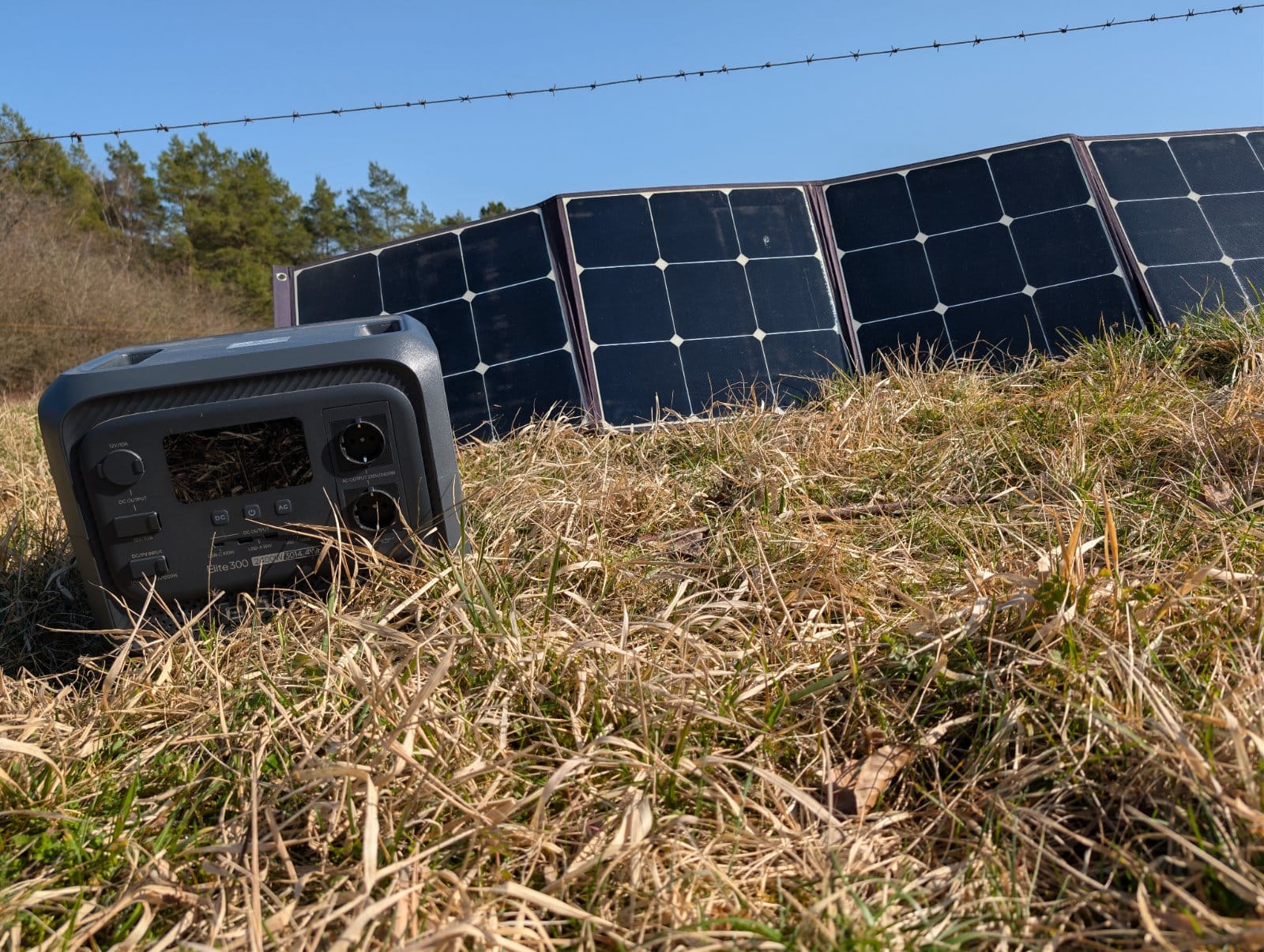
See the compatible Bluetti solar panels: Bluetti solar panels (US) / Bluetti solar panels (UK).
Charging while driving: two options
The 12V car socket lets you charge the station on the move. With a maximum of about 120W, expect 9 to 10 hours of driving for a full charge. So it is mainly a top-up solution.
To go faster, the Elite 100 Mini works with the Bluetti Charger 1 (US) / Bluetti Charger 1 (UK), an alternator charger that delivers up to 349W to this model. Bluetti claims a full charge in about 3 hours 40 minutes of driving.
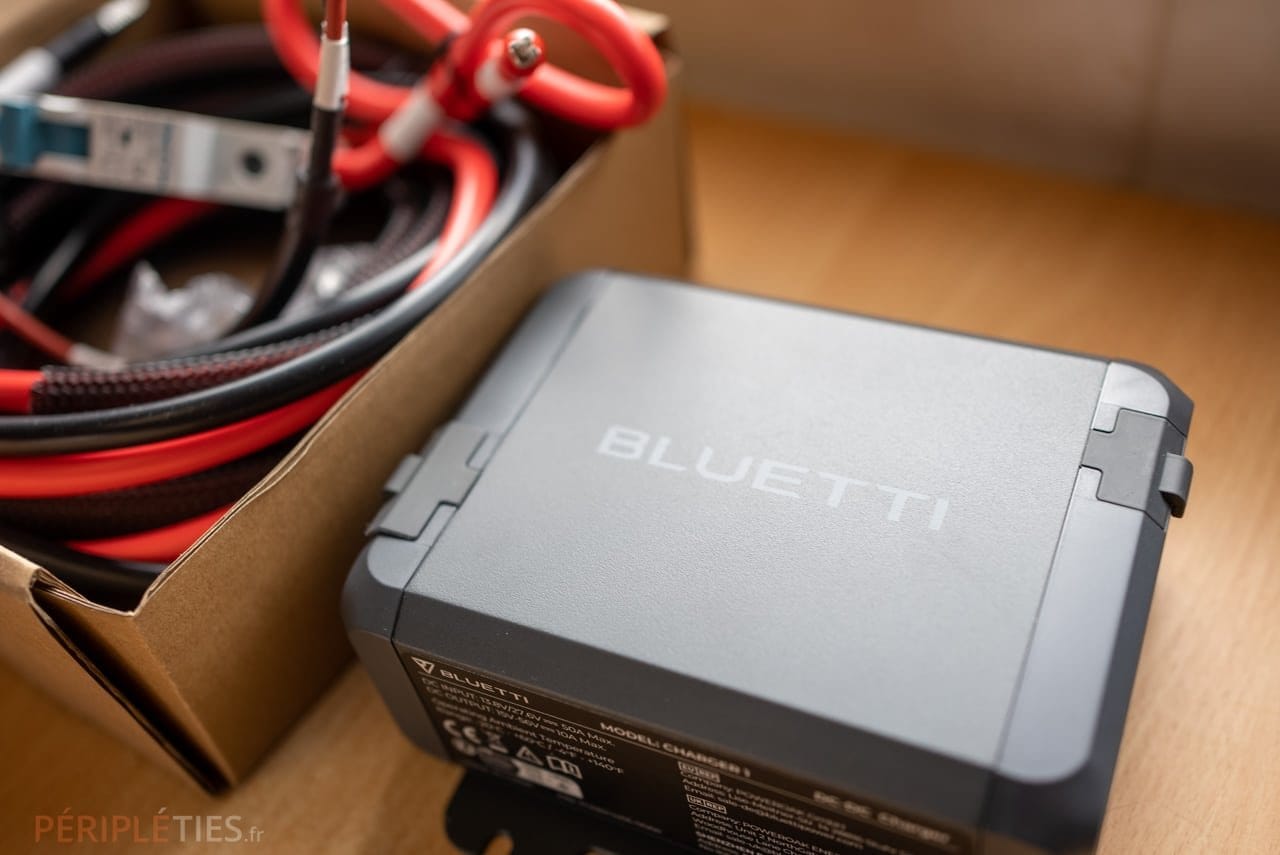
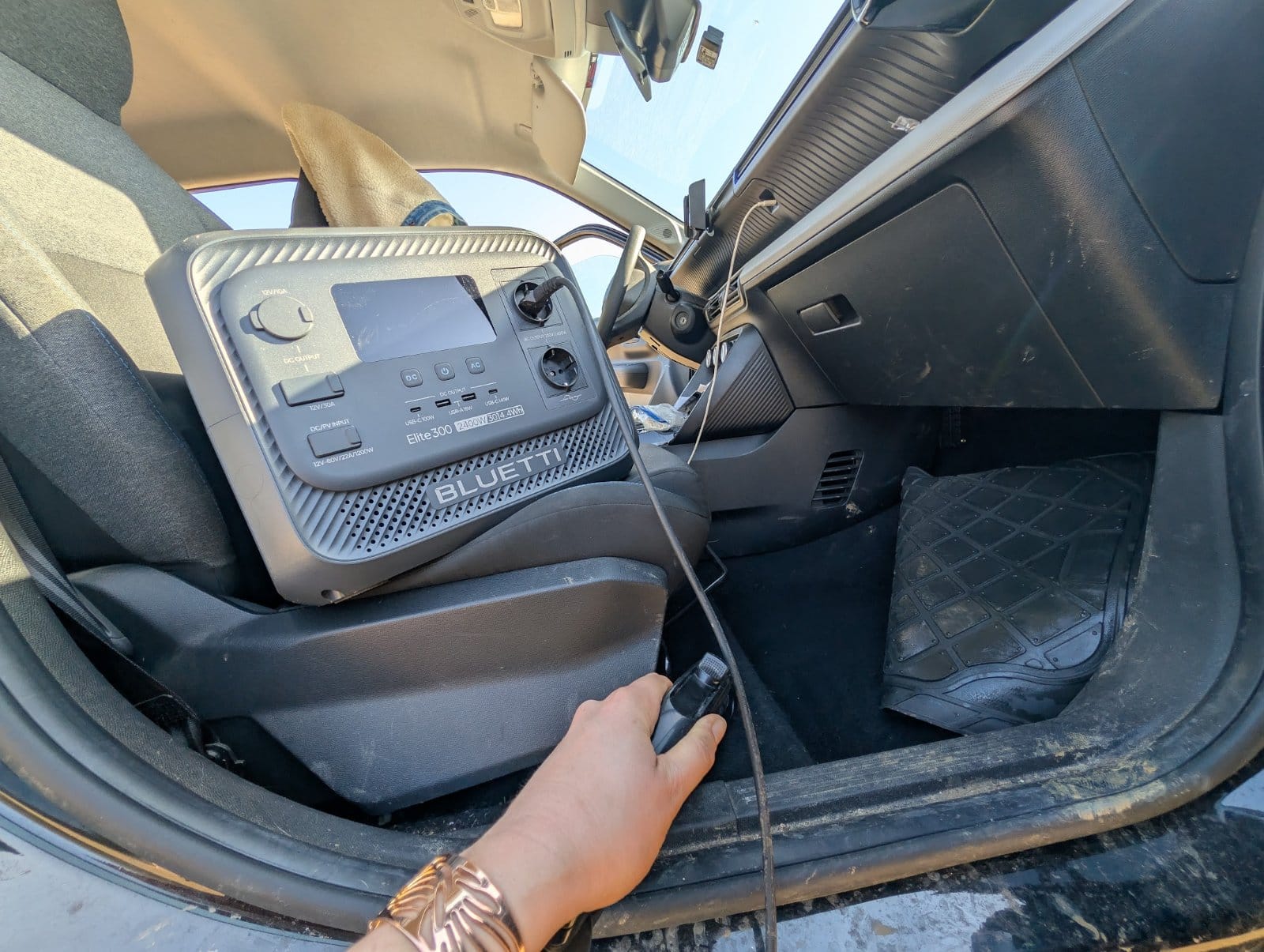
For a van or converted car that is on the move regularly, this is probably the most interesting option: you charge while driving and use the energy once you have stopped for the night. We covered this kind of setup in our Bluetti Elite 200 V2 review.
How much does the Bluetti Elite 100 Mini cost?
Prices at the time of writing (late November 2026, Black Friday period). They move a lot during sales, so check the current deal.
- In the US: listed at $429, currently $379 on Bluetti's US store: Bluetti Elite 100 Mini (US)
- In the UK: listed at £499, currently £349 on pre-order, with dispatch planned around 15 December 2026: Bluetti Elite 100 Mini (UK)
- In Europe: €599, with a €449 launch price on the European store from 24 November to 7 December 2026.
In the US, Bluetti also sells the Elite 100 Mini in bundles (current US prices):
- Elite 100 Mini + 100W solar panel (US): $529.99 instead of $599
- Elite 100 Mini + 200W solar panel (US): $609.99 instead of $649
- Elite 100 Mini + 350W solar panel (US): $999
- Elite 100 Mini + Charger 1 alternator charger (US): $599.99 instead of $629
In the UK, the station is sold on its own for now. You can add a panel or the alternator charger separately: Bluetti solar panels (US) / Bluetti solar panels (UK) and Bluetti Charger 1 (US) / Bluetti Charger 1 (UK).
Our verdict on the Bluetti Elite 100 Mini
With 1,004.8Wh of capacity, its upright shape and its 10.7kg, the Bluetti Elite 100 Mini strikes us as particularly well suited to travellers who value compactness and capacity over raw power. It covers most everyday needs on the road, but it is not for anyone who wants to run very power-hungry appliances.
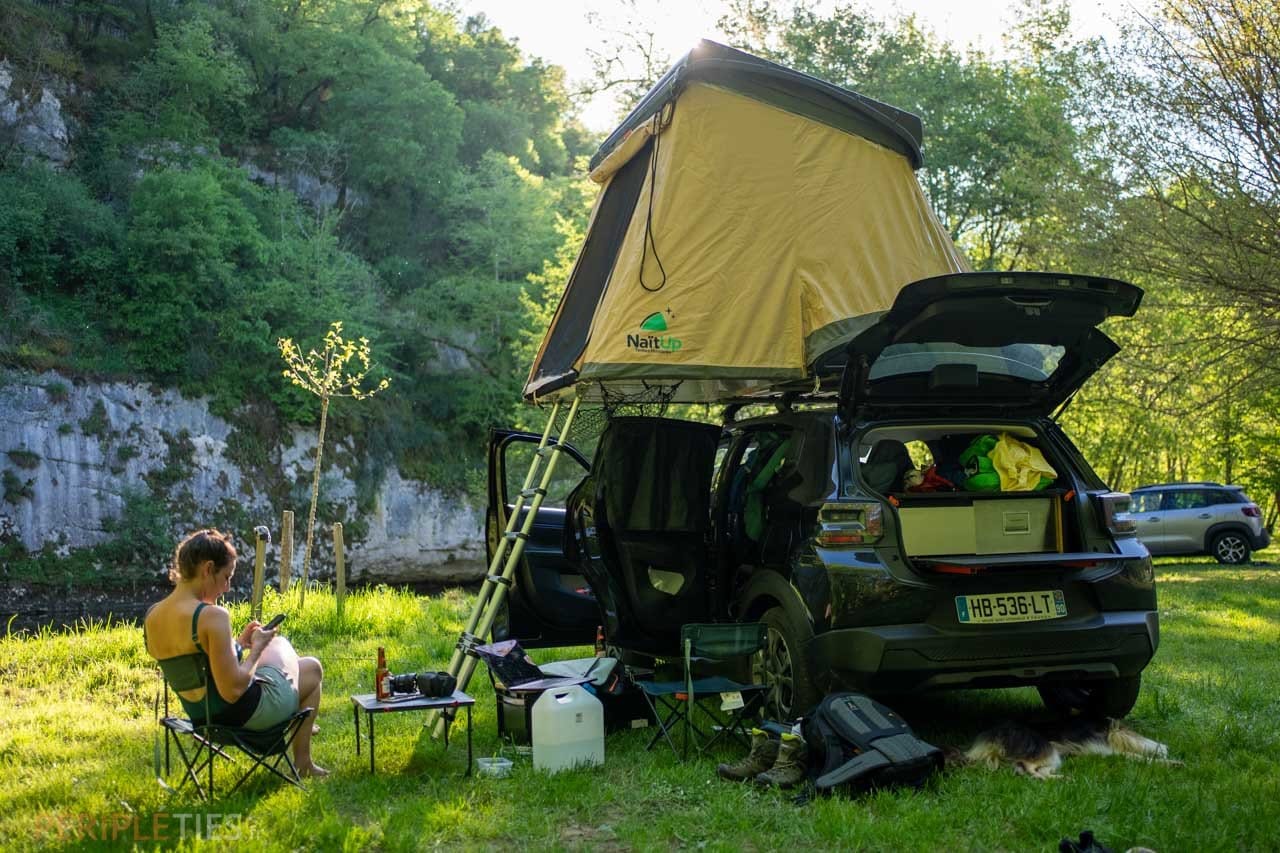
In a converted car, small van or panel van: where it shines
This is probably where the Elite 100 Mini makes the most sense. Its upright shape and moderate weight make it easy to fit into a small space, while still offering comfortable capacity. Enough to charge camera gear, run a laptop, keep a cool box going or use a few mains devices, with no fixed electrical installation. We can easily see it appealing to photographers, anglers and occasional digital nomads who need an easily portable energy reserve.
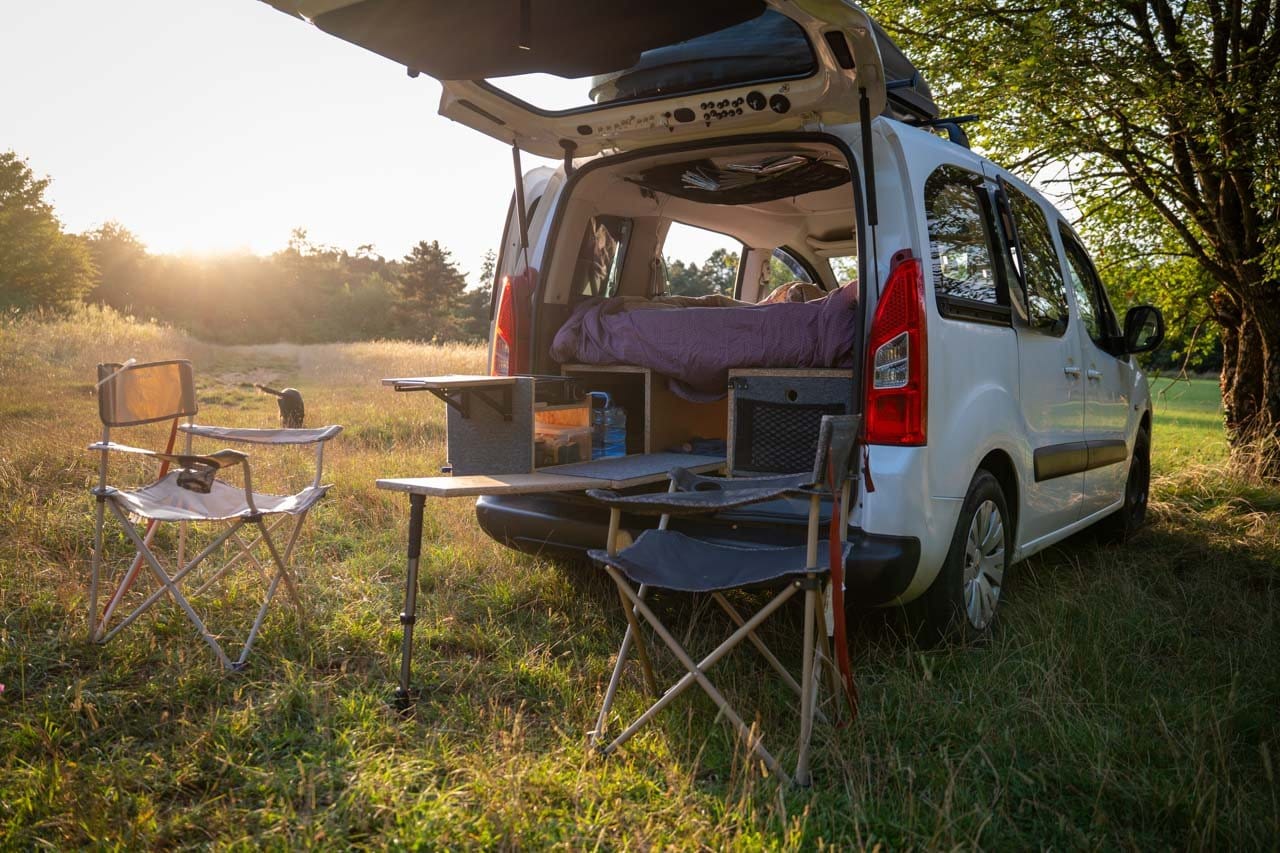
In a motorhome: a back-up reserve rather than a main battery
In a motorhome already fitted with a leisure battery, it will mainly be useful as an extra energy reserve: to occasionally run some mains appliances, charge gear or have an independent power source.
On the other hand, its 700W output and 350W solar input make it less suited to heavy electrical needs or long periods off-grid. If that is you, look at bigger stations such as the Bluetti Elite 200 V2 (US) / Bluetti Elite 200 V2 (UK) or the Bluetti Elite 300 (US) / Bluetti Elite 300 (UK) (read our Bluetti Elite 300 review).
Pros and cons of the Bluetti Elite 100 Mini
What we like:
- 1,004.8Wh in an upright, 10.7kg (23.6lb) body that is easy to fit into a small vehicle
- A LiFePO4 battery rated for 6,000 cycles
- Two USB-C ports (140W and 65W) to charge a laptop without going through the inverter
- The built-in LED light bar (warm white, cool white and SOS)
What we like less:
- Output limited to 700W, even if Power Lifting helps out
- Solar input capped at 350W
- No expansion battery option
Want to compare other portable power stations? Read our guide to the best portable power stations for campervans and motorhomes to find the right model for your needs.
Bluetti Elite 100 Mini FAQ
Is the Elite 100 Mini noisy?
The fans stay discreet under light loads, but become audible during fast charging or close to 700W. We measured around 50dB, with a fairly low-pitched sound.
What is the difference between the Elite 100 Mini and the AC180?
Both offer around 1kWh of capacity. The Mini is much more compact (around 45% less volume) and lighter (5.3kg / 11.7lb less), but delivers less power: 700W versus 1,800W for the Bluetti AC180 (US) / Bluetti AC180 (UK).
What is the difference between the Elite 100 Mini and the Elite 100 V2?
Both have around 1kWh of capacity. The Mini takes up 15% less volume and is rated for 6,000 cycles (versus 4,000), but is limited to 700W of output and 350W of solar. The Bluetti Elite 100 V2 (US) / Bluetti Elite 100 V2 (UK) delivers 1,800W, accepts 1,000W of solar and charges faster.
Can you run a cool box or a fridge on the Elite 100 Mini?
Yes. A compressor cool box using 0.6kWh a day runs for about 34 hours. A household fridge using 1kWh a day runs for about 20 hours, as long as its start-up surge stays within the station's limits.
Can the Elite 100 Mini power a Starlink dish?
Yes, Bluetti explicitly lists Starlink among compatible uses. Runtime will depend on the dish model and its actual consumption.
Can you add an expansion battery?
No. The Elite 100 Mini is not expandable: its capacity stays at 1,004.8Wh.
Can the Elite 100 Mini work as a UPS for a computer?
Yes. When plugged into the mains, it switches to battery in 10ms or less during a power cut, which is enough for most computers, internet routers and screens. Check compatibility before using it with medical equipment.
Safe travels!
Pauline & Simon
N.B. This article was produced in partnership with Bluetti and contains affiliate links. If you are planning a purchase, using them helps us create new articles and videos. We receive a small commission at no extra cost to you. Our opinion remains free and independent.