
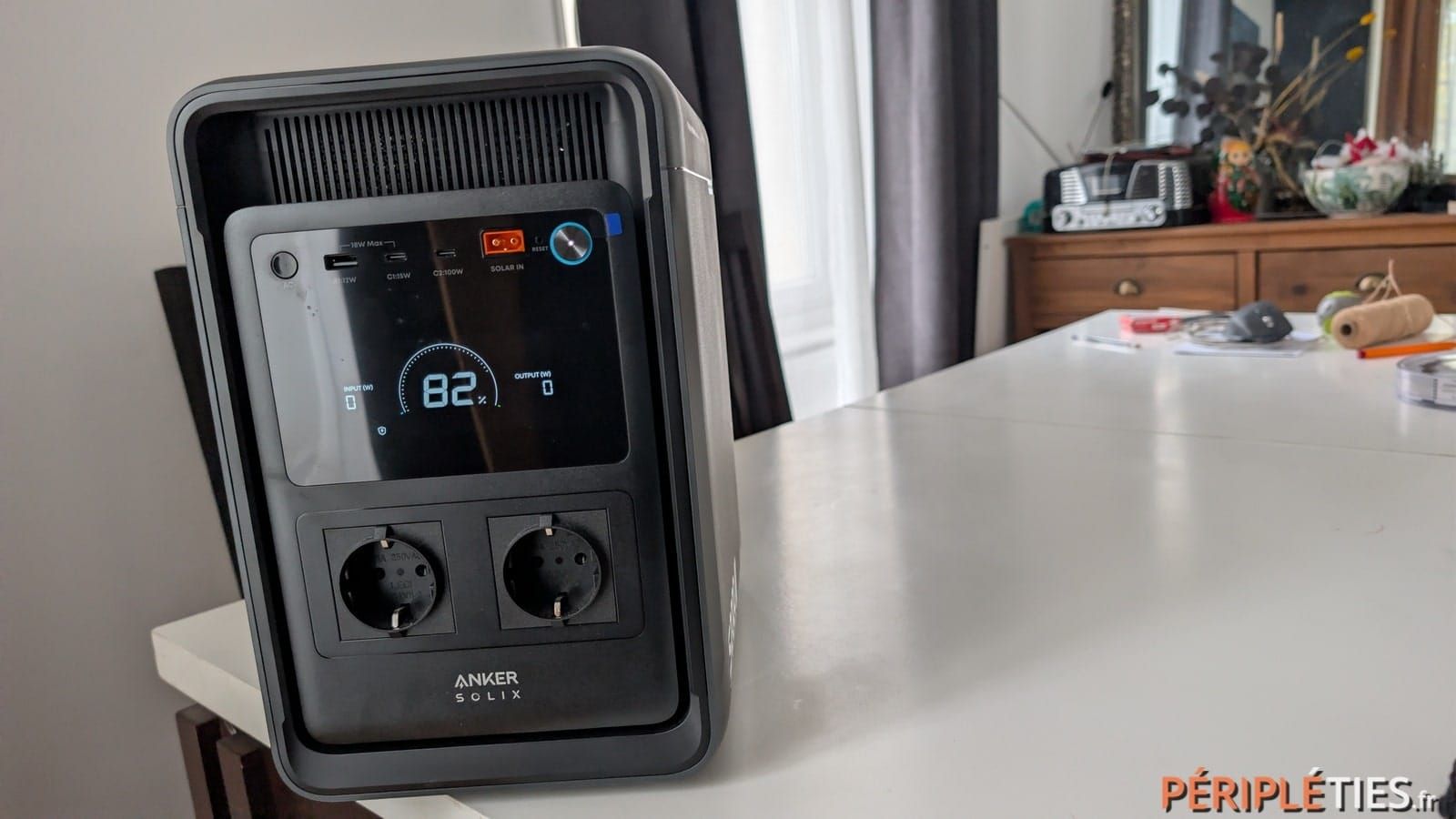
With the SOLIX S2000, Anker steps into the 2 kWh portable power station market with a unit that clearly wants to stand apart from the crowd. At 16.2 kg (35.7 lb), it is the lightest 2 kWh station we have tested, which makes it appealing both for campervan and motorhome travellers and for anyone looking for a compact backup battery at home. We used it in our motorhome and at home to see what it really delivers. Check today's price: Anker SOLIX S2000 (US) / Anker SOLIX S2000 (UK).
Anker SOLIX S2000 review: our verdict in brief
What we liked
- 2,010 Wh in just 16.2 kg (35.7 lb): 4 to 8 kg (9 to 18 lb) lighter than rival stations of the same capacity
- Low idle draw (about 10 W with the AC outlets switched on, 2 W on standby)
- The SurgePad mode, which kept our hair dryer running despite a 1,900 W peak
- The UPS function (switchover in under 10 ms) to protect an internet router or a computer
- Mains charging power adjustable down to 100 W, very handy on a weak campsite hookup
- LiFePO4 battery rated for 6,000 cycles to 80% capacity, with a 5-year warranty
What we liked less
- 1,500 W continuous output: our kettle and our hair straightener would not run
- No 12 V car-style socket and no expansion battery option
- Decent mains charging, but not among the fastest
- No proper carry handle
- Surprising permission requests from the app on Android
Anker SOLIX S2000: a different kind of 2 kWh power station
Anker's pitch with the S2000 is simple: the same capacity as its rivals, in a noticeably smaller and lighter box.
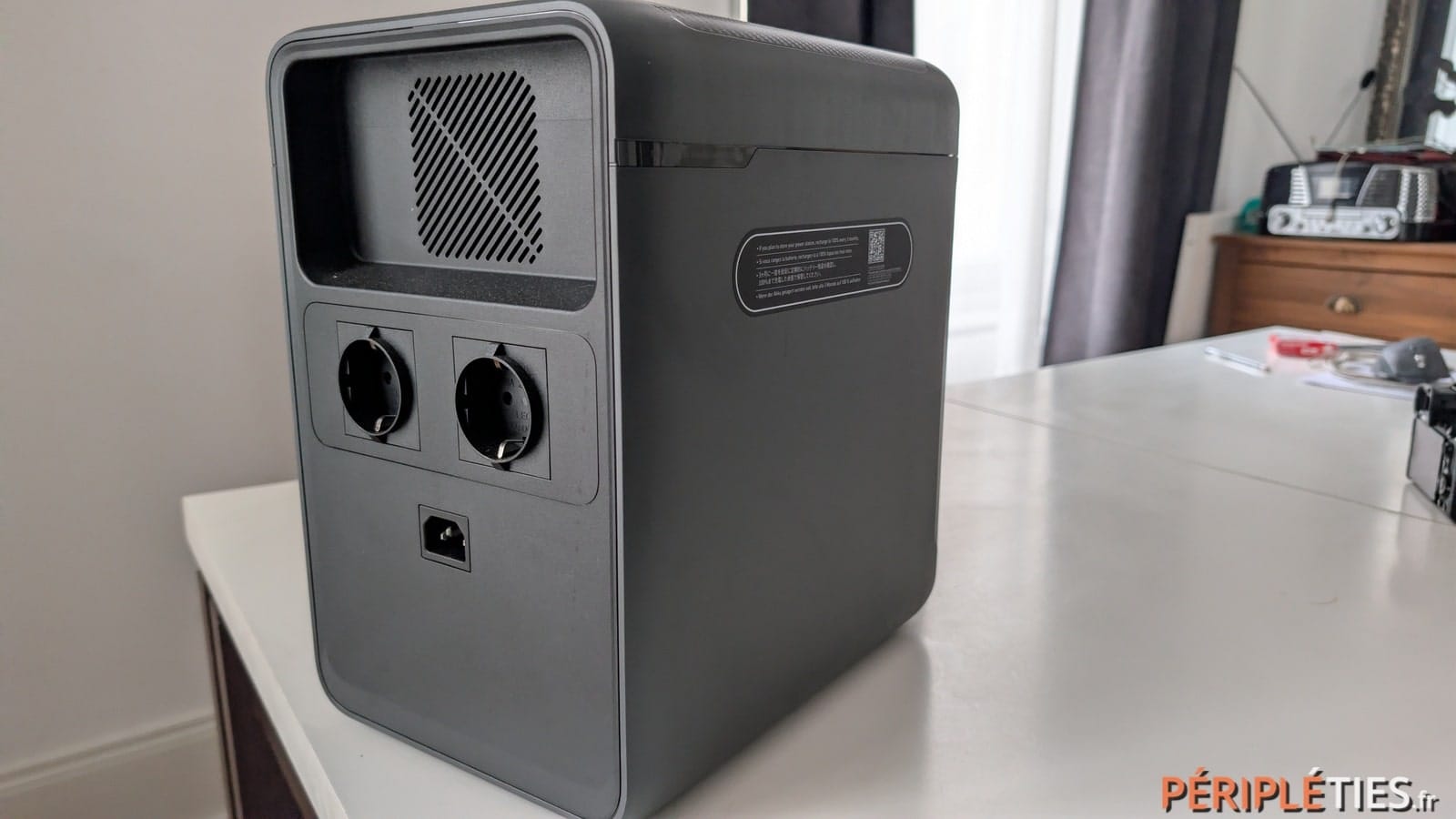
2,010 Wh and 1,500 W of continuous power in a 35.7 lb box
Next to the EcoFlow DELTA 3 Max (US) / EcoFlow DELTA 3 Max (UK) or the Bluetti Elite 200 V2 (US) / Bluetti Elite 200 V2 (UK), the S2000 weighs 16.2 kg (35.7 lb), so 4 to 8 kg (9 to 18 lb) less. That is far from trivial when you travel in a campervan or motorhome, where every kilo eats into your payload.
Behind that compact format, Anker uses a 2,010 Wh LiFePO4 battery and a 1,500 W inverter. Here are the main specs of the European unit we tested.
| Specification | Anker SOLIX S2000 |
|---|---|
| Capacity | 2,010 Wh |
| Battery chemistry | LiFePO4 (LFP) |
| Rated AC output | 1,500 W (2,600 W in SurgePad mode) |
| Peak power | 3,000 W |
| AC outlets (EU unit tested) | 4 × 230 V (2 front, 2 rear) |
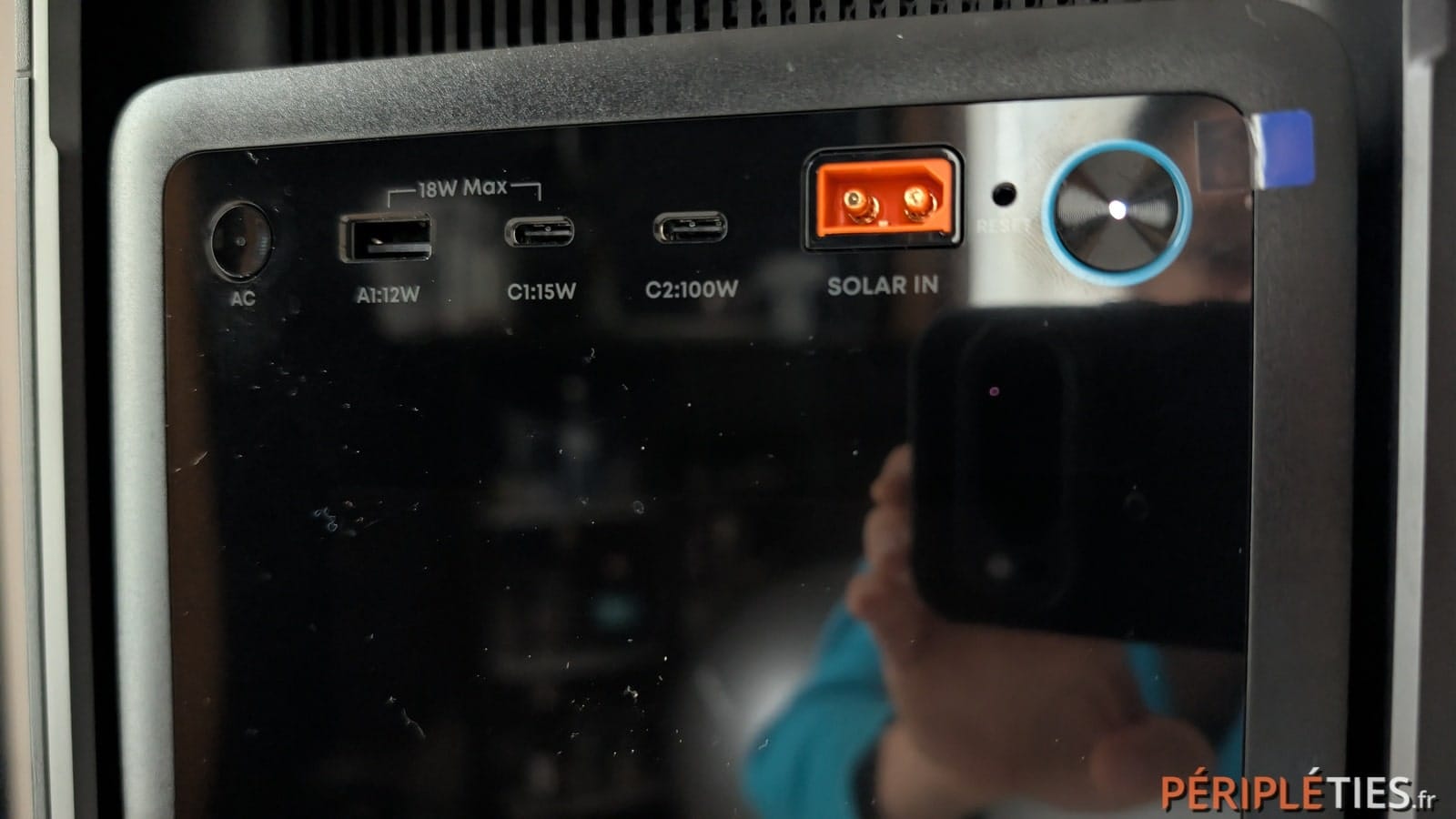
| USB-C | 1 × 100 W and 1 × 15 W |
| USB-A | 1 × 12 W |
| Total outputs | 7 |
| 12 V car socket | No |
| Max solar input | 400 W |
| Max mains charging | 1,600 W in UltraFast mode |
| Dimensions | 20.8 × 28.2 × 32.3 cm (8.2 × 11.1 × 12.7 in) |
| Weight | 16.2 kg (35.7 lb) |
Good to know: we tested the European version, with 230 V sockets. The US model runs at 120 V and, according to Anker, splits five AC outlets between the front and the back. Capacity, weight and the 1,500 W rating are the same.
Prices checked on 17 November 2026 on Anker's official stores: $699.99 in the US (instead of $999.99) and £849 in the UK (instead of £1,099).
How long does the Anker SOLIX S2000 last? Real-world runtimes
With 2,010 Wh of capacity, the S2000 holds a comfortable reserve for everyday equipment. Here are some runtime estimates:
| Device | Estimated runtime |
|---|---|
| Laptop (60 W) | 25 to 30 hours |
| Compressor cool box (40 L) | 2.5 to 3 days |
| Modern household fridge | 30 to 40 hours |
| Starlink Mini | 35 to 50 hours |
| Desktop computer + internet router (120 W) | About 15 hours |
| Projector (100 W) | About 15 hours |
These figures are a guide only: consumption varies with each device, the outside temperature and how you use it. For staying connected on the road, have a look at our Holafly eSIM test.
As a rough guide, the S2000 can also run a CPAP machine for about 2 to 5 nights before it needs recharging, depending on the model and its power draw.
Low idle consumption
Anker puts a lot of emphasis on the S2000's low idle draw. With the AC outlets switched on, it uses about 10 W, which is the inverter's own consumption.
That matters if you want to squeeze as much runtime as possible out of the AC side, especially as this station favours its AC outlets over its USB ports, as we will see further down.
For comparison, some independent tests carried out in the US measured the idle draw of an EcoFlow DELTA 3 (US) / EcoFlow DELTA 3 (UK) at around 15 to 17 W. Take that figure with caution: the test conditions were not detailed, and you would need a side-by-side test in identical conditions to draw a reliable conclusion.
If you only use the USB ports, remember to switch off the AC outlets: standby consumption then drops to just 2 W.
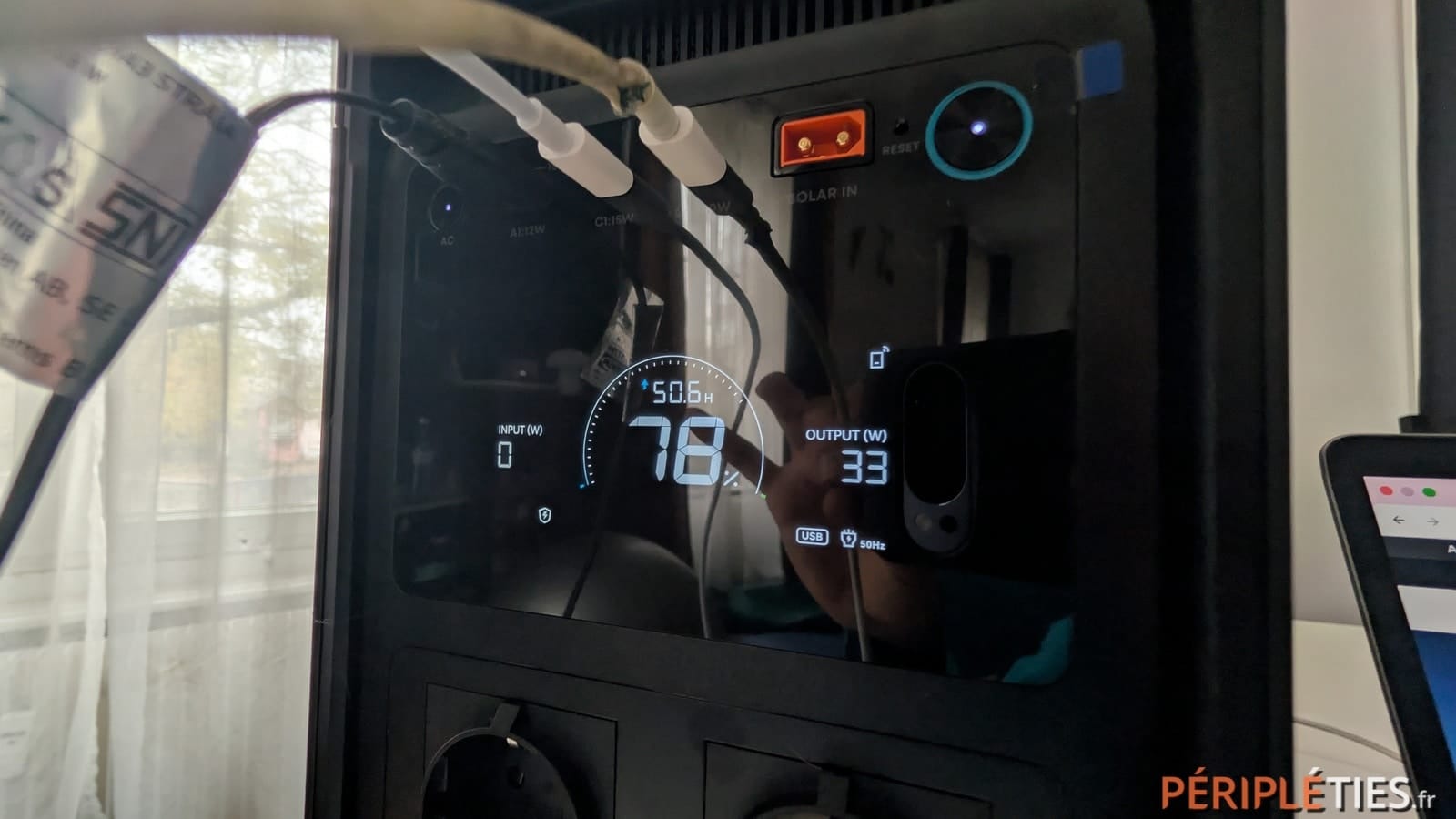
Another nice detail: by default, the screen switches off after about 15 seconds of inactivity. It avoids keeping the display lit for nothing and helps limit consumption, whether the station is on standby or working.
The S2000 really shines with devices that draw little power but run for long periods. That is exactly where its energy efficiency makes a difference.
For more powerful appliances, like a kettle or a hair straightener, it is the station's maximum output that matters. And on that front, the S2000 has a few limits.
What can you run on the Anker SOLIX S2000?
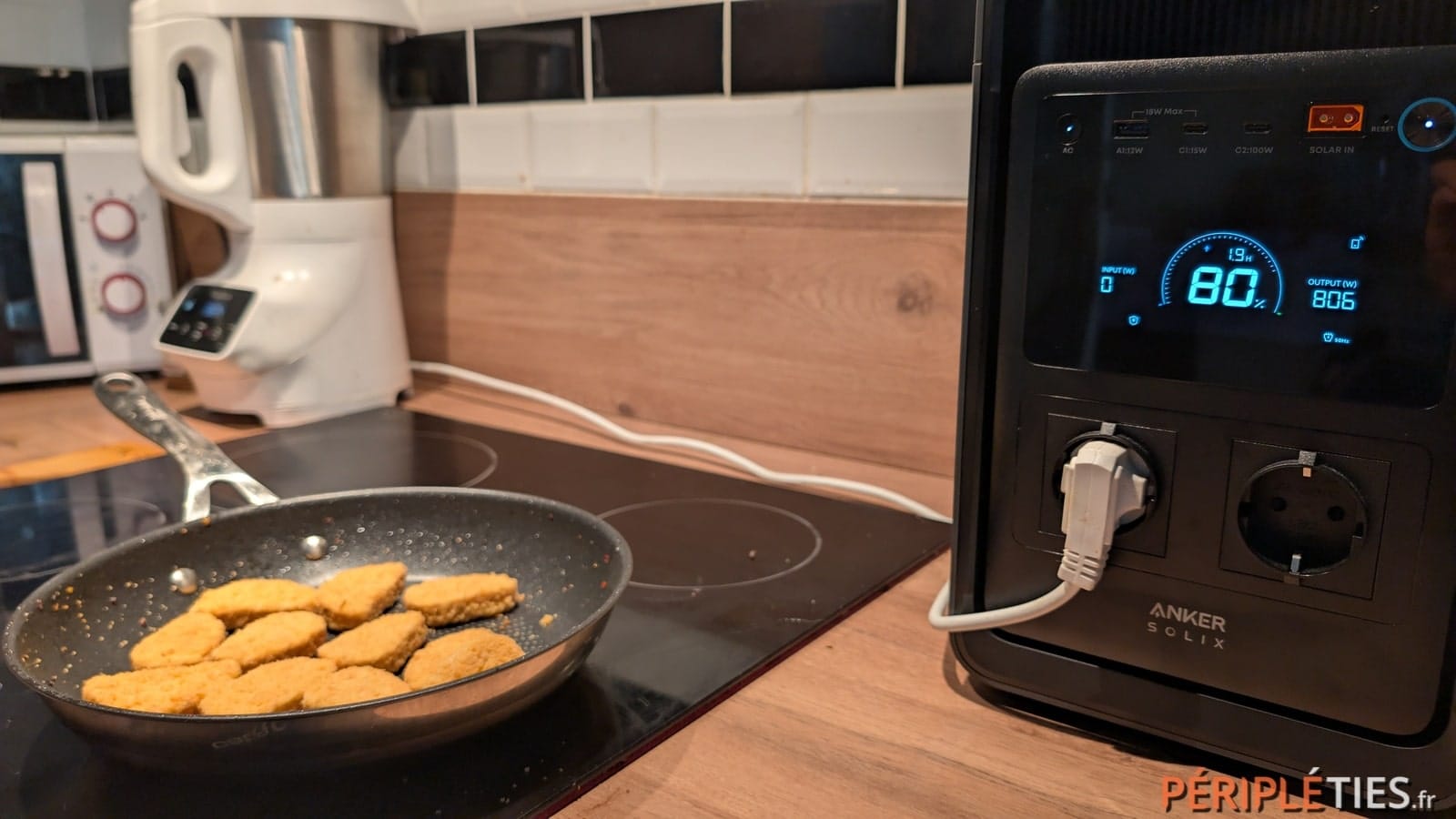
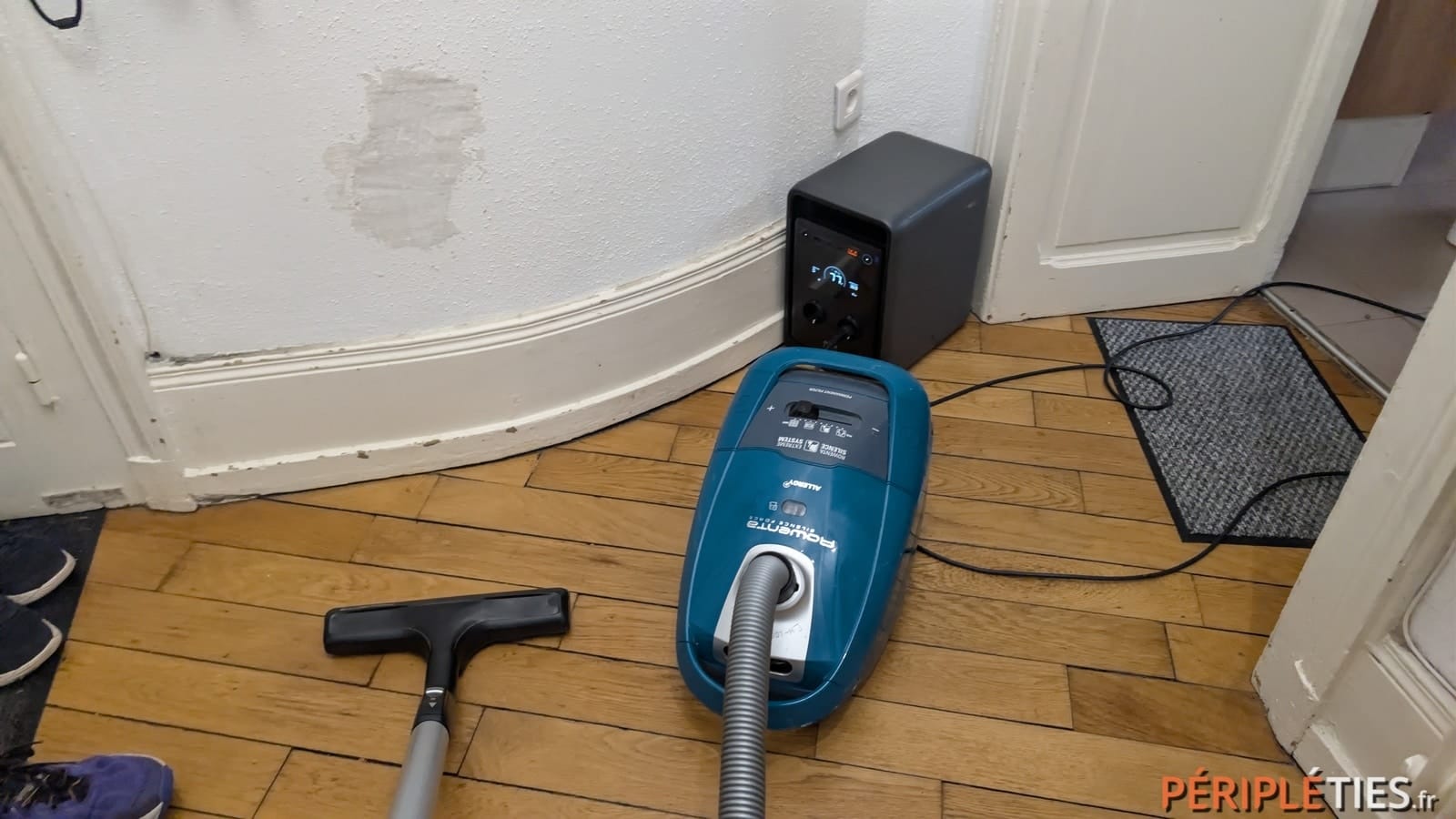
With 1,500 W of continuous output, the S2000 takes a different approach from some of its rivals. Where several brands chase ever more watts, Anker went for something more universal: a compact station able to cover most everyday needs, without trying to power the most energy-hungry appliances.
Everyday use rather than a race for watts
Laptops, fridge, cool box, lighting, camera gear or small kitchen appliances: the list of uses is long. For many travellers, this power will be more than enough.
Where 1,500 W runs out
You will need to be more careful with some equipment. Most standard kettles (2,000 to 2,400 W in Europe) and many hair dryers (1,800 to 2,200 W) exceed the station's rated output.
What the SurgePad mode actually does
Anker has built in its SurgePad technology, which lets the station briefly handle some loads above its 1,500 W rating. We checked this with a hair dryer: although it normally exceeds the station's continuous output, we recorded a peak of 1,900 W for about fifteen seconds without the station cutting out. We also managed to use it on a lower power setting.
So 1,500 W is not necessarily a hard ceiling for some resistive appliances. Be careful, though: the result depends on the appliance and how it works, and not every device above that power will be compatible.
Most hair straighteners and kettles are out of reach
It did not work with our hair straightener, for example. Despite several attempts, the straightener stayed on, but the station's fans kicked in and it seemed to struggle to deliver the power needed. The screen showed a fluctuating wattage before dropping back to zero.
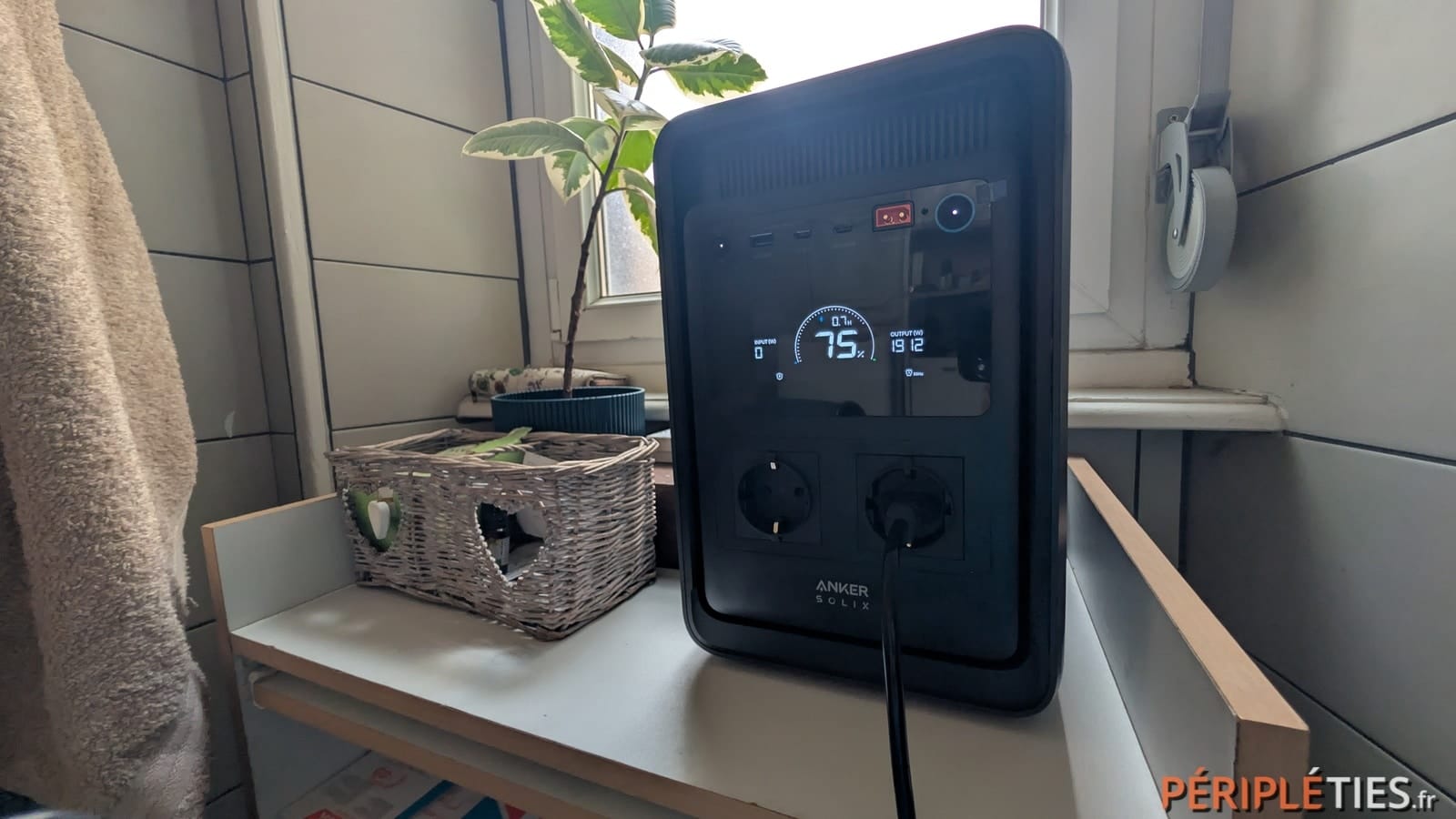
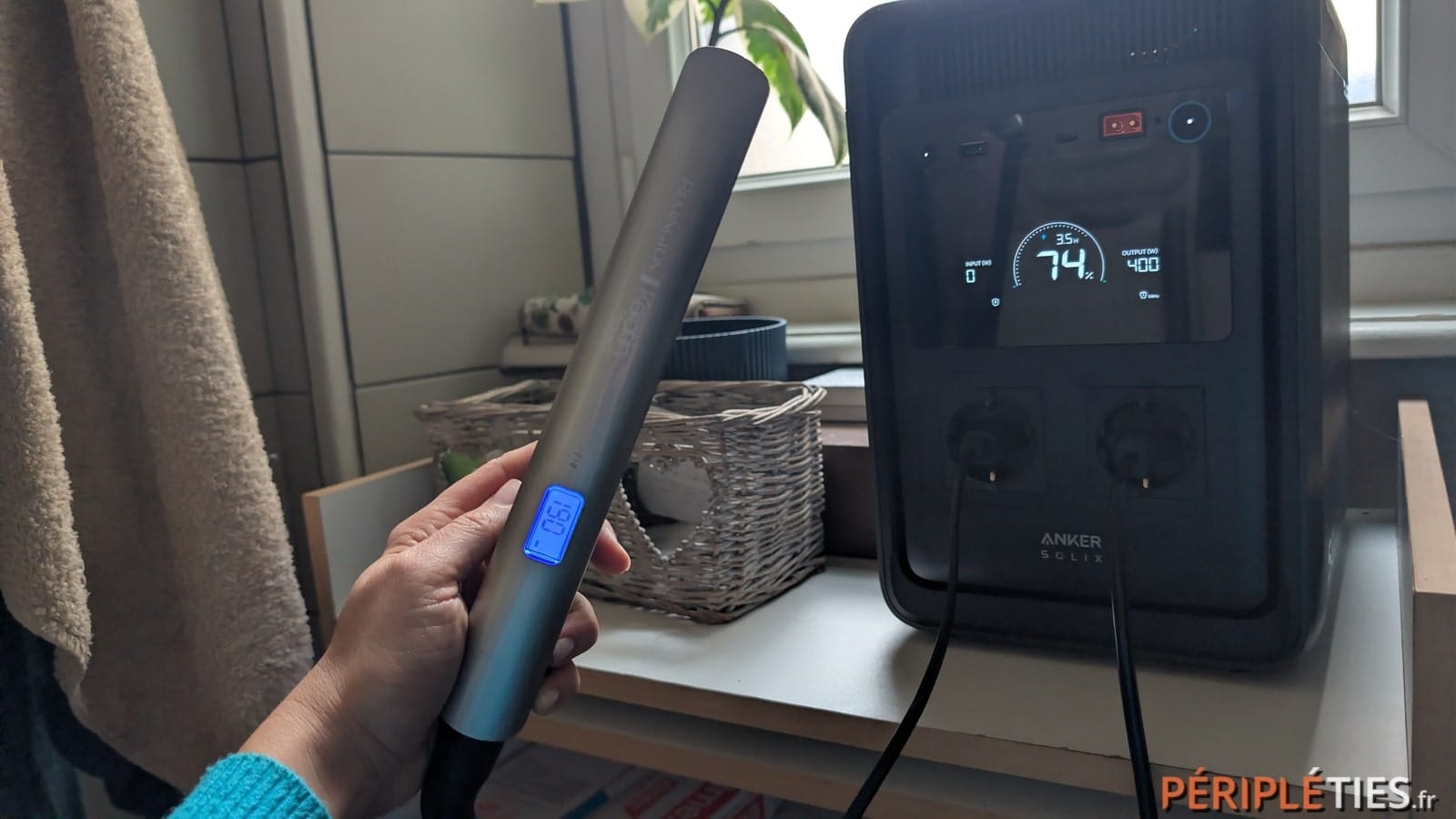
With our kettle, the station immediately showed an "Overload" message and refused to power it.
The station also has a 3,000 W peak rating, designed to absorb very short spikes in demand. Do not confuse that figure with the 2,600 W announced for SurgePad mode.
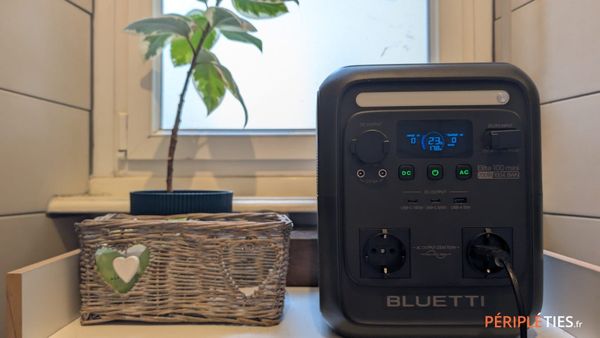
For comparison, the Bluetti Elite 200 V2 (US) / Bluetti Elite 200 V2 (UK) offers 2,600 W of continuous output and up to 3,900 W peak (read our full Bluetti Elite 200 V2 review). If you want even more power to cook on electricity, take a look at our Bluetti Elite 300 review: Bluetti Elite 300 (US) / Bluetti Elite 300 (UK).
In short, the 1,500 W of continuous power rules out some uses, but SurgePad adds welcome flexibility. If you only occasionally need a hair dryer or another resistive appliance, it is not necessarily a deal-breaker.
Outlets: four AC sockets sharing 1,500 W
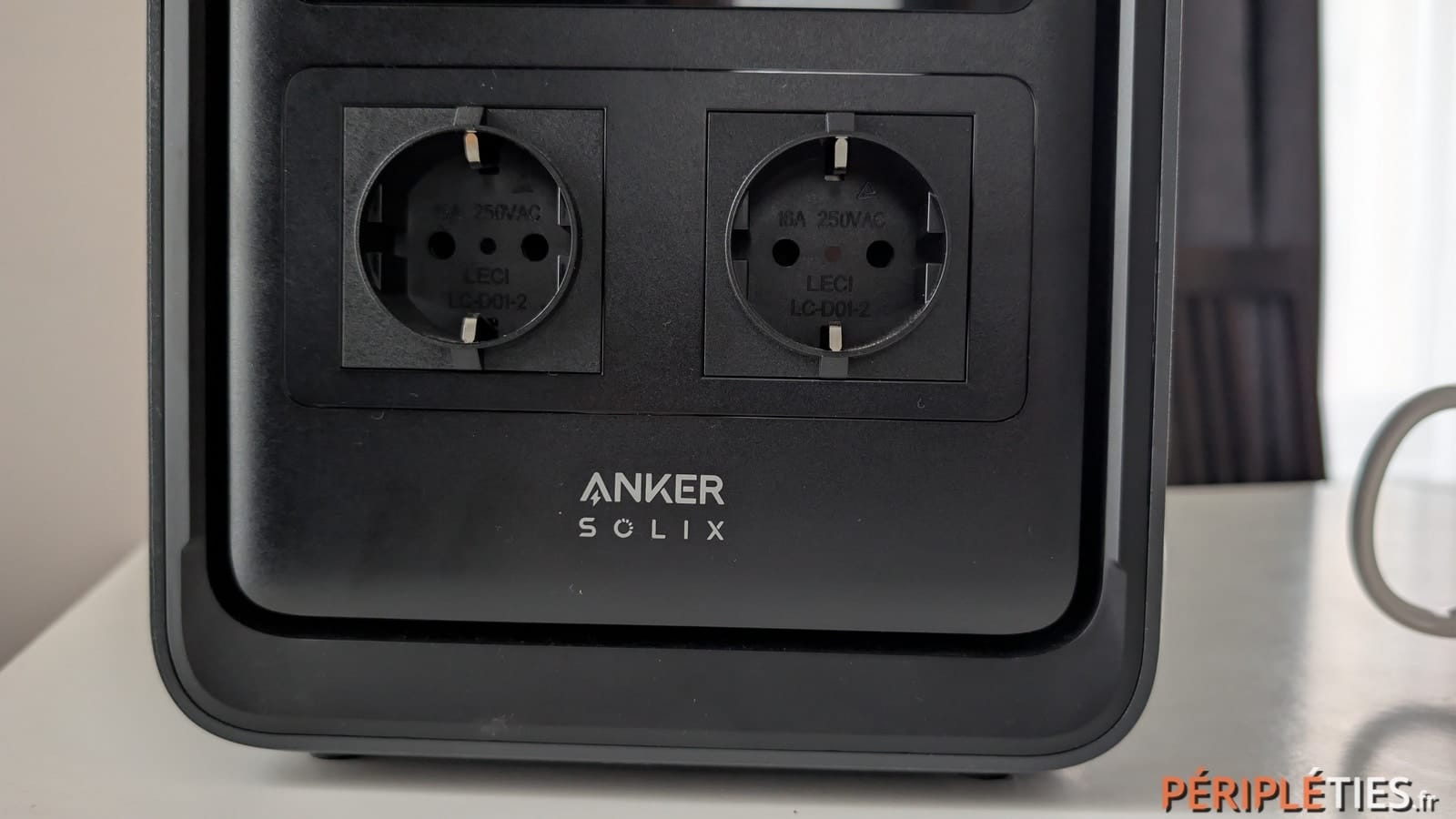
On our European unit, Anker fitted four 230 V sockets (two at the front, two at the back), two USB-C ports (100 W and 15 W) and one 12 W USB-A port.
Keep an eye on the total load
Four mains sockets for a total of 1,500 W is generous in terms of connections, but you need to watch the combined consumption of everything plugged in.
To preserve runtime, use the USB ports whenever you can: smartphones, tablets, cameras and plenty of other devices can be charged that way, without calling on the AC inverter.
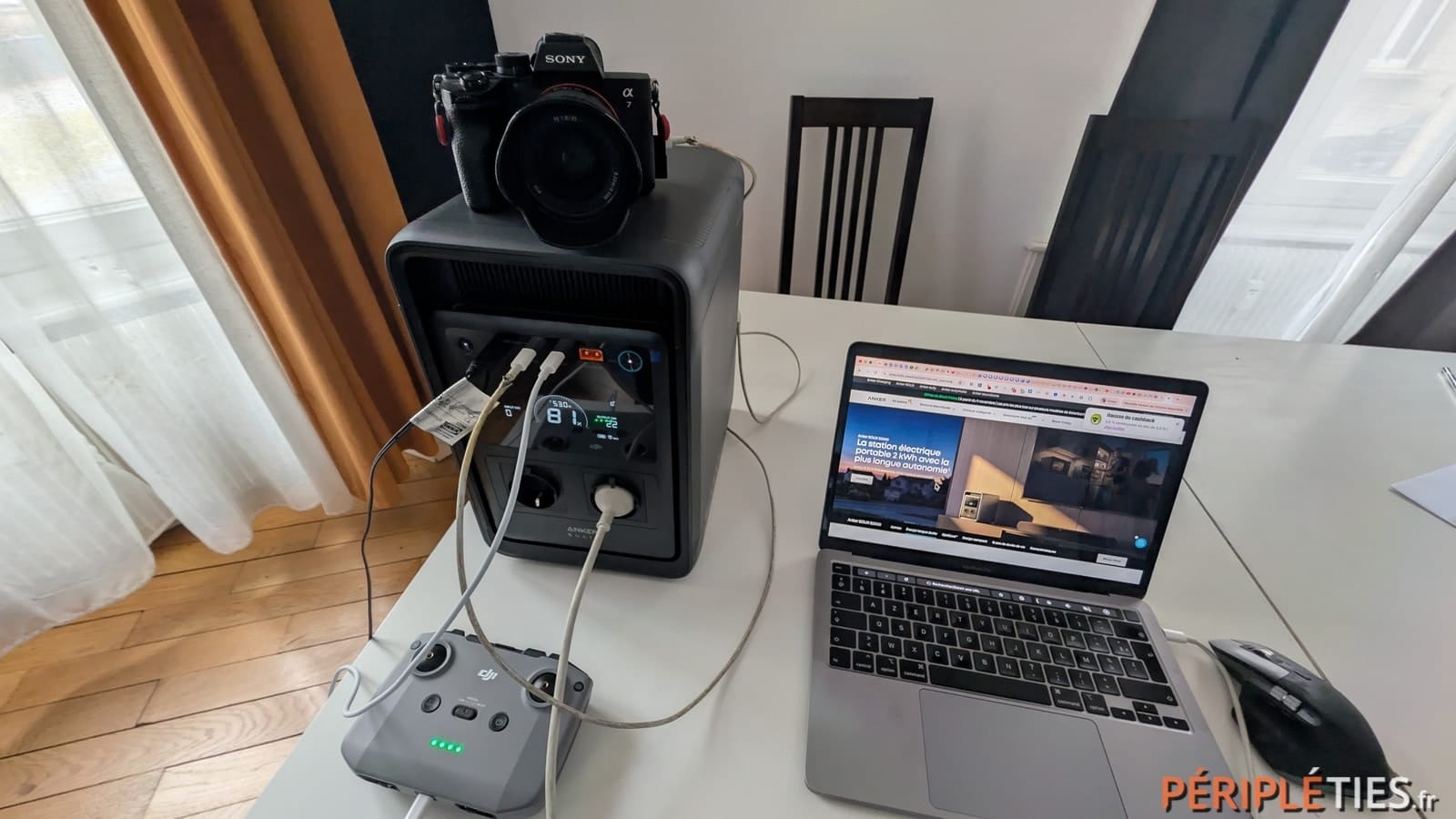
No 12 V car socket
The S2000 has no 12 V car-style (cigarette lighter) socket. That can matter if you want to run a compressor cool box that uses this type of plug. If your cool box also came with a mains adapter, you can still plug it into an AC outlet.
Charging the Anker SOLIX S2000: mains, solar and on the road
Like every station on the market, the S2000 can be charged from the mains, from solar panels, from a 12 V socket or with a dedicated alternator charger.
Mains charging: about 2 hours 20 minutes
From a standard wall socket, the S2000 accepts 1,150 W of charging power, so a full charge takes about 2 hours 20 minutes. That is reasonable, but not particularly fast for a station of this capacity: some rivals charge much more quickly.
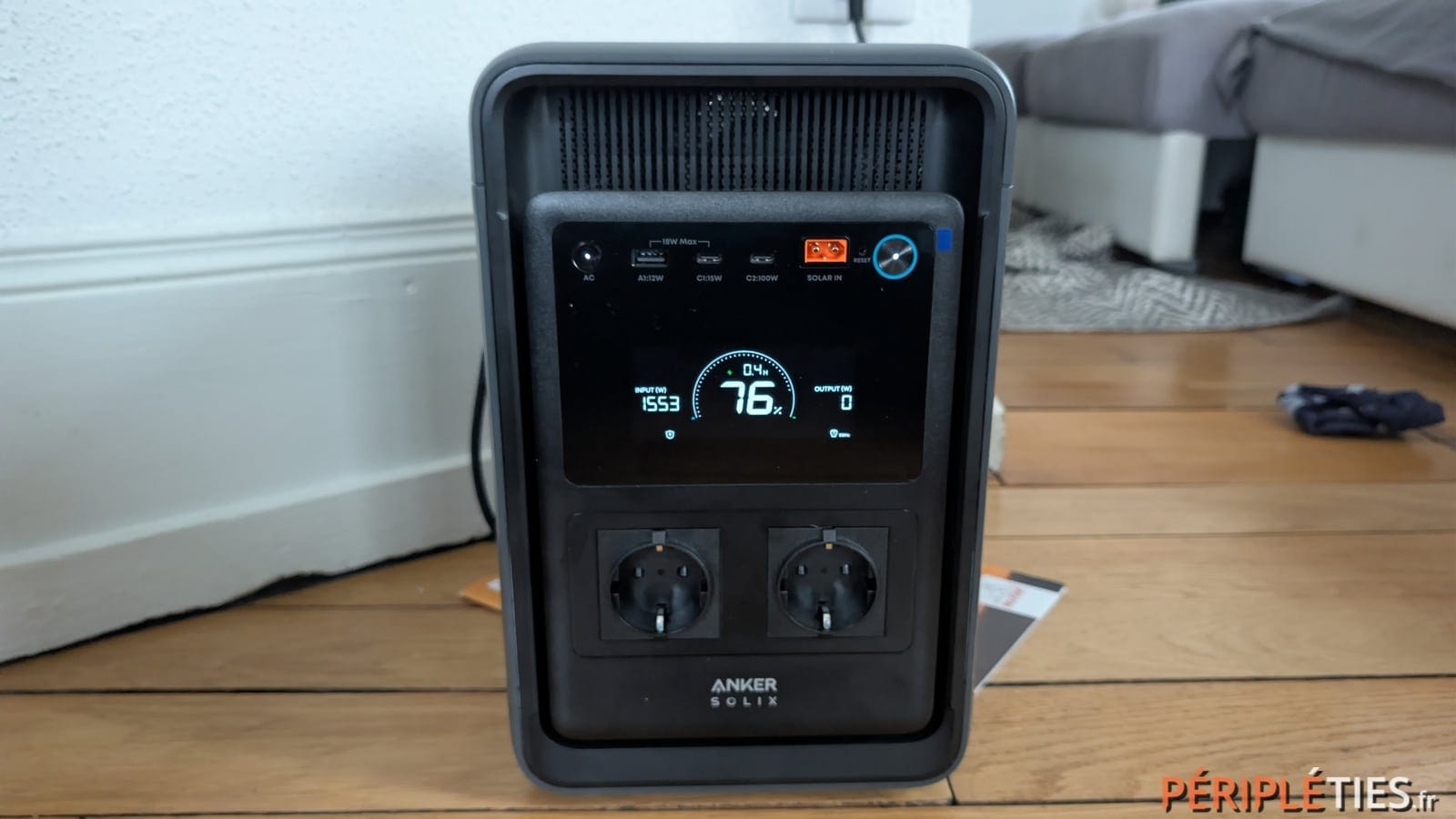
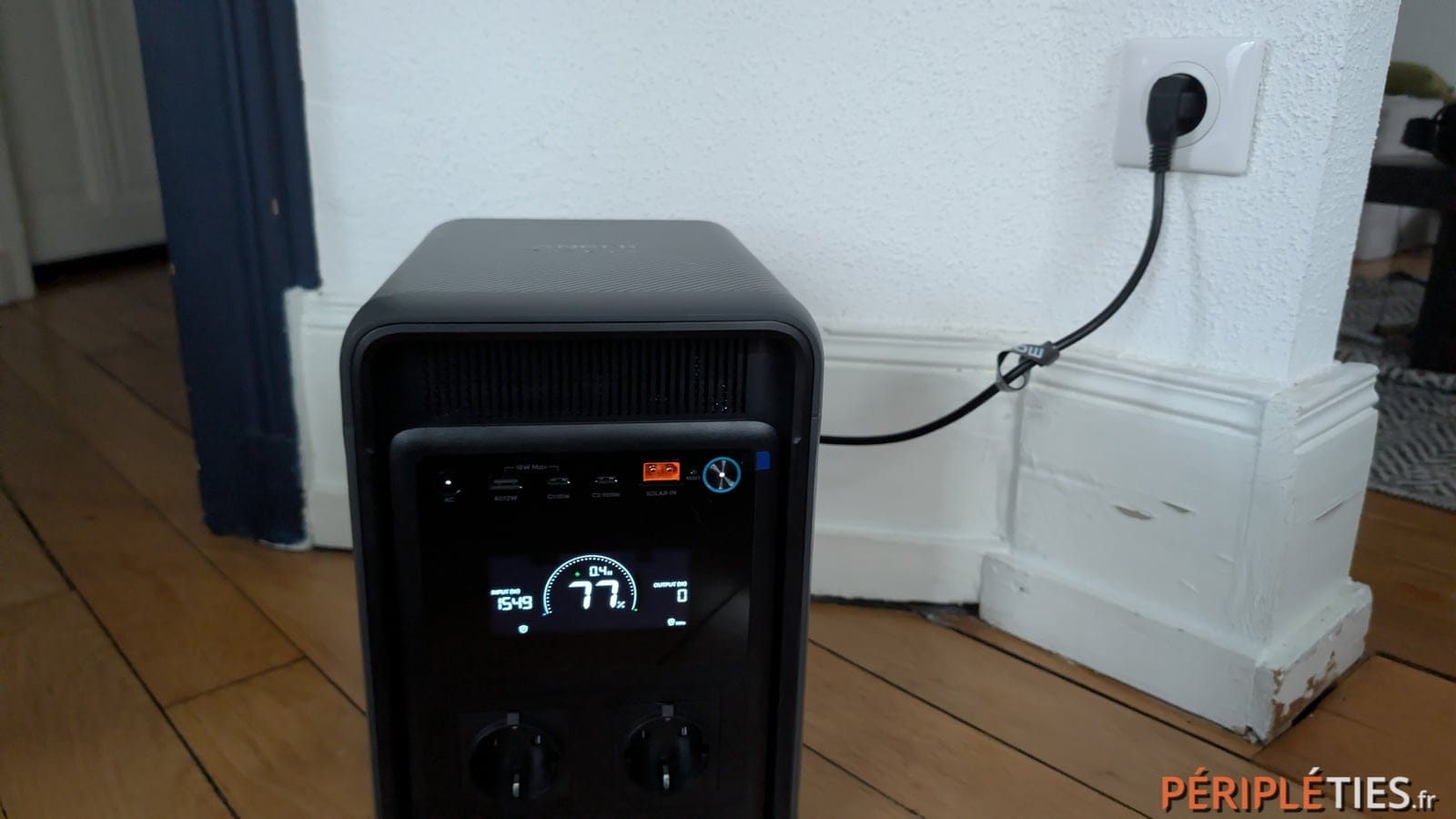
By switching on UltraFast mode in the Anker app, the claimed charging power rises to 1,600 W (we measured 1,552 W at the wall), which brings a full charge under two hours.
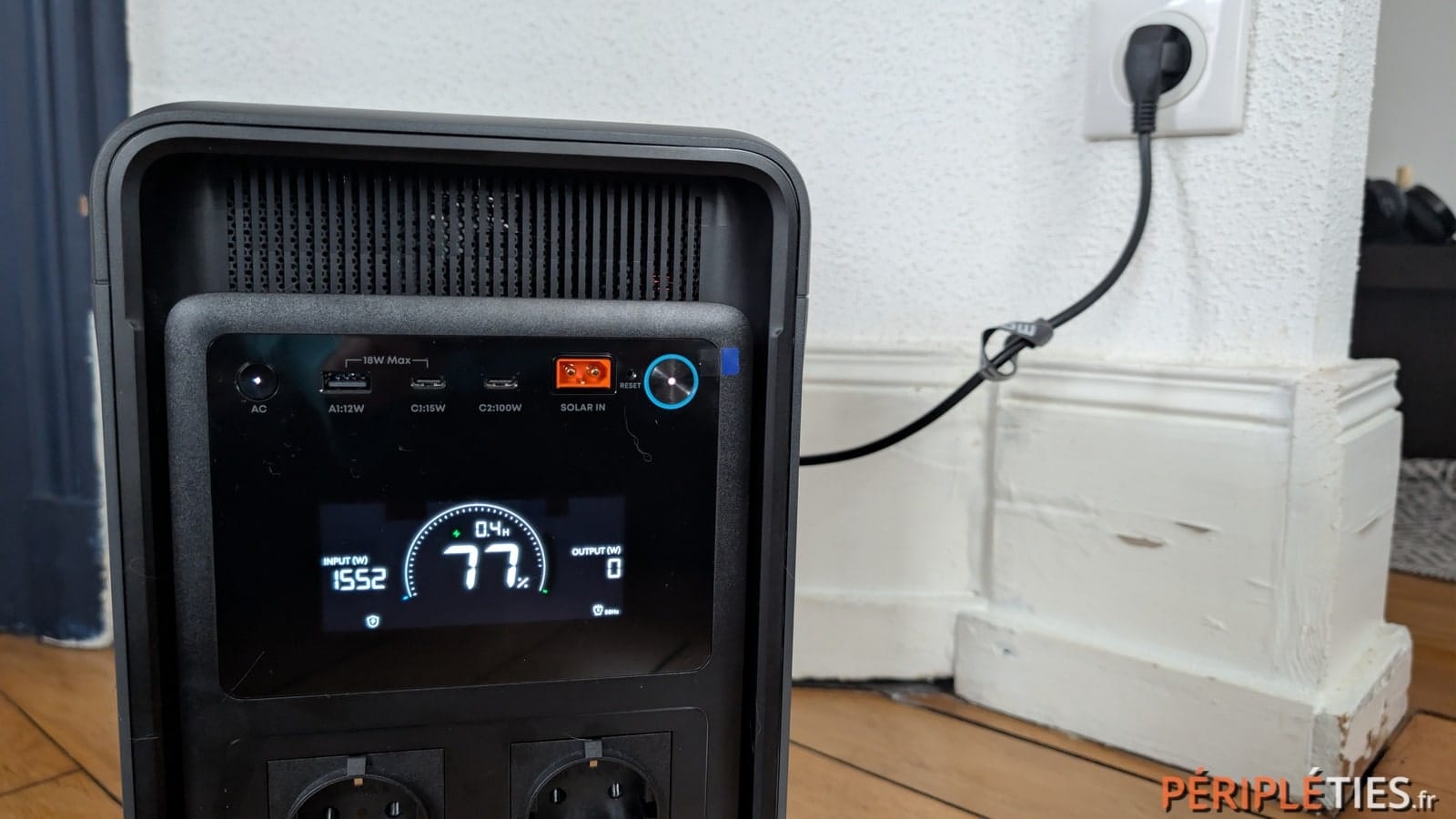
Mains charging power can also be turned down, to as little as 100 W. That is really useful in France, where the electric hookup on many campsites and on some aires (the motorhome service areas you find all over the country, see our guide to motorhome aires in France) is limited to a few amps. Pull too much and you trip the bollard.
Solar charging: up to 400 W of panels
The S2000 accepts up to 400 W of solar input, so you can charge it from one or more compatible panels such as the Anker SOLIX solar panels (US) / Anker SOLIX solar panels (UK). Anker quotes 3 to 4 hours to go from 20 to 80% with 400 W of panels. Bear in mind that this is a theoretical figure, obtained in ideal sunshine. In real life, weather, panel angle and season all affect charging time.
For life on the road, this solar input is still useful to top up on sunny days and stretch your autonomy.
Charging while driving: about 15 hours from a 12 V socket
You can also charge the S2000 while you drive. The first option is a 12 V socket, but the power is limited to about 120 W: count on more than 15 hours of driving for a full charge.
To go faster, Anker sells an alternator charger separately: Anker SOLIX Alternator Charger (US) / Anker SOLIX Alternator Charger (UK). It is a smart option for motorhome owners and vanlifers who drive regularly and want to use their journeys to refill their battery. It works on the same principle as the EcoFlow alternator charger (US) / EcoFlow alternator charger (UK).
Ultra-compact: the S2000's biggest strength
This is probably the S2000's most convincing argument. At 16.2 kg (35.7 lb), it is clearly lighter than other stations of the same capacity: the EcoFlow DELTA 3 Max (US) / EcoFlow DELTA 3 Max (UK) is close to 20 kg (44 lb) and the Bluetti Elite 200 V2 (US) / Bluetti Elite 200 V2 (UK) is over 24 kg (53 lb).
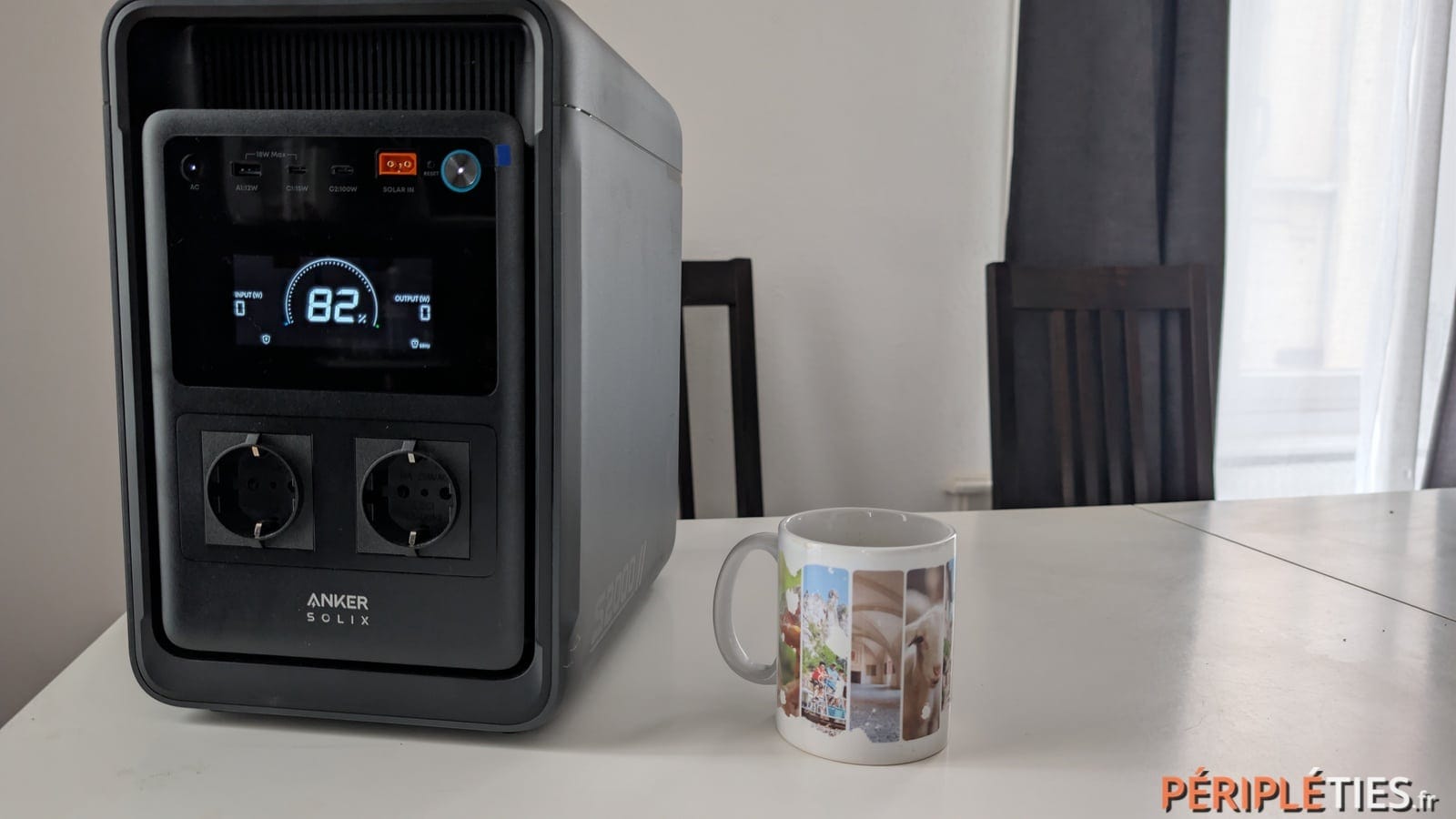
And in practice, you really feel it. Its weight is closer to that of a roughly 1,000 Wh station like the EcoFlow DELTA 3 (US) / EcoFlow DELTA 3 (UK), so the S2000 is much easier to carry and move around. We have also tested the EcoFlow Delta range if you want to compare: read our EcoFlow Delta 3 comparison.
Compact, but with a few details to improve
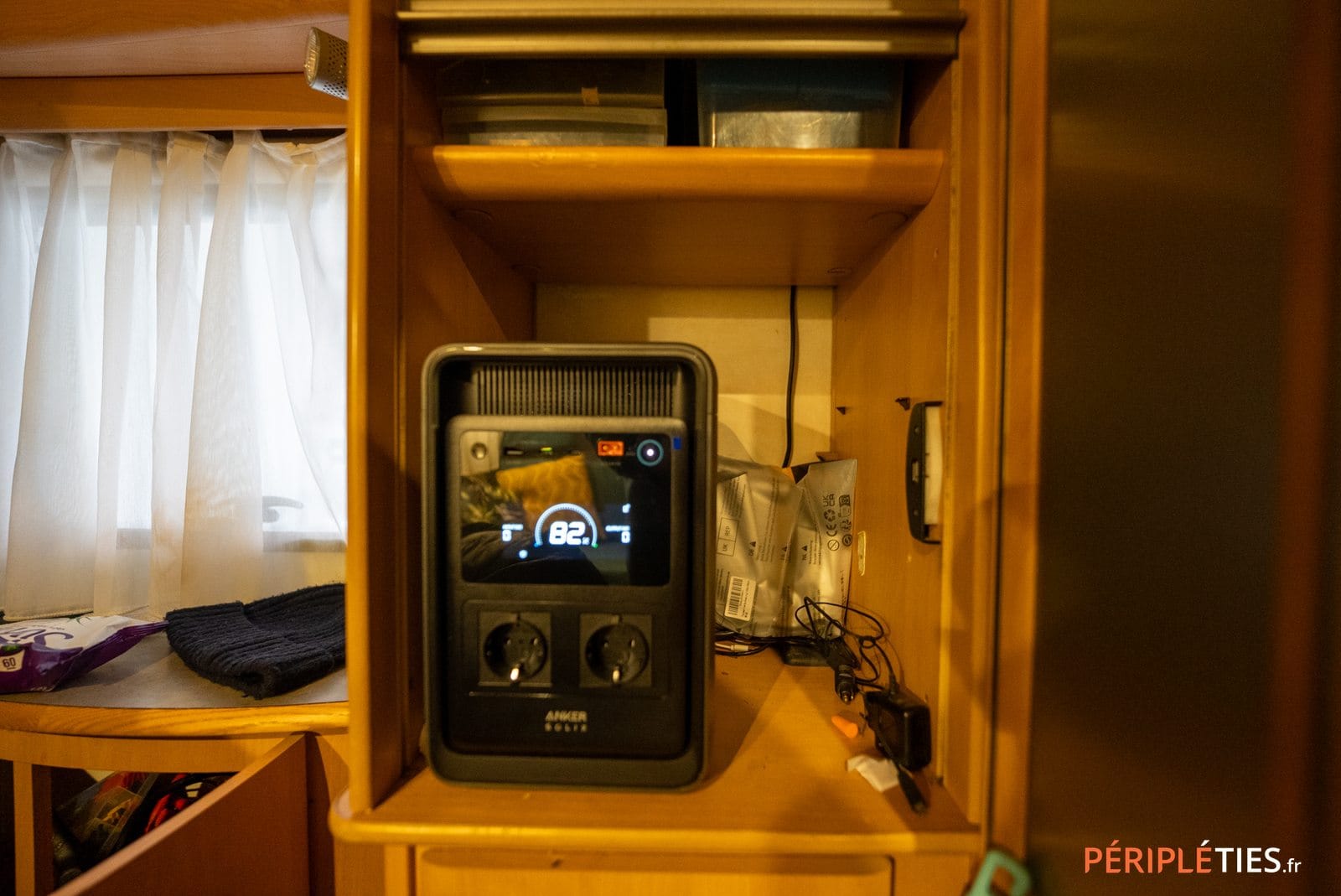
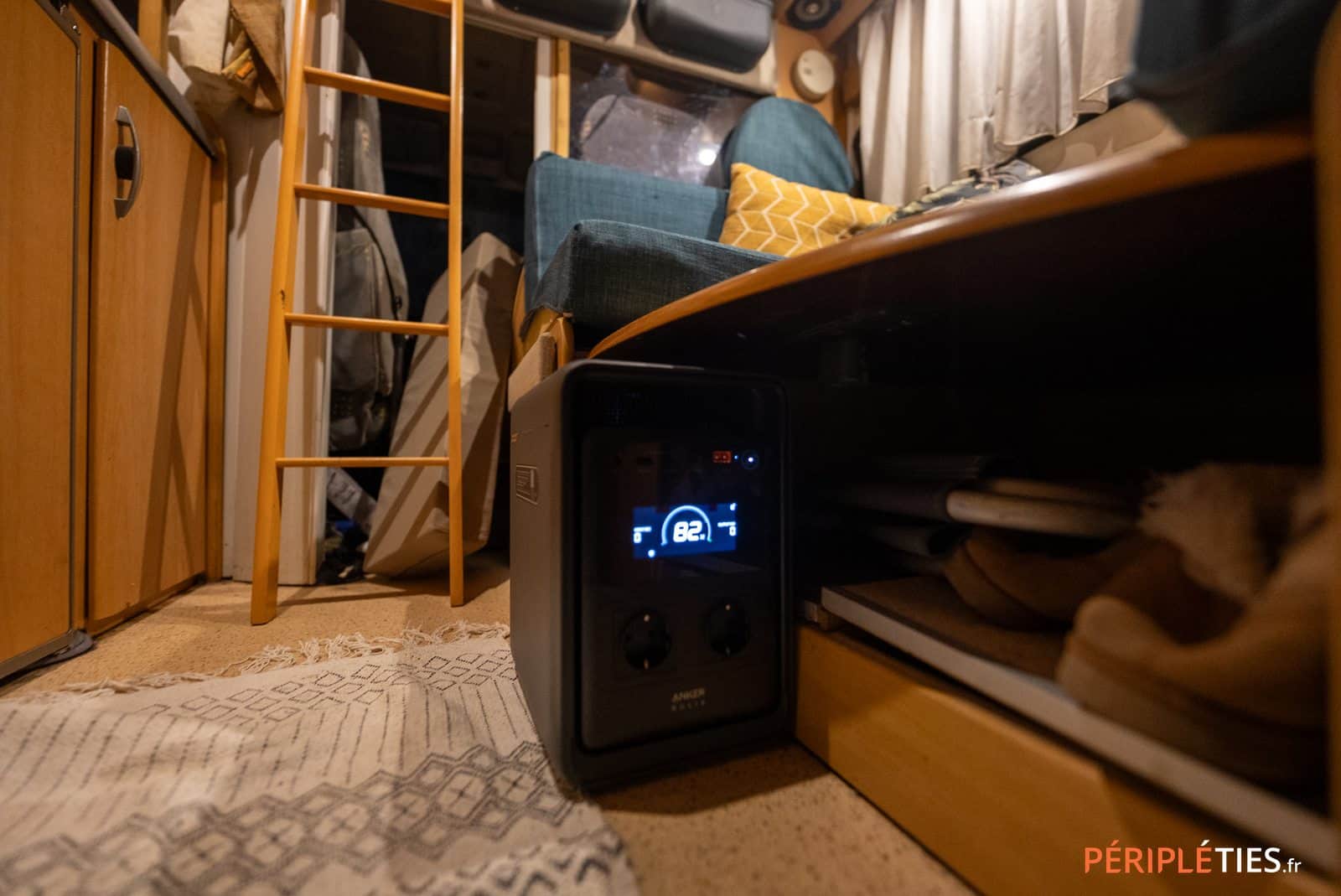
At 20.8 × 28.2 × 32.3 cm (8.2 × 11.1 × 12.7 in), it slips fairly easily into a small space. Its tall, narrow format is particularly handy for fitting it into a locker or a storage compartment.
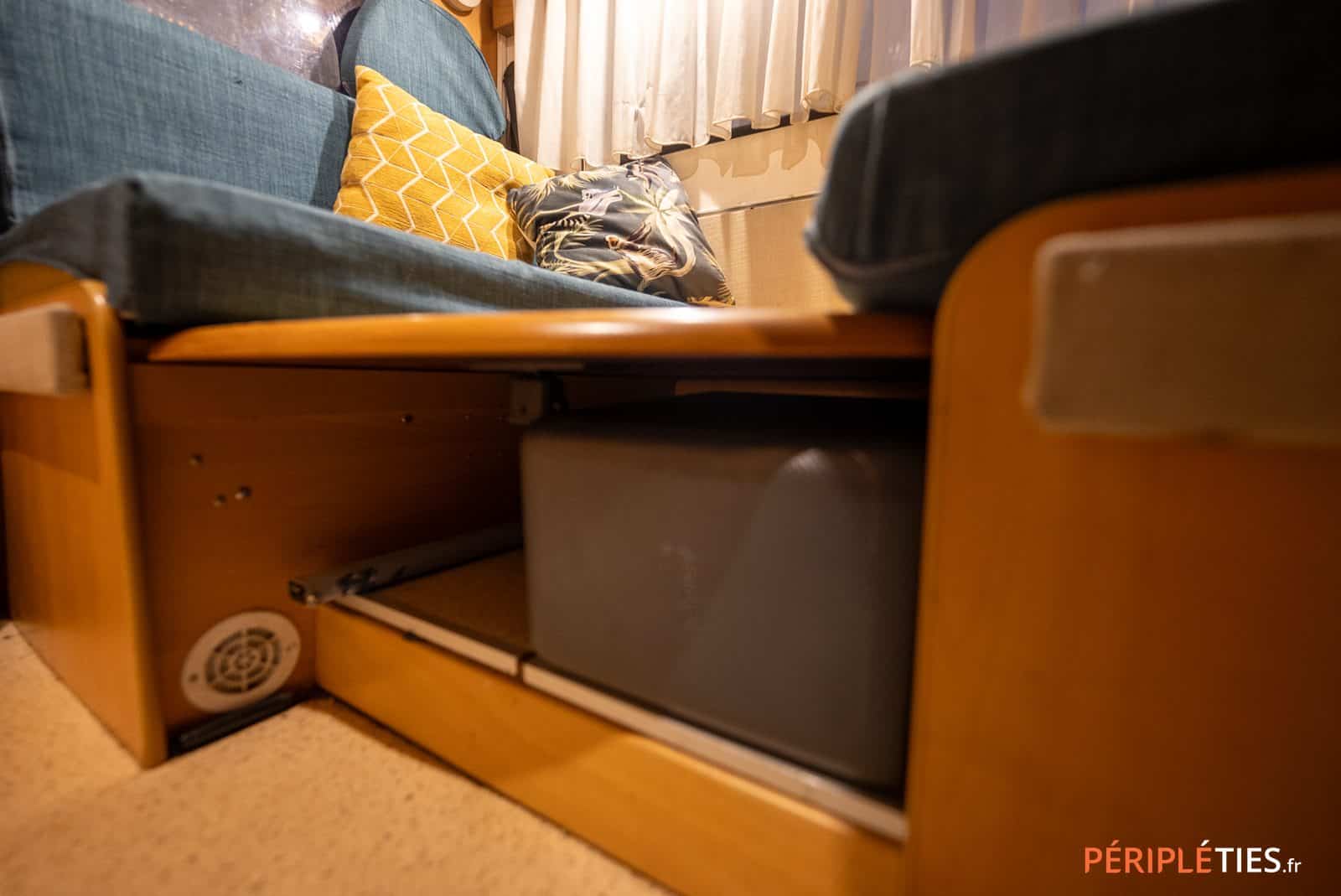
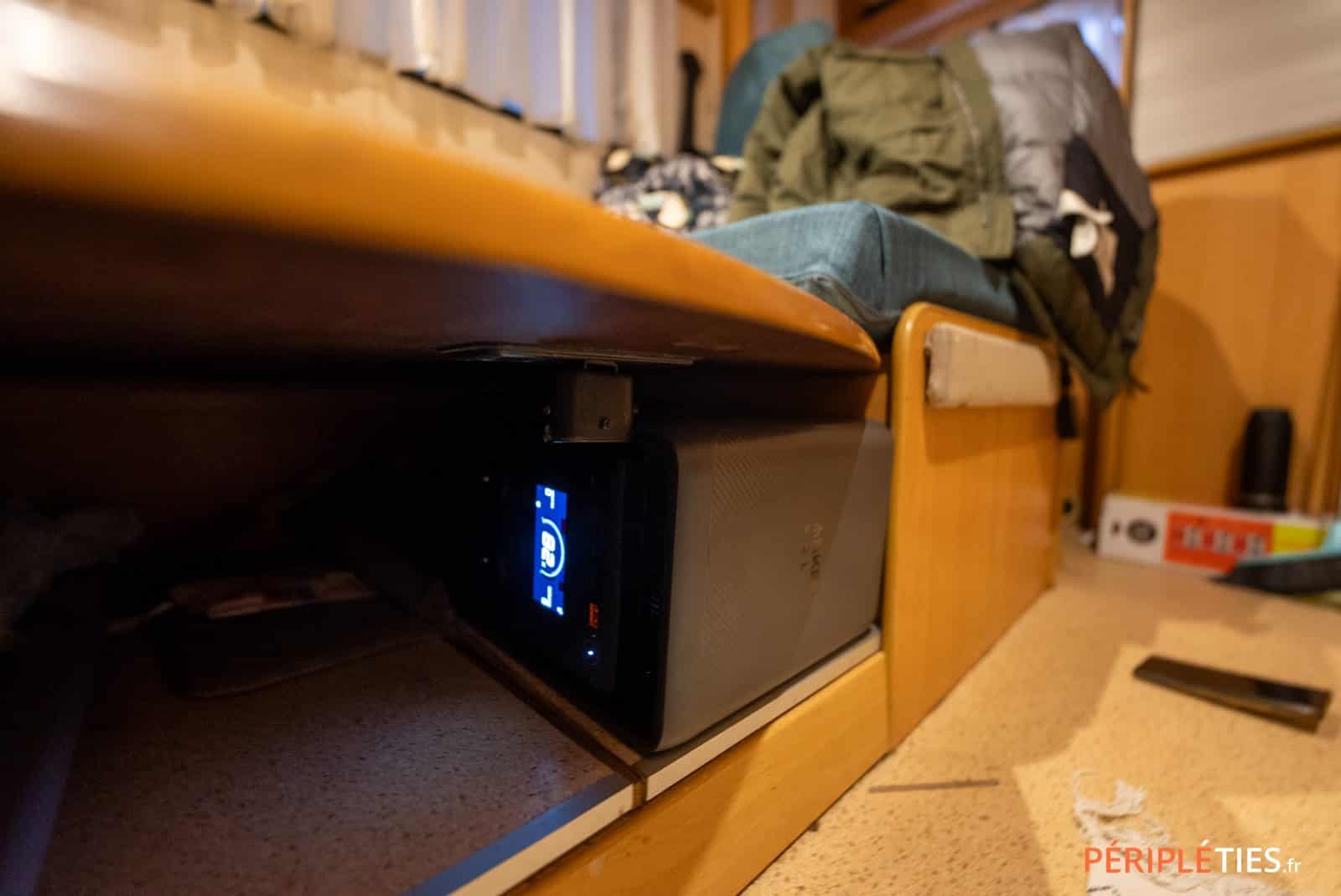
Ergonomics: no proper carry handle
One small regret: Anker did not include a classic handle on top. The station has side grips moulded into the casing, but a real handle would have made it even easier to carry.
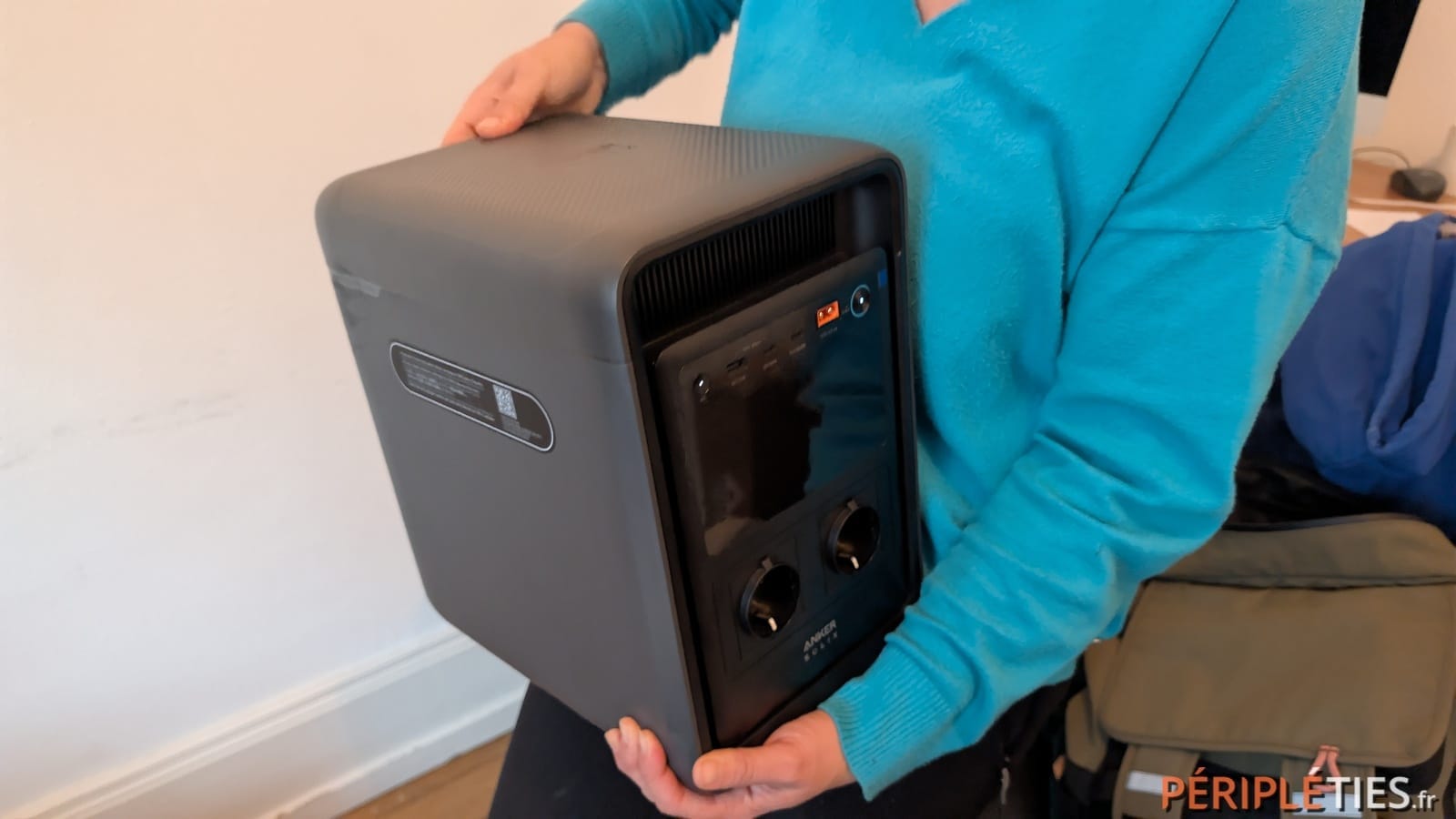
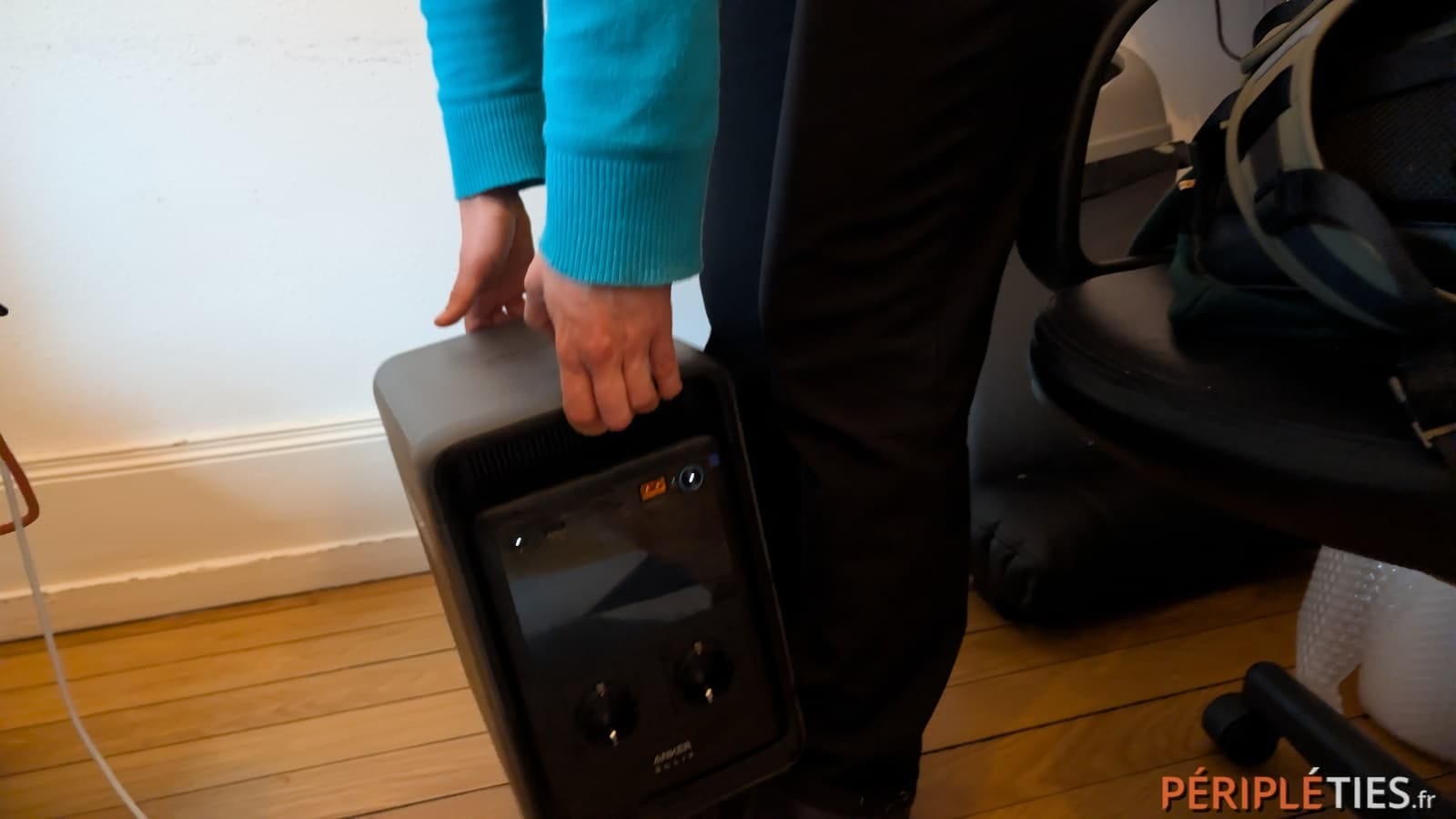
On this point, the S2000 largely keeps its promises: 2 kWh of capacity in a size and weight that are genuinely easy to live with on the move.
Using the Anker SOLIX S2000 in a campervan or motorhome
With 2,010 Wh of capacity and a good range of outlets, the S2000 makes an interesting extra energy reserve for campervan and motorhome travellers. It can also become the main power source of a self-built van conversion, without the need for a more complex fixed electrical installation.
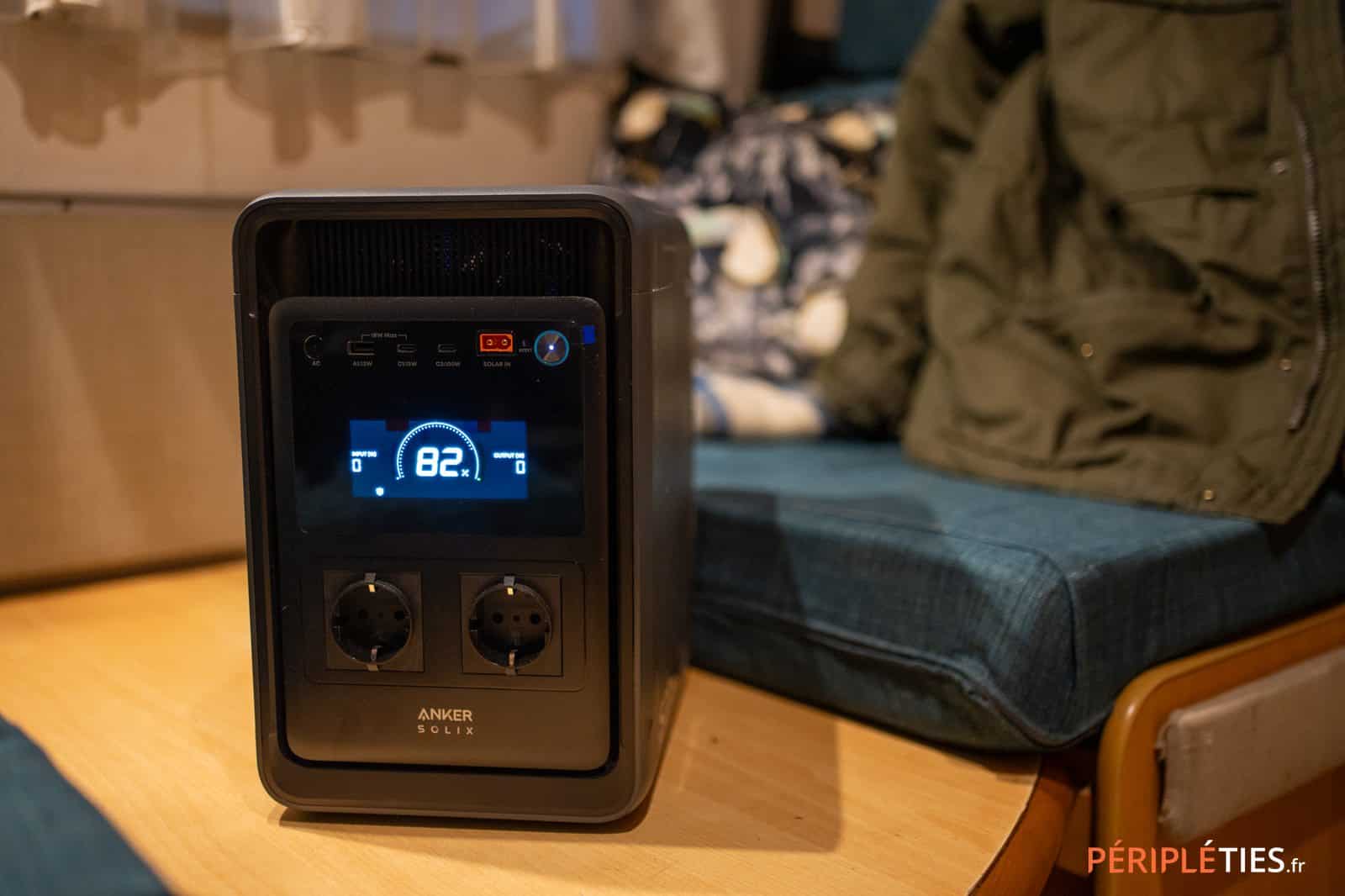
At 16.2 kg (35.7 lb), it is one of the lightest stations in its class. It weighs 1.7 kg (3.7 lb) less than the Jackery Explorer 2000 V2 (US) / Jackery Explorer 2000 V2 (UK) (17.9 kg / 39.5 lb) and nearly 4 kg (9 lb) less than some rivals. A real advantage when you know every kilo counts on board.
Can the Anker SOLIX S2000 work as a home backup battery (UPS)?
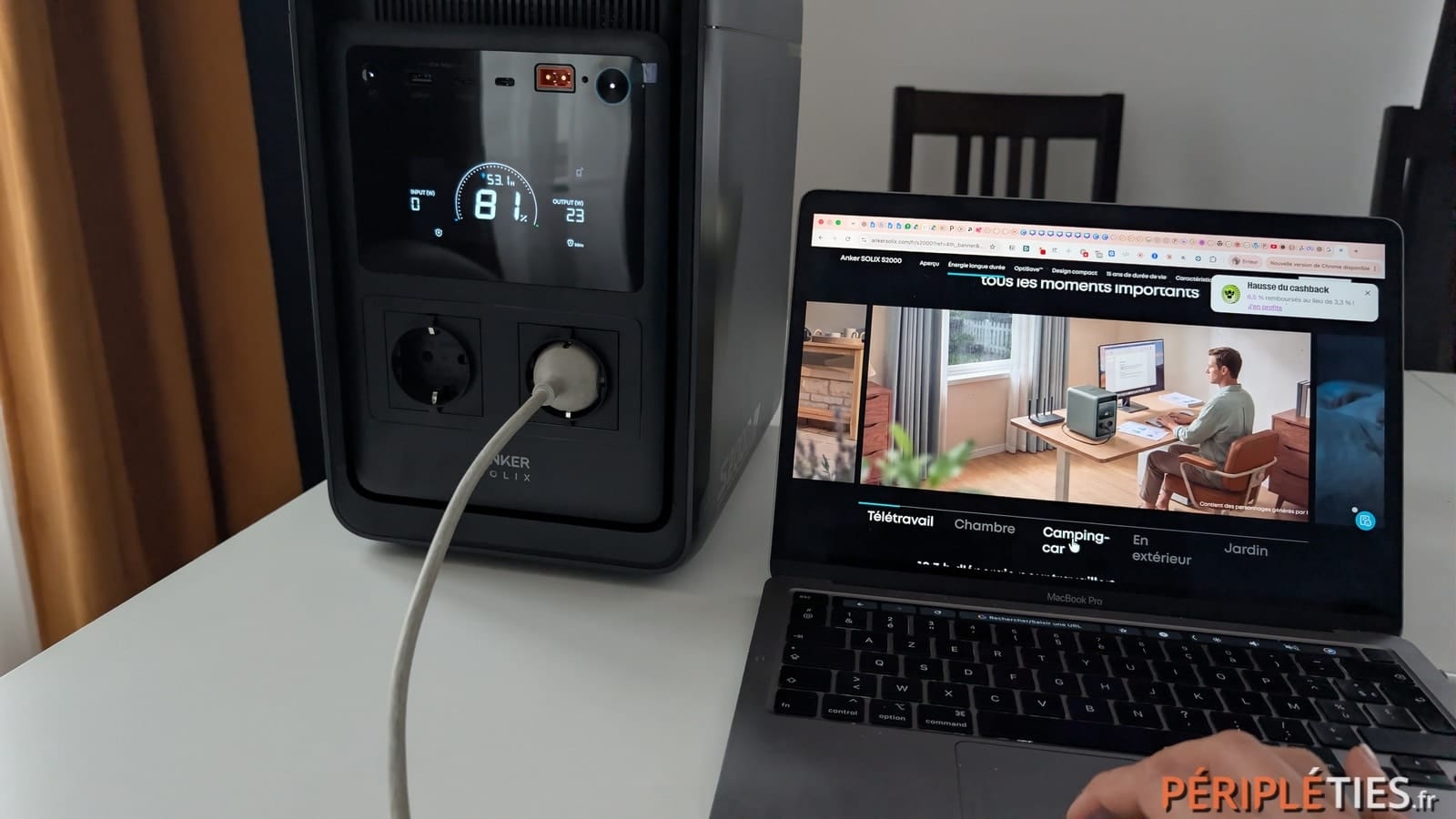
The S2000 has a UPS mode (uninterruptible power supply) with a switchover time of under 10 ms. In practice, it stays plugged into the mains and powers your devices. If the power cuts out, it automatically takes over.
That is especially useful to keep an internet router, a computer, a monitor or a fridge running during a power cut.
Watch the power available during a cut
There are two things to distinguish here. When the station is plugged into the mains, its bypass mode lets up to 2,300 W pass through on the European version (the figure is lower on the 120 V US model). But during a power cut, it has to rely on its own inverter, which is limited to 1,500 W.
The S2000 is a good way to keep a few essential devices running, but it obviously cannot power a whole house.
What can you do with the Anker SOLIX app?
Like most portable power stations, the S2000 is controlled through a smartphone app. It lets you adjust the charging power, set charge limits to protect the battery, turn on silent mode and track consumption.
Our favourite feature is the timer that switches the AC outlets on and off on a schedule. It is a great way to avoid leaving the inverter running for nothing and to keep idle consumption down.
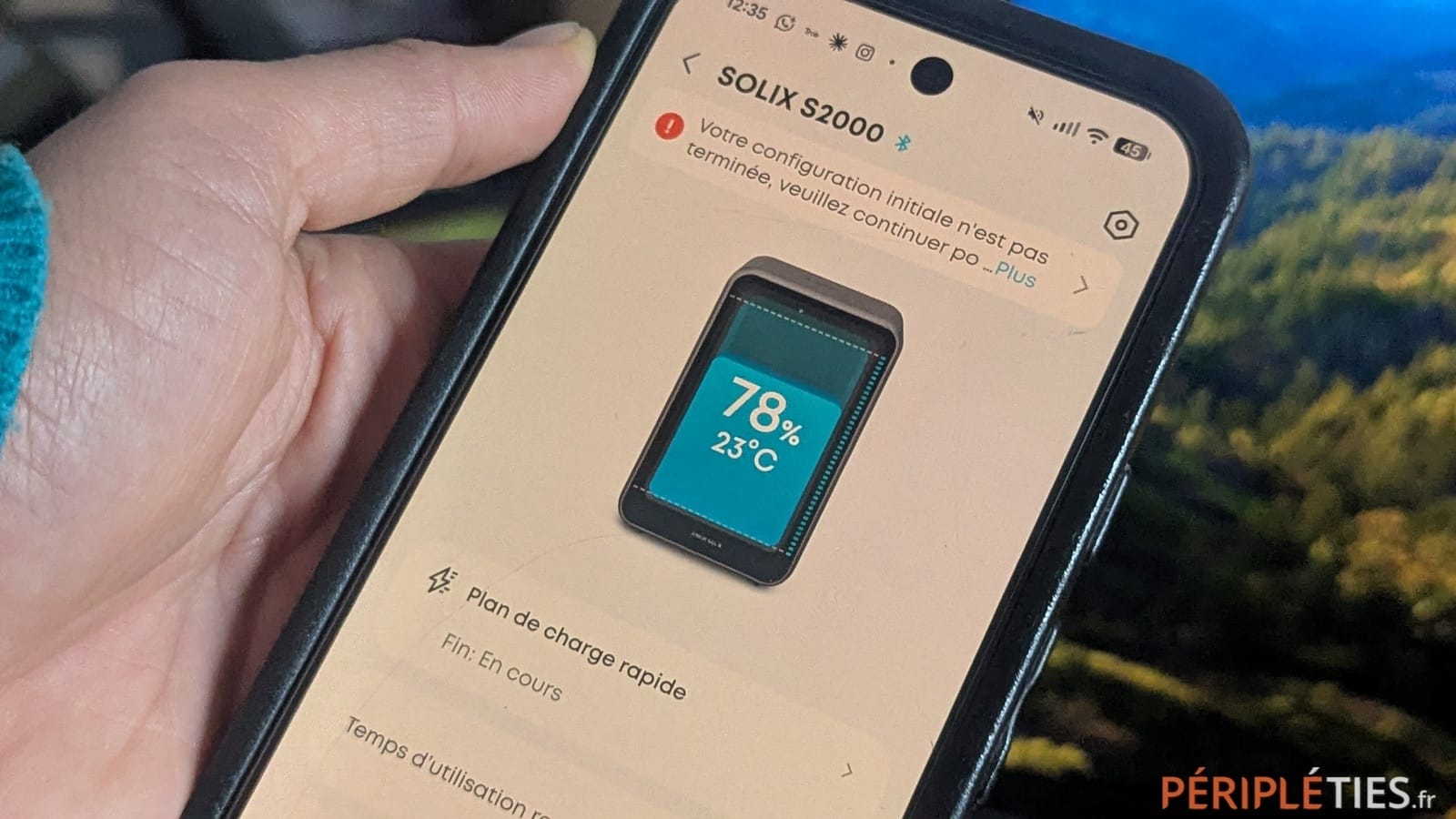
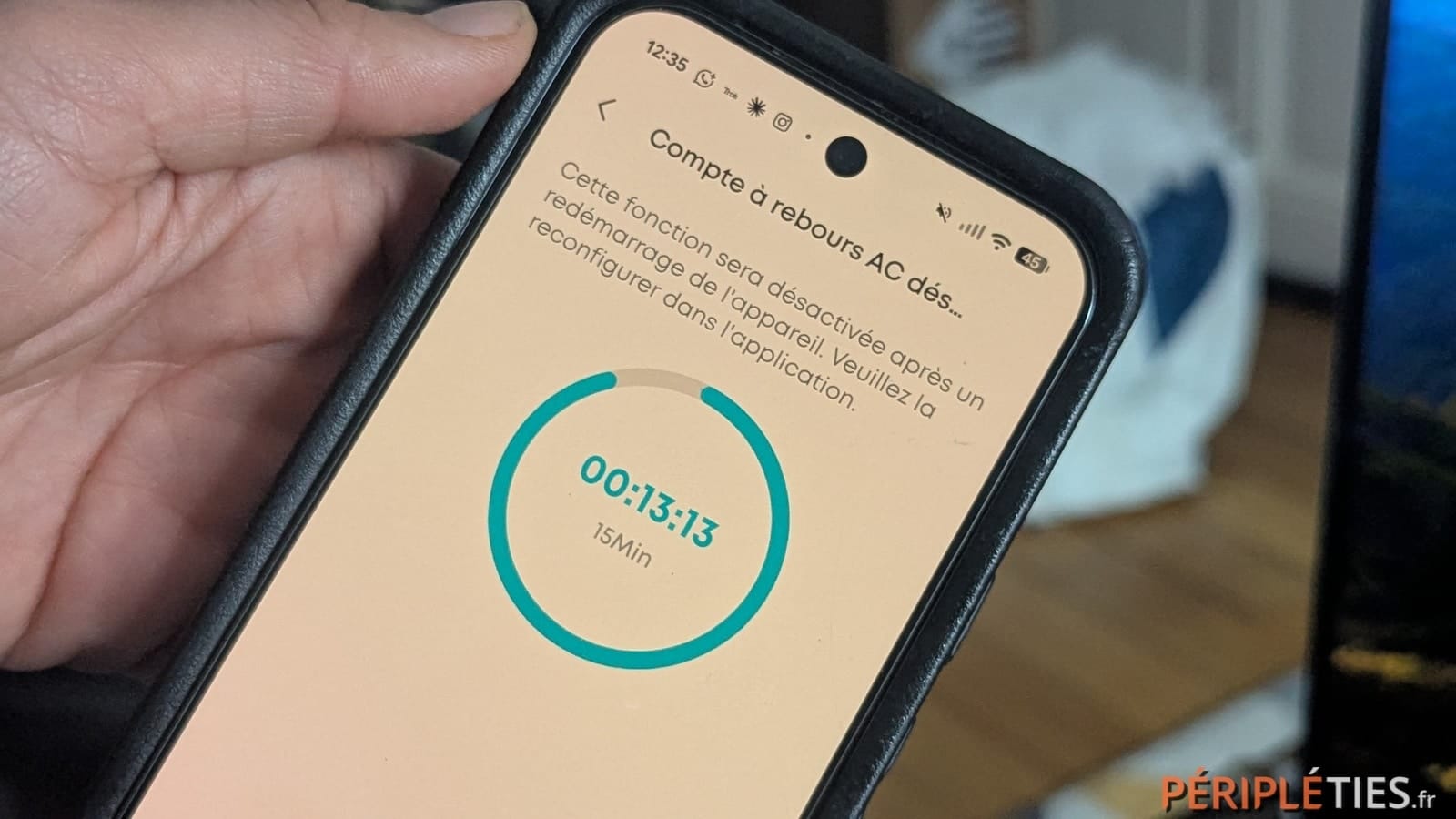
The app also offers an off-peak mode to schedule charging when electricity is cheaper.
One drawback, though, when installing it on an Android phone: the Anker app asked us for access to the phone's contacts and calls. A rather surprising request for an app meant to control a power station, and we do not really see the point. We eventually managed to install and use the app without granting these permissions, after several attempts. Anker should clarify this.
How long will the Anker SOLIX S2000 last? Battery lifespan
Anker claims up to 10,000 charge cycles, or a theoretical lifespan of up to 15 years. But be careful: that figure is for 60% remaining capacity. To keep 80% of its original capacity, the brand quotes 6,000 cycles, which is roughly in line with the rest of the market.
The 5-year manufacturer's warranty is therefore a more concrete benchmark when you buy.
Anker SOLIX S2000 price in the US and UK: is it worth it?
At launch, Anker set the S2000's list price at $1,199.99 in the US. In the UK, the reference price shown on the official store is £1,099. Yet since launch, the station has almost always been sold for less, and that changes our verdict considerably.
On 17 November 2026, it was selling for $699.99 on Anker's US store and £849 on the UK store. In the UK, it was also offered at £649 during the launch promotion in the autumn.
Around $700, the S2000 goes up against models like the Jackery Explorer 2000 V2 (US) / Jackery Explorer 2000 V2 (UK), which offers similar capacity.
Other 2 kWh stations, such as the Bluetti Elite 200 V2 (US) / Bluetti Elite 200 V2 (UK), the EcoFlow DELTA 3 Max (US) / EcoFlow DELTA 3 Max (UK) or the DJI Power 2000, are usually more expensive. But they also offer more output power, so they are not quite aimed at the same buyer.
Is the Anker SOLIX S2000 good value?
On sale at around $700 (or £650 in the UK), the S2000 strikes us as a very attractive option if you want a big capacity in a box that is easy to carry. Closer to $900 or £850, it still makes sense if weight is a priority for you. At full list price, though, we would find it much harder to recommend over more powerful rivals.
Anker SOLIX S2000 vs other 2 kWh power stations
| Model | Capacity | AC output | Max solar | 12 V socket | Expandable | Weight |
|---|---|---|---|---|---|---|
| Anker SOLIX S2000 (US) / Anker SOLIX S2000 (UK) | 2,010 Wh | 1,500 W | 400 W | No | No | 16.2 kg (35.7 lb) |
| Anker SOLIX C2000 Gen 2 (US) / Anker SOLIX C2000 Gen 2 (UK) | 2,048 Wh | 2,400 W | 800 W | Yes | Yes | 18.9 kg (41.7 lb) |
| EcoFlow DELTA 3 Max (US) / EcoFlow DELTA 3 Max (UK) | 2,048 Wh | 2,400 W | 1,000 W | Yes | Yes | ≈ 20 kg (44 lb) |
| Bluetti Elite 200 V2 (US) / Bluetti Elite 200 V2 (UK) | 2,073 Wh | 2,600 W | 1,000 W | Yes | No | 24.2 kg (53.4 lb) |
| DJI Power 2000 | 2,048 Wh | 3,000 W | 400 W | Not specified | Yes | 22 kg (48.5 lb) |
Output figures are for the European versions; check the specs of your market's model before buying.
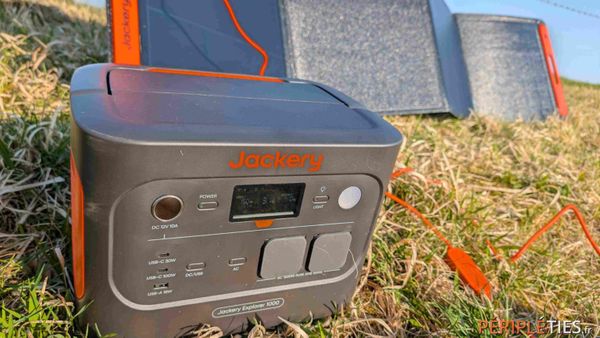
For an overview of the whole market, all capacities included, see our best portable power stations for campervans and motorhomes. And if 2 kWh feels like overkill, the Jackery Explorer 1000 V2 (US) / Jackery Explorer 1000 V2 (UK) (read our Jackery Explorer 1000 V2 review) or the Bluetti AC180P (US) / Bluetti AC180P (UK) cover more modest needs very well.
Our final verdict on the Anker SOLIX S2000
The Anker SOLIX S2000 is a station that owns its choices. With 2 kWh of capacity in just 16.2 kg (35.7 lb), it succeeds where many of its rivals remain bulky: it offers a big energy reserve in a format that is easy to carry and install.
It is not made for every use, though. Its 1,500 W output, and the lack of a 12 V socket or an expansion battery, make it less versatile than some competing models.
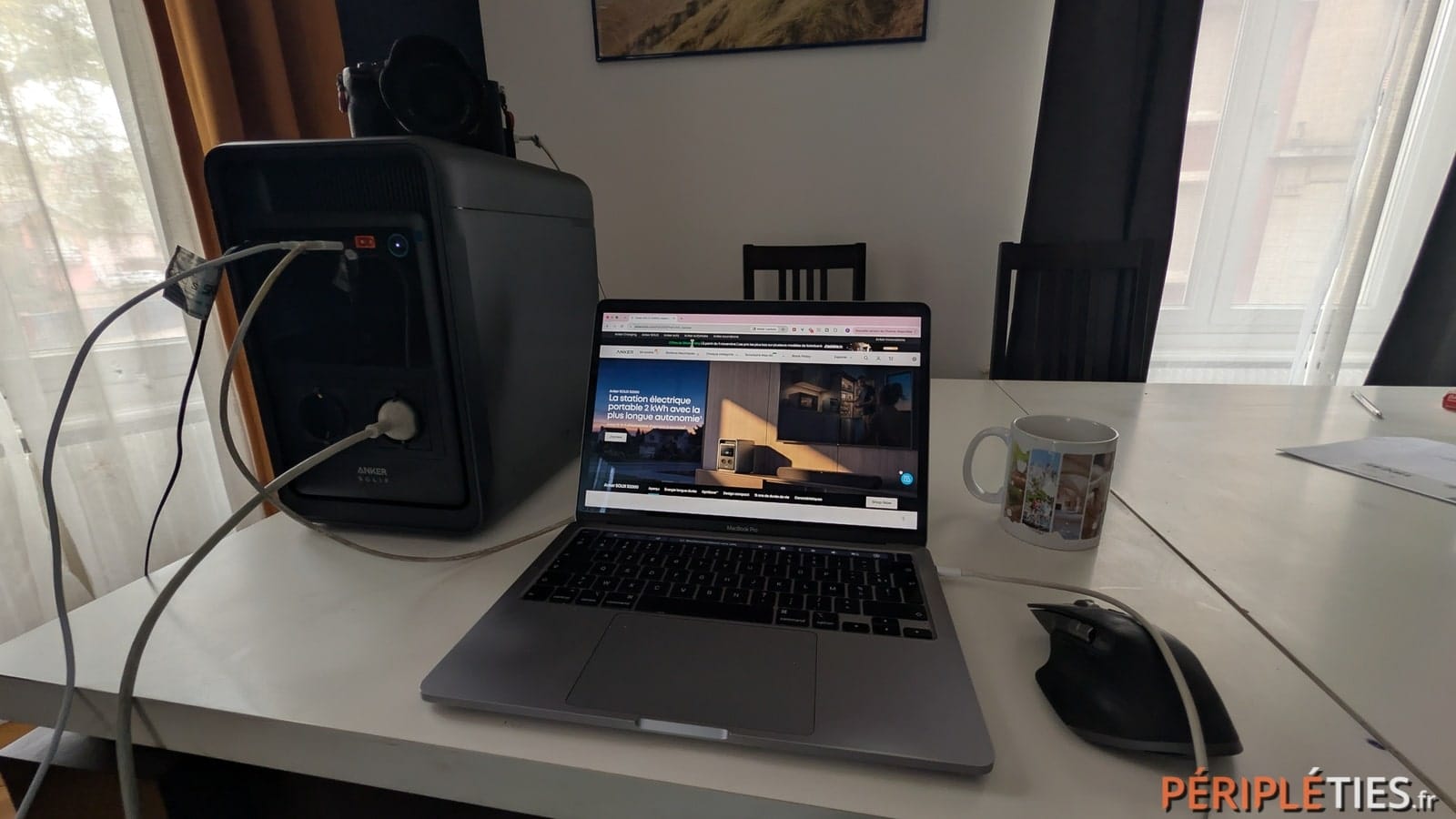
If you are mainly looking for a compact, light station that can power your everyday devices, the S2000 deserves your attention. At around $700 (or £650), it becomes a particularly good deal. At full price, we would rather go for a more versatile model.
In the end, this is a station that does not try to do everything, but answers one specific need well: storing a lot of energy without lugging around a battery that weighs more than 20 kg (44 lb).
Anker SOLIX S2000 FAQ
Can the Anker SOLIX S2000 run a fridge continuously?
Yes. With 2,010 Wh of capacity and an idle draw limited to 10 W when the AC outlets are on, it can run a fridge for several dozen hours. Runtime depends on the fridge's consumption and how often you open the door.
Can you use the Anker SOLIX S2000 while it is charging?
Yes, the station can power devices while it is being charged from the mains or from solar panels. That is handy to keep your equipment running without interruption.
Can you leave the Anker SOLIX S2000 plugged in permanently at home?
Yes, it has a UPS mode and battery management features designed for backup use. Anker includes an automatic maintenance cycle for periods when the station stays plugged in without being used.
Does the Anker SOLIX S2000 work in winter?
Yes, it can discharge down to -20 °C (-4 °F) according to the information available. However, as with other LiFePO4 batteries, you should not charge it when its temperature is below 0 °C (32 °F).
How much does the Anker SOLIX S2000 weigh?
It weighs 16.2 kg (35.7 lb) and measures 20.8 × 28.2 × 32.3 cm (8.2 × 11.1 × 12.7 in), which makes it one of the lightest 2 kWh portable power stations on the market.
Happy travels!
Pauline & Simon